
Reviewed · HAIFA AND THE GALILEE TOURS
Caesarea, Rosh Hanikra and Acre Day Trip from Tel Aviv
Israel’s northern coast packs in plenty. This full-day trip links ancient Caesarea, Haifa’s Baha’i Gardens, the sea-carved grottos at Rosh Hanikra, and Acre’s Crusader remains without asking you to rent a car or puzzle over regional buses. I especially like the variety, moving from Roman ruins to cliffside caves to a living old city, and I like having a guide explain the political and historical layers along the way. The tradeoff is time: four major stops make this a fast, tightly managed day rather than a slow exploration.
The tour costs about $120 per person, including transport, guiding, and entrance fees. That is fair value if you want to cover a wide stretch of coast in one outing, but you should arrive ready for early departure, plenty of walking, and a possible return later than the advertised 10 hours.
In This Review
- Five things to know before you book
- Leaving Tel Aviv for the northern coast
- Caesarea: Herod’s grand Mediterranean port
- Haifa and the Baha’i Gardens viewpoint
- Rosh Hanikra: cable car and sea-carved caves
- Acre: Crusader tunnels beneath a living old city
- How the schedule feels in real life
- Guides, buses, and the value of the experience
- What to bring and how to prepare
- Who should book this northbound day trip?
- Should you book it?
- FAQ
- How long does the day trip last?
- What destinations are included?
- Are hotel pickup and drop-off included?
- Can I enter the Baha’i Gardens?
- Are meals and drinks included?
- Is the tour suitable for young children?
- What happens if I need to cancel?
Five things to know before you book
- Caesarea gives you the strongest Roman and Herodian setting, with a harbor, theater, and archaeological remains beside the Mediterranean.
- The Baha’i Gardens are a scenic viewpoint stop, not a visit inside the gardens, so expect photographs rather than a garden tour.
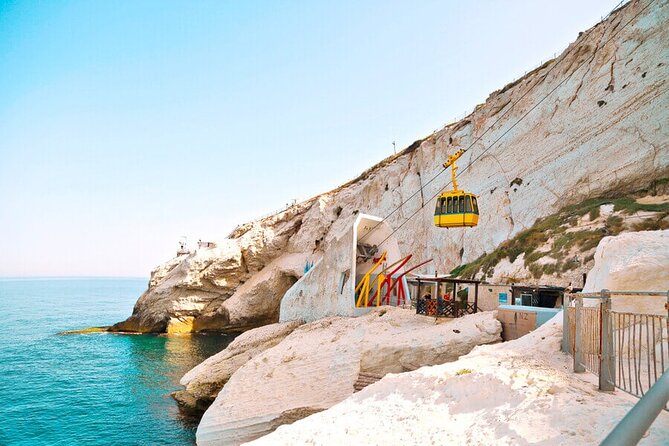
- Rosh Hanikra is the visual high point, with a cable car descending to white-rock grottos filled with seawater.
- Acre combines archaeology with everyday life, pairing an underground Crusader complex with an old market of spices, herbs, and souvenirs.
- The day is tightly packed, with about 40 people at most, hotel pickup, and several fixed meeting times.
- Food and drinks are extra, and it is wise to carry water, wear sturdy shoes, and clarify the lunch arrangements before departure.
Leaving Tel Aviv for the northern coast
Pickup begins around 7:15 a.m. from central Tel Aviv hotels. You travel by air-conditioned coach with a professional guide and driver, then return to Tel Aviv by hotel drop-off or arranged return point at the end of the day.
That early start matters. Caesarea is roughly the first major stop, while Haifa, Rosh Hanikra, and Acre continue north along the coast. The coach saves you the work of driving, parking, and navigating unfamiliar roads. It also lets you look out at the countryside while the guide explains the region’s past and present.
The group can reach up to 40 people. That is not an intimate walking tour, so you need to listen carefully for meeting instructions and return to the coach on time. The best guides make this easy. Aviva is praised for walking with the group, keeping count, and explaining exactly where to meet. Guides including Itamar, Aharon, Avi, Martin, Erez, and Avashai have also been singled out for humor, clear explanations, and good organization.
The vehicle may have Wi-Fi and charging plugs, a small but useful comfort on a long day. Still, bring water and a snack. Food and drinks are not included, and the schedule gives you little time to search for food on your own.
More Day Trips in Haifa and the Galilee
- From Tel Aviv: Guided Day Trip to Nazareth & Sea of Galilee
★ 4.4 · 824 reviews - From Tel Aviv: Caesarea, Haifa and Akko Day Trip
★ 4.4 · 744 reviews - Nazareth and the Sea of Galilee Day Trip from Tel Aviv
★ 4.5 · 541 reviews
Caesarea: Herod’s grand Mediterranean port
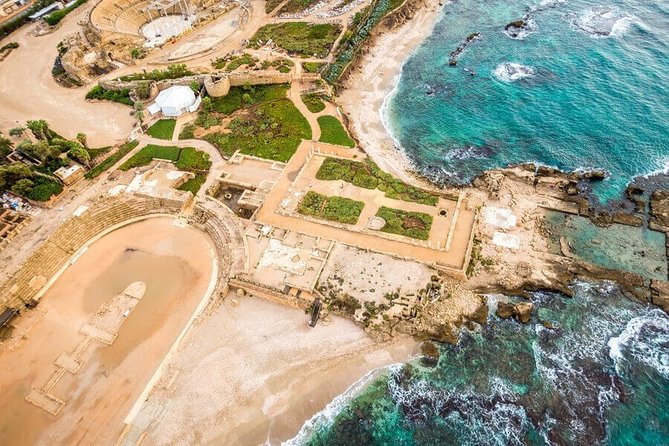
Caesarea National Park opens the historical part of the day with a striking contrast: Roman-era ruins spread beside a modern shoreline. Herod the Great built the port city and named it for Caesar Augustus. The project was an enormous statement of power, with a harbor designed to support trade, government, and military activity.
You have about an hour to walk around the archaeological site, followed by about 20 minutes focused on the ancient theater. The remains include sections of Herod’s harbor, public buildings, and other fragments of the Roman city. Your guide helps turn scattered stones into a picture of a working port rather than a collection of old walls.
The theater is one of the most memorable parts of Caesarea. Built in the first century AD, it faces the sea and gives you a clear sense of how Roman public entertainment fit into civic life. The setting is photogenic, but the visit is not simply a photo stop. Listen for the explanation of how the city developed, changed hands, and declined after its period of importance.
I like the way Caesarea sets the tone for the day. You begin with a powerful ancient city, but the limited time means you will not examine every corner of the park. If Roman and Herodian archaeology is your main reason for visiting, you may want a separate, slower visit on another day.
Wear shoes with a good sole. The route involves walking over archaeological surfaces, and the heat can be tiring, especially in summer. A hat and water are sensible additions.
Haifa and the Baha’i Gardens viewpoint
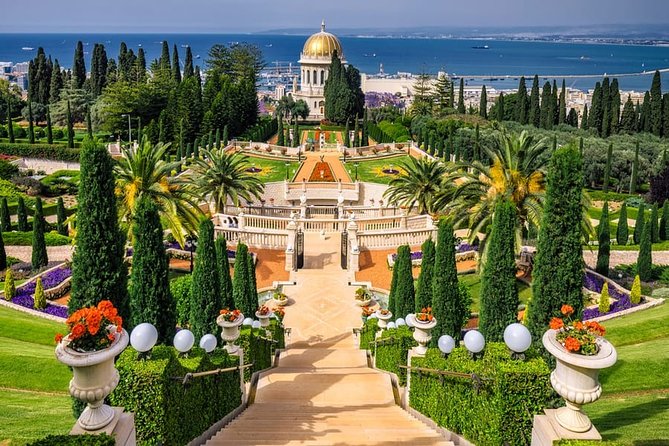
The coach continues to Haifa, Israel’s third-largest city, positioned between Mount Carmel and the Mediterranean. The stop lasts about 20 minutes and is focused on viewing the Baha’i Gardens from above.
The gardens are arranged in terraces down the slope, with a gold-domed shrine dedicated to the Bab, the founder of the Baha’i faith. From the viewpoint, you get the broad composition: carefully ordered terraces, the shrine, the city, and the sea beyond.
This is an excellent photo stop, but it is important to set the right expectation. You do not tour the gardens from within. The schedule provides a scenic overview only, and time here can be brief, sometimes close to five minutes depending on group movement and the day’s timing.
That short visit disappoints some people who expect an hour among the terraces. I would treat Haifa as a pause for views rather than a full destination. If the gardens are high on your personal list, plan a separate visit, because this excursion gives you only a look from the top.
The stop also shows why this tour is best understood as a sampler. You see several major places, but none receives the amount of time it would get on a dedicated city tour.
Rosh Hanikra: cable car and sea-carved caves
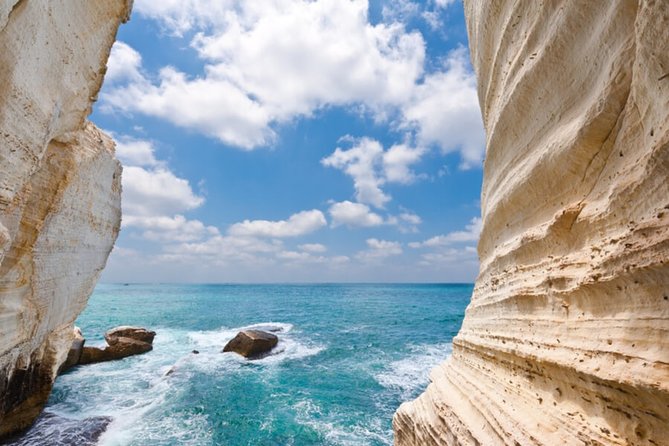
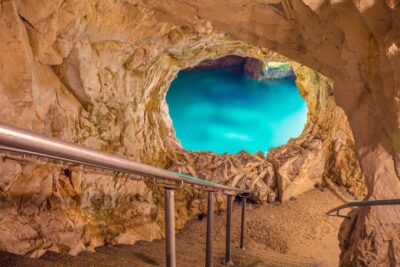
Rosh Hanikra is the day’s most unusual natural stop. Here, the Mediterranean has cut caves and channels into the white cliffs at the edge of the Achziv Natural Reserve.
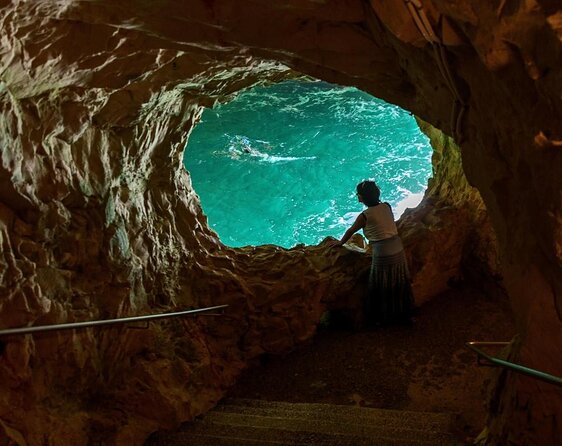
You ascend to the summit by cable car, then go down toward the grottos. The ride is short but memorable, giving you views of the cliff face and the sea. The caves themselves contain turquoise seawater, and the changing light makes this stop feel very different from the formal ruins at Caesarea.
The visit to Rosh Hanikra lasts about an hour for the cable car and summit area, with roughly 40 minutes devoted to the grottos. You may see bats in the caves, and loggerhead turtles are known to frequent the protected area, although wildlife sightings are not guaranteed.
You can also look toward the Lebanese border from Rosh Hanikra. That detail adds present-day context to a place that might otherwise seem purely scenic. Your guide may connect the coastal geography with the region’s modern borders and security concerns.
The grottos receive the strongest praise from many people who take this trip, and I understand why. They offer motion, sound, and color: water inside the rock, waves outside, and the cable car above. If you enjoy unusual natural sites, this may be your favorite hour.
The cliff paths require care. One past account described being led along an unsafe route without adequate railings before a safer return path was used. That is not a reason to avoid the site, but it is a reason to stay with the group, watch your footing, and speak up if a route feels unsuitable. Anyone with limited mobility should ask the operator about current walking conditions before booking.
More Day Trips in Tel Aviv
- From Tel Aviv: Jerusalem and Bethlehem Guided Day Trip
★ 4.3 · 1,316 reviews - Masada and the Dead Sea Day Trip from Tel Aviv
★ 4.5 · 1,014 reviews - Old and New Jerusalem Day Trip from Tel Aviv
★ 4.5 · 296 reviews - From Tel Aviv: Jerusalem Day Trip with Transfer
★ 4.1 · 118 reviews
Acre: Crusader tunnels beneath a living old city
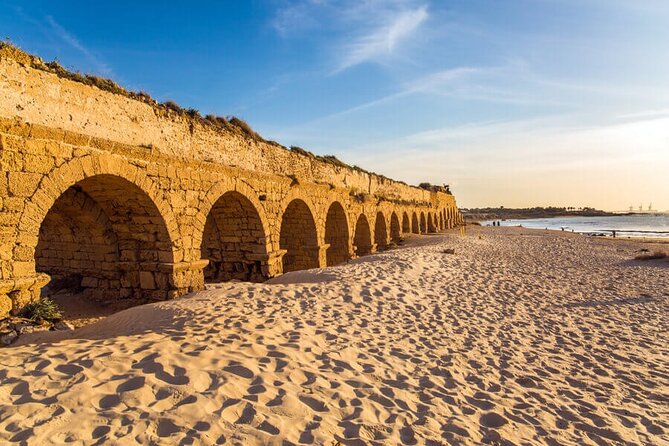
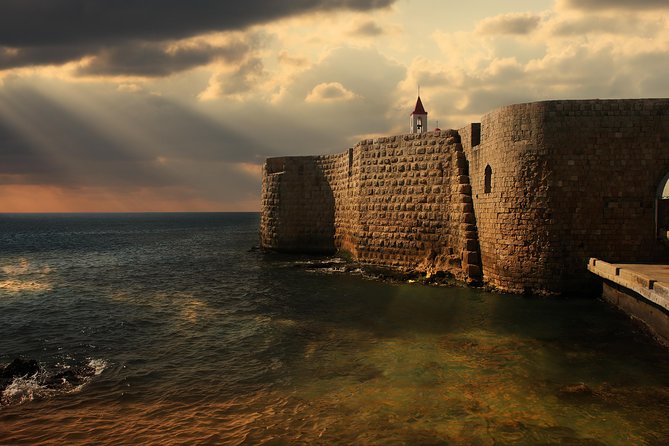
Acre, also called Akko, brings the day back to urban history. Its position on the coast made it important to Greek, Roman, Crusader, and Ottoman powers. The Hebrew name is often explained as meaning until here, reflecting the city’s place at the far end of the land of Israel.
The tour gives you about an hour in the city, followed by about an hour at the Citadel and underground Crusader complex. The underground passages were used by the Knights of St. John and form one of Acre’s most engaging historical sights. Instead of viewing a ruin from outside, you move through spaces that reveal how a military and religious order operated below the city.
The Citadel and crypt provide useful context for Acre’s role during the Crusader period. Your guide can explain the competing powers that shaped the city, while the stone corridors give the story physical scale. It is cooler and more enclosed than Caesarea, so the change of mood is welcome late in the day.
You also have time around the Old City Market. Stalls sell spices, herbs, and small souvenirs, and the market gives you a glimpse of Acre as a working town rather than a preserved museum. I prefer this pairing of archaeology and ordinary commerce. You see the grand military past, then walk through streets where people still shop and eat.
Acre is also the stop that deserves the most caution. The tour information does not include lunch, and the day may include a restaurant stop at your own expense. Some past accounts raised concerns about being taken to a guide-connected restaurant or souvenir business, including an uncomfortable food bill. I would ask at the start of the morning where lunch will be and what prices to expect. You are free to make your own purchasing decisions, and a copper-bracelet demonstration or shop visit should not replace the promised sightseeing.
How the schedule feels in real life
Ten hours is the stated approximate duration, but this is an ambitious route. You cover four destinations, several archaeological areas, a cable car, a cave system, and multiple coach transfers. Traffic, hotel pickups, border-area road conditions, and group delays can all affect the return time.
One past account described a 14-hour day. That may not be typical, but it is a useful warning. Do not book a tight evening flight, dinner reservation, or intercity connection after the tour. Give yourself breathing room.
The schedule rewards punctuality. If one person is late at each stop, the entire group loses sightseeing time. Your guide will usually give clear meeting instructions, but you need to keep track of them. A phone alarm can help, especially after the open time in Acre.
The pace also changes from stop to stop. Caesarea involves outdoor walking, Haifa is brief, Rosh Hanikra includes stairs and cliff paths, and Acre combines underground spaces with market streets. This is manageable for most people, but it is not ideal if you need frequent rests or prefer a slow pace.
Children under four are not accepted. The experience is suitable for most other participants according to the available information, though the walking surfaces and cliff setting make comfortable shoes essential.
Guides, buses, and the value of the experience
The guide can make or break a day like this. You spend many hours on the road, so a guide who tells stories, handles timing, and explains the history in plain language adds real value. Strong guide reports describe Aviva, Aharon, Avi, Itamar, Erez, Martin, Isaac, Ziv, and Avashai as friendly, organized, funny, and well prepared.
The service is not perfectly consistent. One account described a dry guide, poor attention to safety, and a long shop stop. Another raised concerns about an unexpected lunch bill. These complaints are serious because the tour places you in a group setting where the guide controls much of the day.
The operator’s response to the Baha’i Gardens complaint points to a useful booking lesson: the published plan is a scenic view, not entry into the gardens. Read each stop literally. You are paying for transport and access to several major sites, not a full guided tour of every attraction.
At $120, the tour offers solid value if you would otherwise need to arrange a rental car, fuel, parking, and several entrance fees. You also get a guide and air-conditioned transport. The value drops if you dislike group schedules, want long meals, or hope to spend serious time in Haifa or Acre.
The bus itself can make the price feel better. A clean, spacious, newer coach with Wi-Fi and charging points is useful when the day involves long transfers. The driver also matters, and good reports describe smooth handling even on difficult roads.
What to bring and how to prepare
Pack lightly, since you will return to the same coach throughout the day. I would bring:
- Water and a small snack
- Comfortable walking shoes
- Sun protection
- A phone charger
- A little cash or a card for food and market purchases
- A light layer for the coach or underground areas
Do not count on lunch being included. Food and drinks are specifically excluded, and a stop may be arranged in Acre or nearby. Ask whether you will have a choice of where to eat and check prices before ordering.
Keep your expectations clear at each site. Caesarea is an archaeological walk, Haifa is a brief viewpoint, Rosh Hanikra is a natural attraction with a cable car and grottos, and Acre is a mix of Crusader remains and market life.
Who should book this northbound day trip?
I would recommend it to a first-time visitor who wants to see a broad slice of Israel’s Mediterranean coast from Tel Aviv. It suits you especially well if you value convenience, enjoy historical explanation, and prefer someone else to handle the driving.
It is also a good choice for photographers. Caesarea offers sea and stone, Haifa provides a wide city view, Rosh Hanikra supplies the most dramatic natural scenes, and Acre adds narrow streets and market details.
I would hesitate if you want a relaxed pace or if the Baha’i Gardens are your main goal. You will not enter the gardens, and the day may feel rushed. I would also think twice if you have mobility concerns around cliff paths, uneven archaeological ground, or stairs in the Crusader complex.
Should you book it?
Book this trip if your priority is coverage. In one long day, you see Herod’s port, a Roman theater, Haifa’s famous terraces, a remarkable coastal cave system, and Acre’s underground Crusader world. That range is hard to arrange independently in a single day.
Skip it if you want depth. A slower Caesarea visit, a dedicated Haifa outing, or a full day in Acre would give each place more room. If you do book, confirm the pickup point, ask about lunch, expect only an outside view of the Baha’i Gardens, and leave your evening open. With those expectations, this is a practical and often rewarding way to reach Israel’s northern coast.
FAQ
How long does the day trip last?
The advertised duration is approximately 10 hours, beginning around 7:15 a.m. Allow extra time in case traffic, group delays, or transfers extend the day.
What destinations are included?
The trip visits Caesarea National Park, the theater at Caesarea, Haifa for a view of the Baha’i Gardens, Rosh Hanikra and its grottos, and Acre, including the underground Crusader city and Old City Market.
Are hotel pickup and drop-off included?
Yes. Hotel pickup and drop-off are included, with pickup offered from central Tel Aviv hotels. Drop-off arrangements may vary by hotel location.
Can I enter the Baha’i Gardens?
No. This experience provides a scenic view of the Baha’i Gardens from Haifa. It does not include a guided visit inside the gardens.
Are meals and drinks included?
No. Food and drinks are not included. Bring water and budget separately for lunch and market purchases.
Is the tour suitable for young children?
The tour is not suitable for children under four. Most other participants can take part, though the day includes walking, archaeological surfaces, cliff paths, and underground areas.
What happens if I need to cancel?
You can cancel for a full refund if you cancel at least 24 hours before the experience start time. Cancellations or changes made less than 24 hours before departure are not accepted for a refund.
Just added in Tel Aviv
- Wine Tour North of Israel from Tel Aviv★ 5.0 · 2 reviews
- private Full-day Tour to Jericho + the Dead Sea★ 5.0 · 3 reviews
- private Full-Day Tour to Bethlehem and Jerusalem★ 5.0 · 2 reviews
- Private wine tour of Northern Israel★ 5.0 · 4 reviews
- Privet Pickup from Tel Aviv Hotels to the Airport★ 5.0 · 1 review
- VIP Tel Aviv airport Terminal 3 Fast Track Skip Line From plane★ 4.5 · 9 reviews
- Package VIP Skip Line Services in BGN Airport with Transfer to Tel aviv Hotels★ 5.0 · 3 reviews
- Private Transfer from Ben Gurion Airport to Tel Aviv, Bat Yam, Rishon LeZion★ 5.0 · 2 reviews
Haifa and the Galilee Tours, compared.
Nazareth and the Sea of Galilee Day Trip from Tel Aviv
Read our review →
Nazareth and the Sea of Galilee Day Trip from Jerusalem
Read our review →
Travel To Bethlehem, Jericho & Jordan River – Group Guided Tour from Jerusalem
Read our review →
Haifa Shore Excursion: Nazareth and the Galilee – for cruise ship guests only
Read our review →
Browse the lists this tour appears in