
Reviewed · ISRAEL FOOD TOURS AND MARKETS
Tel Aviv: Carmel Market Food Tasting Tour “Shuk Hacarmel”
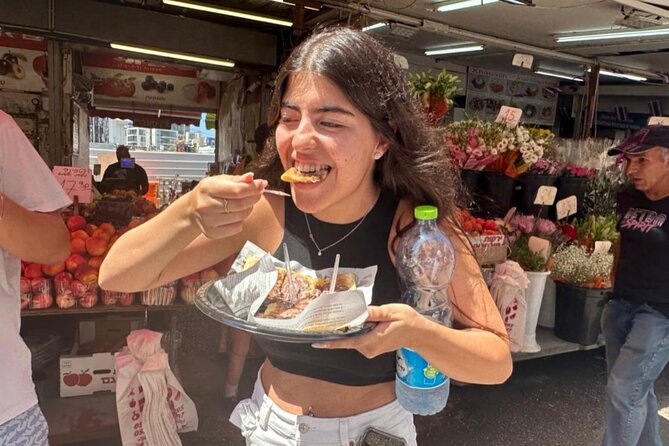
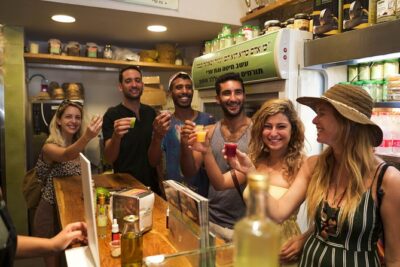
Come hungry, leave happily full. This two-hour walk through Carmel Market and Kerem HaTeimanim brings Israeli food to life through generous tastings, family-run vendors, and stories about the communities that shaped Tel Aviv’s cooking. You get more than a plate of food: you see how Jewish traditions from North Africa, the Middle East, Yemen, and Europe meet Mediterranean produce in one crowded market.
I especially like the substantial lunch-sized tastings, which make the $79.99 price easier to judge, and the small maximum group of 15, which should make it easier to hear the guide and move through the narrow lanes. The main drawback is that two hours passes quickly, so this is an introduction rather than a slow, thorough market tour.
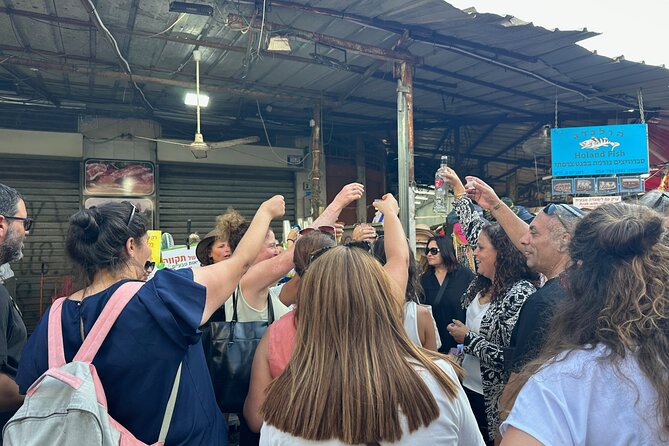
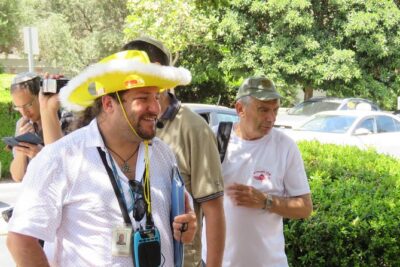
The tour also has a useful personal touch. Your guide takes photos during the walk and can send them to you through WhatsApp or Dropbox. One especially praised guide, Montana, helped make the outing both satisfying and informative, explaining how to spot cultural differences through food and market design.
In This Review
- Key things to know before you book
- Starting near Nahalat Binyamin Street
- Kerem HaTeimanim, Tel Aviv’s Yemenite food quarter
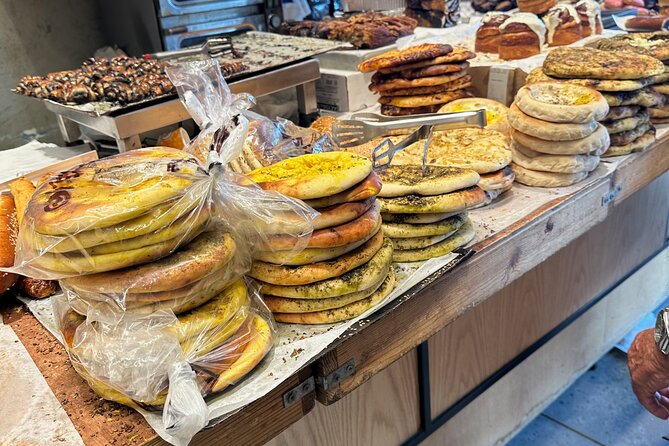
- Malawach, a crisp Yemenite starting point
- Entering Carmel Market, or Shuk HaCarmel
- Falafel, hummus, and familiar Israeli flavors
- Syrian olives, bread, spices, and sweet treats
- Sabich and the influence of Jewish communities
- Art Quest and the Allenby 28 stop
- What the $79.99 price really buys
- Photos, pace, and practical comfort
- Who will enjoy this Carmel Market tour?
- Should you book the Shuk HaCarmel food tour?
- FAQ
- How long does the Carmel Market food tour last?
- How far do you walk?
- Where does the tour start?
- Where does the tour end?
- What time does the tour start?
- Is lunch included?
- What foods are included in the tastings?
- What is the cancellation policy?
Key things to know before you book
- The food can replace lunch: Tastings are described as equal to a substantial meal, with portions including malawach, falafel, hummus, sabich, bread, olives, sweets, and other market foods.
- The route covers about three-quarters of a mile: You walk through Carmel Market and the nearby Kerem HaTeimanim neighborhood rather than covering a large part of Tel Aviv.
- Yemenite food gets special attention: Malawach and the Kerem HaTeimanim quarter give the tour a clear local focus.
- The group is limited to 15 people: That is a sensible size for crowded market lanes and shared food stops.
- The market walk has cultural value: You learn how food, shop displays, and design reflect Jewish communities from different parts of the region and Europe.
- Check the start time carefully: The meeting information lists noon, while another description refers to the market portion beginning at 11:00.
Starting near Nahalat Binyamin Street
The meeting point is Nahalat Binyamin Street 1 in Tel Aviv-Yafo, near public transportation. The activity ends back at the same meeting point, which keeps the logistics simple if you are fitting the tour into a day of sightseeing.
The walk is planned for about two hours, with 90 minutes identified as walking time with food stops. The route is only about 1.2 kilometers, or three-quarters of a mile, but the market itself can make short distances feel slower. Narrow passages, displays, and food stops all take time.
The published information gives a 12:00 pm start time. Another description says the market tour starts at 11:00 and lasts about two hours, so I would confirm the exact meeting time when booking. That small timing mismatch is easy to solve, but it is worth checking before you arrange lunch or another activity.
The tour takes place rain or shine. Wear shoes suited to a short urban walk, and bring enough room in your schedule to stay with the group rather than rushing off at the end.
More Food Tours in Tel Aviv
- Carmel Market Tasting Tour – LocaLocal
★ 5.0 · 140 reviews - Tel Aviv: Jaffa & Carmel Market Walking Tour
★ 4.7 · 60 reviews - Tel Aviv: Carmel Market & Tel Aviv Tour with Tastings
★ 3.8 · 36 reviews
Kerem HaTeimanim, Tel Aviv’s Yemenite food quarter
The route begins around Kerem HaTeimanim, a compact neighborhood close to the market. Its name means Yemenite Vineyard, and the area is associated with Yemenite Jewish culture, small cafes, and traditional food.
This gives the tour a stronger sense of place than a simple series of market tastings. You are not just sampling falafel from one stall and moving on. You are learning how a neighborhood connected to Yemenite Jewish life fits into modern Tel Aviv.
The quarter is described as having cozy cafes and traditional Yemenite cooking. That makes it a useful first stop because it gives you a cultural frame for the dishes that follow. The guide can connect what you eat with the migration stories and food traditions that helped shape Israeli cuisine.
The area is also a practical introduction to the pace of the tour. You move on foot, stopping often, rather than sitting down for a long meal. If you prefer relaxed restaurant service, the format may feel hurried. If you like tasting several foods in one outing, the pace works well.
Malawach, a crisp Yemenite starting point
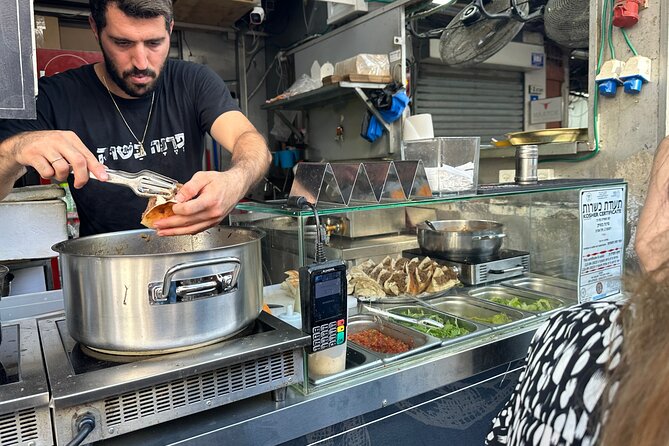
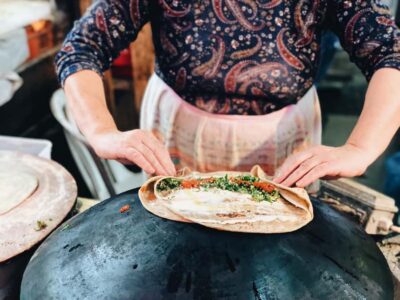
One of the featured tastings is malawach, a flaky Yemenite Jewish pastry made from layered dough and fried until crisp and golden. It is a filling food, with a texture that makes clear why it has remained popular.
Malawach is a good first taste because it shows how food history can appear in a simple snack. It is not presented as a museum piece. You eat it as part of the neighborhood’s everyday food culture, while the guide explains its place in the wider story of Jewish communities from Yemen and the Middle East.
For you, this tasting also helps explain why the tour can replace lunch. Pastry alone may sound modest, but the full sequence includes several hearty foods. By the end, you are likely to have eaten far more than a few token samples.
The tour does not list every ingredient or serving size for each stop, so anyone with food allergies or strict dietary needs should ask the provider before booking. The available information confirms the featured dishes, but it does not promise vegetarian, vegan, gluten-free, or allergy-specific substitutions.
Entering Carmel Market, or Shuk HaCarmel
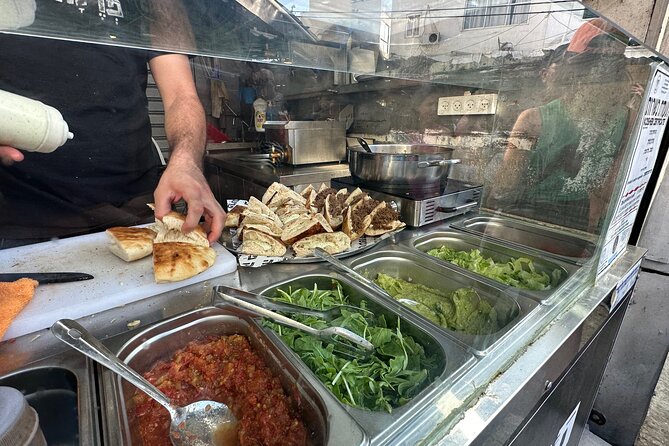
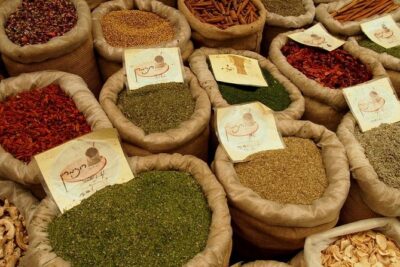
Carmel Market is Tel Aviv’s largest open-air market, and its appeal comes from variety. Stalls bring together fresh produce, spices, breads, olives, sweets, prepared foods, and many of the ingredients used in Israeli kitchens.
A guide is especially useful here. On your own, you might notice the colors and smells but miss the connections between the foods. The tour points out flavors shaped by Jewish communities from North Africa, the Middle East, and Europe, along with Mediterranean ingredients that give Israeli food its familiar freshness.
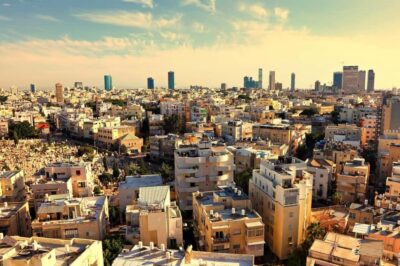
The market is also part of Tel Aviv’s growth into a multicultural city. That historical context adds meaning to the food stops. A plate of hummus or a piece of baklava becomes part of a wider story about movement, settlement, family businesses, and changing city life.
The route includes family-run vendors that have operated for generations. That detail matters because it shifts the focus away from a polished restaurant menu and toward the people who keep market food traditions alive. You are tasting dishes where they are sold and eaten, not simply hearing about them in a classroom.
A completely different kind of day:
- From Tel Aviv: Masada & Dead Sea Full Day Tour with Pick Up
★ 4.5 · 1,496 reviews - From Tel Aviv: Jerusalem and Bethlehem Guided Day Trip
★ 4.3 · 1,316 reviews - Masada and the Dead Sea Day Trip from Tel Aviv
★ 4.5 · 1,014 reviews - Tel Aviv: Jerusalem, Bethlehem & Dead Sea
★ 4.0 · 881 reviews
Falafel, hummus, and familiar Israeli flavors
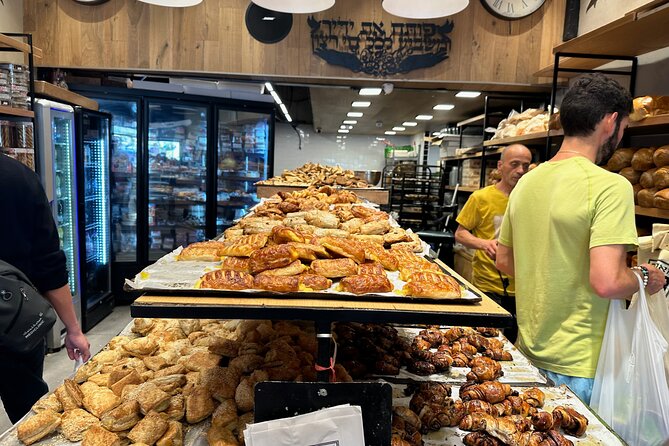
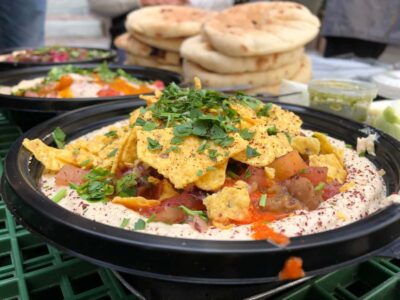
Falafel is another central tasting. You can expect crisp chickpea or fava bean patties served in warm pita with accompaniments. It is a familiar dish to many people, but trying it as part of a market route gives you a chance to place it beside other regional foods.
Hummus adds a creamy contrast. The tour uses these popular dishes as a starting point, then broadens the meal with olives, bread, spices, pastries, and sweets. That variety is one of the strongest reasons to choose this experience over a single restaurant meal.
You should not expect a formal cooking class. The value comes from tasting, listening, and learning how different cultures can be recognized through food and visual details. The guide may explain how designs and products reflect different traditions, an observation that Montana made especially useful for one guest.
The food also arrives in a sensible order for a lunchtime outing. The published description says the tastings are substantial enough to replace lunch. You can still buy extra items if something catches your eye, but additional purchases are not included in the price.
Syrian olives, bread, spices, and sweet treats
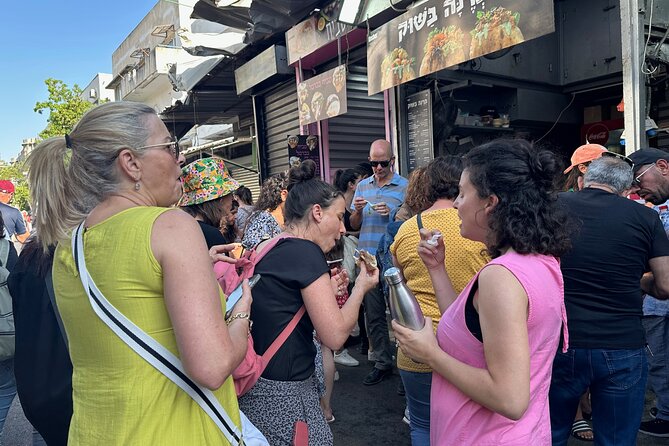
The tour goes beyond the best-known foods. Syrian olives, freshly baked bread, and fragrant spices bring more of the market into the experience.
These stops are important because they show how much of food culture depends on ingredients rather than finished dishes. You get to see and taste products that people buy for home cooking, not only foods prepared for tourists. The guide’s explanations help you understand how the market functions as a daily food source for local families.
The sweet course includes halva and baklava. Halva brings a dense, sesame-based sweetness, while baklava offers layers of pastry and syrup. After falafel, hummus, and malawach, these desserts help round out the meal.
I like this balance. A food tour can disappoint when it offers only tiny samples of one style of dish. Here, the mix of crisp, creamy, savory, flaky, salty, and sweet foods should give you a broader feel for Israeli and Middle Eastern eating.
Sabich and the influence of Jewish communities
Sabich is also included among the foods you may taste. It is associated with Iraqi Jewish cooking and typically combines ingredients such as eggplant, egg, and other fillings, though the available details do not specify the exact preparation served on this tour.
Its presence fits the larger purpose of the walk. Israeli cuisine is not one fixed tradition. It developed through the cooking of Jewish communities arriving from many regions, along with Palestinian and broader Mediterranean food influences.
That is where the tour has more depth than a basic market snack crawl. The dishes are connected to migration and family memory. You can taste a Yemenite pastry, a Middle Eastern dip, an Iraqi Jewish sandwich, and North African or Mediterranean ingredients in the same short route.
The guide’s role matters here. A good explanation can keep the experience from becoming a list of food names. Montana was specifically praised for explaining how designs and market goods can point to different cultural backgrounds, which suggests that the conversation extends beyond what is on the plate.
Art Quest and the Allenby 28 stop
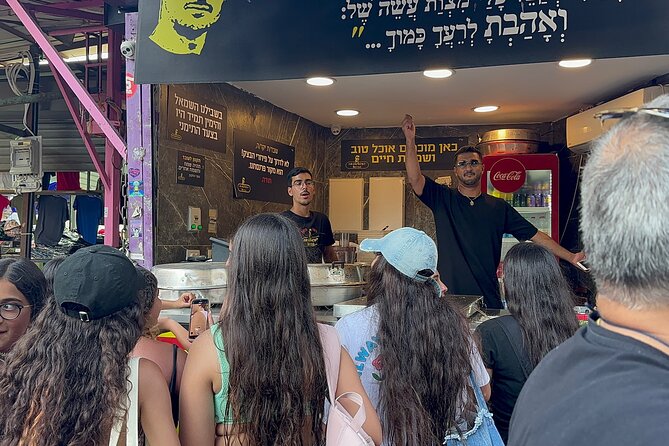
The route also lists Art Quest, Club Allenby 28, as a stop. It is described as a place combining contemporary art and nightlife.
This is the least clearly explained part of the tour. The food descriptions are detailed, but the available information does not say exactly what you will do there, whether you enter the venue, or how much time is devoted to art compared with the market. I would treat it as a brief cultural point along the route rather than booking the tour specifically for this stop.
The listed stop lasts about 30 minutes, as do several other parts of the route. Since the entire activity lasts roughly two hours, the timing appears to be approximate rather than a strict schedule. Market conditions, food service, and group movement can all affect the pace.
That uncertainty is not necessarily a problem. It simply means you should choose this outing for the combination of food and neighborhood context, not for a detailed art visit.
What the $79.99 price really buys
At $79.99 per person, this is not the cheapest way to eat at Carmel Market. You could buy individual snacks on your own for less, especially if you already know what you want and enjoy exploring without a guide.
The comparison changes when you count what is included. You receive food tastings, a 90-minute walking tour with food stops, an expert licensed local guide, and photos from the experience. The portions are intended to equal a substantial lunch, which adds real value.
I would see the price as paying for access, interpretation, and convenience as much as food. You do not need to research which stalls to visit, decide what to order in an unfamiliar market, or work out how the dishes connect to Tel Aviv’s past.
The value is strongest for a first visit to Tel Aviv, for anyone who wants a guided introduction to Israeli food, or for people who enjoy trying several dishes without committing to a single restaurant. It is weaker for confident market shoppers who speak the local language, know the foods already, or prefer to spend the same money on a longer meal.
Group discounts may be available, and the maximum group size is 15. Ask about the discount if you are booking with family or friends. A smaller group can also make the cost feel more reasonable because the guide can manage the food stops and conversation without the outing becoming unwieldy.
Photos, pace, and practical comfort
Your guide takes photos during the tour and can send them through WhatsApp or Dropbox. That is a nice extra, especially if you want a record of the market without constantly stopping to take pictures yourself.
The tour is near public transportation, and it begins and ends at the same meeting point. Most people can participate, according to the booking information, but you should still consider the walking route, standing time, and crowded market conditions if you have mobility concerns.
The outing runs rain or shine. Bring weather protection suited to the forecast, since this is an open-air market experience rather than an indoor food hall.
Free cancellation is available if you cancel at least 24 hours before the start time. Changes or cancellations inside that window are not accepted for a refund, and the cut-off follows local Tel Aviv time.
Who will enjoy this Carmel Market tour?
I would recommend it to first-time visitors who want an easy introduction to Israeli food and Tel Aviv neighborhoods. It also suits people who prefer a guide to explain cultural differences instead of simply pointing out dishes.
Families and small groups may find the format convenient, especially with possible group discounts and food portions large enough to cover lunch. The 1.2-kilometer route is not long, but the market setting may require patience and attention.
Food-focused visitors should appreciate the range. You get Yemenite malawach, falafel, hummus, sabich, Syrian olives, bread, spices, halva, and baklava in one outing, along with stories about the communities behind those flavors.
I would hesitate to recommend it to anyone seeking an in-depth historical tour, a cooking lesson, or a quiet sit-down meal. The tour offers historical context, but food and walking remain the main event. I would also confirm the starting time before paying, since the published times are not fully consistent.
Should you book the Shuk HaCarmel food tour?
Book it if you want a well-fed introduction to Tel Aviv rather than a simple snack stop. The strongest reasons are the generous meal-sized tastings, the Yemenite and Middle Eastern focus, the family-run vendors, and the chance to understand how several Jewish food traditions shaped Israeli cooking.
Skip it if you would rather explore Carmel Market independently and spend less on individual purchases. For most first-time visitors, though, the guide’s explanations and the carefully arranged range of foods justify the added cost. Confirm the noon meeting time, arrive hungry, and let the market provide the setting for your first serious taste of Tel Aviv.
FAQ
How long does the Carmel Market food tour last?
The experience lasts approximately two hours. The included walking portion is described as 90 minutes with food stops.
How far do you walk?
The route covers about three-quarters of a mile, or 1.2 kilometers.
Where does the tour start?
The meeting point is Nahalat Binyamin Street 1 in Tel Aviv-Yafo.
Where does the tour end?
The activity ends back at the meeting point.
What time does the tour start?
The meeting information lists a 12:00 pm start. Another description refers to the market portion beginning at 11:00, so confirm the exact time when booking.
Is lunch included?
The food tastings are described as equal to a substantial lunch portion. Additional purchases are not included.
What foods are included in the tastings?
The tour includes foods such as malawach, falafel, hummus, Syrian olives, sabich, freshly baked bread, spices, halva, and baklava. Exact servings may vary.
What is the cancellation policy?
You can cancel at least 24 hours before the local start time for a full refund. Cancellations or changes made less than 24 hours before the start time are not accepted for a refund.
Just added in Tel Aviv
- Wine Tour North of Israel from Tel Aviv★ 5.0 · 2 reviews
- private Full-day Tour to Jericho + the Dead Sea★ 5.0 · 3 reviews
- private Full-Day Tour to Bethlehem and Jerusalem★ 5.0 · 2 reviews
- Private wine tour of Northern Israel★ 5.0 · 4 reviews
- VIP Tel Aviv airport Terminal 3 Fast Track Skip Line From plane★ 4.5 · 9 reviews
- Package VIP Skip Line Services in BGN Airport with Transfer to Tel aviv Hotels★ 5.0 · 3 reviews
- Privet Pickup from Tel Aviv Hotels to the Airport★ 5.0 · 1 review
- Private Transfer from Ben Gurion Airport to Tel Aviv, Bat Yam, Rishon LeZion★ 5.0 · 2 reviews
Israel Food Tours and Markets, compared.

Browse the lists this tour appears in