
Reviewed · ISRAEL FOOD TOURS AND MARKETS
Tel Aviv: Carmel Market & Neighborhood Guided Walking Tour
Markets tell you how a city eats. This 90-minute walk through Carmel Market and nearby neighborhoods brings Tel Aviv’s immigrant food traditions, street stalls, bakeries, and colorful buildings into one compact outing. I like the focus on everyday food and local history, and I like that the guide leaves time for you to shop and ask for help with translations. The main consideration is that the tour covers about 1 kilometer, so it is a brief introduction rather than a full market exploration.
I also appreciate the optional food-tasting upgrade. It turns a sightseeing walk into something closer to lunch, while the standard tour lets you choose and pay for only the products that interest you. The group can reach 15 people, which keeps the price reasonable but may make the narrow market lanes feel crowded at busy times.
In This Review
- Key points at a glance
- Starting beside Poli House and Allenby Street
- Carmel Market: a close look at Tel Aviv’s food culture
- Malawach, sabich, and the stories behind the dishes
- Yemenite influence around the market
- Pastel buildings and Bauhaus details
- Nachalat Binyamin and its street art
- How the optional food upgrade changes the experience
- What the $39 price gets you
- The pace, walking distance, and physical demands
- Who will enjoy this walk most
- What the guide adds
- Booking flexibility and meeting-day advice
- Should you book the Carmel Market tour?
- FAQ
- How long is the Carmel Market walking tour?
- How far does the tour cover?
- Where does the tour meet?
- Is food included?
- What language is the tour conducted in?
- What should I bring?
- Can I cancel the booking?
Key points at a glance
- Carmel Market’s Yemenite character: See how Yemenite Jewish traditions helped shape the market’s food and surrounding streets.
- Immigrant food stories: Learn about malawach, sabich, and other dishes brought to the area by Jewish immigrants.
- A short, manageable route: The walk covers roughly 1 kilometer in 90 minutes, with plenty of stops for explanation.
- More than a food market: The route includes Bauhaus details, pastel-colored buildings, street art, and crafts in Nachalat Binyamin.
- Optional lunch-sized tastings: Choose the upgrade if you want food included rather than buying items separately.
- Personal guidance from Katya: A verified booking praised Katya for making the visit lively and closely tied to Israeli history.
Starting beside Poli House and Allenby Street
The meeting point is on the corner outside the Poli House hotel, where Carmel Market meets Allenby Street. This is a useful starting place because you are right at the edge of the market, not wasting time on a long walk from a distant meeting location.
I suggest arriving with comfortable shoes, water, a hat, and sunscreen. The tour runs rain or shine, and much of the route is outdoors. Tel Aviv can feel hot even during a short walk, while wet weather may make cobblestones less pleasant underfoot.
The guide leads in English, and the group size can reach 15 people. That is small enough for a local guide to answer questions, but it is not a private tour. If you want close access to every explanation, stay near the guide when the group enters the narrow market lanes.
More Food Tours in Tel Aviv
- Carmel Market Tasting Tour – LocaLocal
★ 5.0 · 140 reviews - Tel Aviv: Jaffa & Carmel Market Walking Tour
★ 4.7 · 60 reviews - Tel Aviv: Carmel Market & Tel Aviv Tour with Tastings
★ 3.8 · 36 reviews
Carmel Market: a close look at Tel Aviv’s food culture
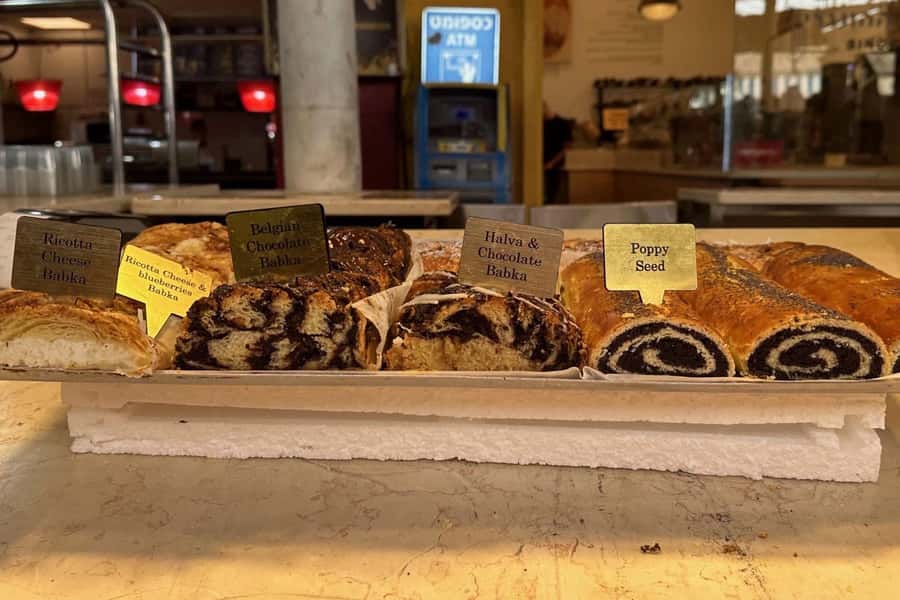
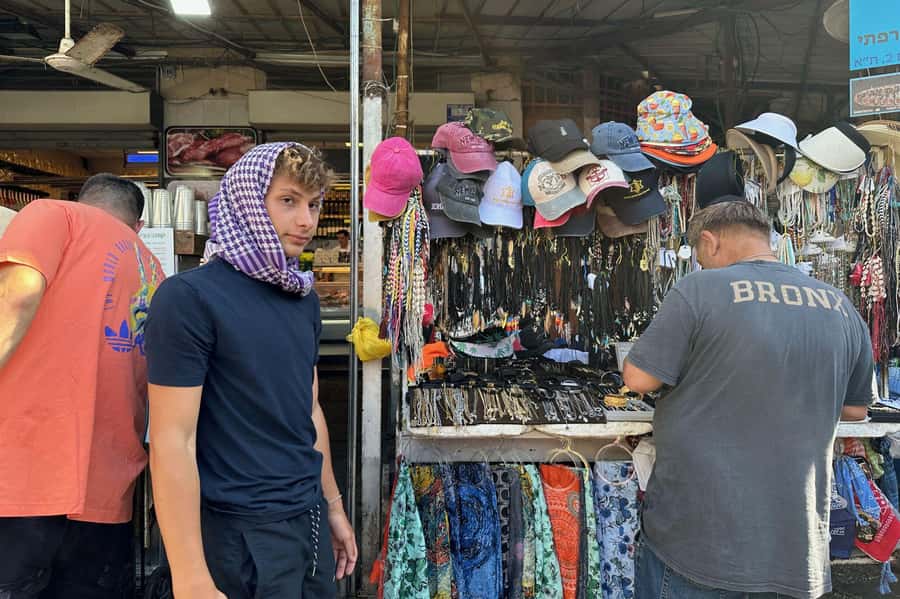
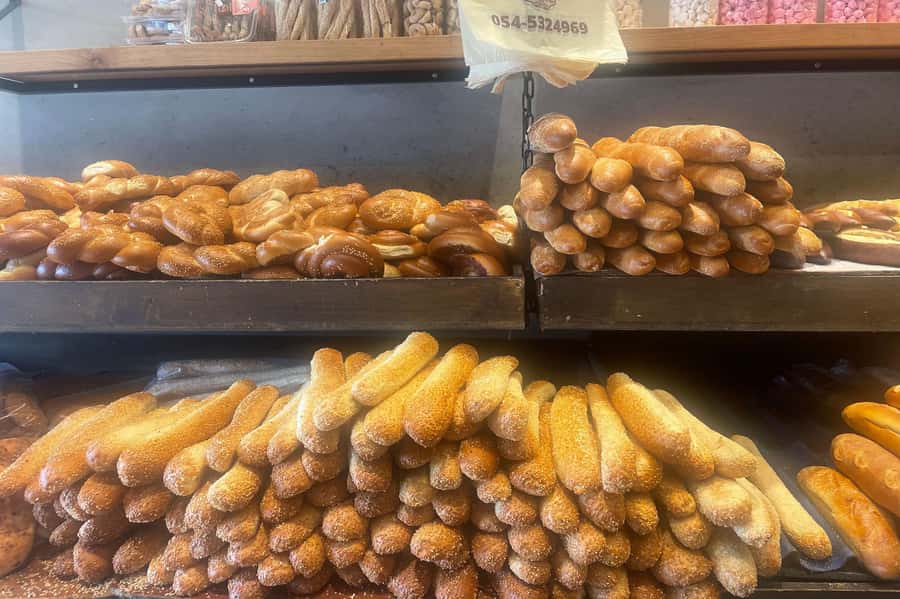
Carmel Market, or Shuk HaCarmel, is the main focus of the experience. It is the largest open-air market in central Tel Aviv, with vendors, shops, bakeries, produce, spices, and prepared foods packed along its streets.
The value of having a guide here is not simply knowing where the market is. You can walk through the stalls on your own, but a guide gives the food a backstory. You learn how Jewish immigrants shaped the cooking of Tel Aviv and how different traditions came together in one market.
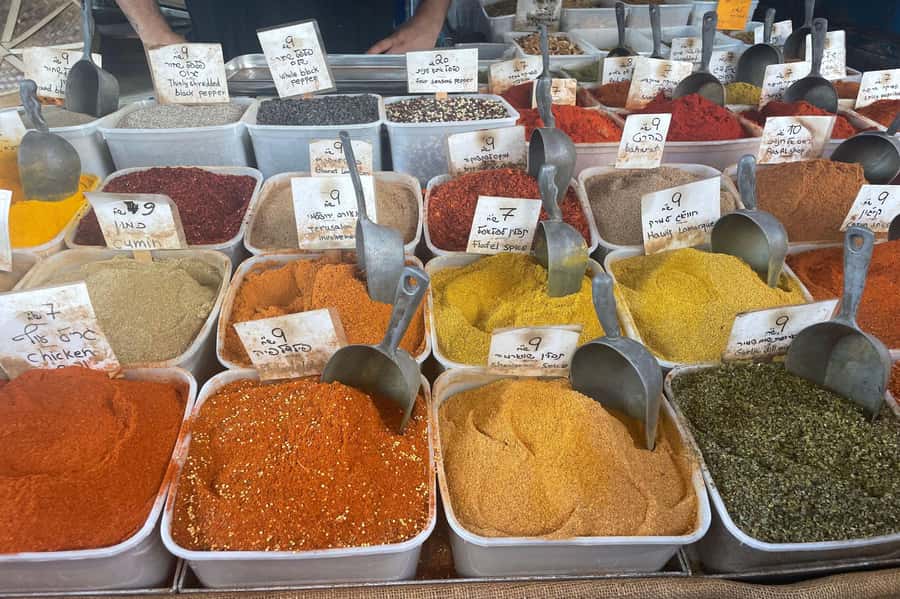
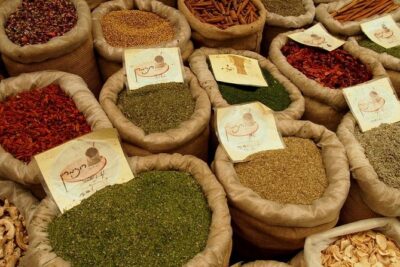
Expect to see large displays of fresh produce and spices, along with dishes that may be unfamiliar if this is your first visit to Israel. Your guide can explain what you are looking at and point out foods worth considering. If you purchase something, the guide can help with translation.
That translation help is especially useful when you want to ask about ingredients, portions, or how a food is normally eaten. You still control what you buy, which keeps the standard tour flexible. You are not locked into a fixed tasting menu unless you select the food option.
Malawach, sabich, and the stories behind the dishes
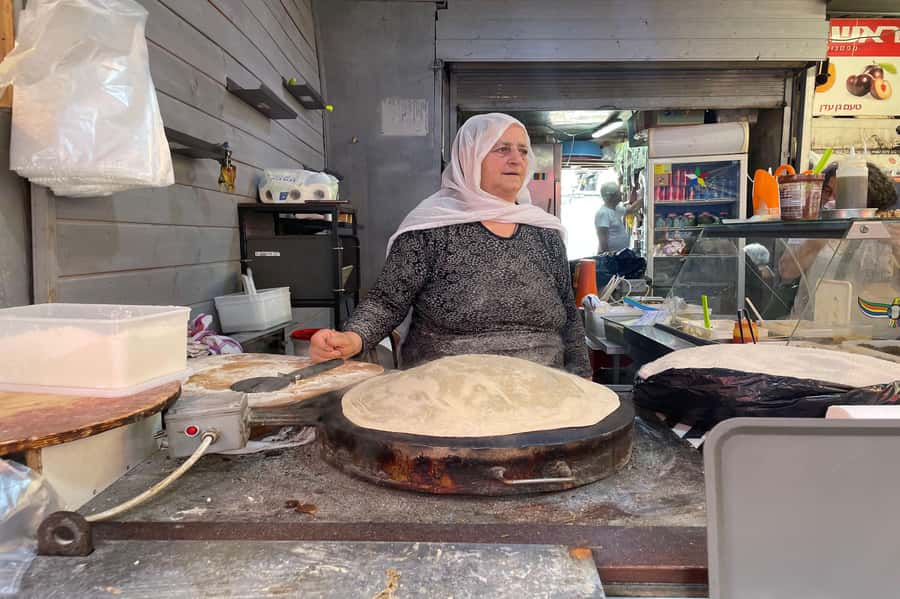
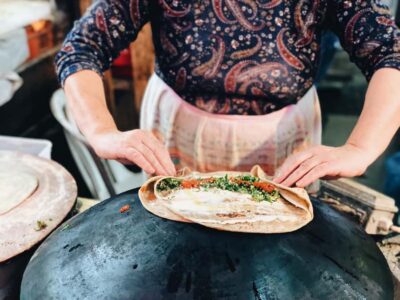
The food discussion includes malawach and sabich, two dishes connected with immigrant communities and the changing food culture of the region.
Malawach is associated with Yemenite Jewish cooking and is known as a substantial, layered bread. Sabich is built around ingredients including eggplant and egg, and it reflects the way immigrant food traditions became part of ordinary Israeli eating.
The point is not just to memorize dish names. You begin to see the market as a record of migration. Recipes, ingredients, and cooking habits arrived with families, then became part of the wider food scene in Tel Aviv.
This is one of the tour’s strongest features. Instead of treating the market as a colorful backdrop for photographs, the guide connects food to daily life and identity. You get a better sense of how a modern city can be shaped by people arriving from different places.
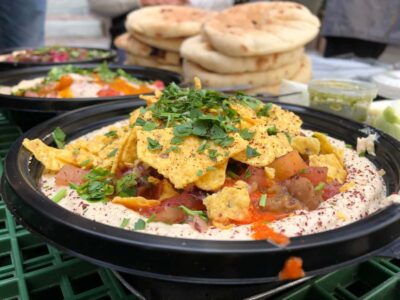
If you choose the food-tasting upgrade, the included food is described as equal to a lunch portion. That makes the upgrade more appealing for someone who wants a proper meal during the tour. If you prefer to browse freely, the basic option gives you time to purchase individual products as you go.
Yemenite influence around the market
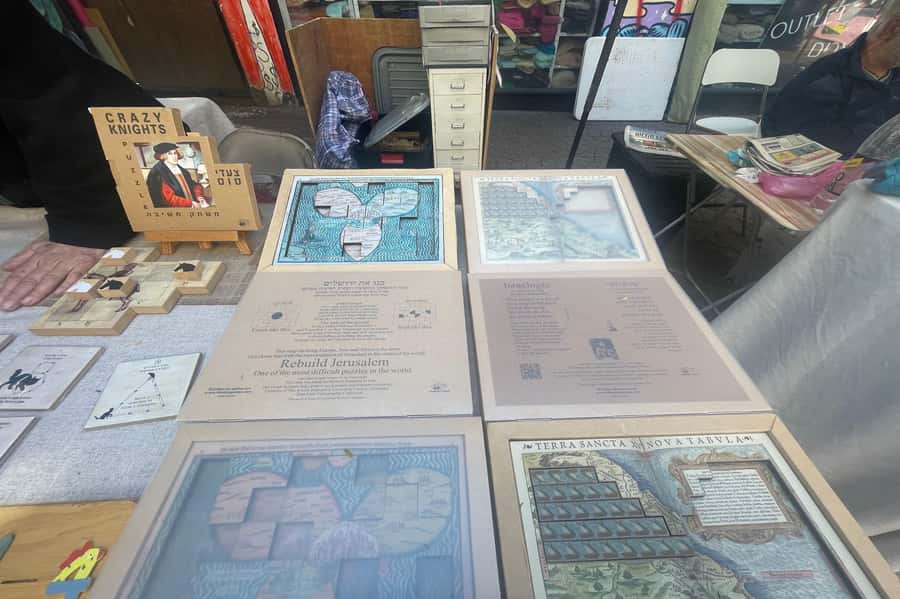
The tour adds a Yemenite angle to the Carmel Market visit. That focus gives the walk a clearer theme than a general food tour, especially if you want to understand the connection between neighborhood identity and cooking.
You can expect the guide to explain how Jewish immigrants influenced both the menu and the character of the surrounding district. The market becomes a meeting point between older food traditions and the needs of a modern city.
I find this more useful than a simple list of foods to try. You leave with a framework for understanding why certain dishes appear in Tel Aviv and how food can carry family history across borders.
The route also offers a glimpse of daily life. Vendors, shoppers, bakeries, and small shops make the market feel like a working part of the city rather than a set built only for sightseeing. Since the tour is limited to 90 minutes, you will not inspect every stall, but you will get an organized introduction without losing half a day.
More Walking Tours in Tel Aviv
- Walking Tour of Akko (Half-day)
★ 5.0 · 84 reviews - Tel Aviv: Jaffa Half-Day Walking Tour
★ 4.5 · 70 reviews - Tel Aviv: Florentin Saturday Walking Tour
★ 3.5 · 65 reviews - Best of Tel Aviv and Jaffa Walking Tour – 1 Day
★ 4.5 · 53 reviews
Pastel buildings and Bauhaus details
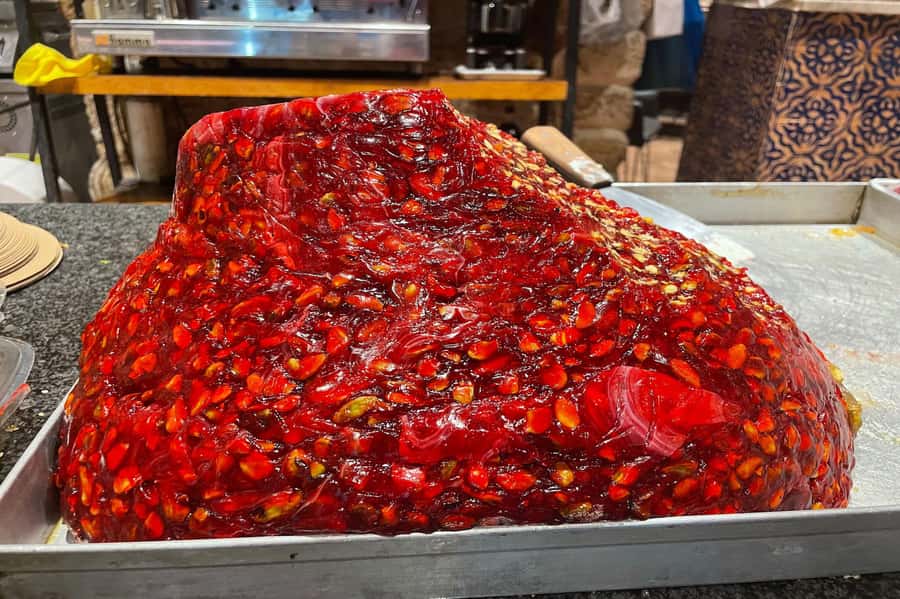
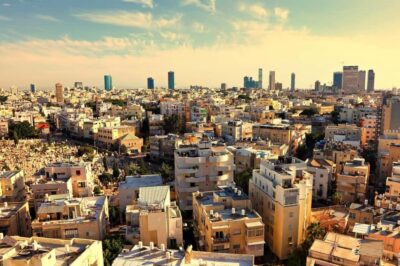
Food is only half of the walk. The route also includes nearby streets lined with pastel-colored buildings and examples of Bauhaus architecture.
Tel Aviv is well known for its modernist building style, and seeing it alongside the market helps explain the city’s unusual mix. One moment you are looking at produce and spice displays, and the next you are noticing clean architectural lines and older façades.
The architecture portion is not presented as a separate museum visit. It is part of the walk, which makes it easy to absorb without adding another formal stop. Your guide can point out details you might otherwise miss while moving between the market and nearby streets.
The drawback is that the tour description does not promise entry into buildings or a long architectural lecture. If Bauhaus design is your main interest, you may want a dedicated architecture tour as well. Here, it works best as a useful layer added to the market visit.
Nachalat Binyamin and its street art
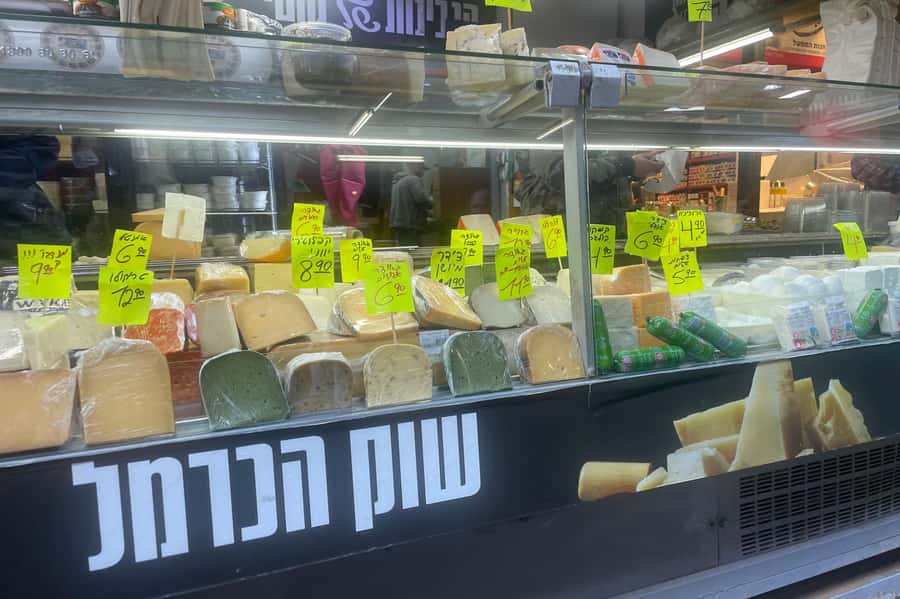
The route continues into Nachalat Binyamin, an area known for street art and local crafts. This changes the mood from food shopping to creative neighborhood wandering.
Street art gives the walk a more contemporary side, while local crafts show another part of Tel Aviv’s small-scale commercial culture. You have a chance to see how the area uses public space and local making alongside the older market activity.
This section is also helpful if you want a break from stalls and food. The route remains short, but the change in scenery keeps the walk from feeling like one long aisle of market goods.
You should think of Nachalat Binyamin as a taste of the neighborhood rather than a full art tour. The guide reveals selected places along the route, but the 90-minute schedule limits how long you can linger. If you see a craft or product you like, ask about it promptly, since the walk continues on a set timetable.
How the optional food upgrade changes the experience
The standard tour does not include food or drinks. You can buy local products during the walk, and the guide can help with translations if needed.
The food-tasting upgrade includes enough food to equal a lunch portion. That is an important detail because many market tours offer only tiny samples, leaving you hungry and still searching for a meal. Here, the upgrade can serve as both a tasting experience and a practical midday stop.
I would choose the upgrade if you want the food to be part of the main experience and prefer not to make buying decisions in a crowded market. It also makes budgeting easier because you know food is included in the selected option.
I would choose the basic tour if you have dietary concerns, want to select your own products, or already have restaurant plans. The standard option gives you time to shop without requiring you to eat everything chosen by the tour.
Drinks are not included, though you are welcome to purchase them during the walk. Bring water in any case, particularly in warm weather.
What the $39 price gets you
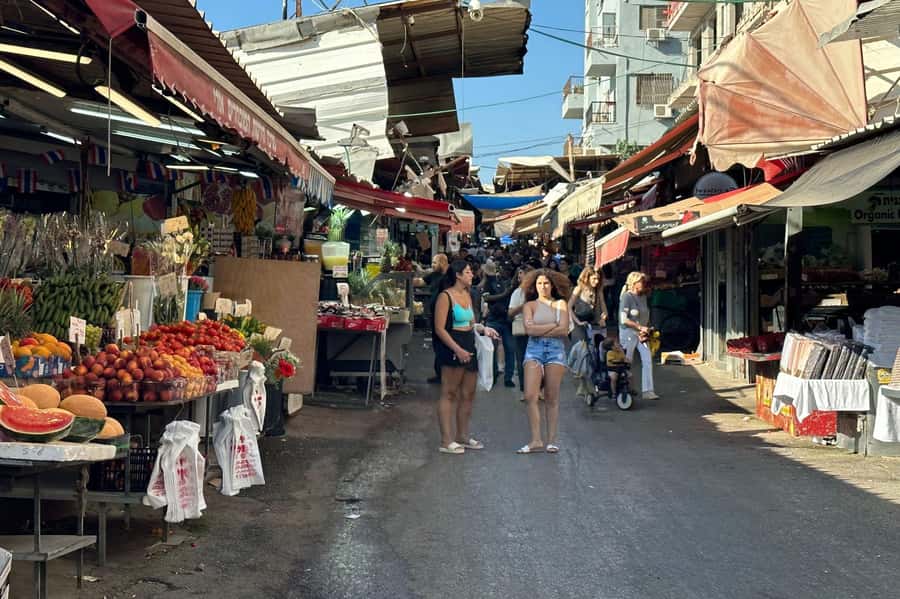
At $39 per person, this is priced as an accessible small-group city tour rather than a premium private food experience. You are paying for a local English-speaking guide, a planned route, market interpretation, neighborhood context, and time to buy products.
The value depends on how you use the 90 minutes. If you simply want to see the market, you can enter Carmel Market without booking a tour. The added value comes from understanding the food traditions, getting help with unfamiliar products, and seeing the market in relation to Yemenite culture, immigrant life, architecture, and nearby crafts.
The price can also be lower per person when two or more people book together. That makes it a sensible choice for couples, friends, or families who want a structured first look at the area.
A group of up to 15 people means the tour is not designed for quiet, highly personalized conversation at every stall. Still, the route is short and the subject is broad enough that a group format works reasonably well. If your priority is private food shopping advice, you may prefer a private guide, but that would likely cost more.
The pace, walking distance, and physical demands
The total route covers about 1 kilometer, or 0.6 miles. That is not a long distance, but market streets can be uneven, crowded, and slower to navigate than a normal pavement.
You will spend much of the time standing, looking at stalls, and listening. Comfortable shoes matter more than athletic footwear. A hat, sunscreen, and water are specifically recommended, and I would follow that advice even if the walk looks easy on a map.
People with mobility issues must be accompanied by an active companion. The tour takes place rain or shine, so anyone who is sensitive to heat or wet conditions should check the forecast and dress accordingly.
Children and infants must be accompanied by at least one paying adult. Infants from 0 to 1 year are free. Since the walk is short, it can work for families, but the market’s narrow spaces may require extra care with strollers and young children. The available information does not promise stroller access, so ask before booking if that is important to you.
Who will enjoy this walk most
I would recommend this tour to first-time visitors who want an easy introduction to Tel Aviv’s food culture without committing to a full-day outing. It also suits anyone interested in migration, Jewish culinary traditions, neighborhood development, or local shopping.
Food-focused visitors will get the most from the dish explanations and optional lunch-sized tastings. Architecture fans will appreciate the Bauhaus details, though they should not expect a dedicated building tour.
The experience also fits a morning or afternoon between other plans. Ninety minutes is long enough to gain context but short enough to fit into a busy Tel Aviv schedule.
I would be more cautious about booking if you want a long, leisurely meal, extensive shopping time, or a private conversation with the guide at every stop. The route gives you an introduction, not an exhaustive tour of every market lane.
What the guide adds
A local guide is central to this experience. The strongest praise attached to the tour focused on Katya, who was described as an exceptional guide who made the visit lively and closely connected to Israeli history.
That detail matters because the route depends on explanation. Stalls and buildings are easy to see, but the connection between food, immigration, and daily life is harder to understand without someone to supply the context.
The guide can also assist with translations while you shop. That practical help may be just as valuable as the historical commentary, especially if you want to buy spices, prepared food, or local products but are unsure how to communicate.
The tour is conducted in English. If you have a particular interest, such as Yemenite cooking, Bauhaus architecture, or the history of a specific dish, ask about it early so the guide can shape the conversation where possible.
Booking flexibility and meeting-day advice
You can cancel up to 24 hours before the tour for a full refund, and the reserve-now, pay-later option lets you hold a place without paying immediately. These terms are useful if your Tel Aviv schedule may change.
Check the available start times when booking, since the tour does not list one fixed daily departure. Meet outside Poli House at the junction of Carmel Market and Allenby Street, and allow a few extra minutes to find the exact corner.
Wear shoes that can handle cobblestones. Carry water, sunscreen, and a hat. If you plan to buy products, bring enough room in your bag and consider having small purchases wrapped securely for the rest of your day.
Should you book the Carmel Market tour?
Book it if you want a short, guided introduction to Tel Aviv’s market food, immigrant communities, Yemenite influence, Bauhaus streets, and Nachalat Binyamin crafts. The $39 base price is fair for a 90-minute English tour, especially when you value local explanations and shopping assistance.
Choose the food upgrade if you want lunch-sized tastings built into the walk. Stay with the basic option if you prefer to select your own food or already have a meal planned.
Skip it if you want a private tour, a long meal, or several hours of unhurried shopping. For most first-time visitors, though, this is a practical way to get your bearings in Carmel Market and understand more than you would by wandering through it alone.
FAQ
How long is the Carmel Market walking tour?
The tour lasts 90 minutes.
How far does the tour cover?
The route covers about 1 kilometer, or 0.6 miles.
Where does the tour meet?
Meet on the corner outside the Poli House hotel, at the junction of Carmel Market and Allenby Street.
Is food included?
Food is not included in the standard tour. You can purchase local products during the walk, or choose the food-tasting upgrade, which includes food equivalent to a lunch portion.
What language is the tour conducted in?
The live tour guide leads the experience in English.
What should I bring?
Bring comfortable shoes, a hat, sunscreen, and water.
Can I cancel the booking?
You can cancel up to 24 hours in advance for a full refund. You can also reserve now and pay later.
Just added in Tel Aviv
- Wine Tour North of Israel from Tel Aviv★ 5.0 · 2 reviews
- private Full-day Tour to Jericho + the Dead Sea★ 5.0 · 3 reviews
- private Full-Day Tour to Bethlehem and Jerusalem★ 5.0 · 2 reviews
- Private wine tour of Northern Israel★ 5.0 · 4 reviews
- Privet Pickup from Tel Aviv Hotels to the Airport★ 5.0 · 1 review
- VIP Tel Aviv airport Terminal 3 Fast Track Skip Line From plane★ 4.5 · 9 reviews
- Package VIP Skip Line Services in BGN Airport with Transfer to Tel aviv Hotels★ 5.0 · 3 reviews
- Jerusalem and Dead Sea Trip from Tel Aviv★ 4.0 · 6 reviews
Israel Food Tours and Markets, compared.

Browse the lists this tour appears in