
Reviewed · ISRAEL FOOD TOURS AND MARKETS
Tel Aviv: Food Tasting Tour of Iraqi Jewish Tikva Market
Markets tell you more about a city than polished restaurant districts. Tel Aviv’s Tikva Market brings Iraqi and Egyptian Jewish cooking into one compact, food-filled walk, with spice grinding, warm Iraqi pita, shawarma, kobba, barakas, rugelach, and baklava. I like the focus on everyday food and the chance to meet vendors rather than simply eat at arranged restaurant stops. I also like that the tour includes the religious and jewelry shops along Eshel, giving the meal a neighborhood setting.
The main drawback is the short 90-minute schedule. You cover about 2 kilometers and eat enough for a substantial lunch, so the pace may feel brisk, especially if you want time to browse every stall. The route is also not suited to people with mobility impairments, and it runs rain or shine.
In This Review
- Key points at a glance
- Why Tikva Market is worth your time
- Starting with cumin, turmeric, and paprika
- Warm Iraqi pita from the stone oven
- Shawarma with hummus, tahini, and salad
- Kobba and barakas: the less familiar bites
- Sweet stops with rugelach and baklava
- Eshel and the neighborhood’s Jewish traditions
- Guide Montana and the value of local help
- Who will enjoy this 90-minute food walk?
- Timing, group size, and practical value
- Should you book the Tikva Market tour?
- FAQ
- How long does the Tikva Market food tour last?
- How much does the tour cost?
- Where does the tour meet?
- What food is included?
- Is the food enough for lunch?
- How far does the tour walk?
- Is the tour offered in English?
- Is the tour suitable for people with mobility impairments?
- Can I cancel the booking?
Key points at a glance
- Spice making comes first: Watch traditional spices being prepared and ground at the market’s opening stop.
- The food equals lunch: Samples include Iraqi pita, shawarma, kobba, barakas, rugelach, and baklava.
- Iraqi and Egyptian flavors shape the route: Cumin, turmeric, paprika, stuffed pastries, and baked breads give the walk a clear regional identity.
- Eshel adds cultural context: The neighborhood’s main street has shops selling Jewish religious items and jewelry.
- Small groups keep the walk personal: The maximum group size is 15, with private group bookings also available.
- Guide Montana has earned trust: She provides local context and, after a booking misunderstanding, helped arrange the correct price adjustment.
Why Tikva Market is worth your time
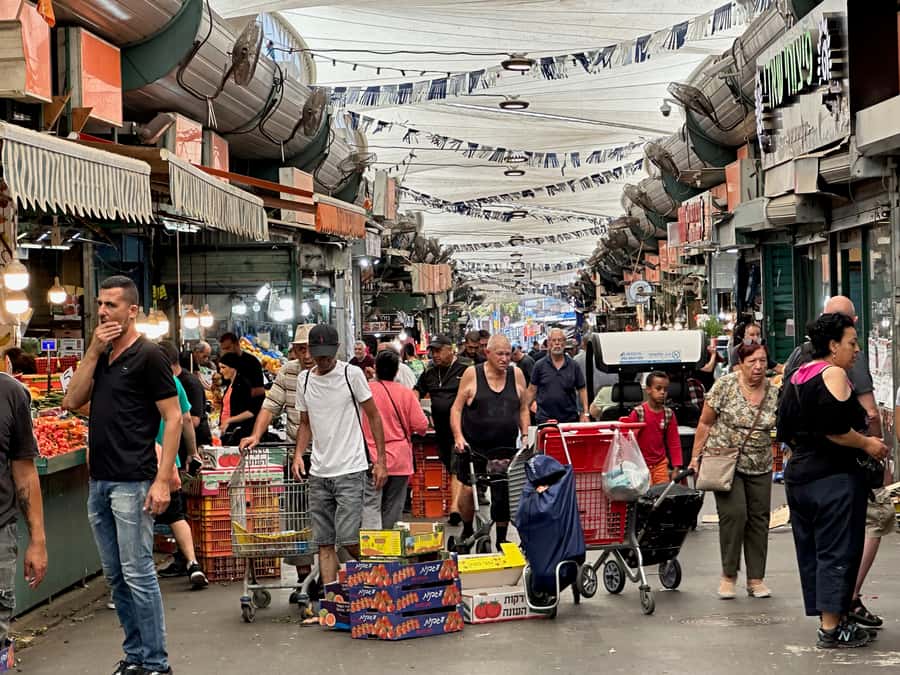
Shuk Hatikva, the Hebrew name for Tikva Market, is one of Tel Aviv’s traditional markets. Its food culture reflects Jewish communities from Iraq and Egypt, which gives the tour a different character from a standard Israeli street-food walk.
You are not simply collecting bites. You are tasting food shaped by migration, family cooking, religious tradition, and the practical rhythm of a neighborhood market. That matters because many dishes make more sense when you see where they are sold and how they are prepared.
The price is $63 per person. That is not a cheap snack crawl, but the tour includes enough food for a substantial lunch, a licensed local guide, a spice demonstration, bottled water, and 90 minutes of guided walking. If you would otherwise buy several separate meals and pay for a private guide, the price is reasonable. If you mainly want to browse independently and sample one or two items, it may feel high.
The lower per-person price for bookings of two or more also makes this a better deal for couples, friends, or families with older children. Infants from zero to two years old are free, but they do not receive food samples.
More Food Tours in Tel Aviv
- Carmel Market Tasting Tour – LocaLocal
★ 5.0 · 140 reviews - Tel Aviv: Jaffa & Carmel Market Walking Tour
★ 4.7 · 60 reviews - Tel Aviv: Carmel Market & Tel Aviv Tour with Tastings
★ 3.8 · 36 reviews
Starting with cumin, turmeric, and paprika
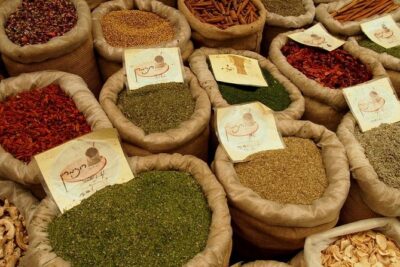
The route begins outside Naama Spice, a spice shop in the market. This is a useful starting point because the first stop explains how the market works before the eating begins.
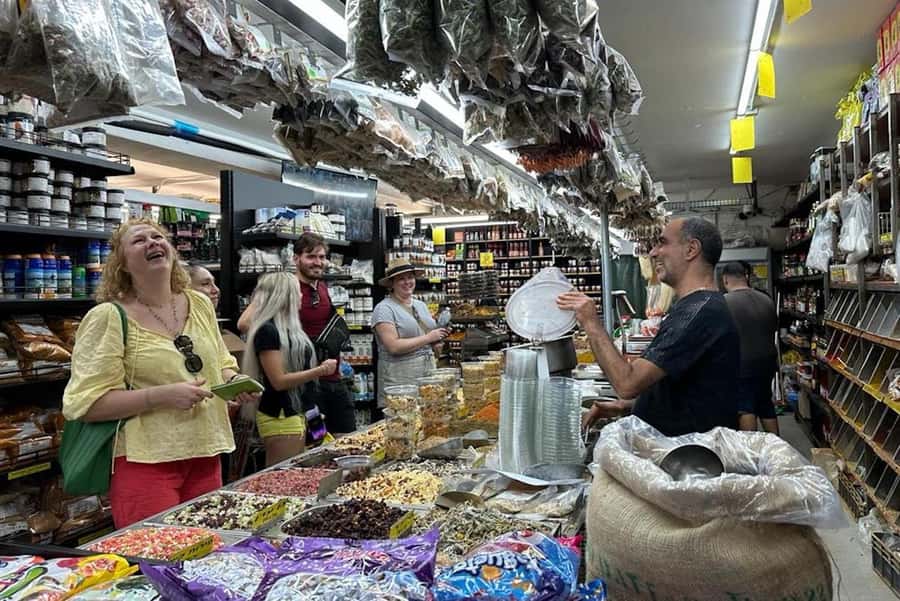
You watch a vendor prepare and grind traditional spices using careful techniques. The point is not only to see a machine or a pile of colorful powders. You get a look at how flavor is built, blended, and sold for daily cooking. The smells of cumin, turmeric, and paprika help set the tone for the rest of the walk.
This demonstration is especially useful if you are unfamiliar with Iraqi or Egyptian Jewish cooking. Spices that may seem ordinary on a supermarket shelf take on more meaning when you see them prepared in a working market and tied to local dishes.
I would pay attention here and ask questions. The tour is led in English, and the guide can connect the spice stop with the foods you taste later. Since the walk is only 90 minutes, this is not a long cooking lesson, but it gives you a clear introduction.
Warm Iraqi pita from the stone oven
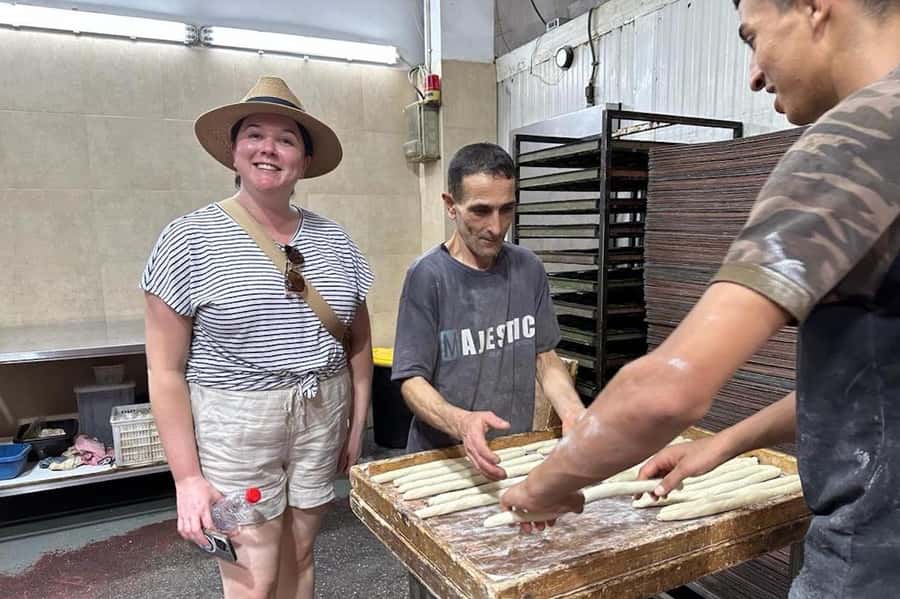
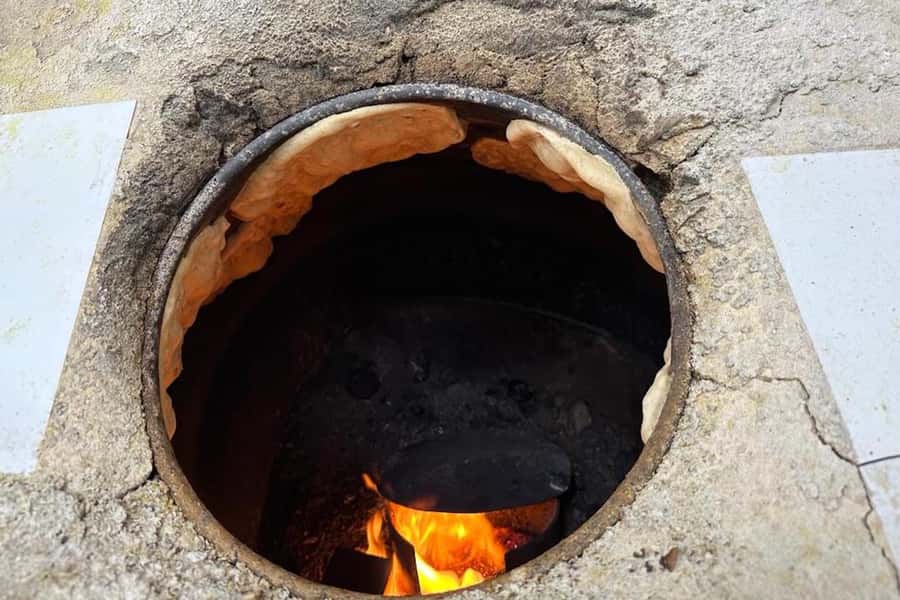
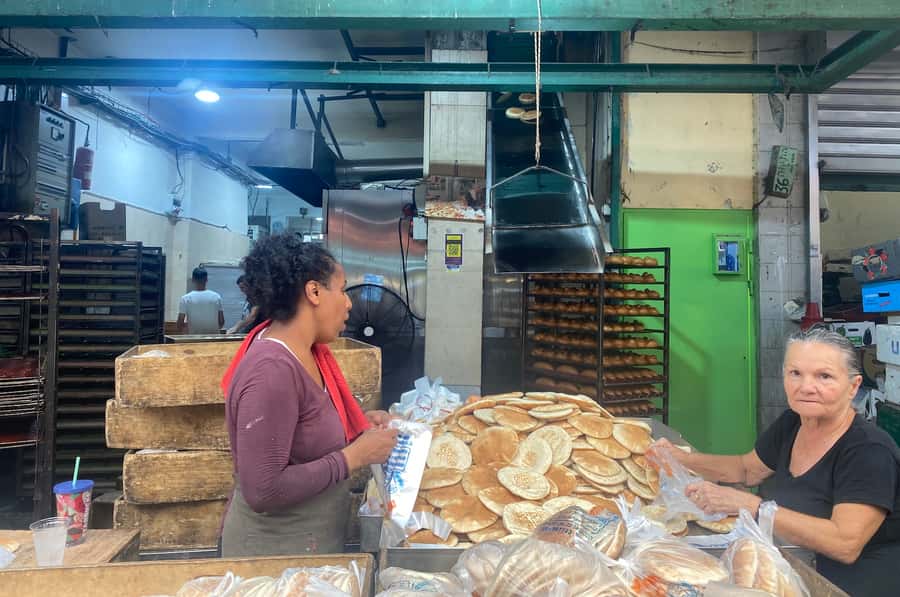
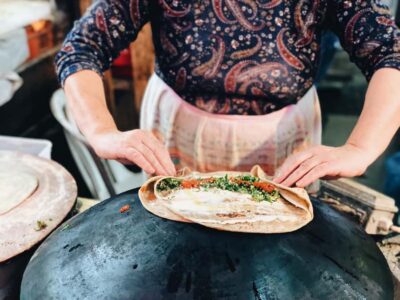
Next comes a traditional bakery, where Iraqi pita is prepared. The dough is stretched and flipped before it goes into a stone oven. As it bakes, it forms the familiar pocket that makes the bread so useful for filled foods.
This is one of the tour’s strongest stops because the bread is part of the show. You see the technique, smell the oven, and taste the pita while it is warm. Fresh bread also gives you a useful comparison with the softer packaged pitas found elsewhere.
The Iraqi pita is not just a filler for later ingredients. It reflects a specific cooking tradition and helps explain why bread is central to market food. If you are planning to eat a full meal before the tour, I would not. The tastings add up quickly.
The market route covers about 2 kilometers, but the walking itself is not the main challenge. The bigger issue is timing. You move between food stops, listen to explanations, and sample several dishes in a short period. Comfortable shoes are a must.
Shawarma with hummus, tahini, and salad
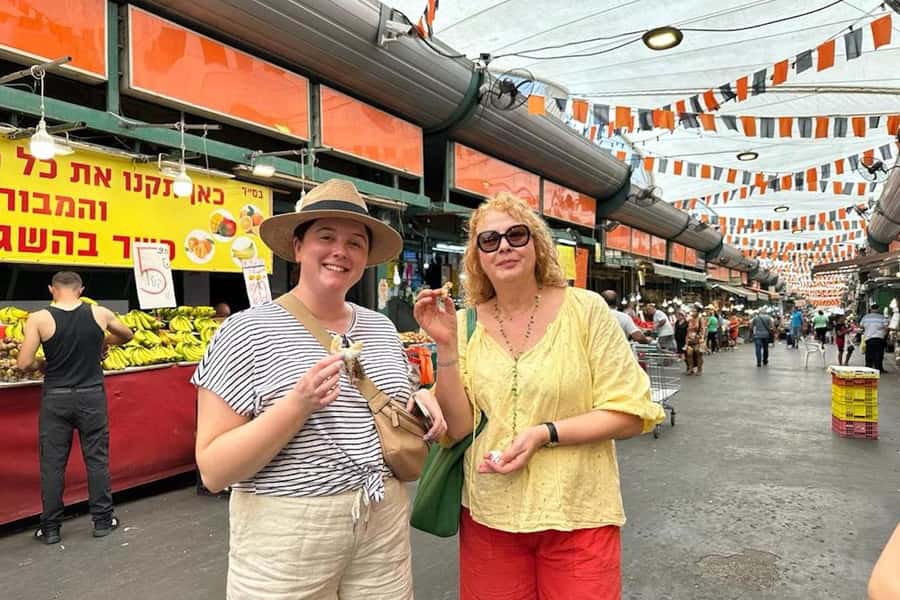
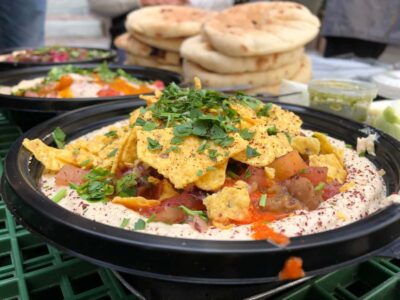
The shawarma stop brings a familiar Israeli favorite into the market setting. Meat turns on a hot grill while the cook slices thin strips and places them into soft pita. Hummus, tahini, and fresh salads complete the serving.
This part should appeal to first-time visitors because the flavors are easy to understand, yet the market setting makes the experience more local than a generic fast-food counter. You can see the meat being cut and the sandwich assembled instead of receiving an anonymous plate.
The shawarma also gives the tour a satisfying center. The bread, meat, sauces, and salads make this more than a taste-sized nibble. Since the food portion is described as equal to a substantial lunch, you should arrive hungry but not starved.
One practical note: the provided tour details do not specify the meat used or give a vegetarian alternative. If you have dietary restrictions, ask before booking. The experience centers on savory market foods, and the listed menu includes meat-filled dishes.
A completely different kind of day:
- From Tel Aviv: Masada & Dead Sea Full Day Tour with Pick Up
★ 4.5 · 1,496 reviews - From Tel Aviv: Jerusalem and Bethlehem Guided Day Trip
★ 4.3 · 1,316 reviews - Masada and the Dead Sea Day Trip from Tel Aviv
★ 4.5 · 1,014 reviews - Tel Aviv: Jerusalem, Bethlehem & Dead Sea
★ 4.0 · 881 reviews
Kobba and barakas: the less familiar bites
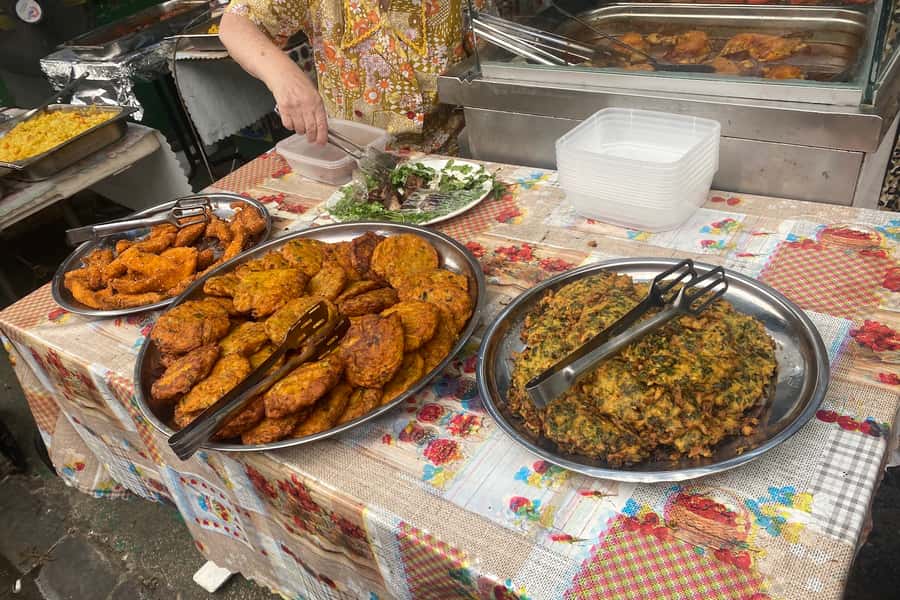
The next savory tastings include kobba and barakas. Kobba is described as an encased meatball, prepared as either a pastry or potato item. Barakas are flaky pastries filled with cheese or potato.
These are the foods I would be most curious to try. Shawarma is widely known, but kobba and barakas show more of the home-style and bakery side of Iraqi-influenced cooking. Their appeal comes from texture as much as flavor: crisp pastry, soft potato, seasoned filling, and a firm outer layer.
The tour gives you a chance to sample these dishes without committing to a full plate of something unfamiliar. That is good food-tour design. You can decide what you like, then return to the market later for more if your schedule allows.
The description does not promise a choice of fillings or a custom menu at each stop. You should treat the food list as a guide to the kinds of items served, not a guarantee that every filling will be available on every day.
Sweet stops with rugelach and baklava
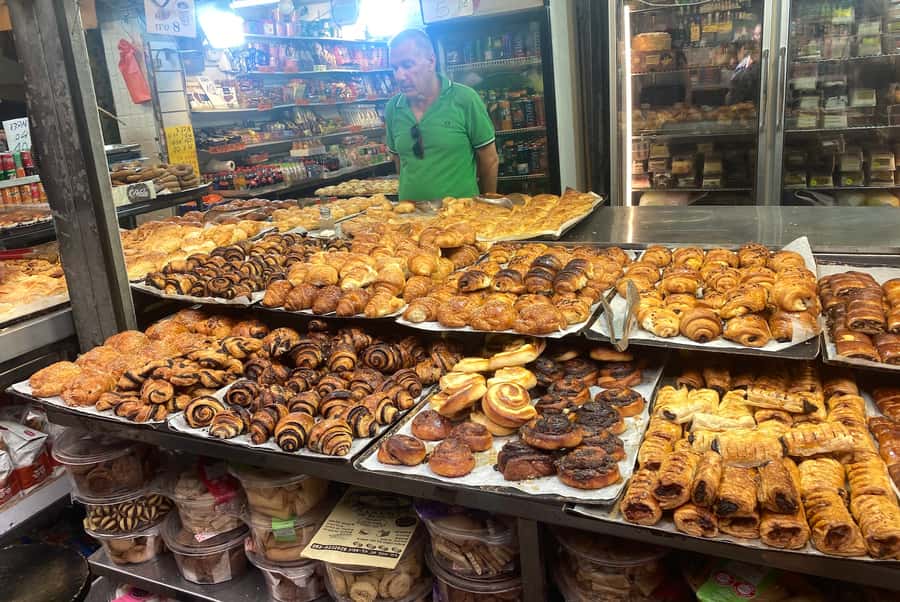
The market’s bakeries provide the sweet finish. You can choose chocolate or cinnamon rugelach, followed by traditional baklava.
Rugelach gives you a small, rolled pastry with a choice between a chocolate filling and cinnamon flavor. Baklava adds the syrupy, nut-filled pastry associated with much of the Middle East. Together, the two stops give you a nice contrast: one familiar to many Jewish bakery fans, the other more closely tied to the wider regional pastry tradition.
I like that dessert is not treated as an afterthought. Sweet foods often reveal how communities adapt recipes and keep traditions alive, especially in neighborhoods shaped by migration. The pastries also provide a slower final note after the heavier savory tastings.
You may want to choose your rugelach flavor based on how much else you have eaten. Cinnamon is usually the less rich choice, while chocolate makes sense if you want dessert to feel like a proper finale. The exact choice available is chocolate or cinnamon, not both.
Eshel and the neighborhood’s Jewish traditions
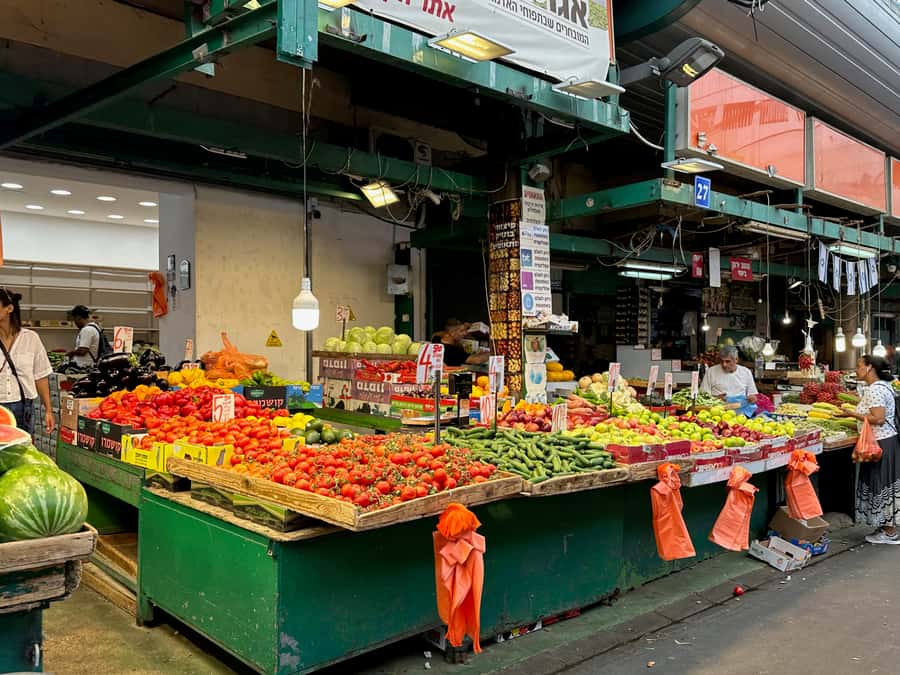
The market is more than food stalls. Along Eshel, the neighborhood’s main street, you see shops selling traditional Jewish religious items and jewelry.
This portion gives the tour a welcome change of pace. After several food stops, you get a better sense of the people and traditions that shape the area. Religious goods and jewelry connect the market to family life, celebrations, worship, and local identity.
The route does not present Eshel as a museum. That is part of its value. You see shops serving the neighborhood in the present day, alongside bakeries and food counters that have their own daily routines.
For me, this cultural stop helps keep the tour from becoming a simple list of snacks. The food matters more when you understand that it belongs to a living community. You also get a chance to see a side of Tel Aviv that can be missed if you stay around the beach, major museums, and nightlife districts.
Guide Montana and the value of local help
A food market is easier to read with a local guide. Guide Montana received especially strong praise for showing visitors small corners of the market and adding historical context. That is exactly the kind of help you want in a place where signs, ingredients, and customs may not be obvious.
The guide is an expert licensed local guide, and the tour is offered in English. The group limit is 15 people, which should keep the explanations manageable without making the walk feel entirely private. A private group option is available if you want more control over the pace or prefer to keep the outing within your own party.
Montana also showed practical reliability after a misunderstanding involving the booking and the food tour. She helped clear up the issue, and the price difference was returned a few days later. That does not change the food itself, but it is useful evidence of good follow-through when plans go wrong.
The tour runs rain or shine, so the weather may affect your comfort. Bring suitable shoes and dress for the forecast. The provided information does not mention a covered route or indoor alternative.
Who will enjoy this 90-minute food walk?
I would recommend this tour to you if you want a substantial introduction to Iraqi and Egyptian Jewish food without giving up half a day. The compact schedule works well on a first visit to Tel Aviv when you want a local food experience and still have time for other sights.
It is also a good fit if you enjoy learning how food is made. The spice grinding and pita preparation add action to the tasting, while the shawarma stop shows the cooking and assembly process.
You should think twice if you have limited mobility. The tour covers about 2 kilometers and is specifically not suitable for people with mobility impairments. You should also check ahead if you have food allergies, follow a special diet, or need a vegetarian plan, since no detailed dietary substitutions are provided.
Families with very young children should remember that infants are free but receive no samples. Older children who are comfortable walking and trying new foods may find the range of pastries and grilled dishes appealing, though the brisk route may not suit every child.
Timing, group size, and practical value
At 90 minutes, this is a focused introduction rather than an all-day market exploration. You get several tastings, a spice demonstration, cultural context, and roughly 2 kilometers of walking. The short format makes it easy to place at lunchtime or early in a day of sightseeing.
The small-group cap of 15 is a useful middle ground. You get more personal attention than on a large coach tour, but you do not have to pay the full cost of a private guide. If you want a more personal experience, private group bookings are available.
The meeting point is outside Naama Spice. Plan to arrive with comfortable shoes and an appetite. Since tastings equal a substantial lunch, avoid booking this immediately after breakfast or another major meal.
Free cancellation is available up to 24 hours before the tour for a full refund. You can also reserve and pay later, which helps if your Tel Aviv plans are still shifting. Starting times vary, so you need to check availability for your date.
Should you book the Tikva Market tour?
Book it if you want a compact, food-focused look at a traditional Tel Aviv neighborhood and you value context as much as eating. The best reasons are the Iraqi pita made before you, the spice demonstration, the less familiar kobba and barakas, and the chance to connect the food with Eshel’s religious and jewelry shops.
At $63, the tour makes sense when you count the amount of food as lunch and include the guide, water, and small-group format. It is less appealing if your main goal is cheap street food or unhurried shopping.
I would choose this tour early in your Tel Aviv stay. You get a useful introduction to local flavors, and the guide can help you understand what you are seeing. Just wear good shoes, arrive hungry, and allow extra time afterward if you want to browse the market on your own.
FAQ
How long does the Tikva Market food tour last?
The tour lasts 90 minutes.
How much does the tour cost?
The listed price is $63 per person. The price per person is lower when two or more people book together.
Where does the tour meet?
Meet outside Naama Spice, the spice store in Tikva Market.
What food is included?
Food tastings include Iraqi pita, shawarma, kobba, barakas, a choice of chocolate or cinnamon rugelach, and traditional baklava.
Is the food enough for lunch?
Yes. The tastings are described as equivalent to a substantial lunch portion.
How far does the tour walk?
The route covers about 2 kilometers.
Is the tour offered in English?
Yes. The tour has a live English-speaking guide.
Is the tour suitable for people with mobility impairments?
No. The tour is not suitable for people with mobility impairments.
Can I cancel the booking?
Yes. You can cancel up to 24 hours in advance for a full refund. You can also reserve now and pay later.
Just added in Tel Aviv
- Wine Tour North of Israel from Tel Aviv★ 5.0 · 2 reviews
- private Full-day Tour to Jericho + the Dead Sea★ 5.0 · 3 reviews
- private Full-Day Tour to Bethlehem and Jerusalem★ 5.0 · 2 reviews
- Private wine tour of Northern Israel★ 5.0 · 4 reviews
- Package VIP Skip Line Services in BGN Airport with Transfer to Tel aviv Hotels★ 5.0 · 3 reviews
- Privet Pickup from Tel Aviv Hotels to the Airport★ 5.0 · 1 review
- VIP Tel Aviv airport Terminal 3 Fast Track Skip Line From plane★ 4.5 · 9 reviews
- Private Transfer from Ben Gurion Airport to Tel Aviv, Bat Yam, Rishon LeZion★ 5.0 · 2 reviews
Israel Food Tours and Markets, compared.

Browse the lists this tour appears in