

Reviewed · CITY TOURS
Tel Aviv & Old City of Jaffa – Tiny group from Tel Aviv
Tel Aviv reveals its story on foot. This small-group walk links the city’s first neighborhood with ancient Jaffa, giving you a useful introduction to both modern Israel and its much older roots. I especially like the maximum of 10 people and the way the route includes Neve Tzedek, the Suzanne Dellal Centre, HaTachana, and Jaffa’s Clock Tower.
I also like the historical thread connecting the stops. The guide does more than point out pretty buildings, explaining why Tel Aviv’s Bauhaus center earned UNESCO World Heritage status and how recent Israeli history fits into the region’s much longer past. The main consideration is price: $139 per person is a serious sum for a three-hour walk with no food, drinks, or paid admissions included.
In This Review
- Key points at a glance
- Why this short tour works as an introduction
- Neve Tzedek shows Tel Aviv before the high-rises
- The Suzanne Dellal Centre adds culture to the walk
- HaTachana connects Tel Aviv to the railway age
- Tel Aviv’s Bauhaus buildings need explanation
- Crossing into Jaffa changes the mood
- The Clock Tower and Seraya mark Jaffa’s Ottoman past
- What the guide adds to the experience
- Is $139 a fair price for three hours?
- Who should book this Tel Aviv walk?
- FAQ
- Where does the tour start?
- Where does the tour end?
- How long does the tour last?
- How large is the group?
- What is included in the price?
- What should I bring?
- Should you book it?
Key points at a glance
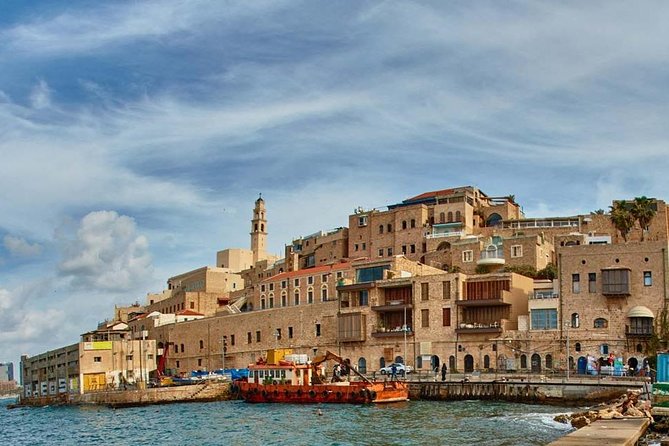
- A compact route with real variety: See Tel Aviv’s early residential streets, a restored railway station, and Jaffa’s Ottoman-era center in one outing.
- Small group of up to 10: The group size should make it easier to hear the guide and ask questions without wasting time collecting people.
- Strong historical focus: The tour connects Bauhaus Tel Aviv, Independence Hall, the old railway line, and Jaffa’s long past.
- Useful finish in Jaffa: The walk ends at the Clock Tower, leaving you in a good position to continue exploring the Old City.
- Three-hour walking format: You cover a lot, but you should expect steady movement and some standing on city streets.
- Best for first-time visitors: This works well if you want context before exploring Tel Aviv and Jaffa on your own.
Why this short tour works as an introduction
Tel Aviv can feel young, stylish, and modern at first glance. Jaffa, just to the south, feels much older. Putting the two together gives you a better sense of how the city developed instead of treating Tel Aviv as a collection of cafés, beaches, and white apartment blocks.
The route begins near the Dan Panorama Tel Aviv on Kaufmann Street at 10:00 am. From there, you walk south toward Neve Tzedek and continue to Jaffa. The tour lasts about three hours, although the broader description allows roughly three to four hours, so you should keep part of your day open.
This is a walking tour, not a sightseeing ride. That matters. You see the scale of the neighborhoods, notice changes in building styles, and move at a pace that lets the guide point out details from the street. You also need comfortable shoes. The tour asks for moderate physical fitness, and winter visitors should bring warm clothing and an umbrella if rain is possible.
The group limit is one of the strongest features. With no more than 10 people, the guide can usually keep the conversation focused. A larger group would make the narrow streets and stops in Jaffa less pleasant. The small size also reduces the time spent gathering people at each stop, though one poor experience involved a delayed start of about 30 minutes.
More things to do in Tel Aviv:
- From Tel Aviv: Masada & Dead Sea Full Day Tour with Pick Up
★ 4.5 · 1,496 reviews - From Tel Aviv: Jerusalem and Bethlehem Guided Day Trip
★ 4.3 · 1,316 reviews - Masada and the Dead Sea Day Trip from Tel Aviv
★ 4.5 · 1,014 reviews
Neve Tzedek shows Tel Aviv before the high-rises

Neve Tzedek is the right place to begin because it helps you see Tel Aviv as a growing town rather than only as a modern coastal city. The walk focuses on the neighborhood’s first houses and their distinct character. Expect the guide to draw your attention to the local buildings, street layout, and the way this early area differs from Tel Aviv’s later urban blocks.
The value here comes from comparison. You are not just looking at attractive façades. You are seeing an older residential setting before the city expanded northward and gained its famous white apartment buildings. If you like architecture, this is one of the more useful parts of the route.
Neve Tzedek also gives the tour a human scale. The stop is about local houses and neighborhood personality, not a long list of dates. That makes it easier to understand how a city grows one district at a time.
The tour does not include a stated interior visit to private homes, so expect to explore from public streets. The guide’s explanations are the main attraction. If you want extensive time for photographs or shopping, the set route may feel brisk.
The Suzanne Dellal Centre adds culture to the walk
The Suzanne Dellal Centre is presented as a cultural center in the old neighborhood. Its inclusion gives you a change of pace after the residential streets and shows how historic buildings can gain a new public role.
This is a good example of the tour’s wider theme: Tel Aviv is not simply old or new. Parts of the city have been restored, repurposed, and folded into modern cultural life. You may find this stop especially useful if you want to understand how the city treats older sites without turning the whole walk into a museum visit.
The schedule is still fairly tight. The tour has several major stops to cover, so you should not expect a long performance, gallery visit, or extended free period at the center. Think of it as a meaningful waypoint within a larger walking story.
HaTachana connects Tel Aviv to the railway age
HaTachana is a converted 19th-century railway station with distinctive structures. It is one of the most unusual stops because it shifts the focus from neighborhood life to transport and development.
An old railway station helps explain how places once linked by difficult journeys became part of a more connected urban region. Here, the guide can place Tel Aviv and Jaffa within the changes brought by rail travel, trade, and expanding settlement.
The restored setting also gives you a break from ordinary city streets. You can look at the station buildings and consider how the site has been adapted for present-day use. The attraction is not only the appearance of the structures. It is the contrast between their original purpose and their current role.
Admission is listed as free, but the tour does not promise a separate interior program. I would plan on seeing the site as part of the walking route rather than assuming you will have a long independent visit.
More things to do in Jerusalem:
- Tel Aviv: Jerusalem, Bethlehem & Dead Sea
★ 4.0 · 881 reviews - From Tel Aviv: Jerusalem Old & New City Bus Tour
★ 4.2 · 824 reviews - Day Tour to Jerusalem and Bethlehem from Tel Aviv
★ 4.5 · 720 reviews - Jerusalem and the Dead Sea from Tel Aviv
★ 4.5 · 444 reviews
Tel Aviv’s Bauhaus buildings need explanation
Tel Aviv’s White City is one of the tour’s central subjects. The guide explains the architecture that helped the city gain UNESCO World Heritage status, giving you a stronger basis for noticing the buildings around you.
Without context, many white apartment blocks can blur together. With a guide, you can learn why the city’s Bauhaus buildings matter and how their design reflects the period in which Tel Aviv expanded. The tour promises to show more than one famous façade, so the value lies in seeing the style as part of a wider district.
Independence Hall is also included among the sights to see, although the provided schedule does not state that you enter the building. You should treat it as an exterior stop unless the guide says otherwise. Its presence adds modern Israeli history to a route that already covers early Tel Aviv, railway development, and architecture.
This is where the tour appears to earn its strongest praise. The guide links recent Israeli events with the much longer story of the region. That wider explanation can make the rest of your Tel Aviv sightseeing easier to understand, especially if you are visiting Israel for the first time.
Crossing into Jaffa changes the mood
The route continues to Jaffa, described as one of the oldest cities in the world and an ancient port. The shift is immediate in feel, even without entering a museum. Tel Aviv’s early neighborhoods and planned architecture give way to an older urban center shaped by port life, Ottoman rule, and long layers of settlement.
Jaffa is not treated as a separate add-on. It completes the tour’s main idea. You see a young city beside an ancient one, then learn how their stories now fit within the same urban area.
The tour visits the Clock Tower, the Ottoman Seraya building, and the Old City. These are important landmarks, but the guide’s interpretation is what turns a short stop into a useful lesson. You will get more from the route if you listen for how power, administration, trade, and daily life changed over time.
You should also expect uneven walking surfaces and regular standing in open public spaces. The tour requires moderate fitness, and good shoes are not a minor suggestion. If you have limited mobility, ask for specific route details before booking because the supplied information does not promise an accessible path.
The Clock Tower and Seraya mark Jaffa’s Ottoman past
Jaffa’s Clock Tower is the endpoint at Yefet Street 14. Ending here is practical because you are left in the Old City rather than returned to the starting hotel. You can continue exploring after the guide finishes, using the location as your next base.
The Ottoman Seraya building gives the Old City portion a clear historical anchor. It is not just another old façade. It helps you see Jaffa through the period when Ottoman administration shaped the town’s public buildings and civic life.
The tour is especially useful for visitors who want suggestions for what to see next. One particularly strong experience involved a guide pointing out places in Jaffa to explore after the formal walk. That is the kind of practical help worth requesting: ask where to continue, what deserves more time, and which nearby sights fit your remaining schedule.
Because the tour ends at the Clock Tower, you should not plan an important appointment at the original meeting point immediately afterward. The start and end points are different, and the tour does not include transport back to Tel Aviv’s hotel area.
What the guide adds to the experience
The guide is the main reason to choose this tour instead of following a map on your phone. The best feedback describes a guide who was cheerful, flexible, and able to explain modern Israel within the region’s long past.
That balance matters. A tour that focuses only on ancient Jaffa can leave Tel Aviv feeling like a footnote. A tour that talks only about Bauhaus buildings can make the city seem detached from the country’s modern story. Here, the intended approach is to connect both.
The guide also appears to be good at adjusting the explanation to the group. A small party makes that easier. You can ask about architecture, local history, or what to do after the tour without holding up a large crowd.
Still, the experience depends heavily on the individual guide and the day’s organization. One booking began roughly 30 minutes late. The operator said it had sent a message and called ahead, but the customer had not checked the messages or answered the phone. The operator also said it provided a private tour in that case despite the group booking. The practical lesson is simple: check your phone before the start, keep notifications available, and allow a little flexibility in your morning.
Is $139 a fair price for three hours?
At $139 per person, this is not a bargain walk. The fee covers a professional licensed guide, but food, drinks, and admissions are not included. The listed stops are free, so most of what you are paying for is interpretation, organization, and the small group format.
I would judge the value by your priorities. If you want a quick orientation with a guide who can connect architecture, Ottoman Jaffa, and modern Israel, the price may make sense. The tour can save you time and give you a framework for exploring the city on your own afterward.
If you mainly want to see the Clock Tower, walk through Neve Tzedek, and take photographs, $139 may feel high. You can visit public streets and many exterior landmarks without paying for a guided activity. The tour’s value rises when you make active use of the explanations and ask questions.
The rating of 4.6 from nine published ratings suggests a generally strong experience, but the small number means you should not treat that figure as a guarantee. The praise is clearest on historical content, guide quality, flexibility, and the way the tour helps explain Israel today.
Who should book this Tel Aviv walk?
I would recommend it most strongly to first-time visitors who want orientation before exploring alone. It suits people who enjoy architecture, urban history, and local context more than those looking for food tastings or a relaxed café crawl.
It is also a good fit if you have only one morning in Tel Aviv and want to combine the city with Jaffa. The route covers several major themes in about three hours, then leaves you at the Clock Tower for more independent sightseeing.
You may want a different activity if you dislike walking, need a guaranteed late start, or want plenty of time inside individual attractions. This is a guided overview, not a slow museum tour.
The minimum booking is three people, and the maximum is 10. Confirmation is sent within 48 hours, subject to availability. The experience requires good weather, and cancellation rules allow a full refund if you cancel at least 24 hours before the start. If bad weather or the minimum group size cancels the tour, you are offered another date or experience, or a full refund.
FAQ
Where does the tour start?
The tour starts at the Dan Panorama Tel Aviv, Kaufmann Street 10, Tel Aviv-Yafo. The start time is 10:00 am.
Where does the tour end?
The tour ends at the Clock Tower on Yefet Street 14 in Jaffa. It does not end at the original meeting point.
How long does the tour last?
The walking tour lasts about three hours. The broader time estimate is approximately three to four hours.
How large is the group?
The tour requires a minimum of three people and has a maximum of 10 participants.
What is included in the price?
A professional licensed tour guide is included. Food, drinks, and admission fees are not included.
What should I bring?
Wear comfortable shoes and be prepared for moderate physical activity. In winter, bring warm clothing and an umbrella if rain is possible.
Should you book it?
Book this tour if you want historical context in a small group, not just a checklist of sights. The combination of Neve Tzedek, HaTachana, White City architecture, Independence Hall, and Ottoman Jaffa gives you a smart first look at Tel Aviv’s many layers.
I would hesitate only if $139 feels too high for a three-hour outdoor walk or if you prefer to explore at your own pace. For everyone else, especially first-time visitors who want help making sense of modern Israel and ancient Jaffa together, this is a worthwhile orientation with a convenient finish in the Old City.
Just added in Tel Aviv
- Wine Tour North of Israel from Tel Aviv★ 5.0 · 2 reviews
- private Full-day Tour to Jericho + the Dead Sea★ 5.0 · 3 reviews
- private Full-Day Tour to Bethlehem and Jerusalem★ 5.0 · 2 reviews
- Private wine tour of Northern Israel★ 5.0 · 4 reviews
- VIP Tel Aviv airport Terminal 3 Fast Track Skip Line From plane★ 4.5 · 9 reviews
- Package VIP Skip Line Services in BGN Airport with Transfer to Tel aviv Hotels★ 5.0 · 3 reviews
- Privet Pickup from Tel Aviv Hotels to the Airport★ 5.0 · 1 review
- Private Transfer from Ben Gurion Airport to Tel Aviv, Bat Yam, Rishon LeZion★ 5.0 · 2 reviews
City Tours, compared.



From Jerusalem Small group tour Old&New City ENTRY FEES INCL
Read our review →
Best seller! Jerusalem old city four quarters tour
Read our review →
Browse the lists this tour appears in