
Reviewed · ISRAEL FOOD TOURS AND MARKETS
Urban Walking & Food Tour in Tel Aviv
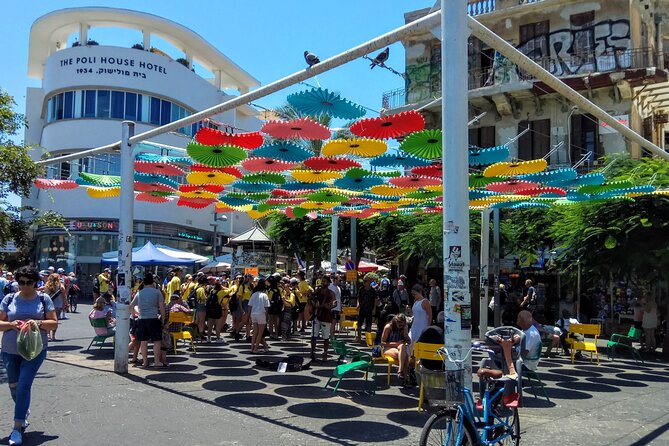
Tel Aviv tells its story one street at a time. This five-hour private walk links Habimah Square, Rothschild Boulevard, Neve Tzedek, Carmel Market, and Kerem HaTeimanim, giving you a useful first look at the city’s architecture, founding years, immigrant communities, and food culture. I like the strong historical route and the way the tour connects major sights with ordinary streets. I also like the small-group format, which makes room for questions and personal advice from guide Menno.
The main drawback is the food arrangement. The tour description calls lunch all-inclusive, but the practical information says lunch and drinks cost about $40 per person and lists lunch as not included. You should confirm exactly what is covered before paying. The walk also lasts about five hours, so Tel Aviv’s heat can make shade, water, and comfortable shoes important.
In This Review
- Key points to know before you book
- Why this route works as a first look at Tel Aviv
- Habimah Square and the first steps along Rothschild Boulevard
- Hotels, odd buildings, and the story beneath the streets
- Founders, independence, and Tel Aviv’s first high-rise
- Neve Tzedek, from small neighborhood to design district
- Aharon Chelouche House and the restored Suzanne Dellal Centre
- Carmel Market: where the food portion takes over
- Kerem HaTeimanim and the final neighborhood lesson
- Price, group size, and what you receive
- Walking conditions and who should choose it
- Should you book the Tel Aviv walking and food tour?
- FAQ
- Where does the tour begin?
- What time does the tour start?
- Where does the tour end?
- How long does the tour last?
- How much does the tour cost?
- Is the tour private?
- How many people can join?
- Is lunch included?
- What food and drink are included?
- Can I cancel for a full refund?
Key points to know before you book
- A city story told in sequence: You begin with Tel Aviv’s founding families and finish among the markets and neighborhoods shaped by Yemenite immigrants.
- Bauhaus is only part of the picture: Rothschild Boulevard offers White City architecture, but the route also covers Ottoman railways, early schools, synagogues, towers, and urban renewal.
- Carmel Market gets the most time: Nearly two hours are set aside for food, browsing, and tastings around the market.
- Menno adds local context: His style combines history, architecture, urban development, and practical suggestions for bars and restaurants.
- Private, but group size needs checking: The activity is described as private, with only your group participating, while the supplied details also mention a cap of 10 and a booking price for up to 6 people.
- Budget about $40 extra per person: That is the stated estimate for food and drinks, despite the separate reference to an included lunch.
Why this route works as a first look at Tel Aviv
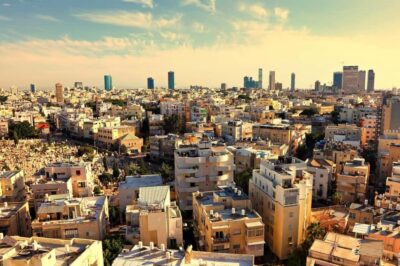
I like tours that explain how a city grew instead of simply pointing at its postcard sights. This one begins in central Tel Aviv, follows the city’s early expansion, then moves toward the older neighborhoods near Jaffa and the Carmel Market.
That order gives you a helpful sense of change. The morning starts with grand boulevards and public institutions. It moves through early Jewish neighborhoods, restored houses, a modern dance center, and an old railway corridor. By the final part, the setting is smaller, louder, and more local in feel, with food stalls, narrow lanes, cafés, and low-rise homes.
The walk is also more than an architecture tour. You hear about the people who funded Tel Aviv, the immigrants who shaped its neighborhoods, the political events connected to particular buildings, and the city’s newer light rail. I would choose this experience early in a Tel Aviv stay because it gives you names and landmarks that make later exploring easier.
The tour begins at 10 a.m. outside Habimah Theatre. It ends at Coffee at the Market on HaCarmel Street, right by Carmel Market. Since you do not return to the starting point, plan your day around the market rather than expecting a round trip.
More Food Tours in Tel Aviv
- Carmel Market Tasting Tour – LocaLocal
★ 5.0 · 140 reviews - Tel Aviv: Jaffa & Carmel Market Walking Tour
★ 4.7 · 60 reviews - Tel Aviv: Carmel Market & Tel Aviv Tour with Tastings
★ 3.8 · 36 reviews
Habimah Square and the first steps along Rothschild Boulevard
Habimah Square is a fitting starting point. Rothschild Boulevard, Hen Boulevard, Dizengoff Street, and Ben-Zion Boulevard meet here, and the square is home to Israel’s national theatre, one of the earliest Hebrew-language theatres.
You spend about 10 minutes here, enough for an introduction rather than a full theatre visit. The value is orientation. You begin in a public cultural center, then move toward the boulevard that helped define early Tel Aviv.
Rothschild Boulevard receives about 30 minutes, with short detours before you return to the main route. It was Tel Aviv’s first boulevard and is named for a member of the wealthy Rothschild family. Many historic buildings here use the Bauhaus or International style associated with the White City of Tel Aviv.
This is the part many first-time visitors expect, but the guide adds useful context about how the boulevard relates to Ahuzat Bayit, the first neighborhood of Tel Aviv. Look up as you walk. The details are not limited to famous façades, and the route is designed to show how the city’s planned streets developed.
If Bauhaus is your main interest, keep your expectations measured. You see important examples, but this is not a specialist architecture course. It is a broad city tour in which Bauhaus forms one chapter.
Hotels, odd buildings, and the story beneath the streets
The short stop at Nachmani Street 23 brings you to King Albert Square. Here you can see the Norman Hotel and the Pagoda House, whose eclectic design provides a sharp contrast to the cleaner lines of the White City.
The Norman is a high-end boutique hotel, while the Pagoda House has a more decorative appearance. The stop lasts only five minutes, so think of it as a quick visual comparison rather than time for an interior visit.
Next comes Beit Levin, also known as the Castle and the KGB House. The unusual names are part of the appeal. Menno explains why the building acquired them, giving you one of the tour’s smaller but more memorable stories.
The route then passes Yehuda Ha-Levi Street, where you see the location of one of the stations for Tel Aviv’s new light rail. This may sound less historic than a theatre or synagogue, but it helps show how the city is still changing. Tel Aviv’s urban story is not frozen in the early twentieth century.
The Great Synagogue follows. Its scale is impressive, yet its location and appearance make it easy to miss if you walk alone. The synagogue was planned by Tel Aviv’s founders but built years after their neighborhood took shape. I appreciate this kind of stop because it corrects the habit of judging a building only by its exterior.
Founders, independence, and Tel Aviv’s first high-rise
On Rothschild Boulevard, the Founders Monument and Fountain honors the Jewish families who contributed money to build a modern neighborhood. This is a key point in the city’s origin story. Tel Aviv did not appear fully formed. It began through organized effort, private contributions, and a decision to build beyond Jaffa.
The Meir Dizengoff statue adds a more personal link to the city’s early leadership. Dizengoff was Tel Aviv’s first mayor, and the statue shows him on horseback in front of his former home.
That house also carries national importance. In 1948, David Ben Gurion declared the new Jewish state there after a Jewish state had been absent for 2,000 years. The stop lasts five minutes, but the guide’s explanation helps connect a local home with one of the defining political moments in modern Israel.
Migdal Shalom Tower shifts the focus to the modern city. It was the first skyscraper in the Middle East and occupies the site of HaGymnasia, the first Hebrew high school. You have about 15 minutes here, enough to understand the contrast between the low-rise founding city and the high-rise commercial center that followed.
At Herzl Street 2, you see the house of Akiva Weiss, the man who initiated the building of Tel Aviv, along with a statue of Alfred Dreyfus. Dreyfus was a Jewish captain in the French Army whose trial became a major symbol of injustice and antisemitism. The affair had a strong effect on Theodor Herzl, whose political work is closely tied to the modern movement for a Jewish state.
This section is especially useful if you want political history tied to physical places. The tour does not leave the subject in a textbook. It points to homes, streets, monuments, and buildings where these ideas took shape.
More Walking Tours in Tel Aviv
- Walking Tour of Akko (Half-day)
★ 5.0 · 84 reviews - Tel Aviv: Jaffa Half-Day Walking Tour
★ 4.5 · 70 reviews - Tel Aviv: Florentin Saturday Walking Tour
★ 3.5 · 65 reviews - Best of Tel Aviv and Jaffa Walking Tour – 1 Day
★ 4.5 · 53 reviews
Neve Tzedek, from small neighborhood to design district
Neve Tzedek was the first small Jewish neighborhood built outside Jaffa’s walls in the nineteenth century. Other small neighborhoods followed, serving different social and ethnic Jewish groups, and the name Neve Tzedek is now used for the wider area.
You spend about 20 minutes here, passing houses and synagogues that are more than a century old. The neighborhood’s low-rise form makes a strong contrast with the towers and broad avenues earlier in the tour.
Today, Neve Tzedek is known for design shops, fashion boutiques, craft stores, and restaurants. That change is worth discussing honestly. The area is attractive and easy to enjoy, but its restoration and popularity have also made it a polished, expensive part of central Tel Aviv. The older buildings are not simply untouched relics. They sit inside a neighborhood shaped by renewal and commercial activity.
A short stop at Park HaMesila adds another layer. This urban park follows the route of the old Ottoman railway and is intended to link the beach with central Tel Aviv. The red line of the city’s light rail runs under the park.
I like the way this stop shows adaptive city planning. An old transport corridor becomes public space, while new rail infrastructure passes below. It is a quick visit, only about five minutes, but it gives you a useful way to read the city’s current development.
Aharon Chelouche House and the restored Suzanne Dellal Centre
Aharon Chelouche House helps broaden the usual account of Jewish immigration to Tel Aviv. Aharon Chelouche arrived during a Mizrahi immigration wave roughly 50 years before the later Ashkenazi immigration waves were assigned numbered names.
He paid for the land called Neve Tzedek and built its first house with a private synagogue. This stop matters because it places Mizrahi Jewish history inside the city’s early development, rather than treating it as a footnote.
The nearby Suzanne Dellal Centre is one of the route’s prettiest settings. The center for modern dance is home to the Batsheva Dance Company and Inbal Dance Theater. It was built on the restored remains of the Alliance School for Boys and the Yechiely Girls School, both dating to 1908.
The former school buildings now frame a picturesque piazza. You spend only five minutes here, so you may not have time for a performance or a full look inside. Still, it is a worthwhile pause and a clear example of how Tel Aviv gives old buildings new public uses.
Carmel Market: where the food portion takes over
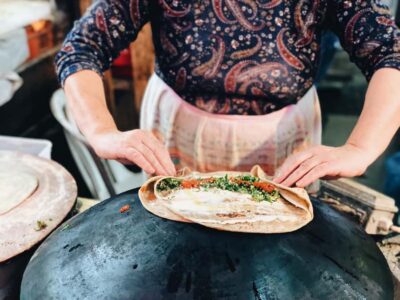
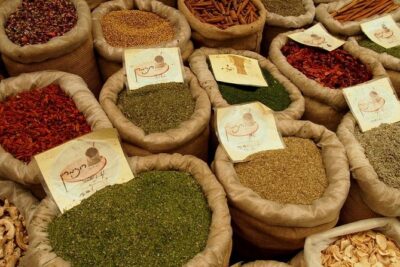
Carmel Market receives about one hour and 45 minutes, making it the heart of the food part of the tour. The market sells clothing, spices, vegetables, electronics, and many other everyday goods. Alongside the traditional stalls, you find bars, restaurants, coffee shops, and chef-run food stands.
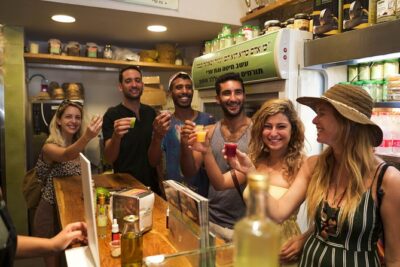
This is not a quiet market designed only for sightseeing. You should expect movement, noise, close spacing, and plenty to look at. That is exactly why a guide can help. Menno’s approach includes food tastings as well as advice about places to eat and drink later in your stay.
The food portion is described in two different ways. One part of the tour information calls lunch all-inclusive and mentions complimentary tea or coffee. Another section says lunch is not included and estimates food and drinks at about $40 per person. Do not treat this as a minor wording issue. For a group of six, the difference can affect the total cost by roughly $240.
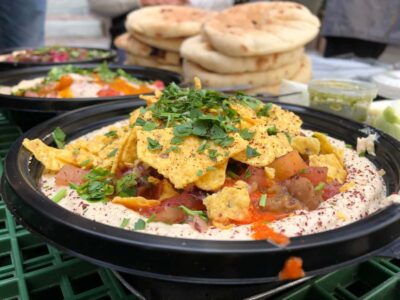
The food itself receives the warmest praise in the available comments. Tastings are described as diverse and substantial enough to keep people full through the evening. That suggests the meal is more than a token sample at one stall, though the exact dishes are not specified and can change.
I would ask three questions before booking:
- Is a full lunch included, or should you pay about $40 per person?
- Are tea and coffee included in all cases?
- Does the food budget cover tastings only, or a complete meal?
With those answers in hand, the $500 group price is easier to judge.
Kerem HaTeimanim and the final neighborhood lesson
The final walk passes through Kerem HaTeimanim, an early poor neighborhood formed by Jewish immigrants from Yemen. Those residents began a market that later grew into Tel Aviv’s largest market, Carmel Market.
The original tin shacks and wooden houses are gone, but the narrow streets remain. Today, small restaurants and ground-level homes line the area, giving it a different scale from Rothschild Boulevard and the high-rise center.
This final connection is one of the tour’s best ideas. You do not simply visit a market and then move on. You learn about the immigrant community that helped create it, then see how the neighborhood and market relate to each other.
The tour ends at Coffee at the Market, HaCarmel Street 33. That is practical if you want to continue eating or browsing, but less convenient if you need to return to Habimah Square. Use the end point as the beginning of your next activity.
Price, group size, and what you receive
The listed price is $500 per group for up to six people. If six people join, that works out to about $83 per person before any separate food cost. For a private five-hour tour with a guide, that can be fair, especially if you value personal questions and a route adjusted to your group’s pace.
For two people, however, the per-person price is much higher. You are paying for privacy and a dedicated guide, not simply a seat on a standard group walk. The description also refers to a maximum of 10 participants, so clarify how that relates to the private booking for up to six.
The tour includes all fees and taxes. Food and drinks are the uncertain part. Since the stated estimate is about $40 per person, budget on that basis unless the provider confirms otherwise in writing.
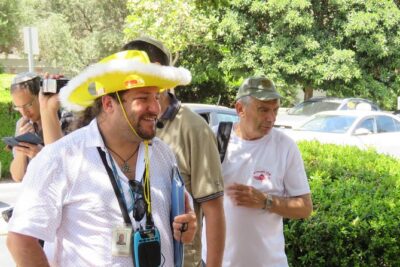
Menno receives the strongest praise for clear explanations, enthusiasm, and a broad grasp of Tel Aviv’s history, architecture, and urban development. The guidance also appears practical: shaded places, bathrooms, benches, and suggestions for bars and restaurants were part of the experience described by past participants.
Walking conditions and who should choose it
The route is urban, with many short stops and one long market section. It is not presented as a strenuous hike, but you are on your feet for about five hours. Heat can be a real factor, and the timing places much of the walk near midday.
Wear comfortable shoes and carry water. The guide has reportedly looked for shade and places to rest when needed, but that does not remove the need to pace yourself. Most people can participate, and service animals are allowed. The tour is near public transportation, though no specific transit directions are provided.
I would choose this tour if you want history, architecture, food, and city planning in one experience. It suits a first visit, a couple or family that wants a private guide, and anyone who prefers context over a checklist of monuments.
I would look elsewhere if you want a dedicated food tour with a fixed menu, a specialist Bauhaus tour, or a very short introduction to Tel Aviv. The route covers a lot, and some stops last only five minutes. Its strength is the broad connection between places, not extended visits inside individual buildings.
Should you book the Tel Aviv walking and food tour?
Book it if you want a strong first orientation to central Tel Aviv and enjoy learning how streets, immigrant communities, politics, architecture, and food fit together. The route is thoughtfully shaped, the market portion is generous, and Menno’s personal knowledge appears to add real value.
Before confirming, settle the lunch question and the group-size wording. If the food cost is extra, add it to the $500 price when comparing options. With that detail clear, this is a good choice for a private group that wants one well-connected day rather than several separate tours.
FAQ
Where does the tour begin?
It begins at Habimah Theatre, Tarsat Avenue 2, Tel Aviv-Yafo.
What time does the tour start?
The tour starts at 10 a.m.
Where does the tour end?
It ends at Coffee at the Market, HaCarmel Street 33, near Carmel Market.
How long does the tour last?
The walking and food experience lasts about five hours.
How much does the tour cost?
The listed price is $500 per group for up to six people.
Is the tour private?
Yes. It is described as a private activity for your group only.
How many people can join?
The price covers up to six people, while the tour information also mentions a maximum of 10 participants. Confirm the applicable limit when booking.
Is lunch included?
The information is inconsistent. One section describes an all-inclusive lunch, while another says lunch is not included and estimates food and drinks at about $40 per person. Confirm this before booking.
What food and drink are included?
The tour highlights food tastings and complimentary tea or coffee, but the exact dishes and the lunch arrangement are not specified.
Can I cancel for a full refund?
Yes, if you cancel at least 24 hours before the local start time. Cancellations made less than 24 hours before the start are not refunded, and poor weather may result in a new date or a full refund.
Just added in Tel Aviv
- Wine Tour North of Israel from Tel Aviv★ 5.0 · 2 reviews
- private Full-day Tour to Jericho + the Dead Sea★ 5.0 · 3 reviews
- private Full-Day Tour to Bethlehem and Jerusalem★ 5.0 · 2 reviews
- Private wine tour of Northern Israel★ 5.0 · 4 reviews
- Privet Pickup from Tel Aviv Hotels to the Airport★ 5.0 · 1 review
- VIP Tel Aviv airport Terminal 3 Fast Track Skip Line From plane★ 4.5 · 9 reviews
- Package VIP Skip Line Services in BGN Airport with Transfer to Tel aviv Hotels★ 5.0 · 3 reviews
- Private Transfer from Ben Gurion Airport to Tel Aviv, Bat Yam, Rishon LeZion★ 5.0 · 2 reviews
Israel Food Tours and Markets, compared.

Browse the lists this tour appears in