
Reviewed · HAIFA AND THE GALILEE TOURS
Caesarea and Haifa Private Tour from Tel Aviv
Three places, one long sweep of northern Israel. This private tour links Caesarea’s Roman ruins with Haifa’s hilltop views and the carefully ordered Baha’i Gardens. I like the private vehicle and dedicated guide, which make a busy day easier to manage, and I like the mix of archaeology, religion, architecture, and coastal scenery. The main consideration is pace: six to seven hours is enough for highlights, not a slow, exhaustive visit.
I also appreciate the professional art historian guide, especially at Caesarea, where a little context turns scattered stones into a readable story. The $1,149 group price works best for four people, but entrance to Caesarea, food, and drinks cost extra.
In This Review
- Key points to know before booking
- Why this Caesarea and Haifa combination works
- Caesarea’s Roman theater and royal harbor
- Haifa from Mount Carmel to the sea
- The Baha’i Gardens and their strict dress code
- Stella Maris and the Carmelite story
- The German Colony and Haifa’s nineteenth-century roots
- What the private format adds
- Is $1,149 a fair price?
- Who will enjoy this tour most?
- Final verdict: book it if you value context and convenience
- FAQ
- Where does the tour begin?
- How long does the tour last?
- Is the tour private?
- Is transportation included?
- Is the Caesarea entrance fee included?
- What should I wear to the Baha’i Gardens?
- Can I cancel for a full refund?
Key points to know before booking
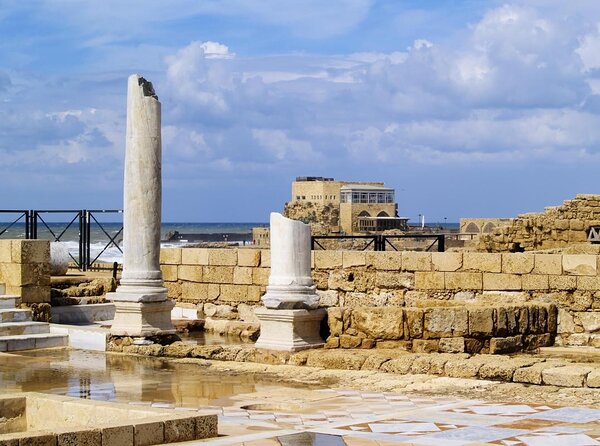
- Caesarea takes about two hours: Roman theater, hippodrome, palace remains, baths, harbor, Crusader citadel, and aqueduct are all part of the visit.
- The tour is private for up to four people: You get round-trip transport and personal time for questions from Tel Aviv, Herzliya, or Netanya.
- Haifa is seen from several angles: The route includes Mount Carmel views, the Baha’i Gardens, Stella Maris, and the German Colony.
- Dress carefully for the Baha’i Gardens: Shorts and sleeveless clothing are not permitted there.
- The strongest feature is the guiding: The tour is designed around history, culture, religion, and architecture rather than quick photo stops.
- The price improves with a full group: At four people, the cost works out to about $287 per person before Caesarea admission and meals.
Why this Caesarea and Haifa combination works
Caesarea and Haifa feel quite different, which is exactly why this makes a useful day out from Tel Aviv. Caesarea gives you a broad sweep of ancient and medieval remains along the Mediterranean. Haifa then shifts the mood to steep streets, religious landmarks, gardens, and wide views over the coast.
You are not simply visiting two archaeological sites. You are moving through several layers of northern Israel: Roman planning, Herodian ambition, Crusader defenses, modern Haifa, the Baha’i faith, Carmelite Christianity, and the legacy of German Protestant settlers.
The private format matters here. With only your party in the vehicle, you can ask why a building was placed where it was, stop to take in a view, or spend less time at a site that does not hold your attention. A multilingual driver and guide is provided, along with a professional art historian guide.
The tour begins at 9:00 a.m. Pickup and drop-off are offered from hotels in Tel Aviv, Herzliya, or Netanya. That saves you the trouble of finding a meeting point and makes the experience particularly convenient if you are staying in one of those areas.
More things to do in Tel Aviv:
- From Tel Aviv: Masada & Dead Sea Full Day Tour with Pick Up
★ 4.5 · 1,496 reviews - From Tel Aviv: Jerusalem and Bethlehem Guided Day Trip
★ 4.3 · 1,316 reviews - Masada and the Dead Sea Day Trip from Tel Aviv
★ 4.5 · 1,014 reviews
Caesarea’s Roman theater and royal harbor
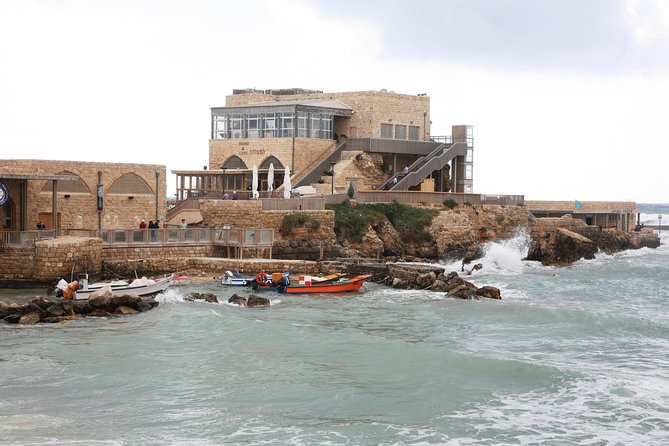
The first major stop is Caesarea National Park, with about two hours for the site. Caesarea was built as a Roman city by King Herod, and the remains are unusually varied. You are not looking at one isolated monument. You move through public entertainment spaces, royal buildings, bath complexes, a harbor, city defenses, and waterworks.
Start with the Roman theater, which once held more than 3,000 people. Its scale helps you picture Caesarea as a functioning city, not just a coastal ruin. A guide can point out how the theater fit into Roman civic life and why this sort of building mattered to an ambitious port city.
The route continues toward King Herod’s palace. Palace remains can be hard to read without help, so this is one of the places where an art historian guide earns the cost of the tour. Walls and foundations become clues to the size and status of the complex.
You then reach Roman villas and bathhouses by walking down the hippodrome. That change of setting is useful. The hippodrome was built for spectacle and racing, while the villas and baths show how wealthy residents spent their private time.
Caesarea’s harbor is another important stop. It was one of the biggest ports in the ancient world, and its presence explains why Herod placed such a major city here. The sea is not just a backdrop. It is central to the city’s purpose, wealth, and connection with the wider Roman world.
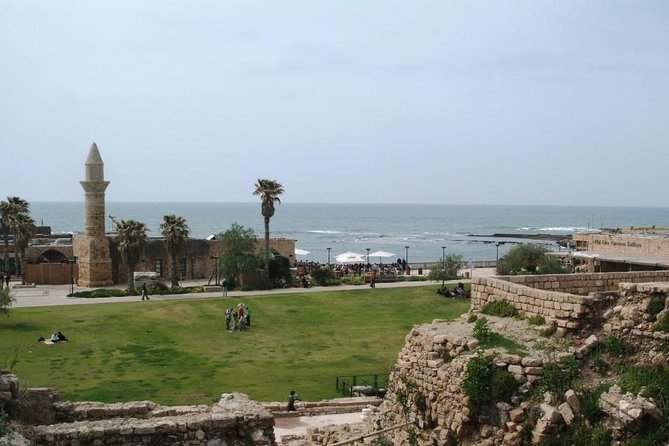
The site also includes medieval city walls, towers, and the Crusades citadel. These remains remind you that Caesarea did not end with Rome. Its role changed over centuries, and the medieval defenses give the visit a second historical chapter.
Finally, you see the Roman aqueduct, described as being especially well preserved. It is an excellent closing feature because it shows the practical engineering behind urban life. A theater may impress you, but an aqueduct explains how thousands of people could live in a large city.
Caesarea National Park admission is not included, so factor that into your budget. Two hours is enough for the main sights, though you should not expect a leisurely examination of every ruin.
Haifa from Mount Carmel to the sea
After Caesarea, the tour continues north to Haifa. The city rises along the slopes of Mount Carmel and drops toward the sea, giving it a different rhythm from the flatter coastal setting around Caesarea.
The route includes viewpoints on Mount Carmel. This is one of the best reasons to keep Haifa in the same day. From above, you can understand the city’s shape in a way that is difficult from street level. The guide also explains Haifa’s mix of languages and religions, which adds human context to the views.
About two hours are allocated to Haifa itself, separate from the garden and monastery stops. The description is broad rather than tightly fixed, so you should expect a guided look at the city’s architecture, religious character, and major views rather than a long independent walk through every district.
I like this part of the tour because it gives you time to connect the separate stops. Haifa is not presented only as a pretty viewpoint. Its location, communities, and buildings all reflect a city shaped by several religious and cultural traditions.
Still, keep your expectations realistic. A private vehicle can make the steep city easier to cover, but this is not a full city walking tour. If you want long visits inside museums or extended time in local neighborhoods, you would need more than this itinerary provides.
The Baha’i Gardens and their strict dress code
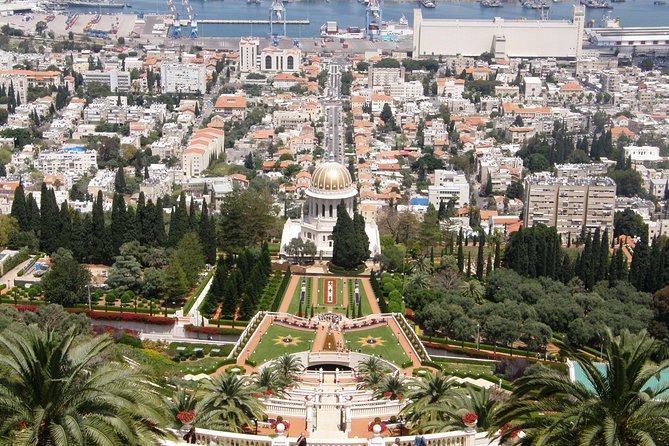
The Baha’i Gardens receive about 30 minutes and are listed as a UNESCO World Heritage Site. They are known for their formal design and their position on the slope of Mount Carmel. The upper views are a major draw, giving you a broad look across Haifa toward the sea.
This is a short stop, but it is visually powerful. The gardens are built around order, symmetry, and careful planting, so allow yourself a few quiet minutes rather than treating the visit as just another photograph.
The practical rule is important: no shorts or sleeveless clothing is permitted at the Baha’i Gardens. Dress modestly from the start, especially if you are planning the tour during warm weather. This requirement can otherwise catch you unprepared.
Admission to the Baha’i Gardens is free according to the tour details. The gardens are also a place where your guide’s cultural explanation matters. You learn about the Baha’i faith while seeing the setting that gives the site much of its visual force.
Thirty minutes will give you a focused introduction. It will not provide time for a long, unhurried exploration of every part of the garden complex. The tour is better suited to seeing the principal view and understanding the site’s importance.
More trips into the Galilee:
- From Tel Aviv: Guided Day Trip to Nazareth & Sea of Galilee
★ 4.4 · 824 reviews - From Tel Aviv: Caesarea, Haifa and Akko Day Trip
★ 4.4 · 744 reviews - Nazareth and the Sea of Galilee Day Trip from Tel Aviv
★ 4.5 · 541 reviews - Caesarea, Rosh Hanikra and Acre Day Trip from Tel Aviv
★ 4.5 · 406 reviews
Stella Maris and the Carmelite story
The next stop is Stella Maris Monastery, also known as the Carmelite Church, with about 30 minutes allocated. It sits in a historic part of Haifa associated with early German settlers and offers a change from the Roman and Baha’i sites.
The church is valued for its architecture, but the visit also carries religious context. The explanation connects Jewish and Arab involvement with the foundations of Christian faith, adding a local layer to what might otherwise be a quick church stop.
You should expect a concise visit rather than a long monastic tour. Half an hour is enough to admire the building and hear its story, especially after the gardens, but it leaves little room for lingering.
This stop works well because it keeps the day from becoming a simple parade of ancient ruins. You see how Haifa’s religious identity is expressed through a Christian landmark as well as through the Baha’i Gardens.
The German Colony and Haifa’s nineteenth-century roots
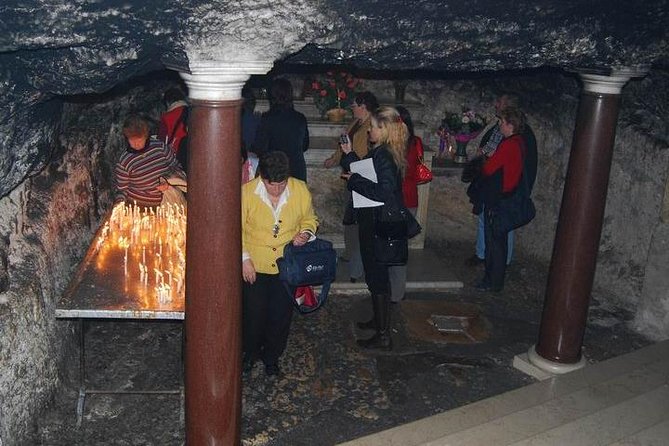
The German Colony is the final listed stop, also for about 30 minutes. Its preserved nineteenth-century buildings reflect the history of German Protestant settlers and the early revival of modern settlement in Palestine.
The architecture gives you a different visual break from Mount Carmel and the religious sites. Here, the interest is in streets, buildings, and the story of a community that helped shape Haifa around 150 years ago.
This is a compact introduction, not a full neighborhood walk. The stop is worthwhile if you enjoy architecture and social history, but anyone hoping for extensive shopping, dining, or free time should note that the schedule is guided and fairly tight.
The German Colony also helps round out the tour’s timeline. You begin with a Roman city, pass through medieval walls, and finish with a preserved nineteenth-century settlement. Few day trips from Tel Aviv offer that range in such a short period.
What the private format adds
The tour is private for your group, with a maximum of four people. That is the clearest difference from a large coach excursion. You do not have to wait for dozens of other passengers, and questions can stay focused on your interests.
Round-trip transport is included in a private vehicle. This matters because Caesarea and Haifa are separate destinations, and the Haifa stops involve hills and changing elevations. You can concentrate on the sites instead of arranging several transport connections.
The guide is described as multilingual and as both a driver-guide and professional art historian. That combination is especially useful at Caesarea, where the site covers 2,000 years and includes Roman, Herodian, Crusader, and later remains.
The strongest praise attached to the experience focuses on the guide’s ability to explain history, culture, and beauty. That is the right way to judge this tour. If you want a simple transfer between photo stops, the private guide may feel unnecessary. If you want the places to make sense, the guide is central to the experience.
Is $1,149 a fair price?
The advertised price is $1,149 per group of up to four people. Split four ways, that is about $287.25 each. For two people, it becomes $574.50 per person, and a solo booking carries the full group price.
That is not a cheap day trip. The value depends on how much you care about private transport, personal guiding, and hotel pickup. You are paying for a dedicated vehicle and guide, not just admission to the sites.
Caesarea National Park entrance fees are extra. Food and drinks are also not included. The Baha’i Gardens, Haifa, Stella Maris, and the German Colony are listed with free admission, but you should still budget for a meal or refreshments during a six to seven hour outing.
For four people, the price is easier to justify, particularly if you would otherwise arrange a private car and separate guide. For two people, compare it with other private day tours before booking. The 4.9 rating from eight reviews points to strong satisfaction, with the guide and the combination of history and scenery receiving the most positive attention, but the small review count means you should still judge the tour by its format and price.
Who will enjoy this tour most?
I would recommend it to you if you want to see both Caesarea and Haifa in one outing without handling transport yourself. It is also a good fit if you like historical explanation, architectural detail, religious sites, and scenic viewpoints in equal measure.
Families or small groups can benefit from the private setup. You have more control over questions and attention than you would on a large group excursion. The included hotel pickup is helpful for anyone who prefers a simple start at 9:00 a.m.
This is less suitable if you want a slow day. Caesarea alone can reward extra time, while Haifa’s gardens, monastery, and German Colony each deserve more than a quick stop if you are a serious architecture or history enthusiast.
You should also be comfortable with walking through archaeological areas and moving between several stops. The tour information says most participants can take part, but it does not promise a completely step-free or low-effort experience.
Final verdict: book it if you value context and convenience
I would book this tour if your priority is to cover Caesarea and Haifa efficiently with a private guide who can connect the sites. The Roman theater, Herod’s harbor, Mount Carmel views, Baha’i Gardens, Stella Maris, and German Colony create a varied day rather than a single-theme excursion.
Book it for four people if possible, since the group price becomes much better per person. Wear modest clothing that covers the shoulders and knees, remember that Caesarea admission is extra, and expect a brisk schedule.
Skip it if you want long independent visits, extended meals, or a deep exploration of Haifa alone. But if you have one day from Tel Aviv and want archaeology, faith, architecture, and coastal views in one well-organized private outing, this is a strong choice.
FAQ
Where does the tour begin?
Pickup begins at 9:00 a.m. from hotels in Tel Aviv, Herzliya, or Netanya.
How long does the tour last?
The experience lasts approximately six to seven hours.
Is the tour private?
Yes. The activity is private, and only your group participates. The price covers up to four people.
Is transportation included?
Yes. Round-trip transport in a private vehicle, hotel pickup, and drop-off at the original departure point are included.
Is the Caesarea entrance fee included?
No. Admission to Caesarea National Park is not included in the tour price.
What should I wear to the Baha’i Gardens?
Shorts and sleeveless clothing are not permitted at the Baha’i Gardens. You should dress modestly for that stop.
Can I cancel for a full refund?
Yes. You can cancel at least 24 hours before the start time for a full refund. Cancellations or changes made less than 24 hours before the start time are not accepted for a refund.
Just added in Tel Aviv
- Wine Tour North of Israel from Tel Aviv★ 5.0 · 2 reviews
- private Full-day Tour to Jericho + the Dead Sea★ 5.0 · 3 reviews
- private Full-Day Tour to Bethlehem and Jerusalem★ 5.0 · 2 reviews
- Private wine tour of Northern Israel★ 5.0 · 4 reviews
- Privet Pickup from Tel Aviv Hotels to the Airport★ 5.0 · 1 review
- VIP Tel Aviv airport Terminal 3 Fast Track Skip Line From plane★ 4.5 · 9 reviews
- Package VIP Skip Line Services in BGN Airport with Transfer to Tel aviv Hotels★ 5.0 · 3 reviews
- Private Transfer from Ben Gurion Airport to Tel Aviv, Bat Yam, Rishon LeZion★ 5.0 · 2 reviews
Haifa and the Galilee Tours, compared.
Nazareth and the Sea of Galilee Day Trip from Tel Aviv
Read our review →
Nazareth and the Sea of Galilee Day Trip from Jerusalem
Read our review →
Caesarea, Rosh Hanikra and Acre Day Trip from Tel Aviv
Read our review →
Travel To Bethlehem, Jericho & Jordan River – Group Guided Tour from Jerusalem
Read our review →
Haifa Shore Excursion: Nazareth and the Galilee – for cruise ship guests only
Read our review →Browse the lists this tour appears in