
Reviewed · CITY TOURS
Classic Jerusalem Old City Tour
Jerusalem packs centuries into a few streets. This private walk with guide and lecturer Nissim Slama takes you through the Old City’s main gates, quarters, sacred sites, and archaeological remains in one focused visit. I like the personal format, with only your group taking part, and I like that the route begins at Jaffa Gate and finishes at the Western Wall.
The tour also earns strong marks for its clear historical explanation, with a perfect 5 rating from 36 reviews and a 100 percent recommendation rate. The main consideration is time: a full visit can take about six hours, and the narrow Old City route includes many major sights in a compact area, so you should be ready for a substantial walking outing.
In This Review
- Key points at a glance
- Why this Old City route works
- Starting at Jaffa Gate and the Tower of David
- The Holy Sepulcher and the Christian Quarter
- Four quarters in one compact walk
- Archaeological sites and the Western Wall
- Nissim Slama’s role as guide and lecturer
- Price, group size, and value
- Timing, walking, and practical planning
- Who will get the most from this tour
- Should you book the Classic Jerusalem Old City Tour?
- FAQ
- How much does the tour cost?
- How long does the tour last?
- Where does the tour begin?
- Where does the tour end?
- Is this a private tour?
- How many people can join one booking?
- Who leads the tour?
- Which areas and landmarks are included?
- Is admission included?
- Can I cancel for a full refund?
Key points at a glance
- A private tour for up to 10 people: Your group receives the guide’s attention instead of sharing the walk with strangers.
- A six-hour route through the Old City: The longer version covers Jaffa Gate, the Tower of David citadel, the Holy Sepulcher, four historic quarters, archaeological sites, and the Western Wall.
- A useful west-to-east finish: Starting at Jaffa Gate and ending at the Western Wall gives the day a clear direction through the Old City.
- Nissim Slama leads the experience: His role as a guide and lecturer makes historical explanation a central part of the walk.
- No admission fee is listed: The tour information identifies the itinerary admission as free, which helps keep the group price easier to assess.
- Flexible duration, with limits: The experience is described as approximately three to six hours, while the detailed route is set at six hours.
Why this Old City route works
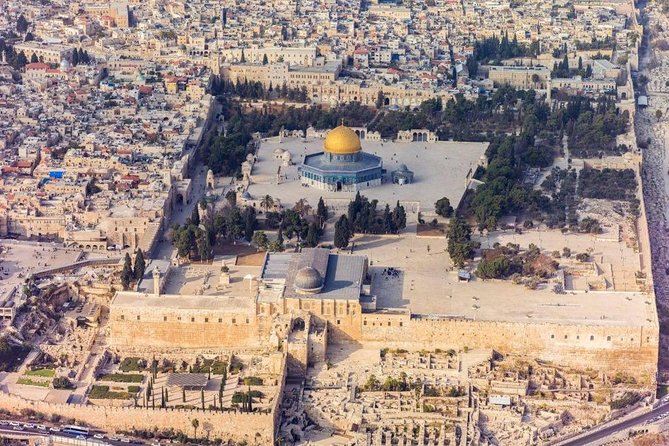
Jerusalem’s Old City covers roughly one square kilometer, yet its streets bring together the Christian, Armenian, Muslim, and Jewish quarters. That compact scale is the great advantage of a guided walk. You can move between major landmarks without spending the day arranging transport, checking maps, or deciding which turning leads to the next important site.
I like the way this route gives you a broad first look at Jerusalem rather than limiting the visit to one religious landmark. You see the city as a place shared, contested, and shaped by several traditions. The guide’s job here is not simply to point at buildings. It is to explain why each quarter matters and how the pieces fit together.
A private tour also makes sense in this setting. The Old City can be confusing even when the distances are short. With a group of up to 10, you can ask questions and keep the pace centered on your own interests. If one part of the route catches your attention, a private format gives you a better chance to discuss it than a large scheduled group usually would.
More things to do in Jerusalem:
- From Tel Aviv: Jerusalem and Bethlehem Guided Day Trip
★ 4.3 · 1,316 reviews - Tel Aviv: Jerusalem, Bethlehem & Dead Sea
★ 4.0 · 881 reviews - From Tel Aviv: Jerusalem Old & New City Bus Tour
★ 4.2 · 824 reviews
Starting at Jaffa Gate and the Tower of David
The meeting point is Jaffa Gate, one of the clearest entrances into the Old City. This is a practical place to begin because it gives you an immediate sense of the walls, the historic entry routes, and the shift from modern Jerusalem into the old quarters.
From there, the tour includes the citadel of the Tower of David. The name can confuse first-time visitors, since the structure is a fortress complex rather than a single tower linked to the biblical king. Its inclusion helps set up the city’s long military and political story before you move deeper into the religious sites.
I appreciate this opening because it starts with the city’s physical defenses and public gateway. You are not dropped straight into a shrine without context. The route first gives you a sense of Jerusalem as a fortified city, then takes you through the communities and sacred places inside the walls.
The information does not specify how long the group spends at each location, so your guide’s judgment matters. A six-hour version allows more room for explanation, while a shorter three-hour version would require a quicker pace and less time at individual sites.
The Holy Sepulcher and the Christian Quarter
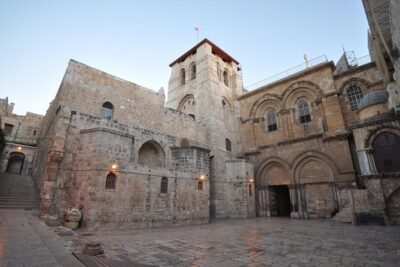
The route continues through the Christian Quarter to the Church of the Holy Sepulcher, identified here as the Holy Sepulcher. For many Christian visitors, this is the most important stop of the day. The site is associated with the crucifixion and burial of Jesus, and several Christian traditions share responsibility for the church.
That shared use is part of what makes the site so significant. It also means the experience can feel layered and complicated. Your guide can help you understand why different chapels, areas, and religious communities occupy the same building and surrounding streets.
I would give this stop careful attention, but I would not expect a quiet, simple visit. A major holy site in a small and heavily visited quarter can feel intense. The tour’s value lies in having Nissim Slama explain the setting while you see it, rather than trying to sort out the religious and historical meaning alone.
The route description does not promise reserved entry, special access, or a private room inside the church. Admission is listed as free for the itinerary, but that does not mean every moment will be leisurely. Keep your expectations realistic and allow the guide’s explanation to be the main benefit.
Four quarters in one compact walk

One of the most useful parts of the tour is its coverage of the Christian, Armenian, Muslim, and Jewish quarters. These are not four separate theme parks. They are connected sections of a living Old City, and the transitions between them show how close different traditions are within Jerusalem’s walls.
The Armenian Quarter may receive less attention from independent visitors simply because its importance is less familiar. Including it gives the tour a wider frame. You are reminded that Jerusalem’s story is not only a contest between two or three groups.
The Muslim Quarter adds another major layer to the route. It is part of the everyday fabric of the Old City as well as a place of religious importance. A guide-led walk can help you read the streets as more than a path between famous monuments.
The Jewish Quarter leads toward the Western Wall, giving the itinerary a clear final direction. I like that the route includes all four quarters instead of treating the Old City as a single undifferentiated place. You get a better sense of how communities, buildings, faith, and politics overlap within a very small area.
Still, the quarter names should not make you expect four neatly separated cultural zones. The boundaries are historical and practical, but the city’s life is more mixed than a simple map suggests. That is another reason the guide’s commentary matters.
More city tours in Jerusalem:
- From Tel Aviv: Jerusalem Old City & Dead Sea Guided Day Tour
★ 4.4 · 389 reviews - Jerusalem: Guided Walking Tour of the Old City
★ 4.7 · 386 reviews - Full Day City Tour of Jerusalem
★ 4.1 · 367 reviews - From Jerusalem Small group tour Old&New City ENTRY FEES INCL
★ 4.0 · 135 reviews
Archaeological sites and the Western Wall
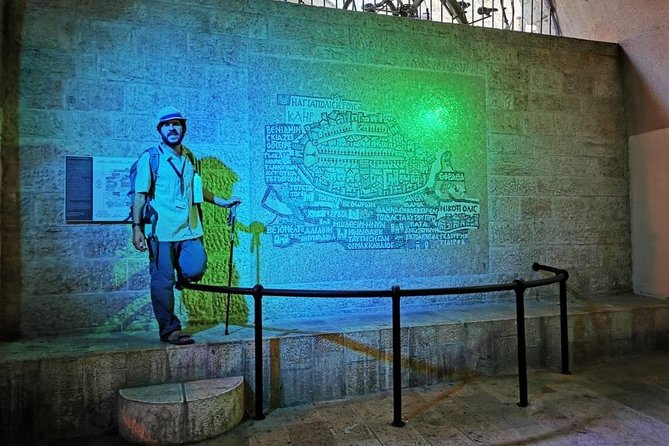
Archaeological sites are also part of the route, though the available details do not name each one individually. That lack of a fixed list is worth noting. You should ask Nissim Slama at the start which archaeological areas are included on your date and how much time the group will spend there.
These remains add physical evidence to the story told by the gates, churches, quarters, and walls. Instead of seeing Jerusalem only through modern religious practice, you can connect the present city to earlier periods of construction and settlement.
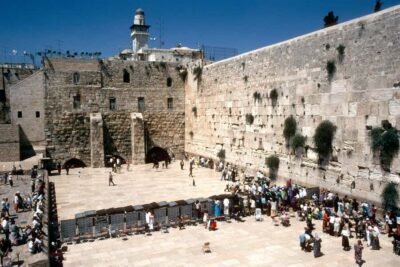
The tour ends at the Western Wall. This is a strong finish because the wall is one of Jerusalem’s most recognizable sacred places and an important site for Jewish prayer. Ending there also makes the route easy to understand: you enter from the western side, cross the Old City, and finish near one of its central landmarks.
The end point is specifically listed as the Western Wall, not the original meeting point. That makes the tour useful if you want to continue from that part of the Old City afterward. The details do not state what transport or onward arrangements are available, so you should plan your next move independently.
Nissim Slama’s role as guide and lecturer
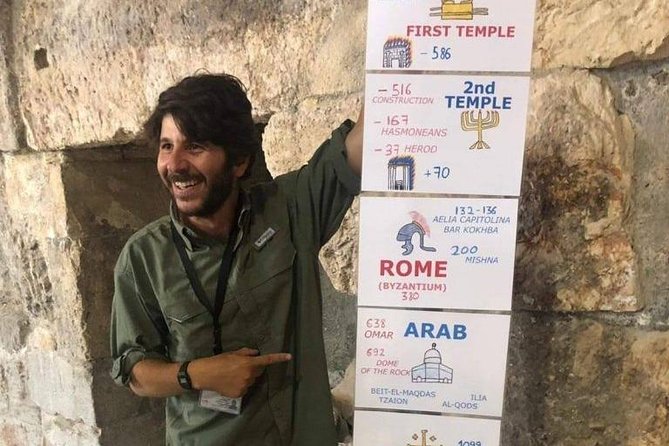
The guide can make or break a historical walking tour, and this experience gives you a named professional: Nissim Slama, listed as a guide and lecturer. That title suggests the tour places real weight on explanation, not just navigation.
The strongest praise attached to the experience focuses on the guide’s ability to provide an interesting, informative history lesson. That is exactly what you want in Jerusalem, where a famous doorway or wall may carry several meanings at once. A good explanation helps you notice what you would otherwise pass without understanding.
I also like that the guide’s local connection is made clear in the tour description. He presents Jerusalem as his city, which gives the walk a personal angle. That does not guarantee that every subject will suit every visitor, but it points to a tour built around interpretation rather than a memorized list of stops.
If you have specific interests, such as archaeology, Christian sites, Jewish history, or the four quarters, tell the guide early. Since this is a private activity, your group has more room to ask questions and shape the emphasis within the planned route.
Price, group size, and value
The listed price is $471.55 per group of up to 10 people. That sounds expensive for one person, but the calculation changes quickly when shared by a full group. At 10 participants, it works out to about $47.16 per person. For five people, it is about $94.31 each. For two people, the per-person cost is much higher.
This is best judged as a private guiding service, not as a basic sightseeing ticket. The listed itinerary admission is free, so most of what you are paying for is Nissim Slama’s time, route planning, local perspective, and historical explanation.
I see good value here for families, friends, or small groups who want a dedicated guide. The price is harder to justify for a solo visitor or a couple unless having a private guide is a major priority. The provider also notes that a discount may be available if you contact him directly before booking online. Since that offer is not stated as a fixed amount, ask for the current price before making plans.
The group limit of 10 is another value point. You get the benefits of a private outing without needing a large party. If your group is close to the maximum, the cost per person becomes much more reasonable.
Timing, walking, and practical planning

The experience is described as lasting approximately three to six hours, while the detailed itinerary gives six hours. Treat six hours as the fullest version of the route. If you only have a short window, confirm in advance whether a three-hour plan can still include the landmarks that matter most to you.
A route through the Old City’s four quarters, major religious sites, archaeological areas, and two well-known landmarks is not a quick stroll. The information does not give a precise walking distance or specify the surface conditions, so plan for an active half-day and wear practical shoes.
The tour starts at Yaffo Gate, also written as Yafo or Jaffa Gate, in Jerusalem. The end point is the Western Wall. Since the start and finish are different, make sure everyone in your group knows where to meet and where the tour ends.
A mobile ticket is provided, and confirmation arrives at booking. The meeting area is near public transportation, which is helpful, although no exact transit instructions are supplied. Service animals are allowed, and the tour information says most people can participate.
Who will get the most from this tour
I would recommend this walk to a first-time Jerusalem visitor who wants a strong overview of the Old City in one day. It suits you especially well if you value explanation and context more than checking off landmarks at top speed.
It is also a good match for a family or group of friends. The private format lets you keep questions within your own group, and the per-person price improves when you have several people sharing the booking.
Religious visitors with a clear focus may also find it useful, since the route includes the Holy Sepulcher and Western Wall along with the surrounding quarters. At the same time, the itinerary is broad enough for visitors who want to understand Jerusalem as a city shaped by several faiths.
I would hesitate if you dislike long walking tours, want guaranteed entry arrangements, or have only a brief amount of time. The route covers a lot, and the exact balance between sites depends on the chosen duration and the guide’s pacing.
Should you book the Classic Jerusalem Old City Tour?
Book it if you want a private, guide-led introduction to Jerusalem’s Old City and your group can share the cost. The combination of Jaffa Gate, the Tower of David citadel, the Holy Sepulcher, all four quarters, archaeological sites, and the Western Wall gives you a useful first framework for the city.
Before booking, confirm whether you will receive the full six-hour route or a shorter version. Ask which archaeological locations are included, and request the direct discount mentioned by the provider before paying online. If Nissim Slama’s clear historical teaching and personal knowledge of Jerusalem are what you want, this tour is a strong choice.
Free cancellation is available when you cancel at least 24 hours before the local start time. Changes or cancellations made within 24 hours are not accepted for a refund.
FAQ
How much does the tour cost?
The price is $471.55 per group of up to 10 people.
How long does the tour last?
The experience is listed as approximately three to six hours. The detailed itinerary describes a six-hour route.
Where does the tour begin?
The meeting point is Yaffo Gate, also known as Yafo Gate or Jaffa Gate, in Jerusalem.
Where does the tour end?
The tour ends at the Western Wall in Jerusalem.
Is this a private tour?
Yes. Only your group participates in the activity.
How many people can join one booking?
The price covers a group of up to 10 people.
Who leads the tour?
The experience is provided by Nissim Slama, listed as a guide and lecturer.
Which areas and landmarks are included?
The route includes Jaffa Gate, the Tower of David citadel, the Holy Sepulcher, the Christian, Armenian, Muslim, and Jewish quarters, archaeological sites, and the Western Wall.
Is admission included?
The itinerary lists the admission ticket as free.
Can I cancel for a full refund?
Yes, if you cancel at least 24 hours before the experience start time. Cancellations or changes made less than 24 hours before the start are not accepted for a refund.
Just added in Jerusalem
- Walking Jerusalem in Russian★ 5.0 · 1 review
- private Full-Day Tour to Bethlehem and Jerusalem★ 5.0 · 2 reviews
- Jerusalem and Dead Sea Trip from Tel Aviv★ 4.0 · 6 reviews
- Tel Aviv & Old City of Jaffa – Tiny group from Tel Aviv★ 4.5 · 9 reviews
- Tel Aviv; Jaffa Old City, Port & Shuk Hapishpishim Walking Tour★ 4.5 · 11 reviews
- Tel Aviv: Food & History Tour of Jaffa Old City & Flea Market★ 5.0 · 1 review
- Discover the Secrets of the Underground Jerusalem with a private tour★ 5.0 · 4 reviews
- Private Tour from Tel Aviv to Jerusalem★ 5.0 · 3 reviews
City Tours, compared.



From Jerusalem Small group tour Old&New City ENTRY FEES INCL
Read our review →
Best seller! Jerusalem old city four quarters tour
Read our review →
Browse the lists this tour appears in