
Reviewed · CITY TOURS
Explore Jerusalem’s Old City
Jerusalem rewards patience. This private tour is interesting because it links sacred places, ancient ruins, personal stories, and present-day life in one long walk. I especially like the custom itinerary, which lets you give more time to Christian sites, Jewish history, archaeology, or the Muslim Quarter. I also like that Roni Peled brings personal experience of Jerusalem and its former border to the guiding, rather than simply reciting dates. The main drawback is the pace: a full day covering all eight stops can be tiring, and the City of David tunnels require extra admission and some comfort with dark, wet passages.
The price is $579.49 per group of up to 15, not per person. That can be a fair deal for a family or larger party, but a couple will pay more per head than on a group excursion. You meet at Jaffa Gate at 8:00 a.m., use a mobile ticket, and finish back at the same meeting point. Lunch at Lina is separate, and the full route can last four to eight hours depending on the plan you choose.
In This Review
- Key reasons this Jerusalem tour is worth considering
- Starting at Jaffa Gate and Mount Zion
- The Armenian Quarter and St. James Church
- City of David: two hours beneath ancient Jerusalem
- The Western Wall and the Temple Mount view
- Through the Muslim Quarter and Cotton Makers Market
- Via Dolorosa and lunch at Lina
- Church of the Holy Sepulchre
- What Roni Peled adds to the day
- Price, timing, and who gets the best value
- Should you book this private Jerusalem tour?
- FAQ
- How long does the tour last?
- What time does the tour begin?
- Where does the tour start?
- Where does the tour end?
- Is this a private tour?
- Is lunch included?
- Is admission to the City of David included?
- Can wheelchair users participate?
Key reasons this Jerusalem tour is worth considering
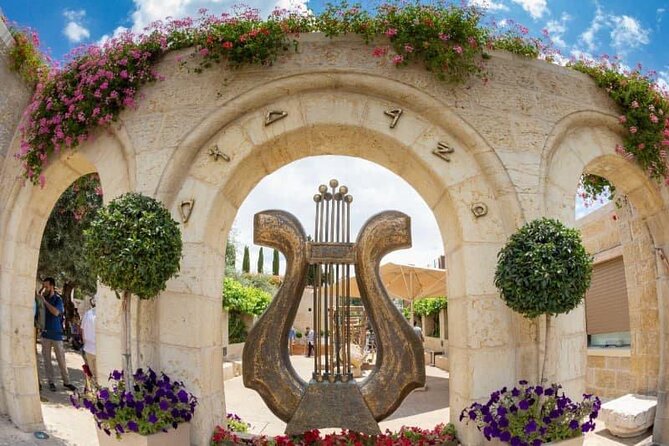
- A private route through all four quarters: You can combine the Armenian, Jewish, Muslim, and Christian sections of the Old City in one outing.
- Personal guiding by Roni Peled: His own Jerusalem childhood and extensive background in Jewish, Christian, Muslim, and Israeli history add a human voice to the monuments.
- The City of David tunnels: The two-hour archaeological section includes the Gichon spring, ancient foundations, and the water-filled Hezekiah Tunnel.
- Flexible half-day or full-day format: You can shape the time around religious interests, archaeology, views, or family stamina.
- Major Christian and Jewish sites: The route includes the Western Wall, Via Dolorosa, Church of the Holy Sepulchre, Mount Zion, and the Last Supper Room.
- Private group value: Up to 15 people can share the quoted price, making this more attractive for families and friends than for solo visitors.
Starting at Jaffa Gate and Mount Zion
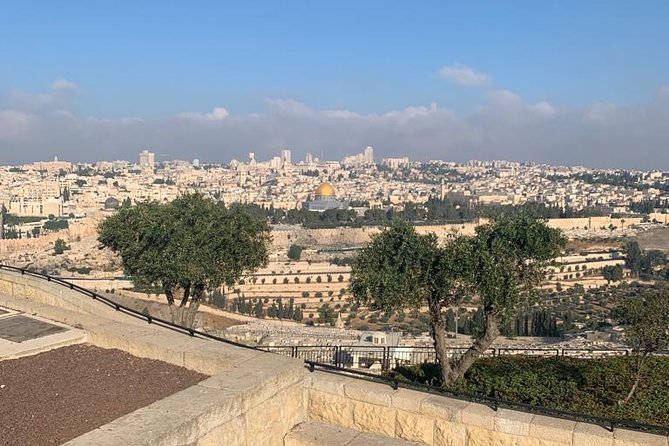
Jaffa Gate is a sensible place to begin. It is one of the Old City’s main entrances, and the guide uses its inscriptions, gates, and nearby Tower of David viewpoint to explain how Jerusalem worked as a fortified city. You also get an immediate feel for the contrast between old stone walls and the active streets outside them.
The opening stop is short, about 10 minutes, but it gives you a useful map in your head. From the western side, you can look toward the city and hear about the guide’s childhood near the Israel-Jordanian border before 1967. That personal connection is one of the most appealing features of this experience. Jerusalem’s political divisions can feel abstract on a map, but a first-person account helps put the old boundary into human terms.
From there, the walk approaches Mount Zion through Zion Gate. The gate still carries marks connected with the fighting of 1948, when the Jewish Quarter fell to Jordanian control, and the guide explains how the area changed after its capture by Israel in 1967. This is a useful stop for anyone interested in modern Israeli history, not just ancient Jerusalem.
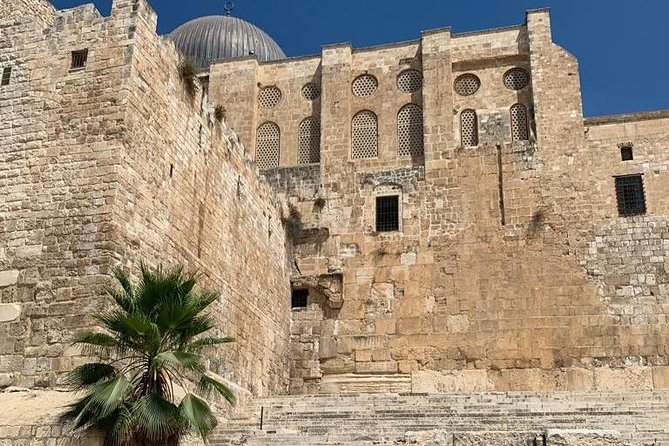
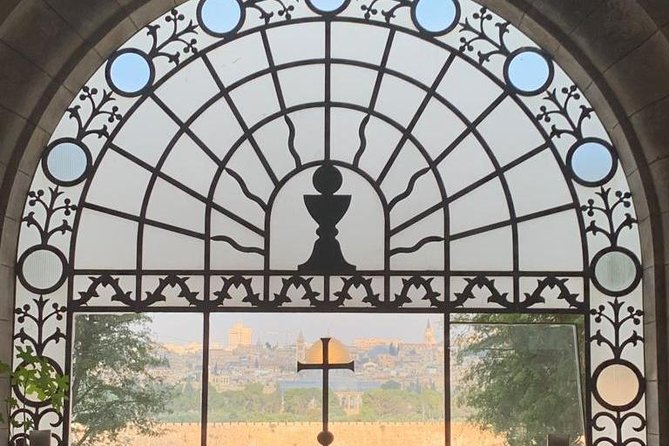
Mount Zion itself packs several important places into roughly an hour. You visit the Room of the Last Supper, the Tomb of King David, and Dormition Church, associated with the death of Mary, the mother of Jesus. The lookout offers views toward the Temple Mount and the Hill of Evil Counsel.
The strength here is variety. In a small area, you move among Jewish, Christian, and later historical traditions. The drawback is that these sites can feel like a rapid sequence if you want quiet time for prayer or close architectural study. Tell Roni early if you want fewer stops and longer explanations.
More things to do in Jerusalem:
- From Tel Aviv: Jerusalem and Bethlehem Guided Day Trip
★ 4.3 · 1,316 reviews - Tel Aviv: Jerusalem, Bethlehem & Dead Sea
★ 4.0 · 881 reviews - From Tel Aviv: Jerusalem Old & New City Bus Tour
★ 4.2 · 824 reviews
The Armenian Quarter and St. James Church
The Armenian Quarter is often calmer than the main commercial lanes, and this tour uses it to introduce one of Jerusalem’s oldest Christian communities. You enter the courtyard of St. James Church, a place connected with James, the brother of Jesus, and James one of Jesus’ twelve disciples.
The stop lasts about 20 minutes. That is enough to see the church’s distinctive architecture and traditional Armenian ceramics, while learning how the Armenian community has maintained a presence in Jerusalem for more than 1,500 years.
I like this section because it moves beyond the best-known landmarks. The Old City is not only a collection of famous biblical locations. It is also a working set of neighborhoods shaped by communities with long memories and distinct customs.
You should keep your expectations measured. The church visit is brief, and access to religious buildings can depend on what is open at the time. The tour description does not promise a long interior visit or a special ceremony. Still, for a first look at the Armenian Quarter, it adds needed balance to a route otherwise dominated by the Western Wall and Christian pilgrimage sites.
City of David: two hours beneath ancient Jerusalem
The City of David is the most physically demanding and archaeologically focused part of the tour. The route explores the area linked with Jerusalem’s earliest capital under King David, including foundations associated with royal buildings, homes, and offices used by officials of the Judean kings.
The headline attraction is the underground water route. You see the Gichon spring, the ancient water source connected with the anointing of Solomon, and enter Hezekiah’s Tunnel with flashlights. The passage is dark and includes walking through water before you emerge near the Shiloam Pool, associated with the Second Temple period.
This is the part I would prioritize if archaeology is your main interest. You are not simply looking at stones behind a barrier. You are following an ancient engineering route and seeing why water mattered so much to a hilltop city. The tunnel also turns history into a physical experience, which can work especially well for families and teenagers.
There are two practical points to weigh. First, admission to City of David National Park is not included in the tour price. Second, the tunnel section is not a casual stroll. You need to be comfortable in a dark, wet passage, and you should plan clothing and footwear with that in mind. The supplied information does not give the ticket price, water depth, or exact tunnel conditions, so confirm those details before booking if anyone in your group has mobility concerns or dislikes enclosed spaces.
The stated time is two hours, making this the longest single stop. That length is justified if you want the archaeology explained properly, but it can make a full day feel heavy when combined with the Old City’s slopes and crowded lanes. A half-day plan may need to leave this out or make it the central focus.
The Western Wall and the Temple Mount view
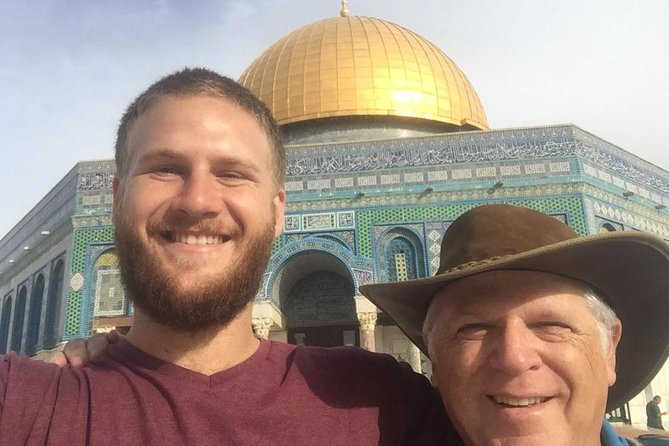
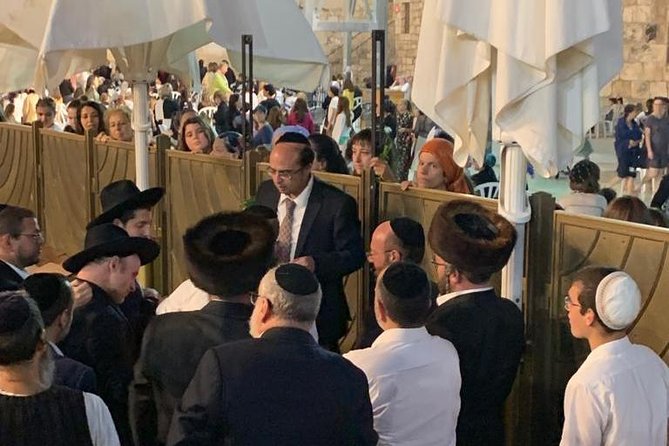
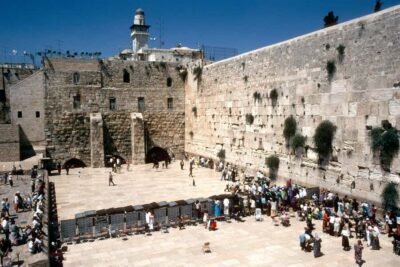
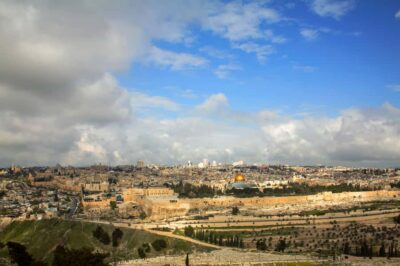
The Western Wall is allotted about 15 minutes. It is the surviving retaining wall associated with the Temple complex, and Jewish worshippers have prayed there for centuries. The guide explains its relationship to the former Holy Temple and the Temple Mount above, where the Dome of the Rock and Al-Aqsa Mosque now stand.
You may place a written prayer in the Wall, following a widely practiced tradition. The short visit gives you time to approach, observe, and pause without turning the experience into a lecture.
The value of having a private guide here is context. The site carries religious importance for Jews, Christians, and Muslims, but the meanings are not interchangeable. A good explanation helps you understand why the same hill can be central to several faiths, while keeping the visit respectful.
Fifteen minutes is not much. If you want extended prayer, a slower look at the plaza, or more discussion of the Temple Mount, say so when the itinerary is set. This is one place where a customized tour can work better than a fixed schedule.
More city tours in Jerusalem:
- From Tel Aviv: Jerusalem Old City & Dead Sea Guided Day Tour
★ 4.4 · 389 reviews - Jerusalem: Guided Walking Tour of the Old City
★ 4.7 · 386 reviews - Full Day City Tour of Jerusalem
★ 4.1 · 367 reviews - From Jerusalem Small group tour Old&New City ENTRY FEES INCL
★ 4.0 · 135 reviews
Through the Muslim Quarter and Cotton Makers Market
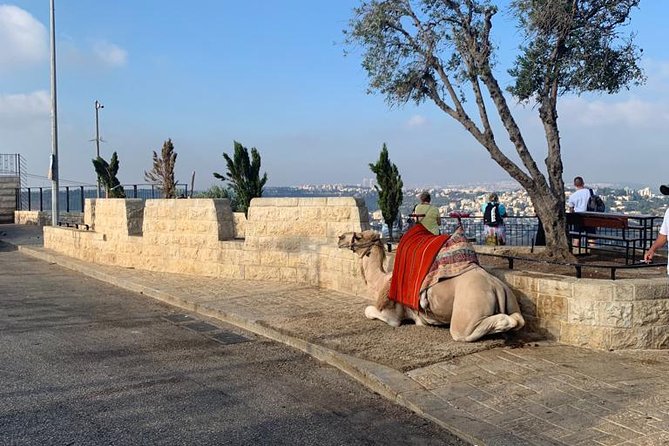
The Muslim Quarter brings a different rhythm. You walk through the bazaar and the 600-year-old Market of Cotton Makers, which remains active today. The route also provides views toward the Dome of the Rock and an explanation of Islam’s development in the area from 638 CE to the present.
This section matters because it keeps the Old City from becoming a one-faith pilgrimage route. You see shops, market lanes, and daily commerce alongside monuments with enormous religious weight. The guide can connect what you are seeing now with the political and religious changes that shaped the city over many centuries.
The scheduled time is about 30 minutes. That is enough for an introduction, but not enough for serious shopping or a leisurely market meal. If you enjoy local goods, ask whether the itinerary can allow extra time. Since this is private, you have more room to make that request than you would on a large coach tour.
The lanes can be crowded and confusing, and the stone paving is not always easy underfoot. The tour can be adapted for wheelchair users, but the Old City’s historic streets and changing access conditions still make it wise to discuss the exact route before the day begins.
Via Dolorosa and lunch at Lina
The Via Dolorosa section follows places associated with Jesus’ final journey. It lasts about an hour and includes a break for lunch at Lina, a hummus restaurant described as a local favorite.
Lunch is not included, so plan to pay separately. That is a small but important point when comparing the group price with your total cost for the day. The meal break also gives the walking schedule a natural pause, which is useful after Mount Zion, the City of David, and the market.
A private guide can make the Via Dolorosa more useful than simply following numbered stations. You can ask how the route developed, which locations have longstanding tradition, and how the modern streets relate to the Christian pilgrimage story. The information supplied does not specify a fixed lunch menu, reservation, or guaranteed seating, so do not assume the meal is part of the booking price.
If your group has children or people who are less interested in religious history, this is another section to tailor. You might prefer a shorter explanation and more time for food, or you might want the full background.
Church of the Holy Sepulchre
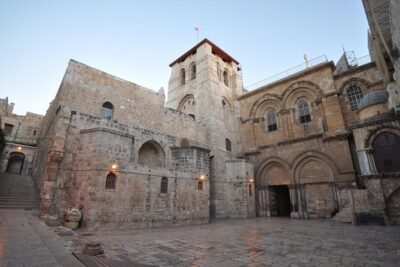
The final major sight is the Church of the Holy Sepulchre, with about an hour inside or around the site. Christian tradition identifies this complex with the crucifixion, the anointing bed, and the tomb of Jesus.
This is one of Jerusalem’s most powerful places, but it is not an easy building to understand at a glance. It has several chapels, levels, traditions, and church communities sharing one complex. Roni’s strength, based on the way his tours are described, is his ability to explain Christian history and religious context without reducing the church to a quick photo stop.
Allow yourself to absorb the atmosphere. The church can be visually busy and emotionally intense, especially for pilgrims. An hour gives you a reasonable introduction, although actual access to particular areas can vary. The tour information does not promise entry to every chapel or a private opening.
The order of this visit is sensible for many people. After hearing about the Via Dolorosa, you reach the place that gives the route its central meaning. It also ends the day with a major sight rather than a minor landmark.
What Roni Peled adds to the day
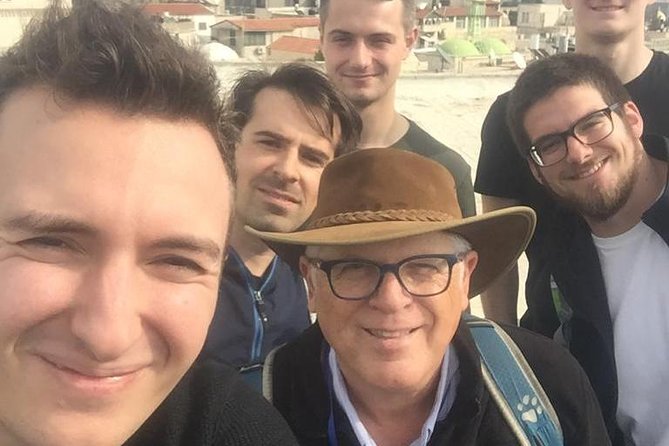
The guide is the core reason to choose this experience over a standard group outing. Roni Peled is described as working at the Israel Museum in Jerusalem, and his tours draw on broad knowledge of Jewish, Christian, Muslim, and Israeli history. The strongest praise centers on clear English, energy, patience, and the ability to adjust the route to personal interests.
That flexibility is not just a marketing phrase. A family with children aged 10 and 14 used his tours to create a more understandable visit, while a pastor with a strong interest in the Bible found the historical and religious detail rewarding. Another group that had already visited Jerusalem found new places and fresh explanations on a return visit.
You should still tell the guide what you want. Ask for more archaeology if the City of David interests you. Request extra Christian context at the Church of the Holy Sepulchre. If modern Israeli history matters most, make that clear at Jaffa Gate, Zion Gate, and Mount Zion.
The personal stories are an asset, but they may not appeal equally to everyone. Some people want a strictly academic tour, while others prefer a guide who connects history to lived experience. This experience leans toward the second style.
Price, timing, and who gets the best value
At $579.49 for up to 15 people, the arithmetic changes with group size. A party of 10 pays about $58 per person, while two people pay close to $290 each before lunch and City of David admission. For a family reunion, church group, or group of friends, the private format can offer strong value. For a couple, compare it with a small shared tour before committing.
The duration can range from four to eight hours. That wide span is useful because it supports a focused half-day or a fuller route, but you need to confirm the exact plan. The supplied itinerary, if followed in full, is closer to a full-day experience because the stop times alone add up to several hours, without counting walking between locations.
The meeting point is Jaffa Gate hostel at Jaffa Gate, and the tour starts at 8:00 a.m. It ends back at the meeting point. The area is near public transportation, and most people can participate. Wheelchair access can be accommodated, but ask for a specific accessible route because ancient streets, steps, and narrow passages can affect the plan.
Confirmation is sent within 48 hours, subject to availability. You can cancel for a full refund if you do so at least 24 hours before the start time. Changes or cancellations inside that window are not accepted.
Should you book this private Jerusalem tour?
Book it if you want a guide-led introduction that crosses religious quarters and connects ancient sites with modern Jerusalem. It is especially well suited to groups of four or more, families with varied interests, repeat visitors, and anyone who wants to shape the day rather than follow a fixed script.
I would choose the full-day option if the City of David tunnels, Western Wall, Via Dolorosa, and Church of the Holy Sepulchre all matter to you. Choose a shorter custom route if you prefer slower visits, have limited mobility, or want to focus on one theme.
The price is harder to justify for just one or two people, and the full route may feel rushed or tiring. But Roni’s personal connection, clear historical explanations, and willingness to adjust the schedule give this experience something a basic sightseeing walk cannot. Tell him your priorities before you start, and you are more likely to get a thoughtful day rather than a checklist of famous stones.
FAQ
How long does the tour last?
The experience lasts approximately four to eight hours, depending on whether you choose a half-day or full-day plan and how the itinerary is customized.
What time does the tour begin?
The stated start time is 8:00 a.m.
Where does the tour start?
You meet at Jaffa Gate hostel at Jaffa Gate in Jerusalem.
Where does the tour end?
The tour ends back at the meeting point.
Is this a private tour?
Yes. Only your group participates, with a maximum group size of 15 people.
Is lunch included?
No. Lunch at Lina is not included in the tour price and must be paid for separately.
Is admission to the City of David included?
No. Admission to City of David National Park is not included.
Can wheelchair users participate?
The tour can be adapted for travelers with wheelchairs. Discuss the exact route in advance because some historic areas and tunnel sections may require changes.
Just added in Jerusalem
- Walking Jerusalem in Russian★ 5.0 · 1 review
- private Full-Day Tour to Bethlehem and Jerusalem★ 5.0 · 2 reviews
- Jerusalem and Dead Sea Trip from Tel Aviv★ 4.0 · 6 reviews
- Tel Aviv & Old City of Jaffa – Tiny group from Tel Aviv★ 4.5 · 9 reviews
- Tel Aviv; Jaffa Old City, Port & Shuk Hapishpishim Walking Tour★ 4.5 · 11 reviews
- Tel Aviv: Food & History Tour of Jaffa Old City & Flea Market★ 5.0 · 1 review
- Discover the Secrets of the Underground Jerusalem with a private tour★ 5.0 · 4 reviews
- Private Tour from Tel Aviv to Jerusalem★ 5.0 · 3 reviews
City Tours, compared.


From Jerusalem Small group tour Old&New City ENTRY FEES INCL
Read our review →
Best seller! Jerusalem old city four quarters tour
Read our review →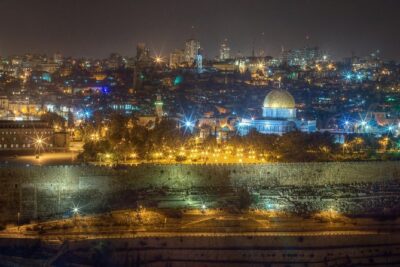
Browse the lists this tour appears in