
Reviewed · DEAD SEA DAY TRIPS
From Jerusalem: Masada and Dead Sea Private Tour
A fortress, a desert, and a very salty swim. This 10-hour private tour from Jerusalem brings Masada, Ein Gedi, the Qumran caves, and the Dead Sea into one demanding but memorable day. I like having a licensed guide beside me throughout the route, and I like the comfort of hotel pickup in a private, air-conditioned car. The main drawback is price: at $460 per person, with entrance fees, parking, tolls, food, and drinks extra, this makes the most sense for people who value privacy and personal guidance.
I also like the way the day connects several major sites instead of treating Masada and the Dead Sea as isolated stops. You move through the Jordan Valley, see Jericho in the distance, hear about David at Ein Gedi, and visit the area tied to the Dead Sea Scrolls. The tradeoff is pace. Ten hours is a long day, and the heat, walking, cable car, and mineral mud can leave you ready for a quiet evening.
In This Review
- Key points to know before booking
- Leaving Jerusalem through the Jordan Valley
- Masada by cable car, with the Snake Path below
- Ein Gedi, waterfalls, and the story of David
- Qumran and the caves tied to the Dead Sea Scrolls
- Floating at the Dead Sea and trying the mineral mud
- What the private format adds
- Is $460 per person a fair price?
- Who should book this day?
- Final decision: a strong choice for a history-focused private day
- FAQ
- How long does the Masada and Dead Sea tour last?
- Is hotel pickup included?
- Is the tour private?
- Which languages are available?
- Are entrance fees included in the price?
- What should I bring?
Key points to know before booking
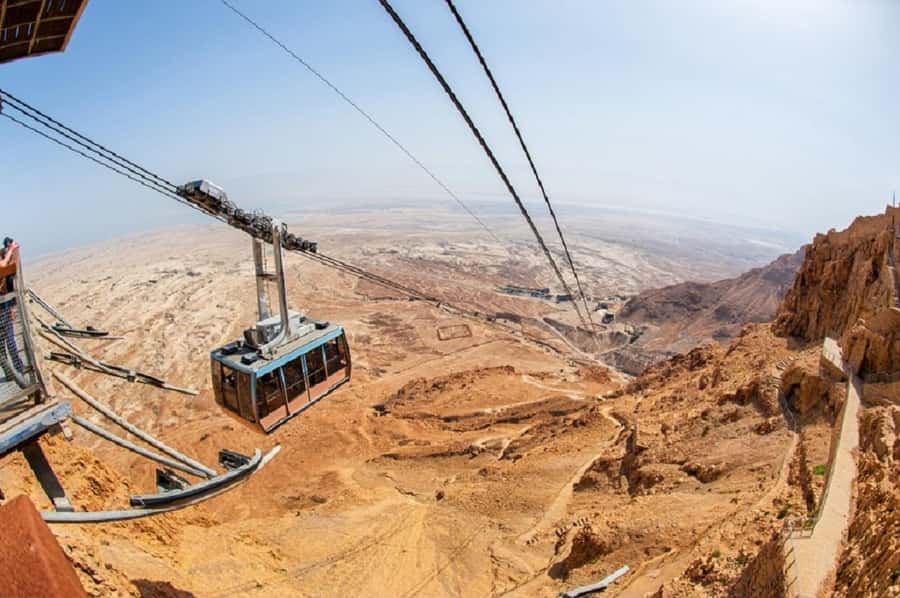
- Masada by cable car: Reach the mountain summit without climbing the Snake Path, then see Herod’s bathhouse, pool, storehouses, synagogue, and siege remains.
- A private guide for the full day: Your guide can explain the biblical, Roman, and archaeological stories as you move between sites.
- Ein Gedi adds a freshwater stop: Waterfalls and pools offer a striking contrast to the dry Judean Desert and the salty Dead Sea.
- Qumran connects the day to the Dead Sea Scrolls: You can see caves associated with the preservation and discovery of the ancient texts.
- The Dead Sea is more than a swim: You can float, apply mineral-rich mud, and wash it off before returning to Jerusalem.
- Bring more than swimwear: Comfortable shoes, a hat, sandals, towel, water, cash, and closed-toe shoes will all be useful.
Leaving Jerusalem through the Jordan Valley
The journey begins with pickup at your hotel or private address in Jerusalem. A driver collects you in a new, air-conditioned private car, which is a real advantage on a long desert day. You do not need to find a bus station, share a large vehicle, or work out the route yourself.
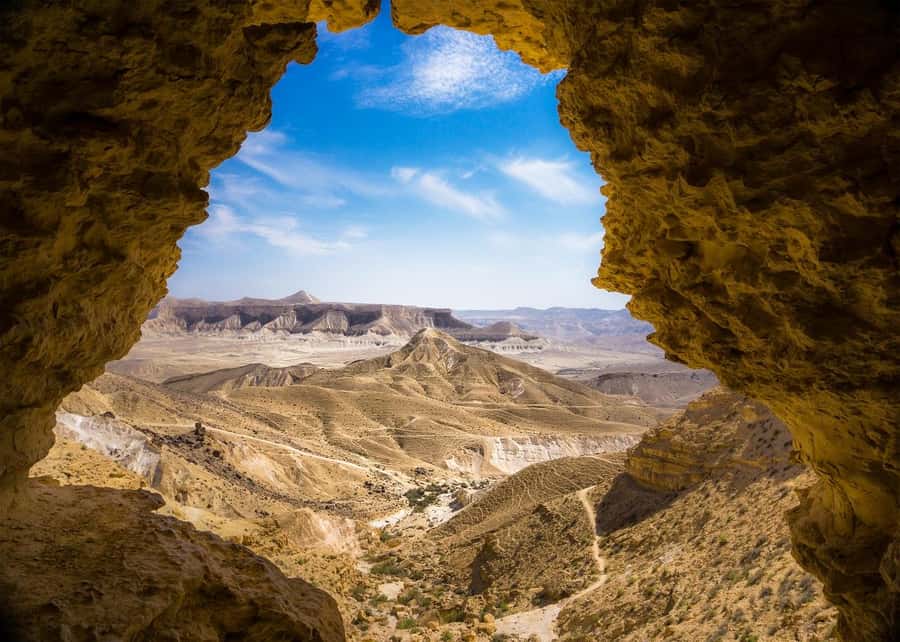
As you descend through the Jordan Valley, your guide can frame the scenery with stories from the Bible and the region’s long human past. Jericho appears in the distance, and the route gives you a chance to picture the Israelites crossing the Jordan River into the Promised Land.
This early drive is not simply dead time. It helps you understand the change in elevation and climate as Jerusalem gives way to the lower, hotter Dead Sea area. Still, the route is a long one, so I would treat the drive as part of the experience rather than expect constant sightseeing through the car windows.
The guide’s role matters here. A private day lets you ask questions as they occur instead of waiting for a group explanation. The only guide feedback provided for this experience praises the guide as helpful and well informed, which fits the most important need on a day built around complicated historical sites.
More Dead Sea day trips:
- Tel Aviv: Jerusalem, Bethlehem & Dead Sea
★ 4.0 · 881 reviews - From Jerusalem: Masada & Dead Sea Full Day Tour with Pick Up
★ 4.5 · 815 reviews - Masada and the Dead Sea Day Trip from Jerusalem
★ 4.5 · 757 reviews
Masada by cable car, with the Snake Path below
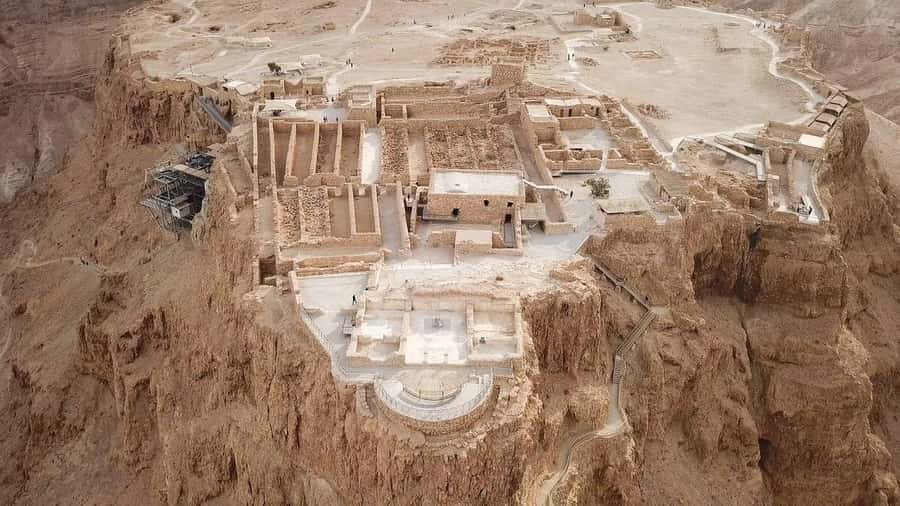
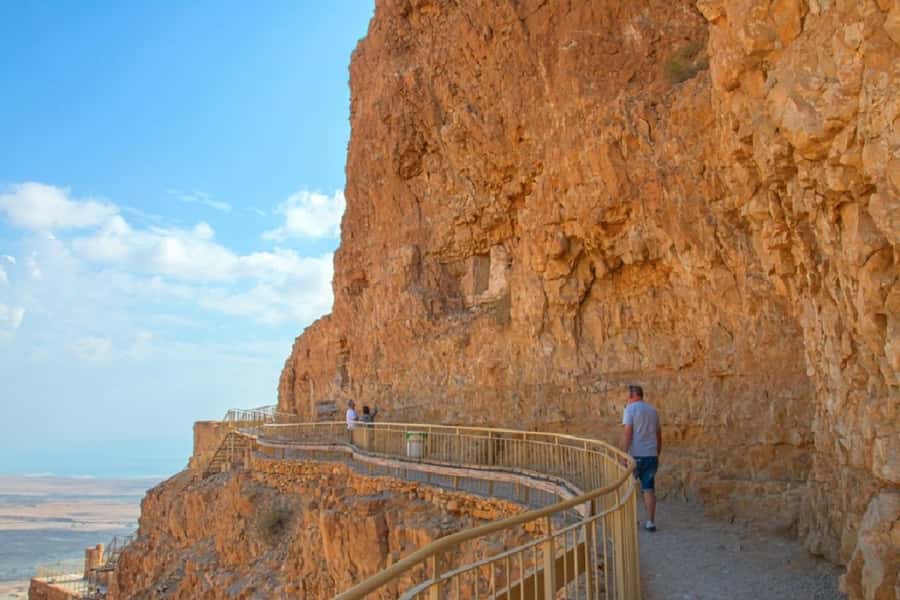
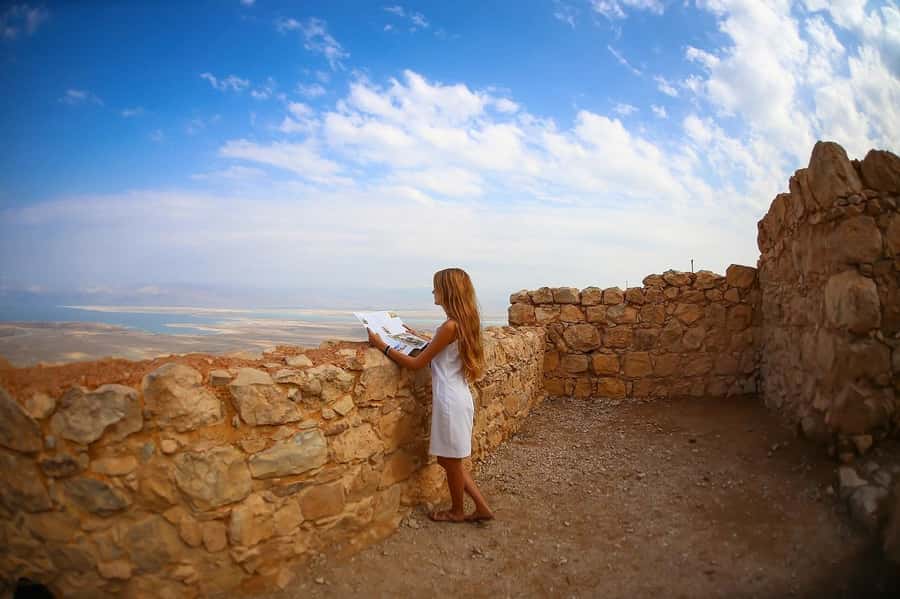
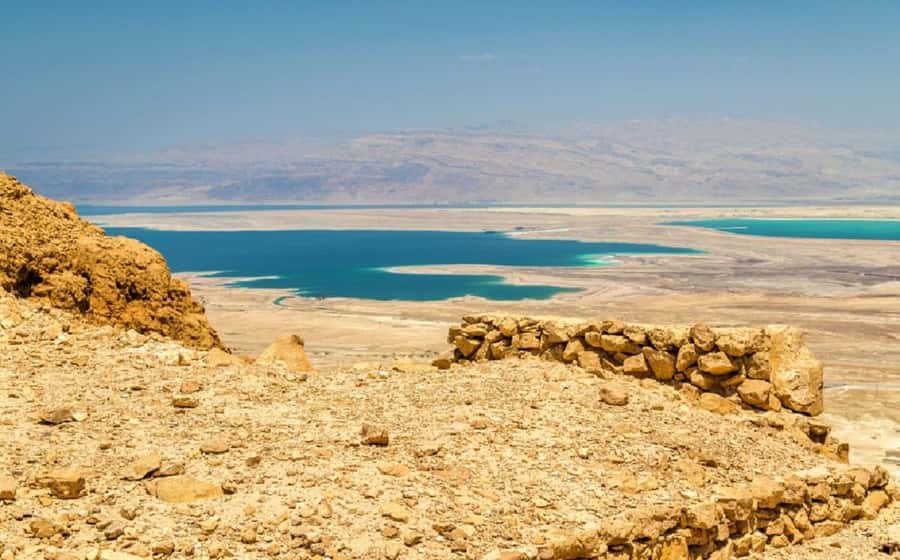
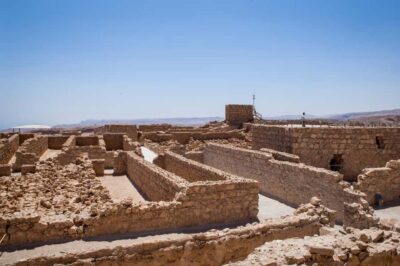
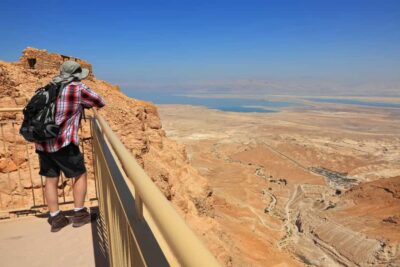
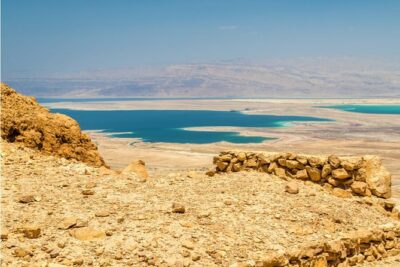
Masada is the main event. This flat-topped mountain fortress rises above the Dead Sea, and you reach its summit by cable car. From above, you can look down toward the Snake Path, the steep route used to reach the fortress long before modern transport.
The cable car makes the visit possible for more people and saves energy for exploring the ruins. It does not make Masada effortless. You will still walk around the summit, and the open, exposed setting can feel hot, especially when the sun is strong. Wear sturdy, comfortable shoes and carry water.
Your guide explains how Masada became one of the last Jewish strongholds against Rome. People lived under siege on the mountaintop, and the remains help turn that story into something physical rather than distant. You see the defensive position, the buildings, and the traces of daily life in a place that was never designed for easy living.
The well-preserved synagogue is one of the most important stops. It provides evidence of synagogue use during the Second Temple period and gives the site a direct connection to Jewish religious life at the time. Your guide can also point out the first piece of parchment discovered by Israeli archaeologists, a small object with great archaeological importance.
Masada’s famous bathhouse, swimming pool, and storehouses show another side of the site. They reveal how people managed water, food, hygiene, and communal life while surrounded by desert and under Roman pressure. The pool and bathhouse are especially useful for understanding the practical systems that supported the settlement.
I recommend taking your time with the views, but do not forget to look closely at the ruins. The broad scene is impressive, yet the small details, such as storage rooms and building remains, tell you how the people on Masada actually lived.
Entrance fees are not included in the tour price. That is important when calculating the final cost, since the cable car and site admission may add to your bill. Ask for the current entrance costs before booking so the advertised price does not surprise you later.
Ein Gedi, waterfalls, and the story of David

After Masada, the route continues to Ein Gedi. This stop changes the mood completely. Instead of bare rock and ancient fortifications, you find freshwater pools and beautiful waterfalls in an oasis setting.
Ein Gedi is linked with the story of David, who is said to have taken refuge there while hiding from King Saul’s anger. The biblical connection gives your guide another chance to connect the physical place with the stories that shaped the region’s identity.
The freshwater is the point. After time in the dry Jordan Valley and on Masada, waterfalls and pools provide a welcome visual contrast. Depending on the exact stop and conditions, your visit may focus more on seeing the water and natural setting than on a long walk, so you should ask your guide how much walking is planned.
This is also where sensible footwear matters. Comfortable shoes are recommended, and closed-toe shoes are specifically listed among the useful items to bring. Sandals can help later at the Dead Sea, but they are not a replacement for shoes that handle uneven ground.
Qumran and the caves tied to the Dead Sea Scrolls
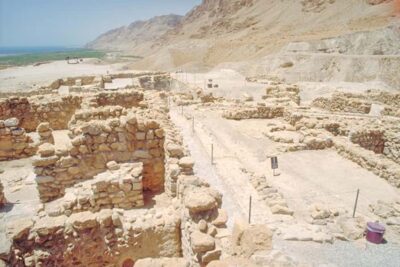
The Qumran Caves are another strong historical stop. These are the caves where the Dead Sea Scrolls were preserved and later found, making the site important far beyond its size.
You stop with the guide to see some of the caves and learn about the discovery. The value here comes from context. Without an explanation, a cave in the desert can look like a simple opening in the rock. With the story of the scrolls, the location becomes part of one of the most important archaeological discoveries connected with ancient Jewish life.
The tour description does not promise a long archaeological visit or a full museum experience, so keep your expectations focused. This is a meaningful stop for understanding the scrolls and the desert communities connected with them, but Masada remains the larger site visit of the day.
Qumran also helps tie together the route. The Dead Sea is not only a place for floating and spa treatments. It has been a place of religious study, refuge, settlement, and preservation for many centuries.
A completely different kind of day:
- From Tel Aviv: Jerusalem and Bethlehem Guided Day Trip
★ 4.3 · 1,316 reviews - From Tel Aviv: Jerusalem Old & New City Bus Tour
★ 4.2 · 824 reviews - Day Tour to Jerusalem and Bethlehem from Tel Aviv
★ 4.5 · 720 reviews - From Jerusalem: Nazareth and Sea of Galilee Tour
★ 4.5 · 588 reviews
Floating at the Dead Sea and trying the mineral mud
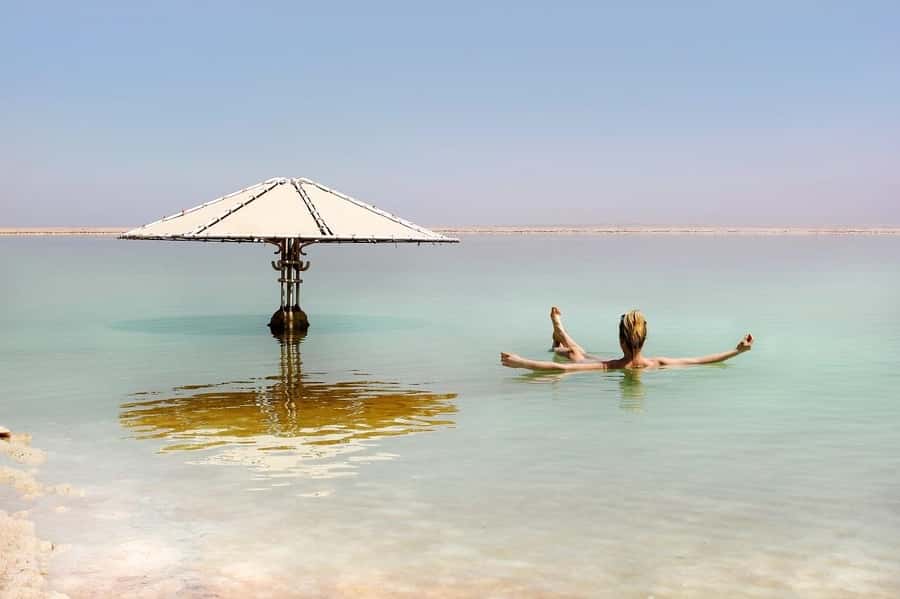
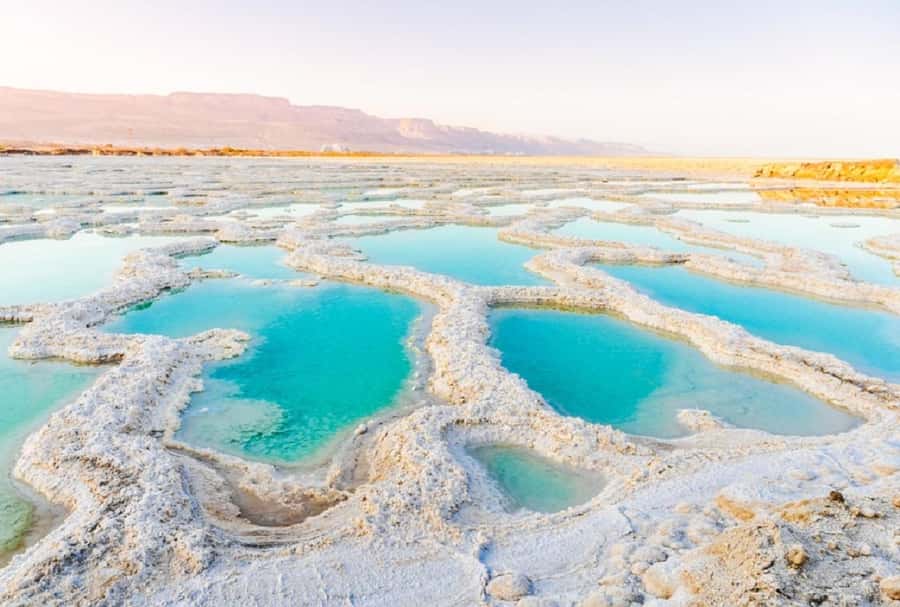
The final major stop is a Dead Sea resort. Here you can enter the water, float on its surface, and cover your body with the mineral-rich mud for which the area is known.
The floating sensation is the simplest pleasure of the day. The water’s high salt content makes it unusually easy to stay on the surface. You should avoid treating it like an ordinary swimming pool, though. The tour specifically recommends bringing swimwear, a towel, sandals, water, and cash, all of which make this part easier.
The mud is often said to be good for the skin, and the description links it to stories about Cleopatra’s youthful appearance. Treat that as a traditional claim rather than a medical promise. The practical appeal is the experience itself: spreading the dark mud over your skin, waiting, then washing it away.
Afterward, you can rinse off in a nearby sulphur pool. This gives the stop a spa-like finish, though the tour does not specify how much time you receive at the resort. Ask your guide about the schedule if floating is a priority for you. With several major stops in one day, the Dead Sea visit may feel brief if the earlier sites take longer than planned.
Be careful around the water. Do not shave immediately before the visit, and keep your hands away from your eyes while you have salt or mud on your skin. Those are general comfort tips for any Dead Sea stop, and they matter more here because the tour combines the resort with a full day of sightseeing.
What the private format adds
The private setup is the clearest reason to choose this tour over a cheaper shared excursion. Pickup is available from any address in Jerusalem, and the group travels in a private air-conditioned car. You can ask for explanations, clarify biblical references, and discuss how much time to give each stop.
That flexibility is useful on a route with different kinds of sites. You may want extra time at Masada, while someone else might care most about the Dead Sea. A private guide can respond to those interests more easily than a fixed large-group schedule.
The experience is offered with live guiding in English, French, German, and Spanish. It is also listed as wheelchair accessible. Since the day includes a mountain fortress, outdoor paths, waterfalls, and a resort, I would still confirm the exact access arrangements for each stop before booking if mobility is a major concern.
The private car also protects you from one common problem on a desert day: fatigue. You can rest between sites instead of managing public transport or sitting in a crowded coach. The journey remains long, but it is a more comfortable way to cover this much ground.
Is $460 per person a fair price?
The price is $460 per person, and that figure does not include entrance fees, parking, toll roads, food, or drinks. On paper, it is expensive for a day trip. The value depends heavily on how many people share the private vehicle and how much you care about personal service.
For a solo visitor or a couple, the cost may feel steep once admissions and meals are added. For a small private group, the price can make more sense because you are paying for a full-day guide, hotel pickup, private transport, and a route that would be awkward to arrange independently in one day.
The guide is the key part of the value. Masada, Ein Gedi, and Qumran each have different stories, and the route crosses a large area. A qualified licensed guide can make the drive useful and help you understand why these sites matter rather than simply dropping you at the entrance.
I would compare the full cost against a shared tour, but do not compare only the headline price. Add the entrance fees, transport costs, and any food you plan to buy. If privacy, comfort, and historical explanation matter to you, the higher cost may be justified. If your main goal is simply to float in the Dead Sea, a shorter and cheaper option may be better.
Who should book this day?
I would recommend this tour to someone staying in Jerusalem who wants the major Dead Sea area highlights in one organized day. It suits first-time visitors who want historical background without planning several separate excursions.
It is also a good match for families or small groups who prefer a private car and want the freedom to ask questions. The tour’s wheelchair-accessible designation may help some visitors, but the exact conditions at Masada, Ein Gedi, and Qumran should be confirmed in advance.
You should think twice if you dislike long days, hot outdoor sites, or a busy schedule. Masada requires walking, the desert can be intense, and the Dead Sea stop comes after several hours of sightseeing. Comfortable shoes, a hat, water, and a towel are not optional extras in practice.
Free cancellation up to 24 hours before departure and the option to reserve now and pay later make the booking less rigid. The tour is also available in English, French, German, and Spanish, which is useful if you want a full explanation in one of those languages.
Final decision: a strong choice for a history-focused private day
Book this tour if you want Masada’s archaeology, Ein Gedi’s water, Qumran’s scroll connection, and the Dead Sea in one carefully guided route from Jerusalem. The strongest feature is the private format, supported by hotel pickup, air-conditioned transport, and a guide available throughout the day.
The main question is value. At $460 per person before entrance fees and other expenses, it is not a budget outing. I would choose it for a small group that wants comfort, historical explanation, and an efficient way to cover the region. I would skip it if you only want a quick Dead Sea swim or if a long, full-day schedule sounds tiring.
FAQ
How long does the Masada and Dead Sea tour last?
The tour lasts 10 hours, including pickup and drop-off in Jerusalem.
Is hotel pickup included?
Yes. Pickup and drop-off are included from your hotel or private address in Jerusalem. The driver can collect you from any address in the city.
Is the tour private?
Yes. It is a private group experience using private transport.
Which languages are available?
Live guiding is available in English, French, German, and Spanish.
Are entrance fees included in the price?
No. Entrance fees, parking, toll roads, food, and drinks are not included.
What should I bring?
Bring comfortable shoes, closed-toe shoes, a hat, swimwear, a towel, sandals, water, and cash. The tour specifically recommends comfortable shoes and water.
Just added in Jerusalem
- Walking Jerusalem in Russian★ 5.0 · 1 review
- private Full-Day Tour to Bethlehem and Jerusalem★ 5.0 · 2 reviews
- Jerusalem and Dead Sea Trip from Tel Aviv★ 4.0 · 6 reviews
- Tel Aviv & Old City of Jaffa – Tiny group from Tel Aviv★ 4.5 · 9 reviews
- Tel Aviv; Jaffa Old City, Port & Shuk Hapishpishim Walking Tour★ 4.5 · 11 reviews
- Tel Aviv: Food & History Tour of Jaffa Old City & Flea Market★ 5.0 · 1 review
- Discover the Secrets of the Underground Jerusalem with a private tour★ 5.0 · 4 reviews
- Private Tour from Tel Aviv to Jerusalem★ 5.0 · 3 reviews
Dead Sea Day Trips, compared.
Masada & Dead Sea Full Day Tour with Pick Up
Read our review →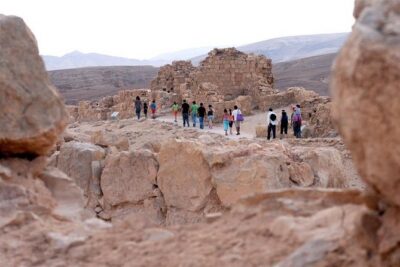
Masada and the Dead Sea Day Trip from Tel Aviv
Read our review →
Masada and the Dead Sea Day Trip from Jerusalem
Read our review →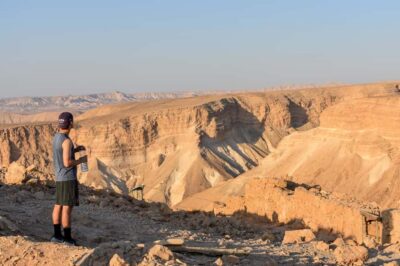
Browse the lists this tour appears in