Reviewed · GUIDED
Guided Shabbat Experience in Jerusalem
Shabbat begins with a city-wide change of pace. This 2.5-hour walk through Jerusalem’s Old City focuses on Jewish culture and Shabbat, taking you from Jaffa Gate through the Jewish Quarter to the Western Wall. I like the clear route and the chance to see several important sites in one compact outing. I also like that guide Orna receives specific praise for her friendly approach and for ending at the Western Wall.
The main thing to check is the schedule. The tour is described as a Friday-afternoon experience, yet the published start time is 5:00 am, so confirm the exact time and day before booking. The Tower of David and Hurva Synagogue also charge separate admission, and food and drinks are not included.
In This Review
- Key points to know before booking
- Why the hours before Shabbat feel different
- Jaffa Gate, the western entrance to the Old City
- The Tower of David and Jerusalem’s changing story
- Forty-five minutes in the Jewish Quarter
- Hurva Synagogue, rebuilt after destruction
- The Western Wall as the final stop
- What $42 buys you, and what it does not
- Practical details for a smoother visit
- Who should book this Old City walk?
- Should you book it?
- FAQ
- How long does the Guided Shabbat Experience in Jerusalem last?
- What time does the tour start?
- Where does the tour begin?
- Where does the tour end?
- What sites are visited?
- Is admission to the Tower of David included?
- Is admission to Hurva Synagogue included?
- Are food and drinks provided?
- What is the cancellation policy?
Key points to know before booking
- Shabbat preparation gives the walk its purpose: You see Jerusalem as the city prepares for its weekly day of rest.
- Orna is a praised guide: One review specifically highlights her pleasant manner and the way she led the group to several meaningful sites.
- The route ends at the Western Wall: This gives the tour a strong religious and emotional finish.
- Five Old City stops fit into 2.5 hours: You get a useful overview, but some stops are necessarily brief.
- The group is limited to 20 people: That is small enough for a more personal walk than a large coach tour.
- The $42 price covers guiding, not admissions or refreshments: Budget extra if you want to enter the paid sites.
Why the hours before Shabbat feel different
Jerusalem’s Old City is always full of major sights, but the hours before Shabbat give this walk a special focus. Friday preparation brings a sense of anticipation to the streets. Markets, prayers, and singing help explain that Shabbat is not simply a religious observance on a calendar. It changes the rhythm of the city.
That setting is the real reason to book this experience. You are not just moving from monument to monument. You are seeing a part of Jerusalem’s weekly life, with the guide explaining the customs and meaning behind what you see.
The route is especially useful if you are new to the Old City. It connects Jaffa Gate, the Jewish Quarter, Hurva Synagogue, and the Western Wall in a logical order. You will not cover every corner of Jerusalem, but you will leave with a clearer sense of how the city’s Jewish quarter fits together.
The timing needs attention. The published start time is 5:00 am, while the description places the experience before Shabbat on Friday afternoon. Those details do not naturally match, so I would contact Abraham Tlalim Tours LTD before paying. A schedule check matters here, since the atmosphere you are promised depends heavily on visiting at the right point before Shabbat begins.
More things to do in Jerusalem:
- From Tel Aviv: Jerusalem and Bethlehem Guided Day Trip
★ 4.3 · 1,316 reviews - Tel Aviv: Jerusalem, Bethlehem & Dead Sea
★ 4.0 · 881 reviews - From Tel Aviv: Jerusalem Old & New City Bus Tour
★ 4.2 · 824 reviews
Jaffa Gate, the western entrance to the Old City
The walk begins at Omar Ben el-Khatab Street 26, near Jaffa Gate. This is one of the Old City’s seven main gates and its western entrance. It takes its name from Jaffa, the port city on the Mediterranean, and historically served as an entry point for Christian pilgrims arriving in Jerusalem.
Jaffa Gate is a practical starting place because it connects the modern city with the walled Old City. Shops, cafes, and landmarks surround it, so you can get your bearings quickly. The nearby Tower of David also gives the opening minutes a strong visual focus.
The planned stop lasts about 15 minutes and admission is free. That is enough time for an introduction, a look at the gate, and some context from the guide. It is not enough time for a long exploration of the area, so do not expect a full visit to every nearby attraction.
I like this opening because it puts the Old City into geographic context. You begin at a major entrance rather than being dropped into a narrow lane with no idea where you are. If you arrive early, the meeting point is near public transportation, which makes the start easier to reach.
The Tower of David and Jerusalem’s changing story
The Tower of David is a historic fortress near Jaffa Gate. Although its name links it to King David in Jewish tradition, there is no evidence that King David built the tower. The site has served as a palace, military stronghold, and prison over many centuries.
Today, the citadel contains a museum covering Jerusalem from ancient times to the present. Its courtyard and upper areas also provide broad views over the Old City and nearby neighborhoods. Even from the outside, the fortress helps you understand why this part of Jerusalem mattered for defense and government.
The tour allows around 15 minutes here. That is a short visit, and admission is not included. You may receive an explanation of the site and see its setting, but you should not expect enough time for a complete museum visit.
This is an important value question. If you want to enter the Tower of David Museum, plan on paying the admission fee separately and ask the guide how the visit fits into the schedule. If you mainly want an introduction and a look at the citadel, the short stop may be sufficient.
The Tower of David also gives the tour a useful contrast. The experience is about Jewish culture and Shabbat, but Jerusalem’s story reaches across many periods and communities. This stop reminds you that the Old City is not a single-story place.
Forty-five minutes in the Jewish Quarter
The longest scheduled stop is the Jewish Quarter, with about 45 minutes. That extra time matters because this is where the tour’s cultural theme becomes most focused.
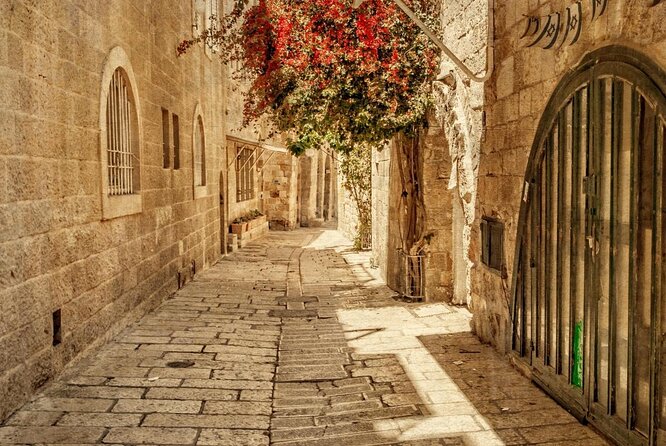
The quarter occupies the southeastern part of the Old City and has been home to Jewish communities since the 16th century. In the 19th century, Jewish residents from different ethnic and religious backgrounds lived here. The quarter was destroyed during the 1948 Arab-Israeli War, and its residents were expelled. After Jerusalem was reunited in the 1967 Six-Day War, the area was rebuilt.
Those events give the quarter a complicated story of community, loss, return, and reconstruction. A walking tour can make those changes easier to understand because you see the streets and buildings as part of a living neighborhood rather than as isolated sights.
The timing should allow your guide to explain the role of the quarter in Jewish life and Shabbat preparation. You may find that this is the most informative portion of the experience, especially if you are unfamiliar with Jewish customs or with the Old City’s division into quarters.
I would use this stop to ask questions. The supplied experience specifically presents the tour as an overview of Jewish culture and Shabbat, so the guide’s explanations are central to the value. Orna was singled out for her friendly manner, which is encouraging if you prefer a walk that feels personal rather than formal.
Still, 45 minutes is not a full study of the quarter. Think of it as a guided introduction. You will gain context and see key areas, but you will need more time on another visit if you want to explore every lane, institution, or archaeological feature.
A few more options to weigh up in Jerusalem
- From Tel Aviv: Jerusalem Old City & Dead Sea Guided Day Tour
★ 4.4 · 389 reviews - Jerusalem: Guided Walking Tour of the Old City
★ 4.7 · 386 reviews - Travel to Bethlehem Half Day Guided Tour from Jerusalem & TelAviv
★ 5.0 · 239 reviews - Travel To Bethlehem, Jericho & Jordan River – Group Guided Tour from Jerusalem
★ 4.5 · 128 reviews
Hurva Synagogue, rebuilt after destruction
The Hurva Synagogue receives about 30 minutes, but admission is not included. Its name means ruin in Hebrew, a reference to the synagogue’s long and difficult past.
The original building was constructed in the early 18th century and became one of the most important synagogues in the Jewish Quarter. It was destroyed by the Arab Legion during the 1948 Arab-Israeli War and remained in ruins for many years. The building was reconstructed and dedicated again in 2010.
Today, the synagogue represents Jewish renewal. Its dome and ark are among the main features you can expect to see, and the building adds a clear architectural highlight to the route.
The 30-minute allocation is more generous than the Tower of David stop. Even so, check the admission arrangements before you arrive. Since entry is not part of the $42 price, the tour’s value depends on how much of the interior you want to see and how well the guide’s explanation complements it.
I like this stop because it connects physical architecture with the story of Jerusalem’s modern Jewish community. The building is not presented as an ancient relic alone. Its destruction, long period as a ruin, and reconstruction make it a place to discuss continuity and change.
The Western Wall as the final stop
The tour ends at the Western Wall, also called the Kotel, with about 45 minutes. This is the strongest finish on the route.
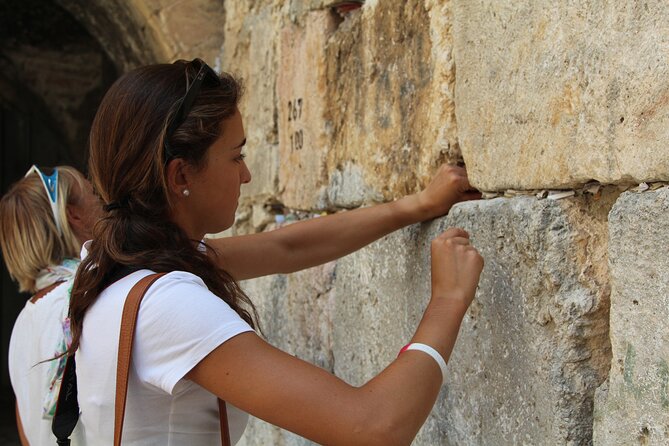
The Western Wall is a retaining wall from the Second Temple complex, which was destroyed by the Romans in 70 AD. It is one of Judaism’s holiest places, and people come from around the world to pray and place written prayers in the cracks of the stones.
The Western Wall Plaza is also a gathering place, surrounded by religious and cultural institutions. Ending here gives the tour a clear purpose. You have heard about Jewish life and Shabbat, visited the Jewish Quarter, and then reached a major place of prayer and continuity.
I appreciate that the tour does not simply pass the wall on the way to somewhere else. The 45-minute stop gives you time to take in the plaza and understand its importance. The guide can help you approach the site with more awareness, especially if you have never visited before.
Remember that the Western Wall is an active religious site, not only a photo stop. The experience is likely to feel more meaningful if you treat the area with respect and listen carefully to the guide’s instructions. The tour information does not list specific dress rules or visiting procedures, so ask ahead if you have concerns.
What $42 buys you, and what it does not
At $42 per person, the tour offers a guided route lasting about two and a half hours. You are paying for local explanation, structure, and a small-group setting rather than for a long list of included tickets.
That is a fair price if you want help understanding the Jewish Quarter and Shabbat. A guide can connect the sites in a way that is hard to manage from a map, particularly during a busy and meaningful time of the week.
The value is less clear if your main goal is museum access. The Tower of David and Hurva Synagogue both list admission as not included. Food and drinks are also excluded, so plan your own refreshments around the schedule. Since Shabbat preparation affects opening hours and city activity, confirm what will be open before you count on eating nearby.
The group can include up to 20 people. That is not a private tour, but it is more manageable than a large sightseeing group. With one review praising Orna’s kindness and guidance, the quality of the experience appears to depend in part on the guide you receive.
Practical details for a smoother visit
You receive confirmation at booking, and the ticket is mobile, so you do not need to print anything unless you prefer a paper backup. The tour begins and ends at the same meeting point, Omar Ben el-Khatab Street 26.
The location is near public transportation. That is useful in Jerusalem, where driving and parking around the Old City can be awkward. Allow enough time to find the exact meeting point, especially if the published 5:00 am start applies.
The walk is listed as suitable for most people, and service animals are allowed. No special fitness requirement is given, but the Old City route includes outdoor walking between several sites. If you have mobility concerns, ask the provider for current route details before booking.
The experience requires good weather and a minimum number of participants. If poor weather cancels it, you can receive a different date or a full refund. The same choice applies if the minimum group size is not reached.
Free cancellation is available up to 24 hours before the local start time. Changes or cancellations inside that window are not accepted for a refund, so keep the deadline in mind.
Who should book this Old City walk?
I would recommend it to you if you want a focused introduction to Jewish culture, Shabbat, and the Jewish Quarter without committing to a full-day tour. The route includes several major places and ends at the Western Wall, which makes good use of a short visit to Jerusalem.
It also suits you if you prefer a guide who can explain religious and historical meaning as you walk. Orna’s praised manner is a positive sign, although guide assignments can matter and are not guaranteed beyond the information provided.
I would be more cautious if you want extended time inside museums or synagogues. Two paid admissions are not included, and the Tower of David stop is only 15 minutes. Independent visitors who already know the Old City may find the pace too introductory.
Most importantly, verify the start time. The 5:00 am listing conflicts with the description of a Friday-afternoon visit. That is the one detail that could change the experience from a timely Shabbat walk into a very early morning outing.
Should you book it?
Book this tour if you want context, guidance, and a meaningful Western Wall finish in a compact 2.5-hour route. The strongest parts are the Jewish Quarter, the Shabbat theme, and the personal touch associated with guide Orna.
Skip it if you want a detailed museum visit, included entrance fees, or a flexible independent wander. Before booking, confirm the date and the unusual 5:00 am start time. If that schedule works for you, $42 is reasonable for a guided introduction to one of Jerusalem’s most important cultural and religious areas.
FAQ
How long does the Guided Shabbat Experience in Jerusalem last?
The experience lasts approximately 2 hours and 30 minutes.
What time does the tour start?
The published start time is 5:00 am. The description also refers to visiting the Old City on Friday afternoon before Shabbat, so confirm the exact schedule with the provider before booking.
Where does the tour begin?
The meeting point is Omar Ben el-Khatab Street 26 in Jerusalem.
Where does the tour end?
The tour ends back at the meeting point, even though the final sightseeing stop is the Western Wall.
What sites are visited?
The route includes Jaffa Gate, the Tower of David, the Jewish Quarter, Hurva Synagogue, and the Western Wall.
Is admission to the Tower of David included?
No. Admission to the Tower of David is not included in the tour price.
Is admission to Hurva Synagogue included?
No. Admission to Hurva Synagogue is not included.
Are food and drinks provided?
No. Food and drinks are not included.
What is the cancellation policy?
You can cancel up to 24 hours before the experience for a full refund. Cancellations or changes made less than 24 hours before the start time are not accepted for a refund.
Just added in Jerusalem
- Walking Jerusalem in Russian★ 5.0 · 1 review
- private Full-Day Tour to Bethlehem and Jerusalem★ 5.0 · 2 reviews
- Jerusalem and Dead Sea Trip from Tel Aviv★ 4.0 · 6 reviews
- Tel Aviv & Old City of Jaffa – Tiny group from Tel Aviv★ 4.5 · 9 reviews
- Tel Aviv; Jaffa Old City, Port & Shuk Hapishpishim Walking Tour★ 4.5 · 11 reviews
- Tel Aviv: Food & History Tour of Jaffa Old City & Flea Market★ 5.0 · 1 review
- Discover the Secrets of the Underground Jerusalem with a private tour★ 5.0 · 4 reviews
- Private Tour from Tel Aviv to Jerusalem★ 5.0 · 3 reviews
Guided, compared.



Travel to Bethlehem Half Day Guided Tour from Jerusalem & TelAviv
Read our review →

Travel To Bethlehem, Jericho & Jordan River – Group Guided Tour from Jerusalem
Read our review →