
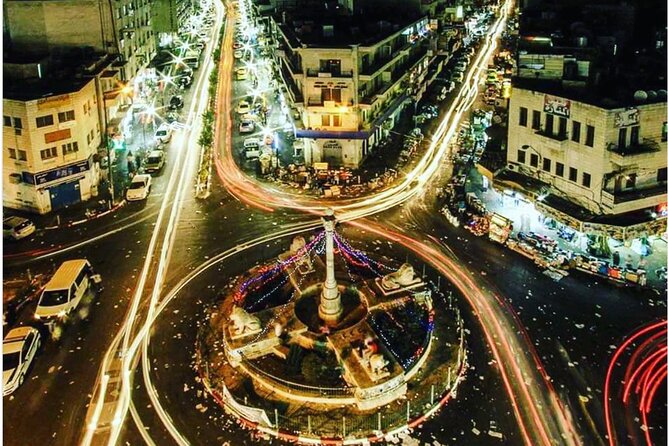
Reviewed · BETHLEHEM AND THE WEST BANK TOURS
Hebron & Ramallah Full-Day Guided Tour from Tel Aviv
See the West Bank beyond the headlines. This full-day trip from Tel Aviv gives you two things I value: direct historical context and a chance to see daily life in Ramallah and Hebron. I also like the small group size, capped at 15 people. The main drawback is the long, serious day, with limited free time and no lunch included.
At $275 per person, this is not a cheap sightseeing outing. You are paying for transport, a full day on difficult routes, and guided explanation of a politically sensitive area that can be hard to visit independently. The strongest praise centers on the guides’ communication and willingness to answer questions, including helping one adult daughter gain an understanding that would have been difficult from a distance.
In This Review
- Key points to know before booking
- Why this Tel Aviv day trip is different
- The early pickup and route toward Ramallah
- Ramallah and the visit to Arafat’s Tomb
- Through the Judean Desert toward Hebron
- Hebron, the Ibrahimi Mosque, and the Cave of the Patriarchs
- What the $275 price really covers
- Practical preparation for a serious day
- Who will get the most from this tour
- Should you book the Ramallah and Hebron day trip?
- FAQ
- Where does the tour begin?
- What time does pickup start?
- Where does the tour end?
- How long does the experience last?
- What cities does the tour visit?
- Is Arafat’s Tomb included in the tour price?
- Is admission to the Cave of the Patriarchs included?
- Is lunch included?
- Do I need to bring a passport?
- How many people can join the tour?
Key points to know before booking
- Ramallah begins with a checkpoint crossing: You enter through the checkpoint near Kufr Akab, where the Separation Wall divides the neighborhood from Jerusalem.
- Arafat’s Tomb costs 10 NIS extra: Allow about two hours for the tomb and a walk through central Ramallah.
- Hebron brings the tour’s most sensitive subjects: Expect discussion of settlements, home demolitions, movement restrictions, and the divided nature of the city.
- The Cave of the Patriarchs is also the Ibrahimi Mosque: The visit connects religious importance with the modern political reality of Hebron.
- The day starts early: Pickup is at 6:30 a.m. from HaYarkon Street 48 in Tel Aviv, with the tour ending back there after about eight hours.
- Dress and documents matter: Bring a current passport and wear modest clothing, especially for Hebron.
Why this Tel Aviv day trip is different
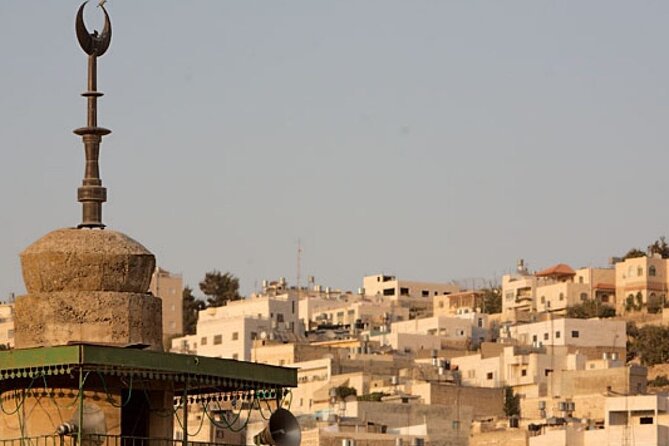
Many day trips from Tel Aviv chase famous monuments. This one asks you to look at borders, roads, checkpoints, and the effects of political decisions on ordinary movement. The route itself becomes part of the lesson.
You travel through areas shaped by Israel’s Separation Barrier, Israeli settlements, Palestinian villages, and different road-access rules. The experience is not designed as a light historical excursion. It is better suited to you if you want to ask questions and listen carefully, even when the answers are uncomfortable.
The tour’s strongest feature is the chance to place major events in physical surroundings. Ramallah is not just a name in the news. Hebron is not only an ancient religious site. You see streets, markets, settlements, farms, walls, and roads, then connect them with the political story explained along the way.
That approach also explains why the quality of the guide matters so much. The supplied feedback gives special praise to communication and question-and-answer time. I would treat that as the central reason to book this outing. If you want only photo stops and simple dates, this may feel heavy. If you want a clearer sense of how people and places are connected, it offers far more.
More Bethlehem and West Bank tours:
- From Tel Aviv: Jerusalem and Bethlehem Guided Day Trip
★ 4.3 · 1,316 reviews - Tel Aviv: Jerusalem, Bethlehem & Dead Sea
★ 4.0 · 881 reviews - Day Tour to Jerusalem and Bethlehem from Tel Aviv
★ 4.5 · 720 reviews
The early pickup and route toward Ramallah
Your day begins at 6:30 a.m. at HaYarkon Street 48 in Tel Aviv. The early start is practical because the tour covers two cities, several major sites, and a wide route through the West Bank. You should arrive ready for a full day rather than a relaxed late-morning outing.
The vehicle is air-conditioned, which matters in a tour that includes extended time on the road. The group can have up to 15 people, a useful middle ground. You get more personal contact than on a large coach, while the price of a guided vehicle is shared among a manageable group.
The route first passes through Pisgat Ze’ev before continuing toward Ramallah. You then enter through a checkpoint to reach Kufr Akab, a neighborhood divided from Jerusalem by the Separation Wall.
This opening section gives you an immediate sense of how geography and access are tied together. A map may show Jerusalem and Ramallah close to each other, but walls, checkpoints, roads, and travel restrictions can make that short distance far more complicated. The guide’s explanation is especially important here, since the physical sights alone cannot tell the whole story.
You should also expect the route to be subject to conditions at checkpoints. The tour data does not promise a fixed crossing time, so the eight-hour estimate should be viewed as approximate. That is one reason the schedule includes broad blocks of time instead of a minute-by-minute plan.
Ramallah and the visit to Arafat’s Tomb
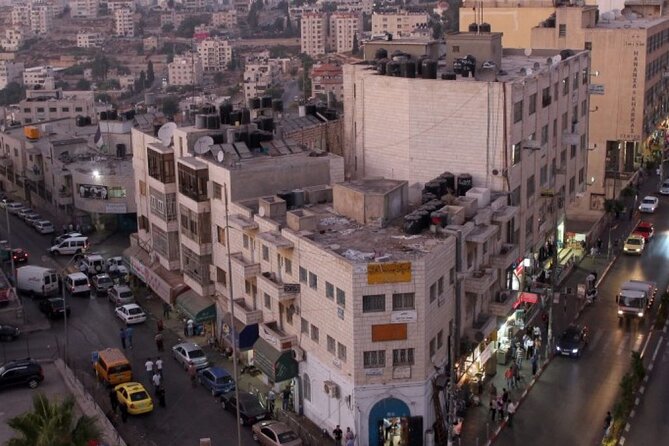
Ramallah is the first major stop. It is described as the de facto capital for Palestinians in the West Bank, and the visit combines a stop at Arafat’s Tomb with a walk through the city’s streets.
The tomb provides a focused place to discuss Yasser Arafat and the Palestinian political movement. Admission costs 10 NIS and is not included in the tour price. That is a small extra charge, but you should carry local currency so this first stop does not become an avoidable nuisance.
The scheduled time in Ramallah is about two hours. That gives you enough room for the tomb and a street walk, but it is not a full independent exploration of the city. Your time is structured around the guide’s route and explanations, so you should not book this expecting long stretches for shopping or wandering alone.
The street portion is just as useful as the tomb itself. You see Ramallah as a functioning city, not simply as a political symbol. The contrast between public life in the city and the restrictions discussed on the approach gives the stop its weight.
I would pay close attention during the question period. The best part of this tour seems to be the chance to ask direct questions and get answers connected to what you are seeing. One especially strong piece of feedback describes the experience as an important learning opportunity for an adult daughter, with communication and questions handled very well. That suggests this tour can work particularly well for families who want older children or young adults to understand the subject through place and conversation.
Through the Judean Desert toward Hebron
After Ramallah, the vehicle heads through the Judean Desert, passing Ma’ale Adumim and Bethany, identified here as the site of Lazarus’s tomb. This portion changes the rhythm of the day. You leave the city and follow a route where desert terrain, settlements, and road systems help explain the region’s divided administration.
Part of the journey uses a highway shared by Israelis and Palestinians. Later, the route continues through Wadi al-Na’ar on roads restricted to Palestinians and tourists. That distinction is one of the trip’s most revealing details. You are not simply moving from one attraction to another. You are seeing how access can depend on identity, road designation, and political control.
The journey can feel long, especially after the early start. Still, road time is not wasted if you listen to the guide’s explanation of the places you pass. The itinerary includes Israeli settlements, Palestinian farms, and villages before Hebron, giving you a moving classroom rather than a series of isolated stops.
This is also where you should keep your expectations realistic. The information provided does not promise a stop at every settlement, farm, or village. Some places may be viewed from the vehicle while the guide explains their significance. The value lies in the connected story, not in collecting a long list of formal attractions.
More things to do in Tel Aviv:
- From Tel Aviv: Masada & Dead Sea Full Day Tour with Pick Up
★ 4.5 · 1,496 reviews - Masada and the Dead Sea Day Trip from Tel Aviv
★ 4.5 · 1,014 reviews - From Tel Aviv: Guided Day Trip to Nazareth & Sea of Galilee
★ 4.4 · 824 reviews - From Tel Aviv: Jerusalem Old & New City Bus Tour
★ 4.2 · 824 reviews
Hebron, the Ibrahimi Mosque, and the Cave of the Patriarchs
Hebron is the final major stop and the most politically charged part of the day. The city contains the Ibrahimi Mosque, also known as the Cave of the Patriarchs, a site of major religious importance.
The attraction is free to enter according to the tour details. More important, the visit places an ancient sacred site inside the present-day reality of a divided and restricted city. Your guide will address Israeli settlements, Palestinian farms and villages, home demolitions, and travel limits affecting Palestinians in the area.
That combination can be difficult to process, and it should not be reduced to a quick photo opportunity. Listen for how the physical city reflects the policies being discussed. The purpose is to help you understand the relationship between the holy site, the surrounding streets, and the people who live there.
The city’s market follows the visit to the religious site. You walk through the market with time for shopping. This is a welcome change in pace after the heavier historical and political material, and it lets you see Hebron as a place of commerce and daily routines.
Still, the shopping time is part of a guided day, not a free afternoon. If you want to browse at length, you may find the schedule tight. I would focus on experiencing the market, buying only what you genuinely want, and staying aware of the group meeting plan.
Hebron is also a religious city with socially conservative residents. The requested dress code is strict: trousers are best for men and women, with shirts closed to the neck and covering the shoulders. In practical terms, the only exposed skin should be your face, lower arms, and hands. On hot days, choose light, loose clothing rather than shorts or sleeveless tops.
This is not merely a matter of comfort. Dressing appropriately shows respect and helps you avoid drawing unwanted attention at a sensitive site. Pack for modesty first, then deal with the heat through breathable fabric.
What the $275 price really covers
At $275 per person, the cost is high compared with a simple city walking tour. The included service is an air-conditioned vehicle, but the real value comes from the time, route, and guided interpretation required to visit two politically complex cities from Tel Aviv in one day.
You are paying for a long-distance excursion with a maximum group size of 15, rather than arranging separate transport and trying to understand checkpoint access and local restrictions on your own. The small group also makes it easier to hear explanations and ask questions than it would be on a large bus.
Lunch is not included. You need to plan for that, although the provided details do not specify a restaurant, meal stop, or lunch price. The 10 NIS fee for Arafat’s Tomb is also extra. These costs are minor beside the booking price, but knowing about them prevents confusion.
The value depends on your travel priorities. I think the price is easier to justify if you care about politics, modern history, religion, and local context. It is harder to justify if your main goal is a relaxed day with lots of independent sightseeing.
Practical preparation for a serious day
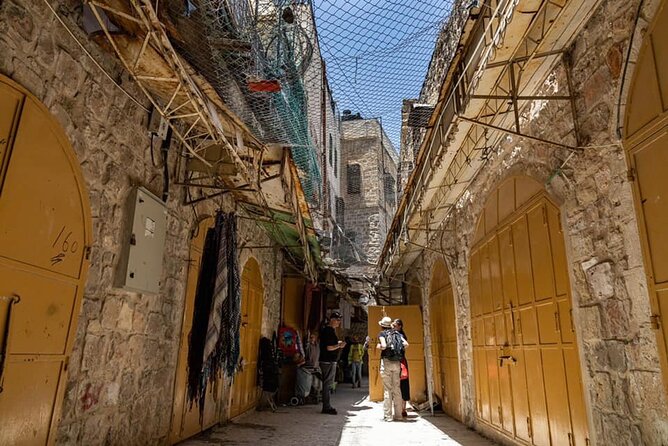
Bring your current valid passport. It is required on the day of travel, and you should not treat it as optional just because the tour begins in Tel Aviv.
Wear sturdy, comfortable clothing suitable for walking. The details specify a moderate fitness level, so you should be prepared for walking through city streets and a market, along with getting in and out of the vehicle during a long day.
Service animals are allowed, and the meeting point is near public transportation. The activity returns to the original meeting point on HaYarkon Street. Mobile ticketing is provided, and confirmation arrives at booking.
The tour can be canceled without charge up to 24 hours before the start time for a full refund. Changes or cancellations made less than 24 hours before departure are not accepted for a refund. The company also requires a minimum number of participants, so if that number is not reached, you will be offered another date or experience, or a full refund.
Who will get the most from this tour
I would recommend this experience to you if you want a guided introduction to Ramallah and Hebron and are willing to spend a full day with difficult political subjects. It suits adults, families with older children, students, and anyone who learns best by seeing places directly.
It is also a good match if you value questions and discussion. The praise for guide communication is unusually specific, and that matters here. The subject cannot be explained well through a few memorized facts. You need room to ask why roads differ, how checkpoints affect movement, and how sacred places fit into modern disputes.
You may want to skip it if you prefer a light cultural outing, a flexible lunch schedule, or a tour focused mainly on ancient monuments. The day is early, the schedule is fairly full, and the material can be emotionally demanding.
Should you book the Ramallah and Hebron day trip?
Book it if your goal is understanding rather than simple sightseeing. The route from Tel Aviv to Ramallah and Hebron gives you a rare chance to connect walls, roads, holy places, markets, and political decisions in one carefully structured day.
Before paying $275, make sure you are comfortable with the early start, modest dress, passport requirement, extra tomb fee, and lack of included lunch. If those points work for you, the small group and strong focus on questions make this a useful choice for seeing the West Bank with more context than a standard highlights tour can provide.
FAQ
Where does the tour begin?
The tour begins at HaYarkon Street 48 in Tel Aviv-Yafo.
What time does pickup start?
The scheduled start time is 6:30 a.m.
Where does the tour end?
The activity ends back at the original meeting point in Tel Aviv.
How long does the experience last?
The tour lasts approximately eight hours.
What cities does the tour visit?
The tour visits Ramallah and Hebron.
Is Arafat’s Tomb included in the tour price?
The visit is part of the tour, but admission costs 10 NIS and is not included.
Is admission to the Cave of the Patriarchs included?
Admission to the Cave of the Patriarchs, also called the Ibrahimi Mosque, is listed as free.
Is lunch included?
No. Lunch is not included in the tour price.
Do I need to bring a passport?
Yes. A current valid passport is required on the day of travel.
How many people can join the tour?
The tour has a maximum of 15 participants.
Just added in Tel Aviv
- Wine Tour North of Israel from Tel Aviv★ 5.0 · 2 reviews
- private Full-day Tour to Jericho + the Dead Sea★ 5.0 · 3 reviews
- private Full-Day Tour to Bethlehem and Jerusalem★ 5.0 · 2 reviews
- Private wine tour of Northern Israel★ 5.0 · 4 reviews
- VIP Tel Aviv airport Terminal 3 Fast Track Skip Line From plane★ 4.5 · 9 reviews
- Package VIP Skip Line Services in BGN Airport with Transfer to Tel aviv Hotels★ 5.0 · 3 reviews
- Privet Pickup from Tel Aviv Hotels to the Airport★ 5.0 · 1 review
- Private Transfer from Ben Gurion Airport to Tel Aviv, Bat Yam, Rishon LeZion★ 5.0 · 2 reviews
Bethlehem and the West Bank Tours, compared.
Day Tour to Jerusalem and Bethlehem from Tel Aviv
Read our review →
Jerusalem, Dead Sea, and Bethlehem from Tel Aviv
Read our review →
Jerusalem and Bethlehem Day Tour from Jerusalem
Read our review →
Travel to Bethlehem Half Day Guided Tour from Jerusalem & TelAviv
Read our review →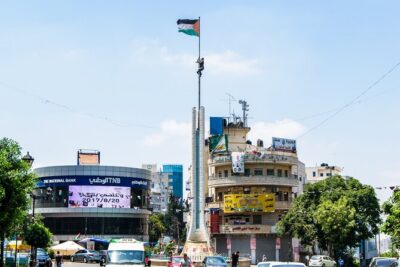
Ashdod Shore Excursion: Jerusalem and Bethlehem – for cruise ship guests only
Read our review →Browse the lists this tour appears in