
Reviewed · BETHLEHEM AND THE WEST BANK TOURS
West Bank Tour from Jerusalem
Go beyond Jerusalem’s walls. This full-day West Bank tour links Ramallah, ancient Jericho, the Jordan River, and Bethlehem in one long, eye-opening day. I like the unusual range: you move from modern Palestinian daily life to biblical sites and major archaeological remains without arranging separate transport. I also like that lunch is included, with several visitors praising the Arabic meal and, in some cases, a home-cooked lunch.
The main drawback is the pace. You cover a lot of ground in about 10 hours, and some stops can feel brief. The political explanation may also lean toward a Palestinian point of view, so you should come ready to listen, ask fair questions, and remember that this is one perspective on a complicated conflict.
In This Review
- Key points before you book
- Why this day is worth your time
- Starting from Jerusalem at 7:30 a.m.
- Ramallah and the memory of Yasser Arafat
- Jericho, ancient ruins, and the Mount of Temptation
- Qasr al-Yahud beside the Jordan River
- Bethlehem and the Church of the Nativity
- The separation wall and Banksy’s artwork
- Lunch and the human side of the tour
- The guides shape the entire experience
- Is $130 a fair price?
- Who should book this West Bank tour?
- My booking verdict
- FAQ
- Where does the West Bank tour start?
- Where does the tour end?
- How long does the tour last?
- What places are included?
- Is lunch included?
- Do I need a passport?
- What should I wear?
- Can Israeli passport holders join?
- Can the itinerary change?
- How many people can join the tour?
- What happens if I need to cancel?
Key points before you book
- Four very different stops in one day: Ramallah, Jericho, Qasr al-Yahud, and Bethlehem give you a broad look at the West Bank.
- A Palestinian guide adds personal context: Guides including Kamal, George, Housam, and Don have been praised for humor, clear explanations, and firsthand insight.
- Bethlehem gets the longest visit: About three hours are set aside for the Church of the Nativity, the old market, the Milk Grotto, Manger Square, and the separation wall.
- The tour is history and current affairs together: Biblical traditions sit beside Arafat’s tomb, Israeli settlements, checkpoints, and Banksy artwork.
- Bring your original passport: A valid passport, modest clothing, water, sunscreen, a hat, comfortable shoes, and a scarf or shawl are required.
- The $130 price covers useful basics: Air-conditioned minivan transport, a local guide, and lunch are included, which makes the cost reasonable for a full day.
Why this day is worth your time
It is easy to visit Jerusalem and remain inside a familiar sightseeing bubble. This tour takes you into Palestinian cities and towns, where the story becomes more immediate and less tidy. You see religious landmarks, archaeological sites, public memorials, markets, and the concrete separation barrier in the same day.
I like that the route is not built around Bethlehem alone. Bethlehem is the headline attraction, but Ramallah gives you a look at present-day Palestinian city life, Jericho connects the region to some of the oldest known settlements, and Qasr al-Yahud adds a major Christian pilgrimage site beside the Jordan River.
You should also know what kind of tour this is. It is not a quiet archaeological outing with long periods to study ruins. It is a guided overview, shaped by road conditions, local access, border controls, traffic, and the guide’s judgment. The order may change, and Ramallah may be replaced with extra time in Jericho and Bethlehem if access is restricted.
More Bethlehem and West Bank tours:
- From Tel Aviv: Jerusalem and Bethlehem Guided Day Trip
★ 4.3 · 1,316 reviews - Tel Aviv: Jerusalem, Bethlehem & Dead Sea
★ 4.0 · 881 reviews - Day Tour to Jerusalem and Bethlehem from Tel Aviv
★ 4.5 · 720 reviews
Starting from Jerusalem at 7:30 a.m.
You meet at Abraham Jerusalem on Ha-Nevi’im Street 67 in Jerusalem’s New City at 7:30 a.m. The activity ends at the same meeting point. Transport is by air-conditioned minivan, and the group can include up to 34 people.
That maximum matters. A group of 34 is not intimate, and getting everyone on and off the vehicle takes time. On the other hand, the group format keeps the $130 price below what a private guide and vehicle would cost. Some departures have been smaller, including one group of about 18 people, but you should plan for the stated maximum rather than count on a small party.
The ride takes you through hills and dry scenery toward the West Bank. You need your original passport, not a copy. Israeli passport holders cannot join this tour, even if they also hold another passport, so check this restriction before paying.
Wear comfortable walking shoes. Modest clothing is important because the day includes sacred places: sleeveless shirts, shorts, and short skirts should be avoided. Pack water, sunscreen, a hat, and a scarf or shawl. You will appreciate all of these during outdoor stops and walks through town.
Ramallah and the memory of Yasser Arafat
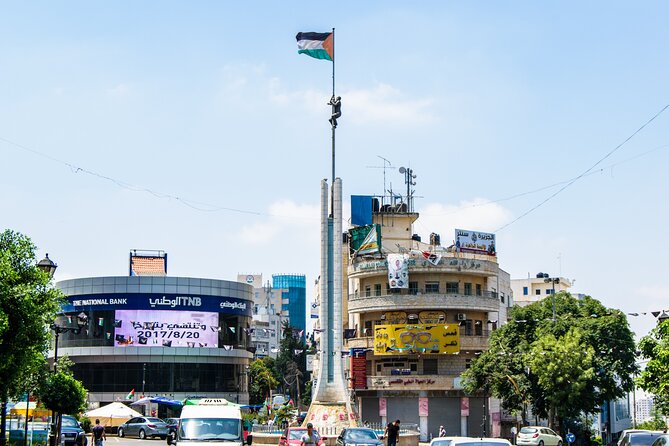
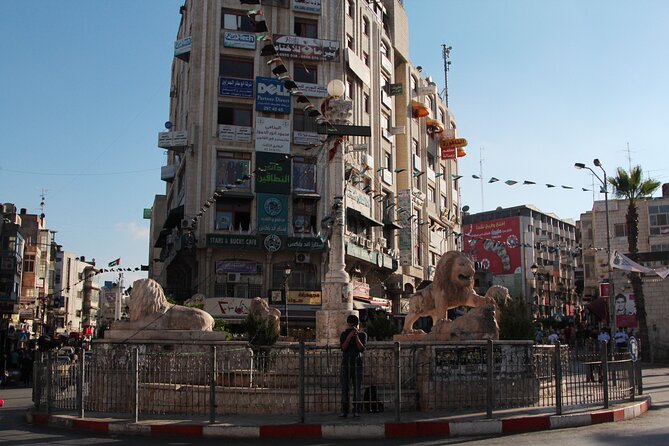
The first planned stop is Ramallah, the modern political and cultural center of the West Bank. You spend about an hour and a half walking through the city and visiting the tomb of Yasser Arafat, the former Palestinian leader.
This is a useful opening because it gives the day a present-day setting. Instead of beginning with a biblical site, you start with a living city and a major Palestinian political symbol. The streets, public spaces, and memorial help frame the later conversations about identity, government, movement, and the Israeli-Palestinian conflict.
The strongest part of Ramallah is the walking tour with the guide. Guides such as Kamal have been praised for using humor and questions to keep a large group involved. George has also been singled out for explaining daily life and culture in a thoughtful way. These personal stories can make the visit much more meaningful than a quick photo stop.
The limitation is time. Ninety minutes is enough for a guided introduction, but not enough to explore Ramallah at length. You will not get a free afternoon to shop, visit museums, or set your own route. Think of this as a carefully selected glimpse rather than a full city tour.
Jericho, ancient ruins, and the Mount of Temptation
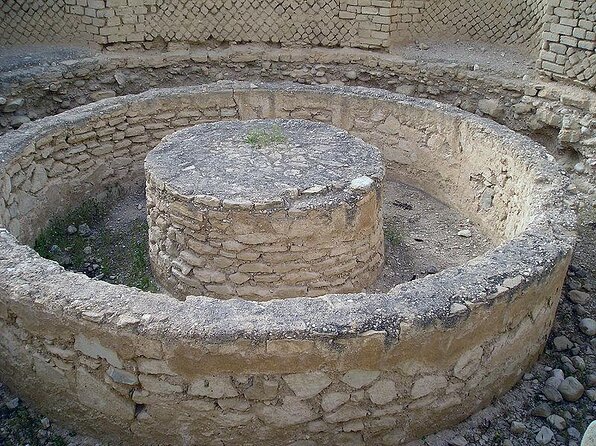
The tour then continues to Jericho, described as the oldest city in the world and an early center of settled civilization. You spend about two hours here, including time at the tourist information center and a view of the Mount of Temptation from below.
Jericho is valuable because it connects biblical stories with archaeology. The guide explains the evidence tied to the city’s long history and places the ruins within the wider story of early human settlement. You also hear about the biblical account of Jesus being tempted by the Devil on the Mount of Temptation.
Set your expectations carefully. This stop may not satisfy you if you want a detailed archaeological visit. One disappointed participant specifically wanted to see Hisham’s Palace and ride the cable car, neither of which is part of the stated program. The scheduled experience focuses on a short historical presentation, ruins, and views from below rather than a full visit to every major Jericho attraction.
That makes Jericho one of the clearest examples of the tour’s tradeoff. You gain range, but not unlimited time at each site. If Jericho is your main reason for booking, check the exact route and included entrances before you go.
More things to do in Jerusalem:
- From Tel Aviv: Jerusalem Old & New City Bus Tour
★ 4.2 · 824 reviews - From Jerusalem: Masada & Dead Sea Full Day Tour with Pick Up
★ 4.5 · 815 reviews - Masada and the Dead Sea Day Trip from Jerusalem
★ 4.5 · 757 reviews - From Jerusalem: Nazareth and Sea of Galilee Tour
★ 4.5 · 588 reviews
Qasr al-Yahud beside the Jordan River
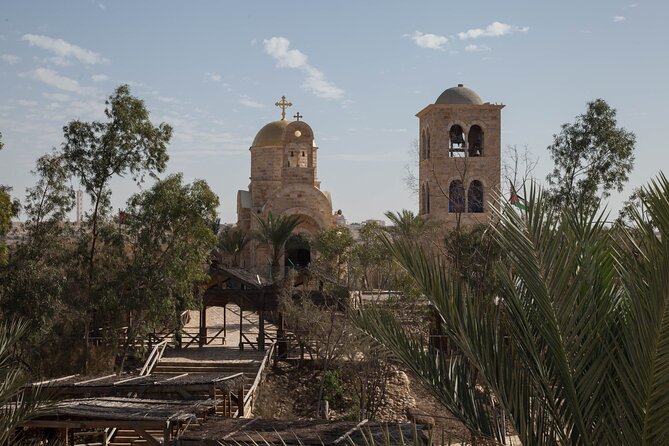
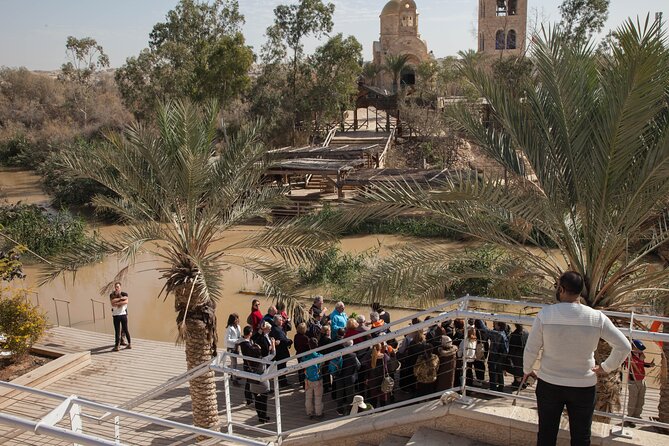
After Jericho, you stop at Qasr al-Yahud, the baptismal site on the Jordan River. The visit lasts about 45 minutes.
For Christian visitors, this may be one of the most meaningful moments of the day. The site is associated with the baptism of Jesus by John the Baptist, and the river setting gives the story a physical location rather than leaving it as an abstract passage from scripture.
The stop is short, so you should not expect an extended religious service or a long walk along the river. Still, it adds an important layer to the itinerary. You have already seen ancient Jericho, and now you stand at a place connected with one of Christianity’s central events.
Bring your water and sun protection. You may spend part of the visit outdoors, and comfortable shoes remain useful. The tour information specifically asks you to bring a valid original passport, so keep it accessible without misplacing it during the day.
Bethlehem and the Church of the Nativity
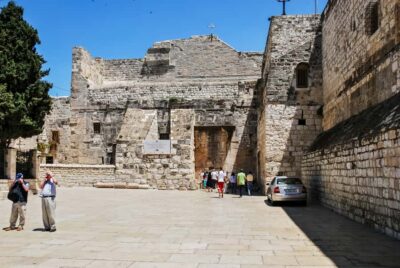
Bethlehem receives roughly three hours, making it the fullest stop on the route. The visit includes the Church of the Nativity, the Grotto, Manger Square, the Mosque of Omar, the Milk Grotto, the old market, and the separation wall.
The Church of the Nativity is the center of the visit. The Grotto beneath the church is traditionally identified as the birthplace of Jesus of Nazareth. Lines can be long, and access can depend on conditions at the church. One guide, Housam, was praised for helping the group move more efficiently through the queue, but you should still allow for waiting.
Manger Square is the natural starting point for understanding Bethlehem’s religious mix. The Church of the Nativity and the Mosque of Omar sit within this central area, showing how Christian and Muslim traditions shape the old city. The Mosque of Omar is described as the oldest and only mosque in Bethlehem’s old city.
The Milk Grotto adds another traditional site. According to local Christian tradition, Mary, Joseph, and Jesus sheltered there before fleeing to Egypt. The story says a drop of Mary’s milk fell to the ground and turned the stone white. You do not need to accept every tradition literally to appreciate how these stories shape the character of Bethlehem.
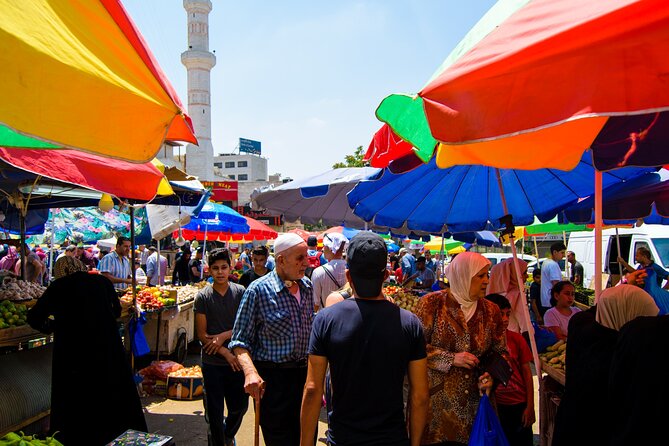
You also walk through the old market. This is one of the places where the tour feels less like a checklist of monuments and more like a look at a working city. Keep your group in sight, since three hours can pass quickly once you combine religious sites, market lanes, explanations, and possible queues.
The separation wall and Banksy’s artwork
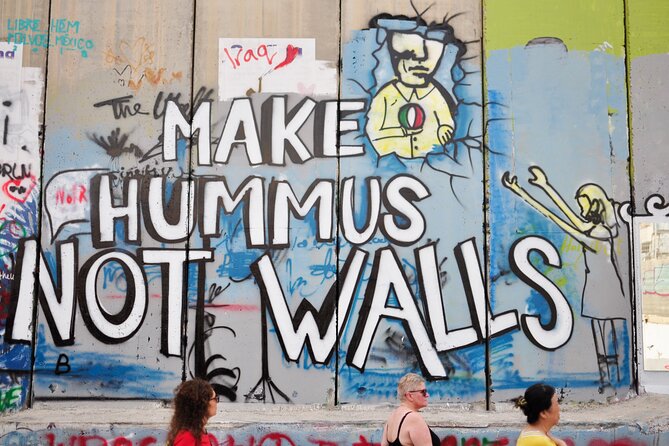
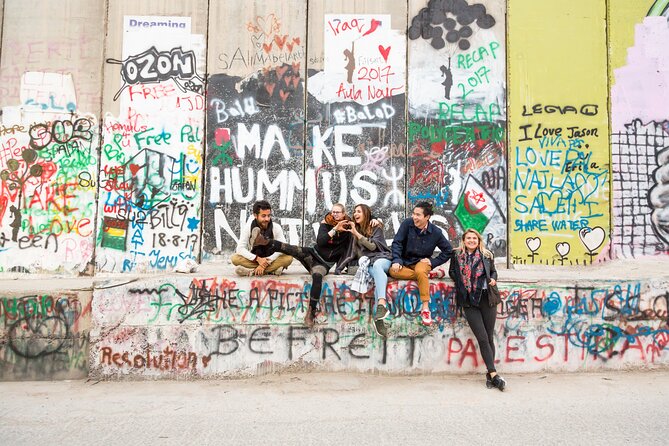
The final part of Bethlehem focuses on the separation barrier that cuts through parts of the city. You see graffiti, including work associated with Banksy, and hear about the barrier’s effect on movement and daily life.
This is a serious and emotional part of the tour. The wall is not simply a photo backdrop. Its meaning depends on your political view and personal experience, and the guide’s presentation may emphasize the Palestinian experience. Some people value this direct account because it offers a side of the conflict they have not encountered elsewhere. Others may find the discussion too political or one-sided.
I think the best approach is to pay close attention, ask respectful questions, and separate observation from interpretation. You can see the wall, the artwork, and the physical division for yourself. The guide can explain the Palestinian position, while you remain responsible for seeking other perspectives if you want a fuller understanding.
Time here can feel uneven. One participant felt that about 90 minutes at the wall was too long and would have preferred more history at the religious sites. If your interest is mainly biblical architecture, this portion may seem overextended. If you want to understand current Palestinian life, it may be one of the most important parts of the day.
Lunch and the human side of the tour
Lunch is included, and the meal is Arabic-style at a local Bethlehem eatery. Several people praised the food, while some described eating a home-cooked meal prepared by the guide’s mother or in a Palestinian home. The exact setting may vary, so do not assume every departure includes a private family meal.
This is more than a practical break. Food gives you a direct connection to local culture and a chance to slow down during a demanding day. Pastries and other offered treats have received especially warm praise, so leave room for them.
The wording about inclusions can be slightly confusing. Lunch is included, but other food and drinks are not unless specifically stated. Bring water and budget for anything beyond the provided meal.
The guides shape the entire experience
The guide can make or break this tour. The most praised guides have been Kamal, George, Housam, and Don, although you cannot select a particular person from the information provided.
Strong guides use personal stories, humor, and questions rather than reciting dates. Kamal has been praised for making the group highly interactive, while George was valued for explaining both history and everyday life. Housam received special praise for helping with access at the Church of the Nativity.
The guide’s viewpoint is also part of the experience. This is a Palestinian-led tour, and the political explanation may focus more heavily on Palestinian experiences and grievances. One person found the presentation somewhat one-sided, while others felt that hearing from a Palestinian guide was the highlight of the day.
If you want an entirely neutral-sounding account, this may not be the right format. If you want direct local context and are willing to compare it with other sources, the guide can add real value.
Is $130 a fair price?
At $130 per person, the price is reasonable for a 10-hour organized outing that includes transport, a local guide, and lunch. You avoid arranging separate vehicles between Jerusalem, Ramallah, Jericho, the Jordan River, and Bethlehem, which would be difficult to manage independently in one day.
The value is strongest if you want breadth. You see four major areas, receive explanations throughout the day, and return to Jerusalem without handling the route yourself. The included lunch also helps, especially in a high-cost destination.
The value is weaker if you want long, unhurried visits. The group may reach 34 people, the schedule can change, and Jericho may feel too short for visitors hoping to see Hisham’s Palace or take the cable car. A private tour would offer more control, but it would cost more.
The activity is booked, on average, 66 days ahead, so popular dates may fill early. Free cancellation is available up to 24 hours before the start time. Poor weather or failure to meet the minimum group size can lead to a new date, an alternative experience, or a full refund.
Who should book this West Bank tour?
I would recommend it to you if you want a broad first look at Palestinian cities, major Christian sites, ancient Jericho, and the current political reality. It works especially well for first-time visitors to Israel who want more than the standard Jerusalem route.
It suits people who enjoy guided interpretation and do not mind a full day on the road. Families and older adults can participate according to the supplied information, but everyone should be comfortable with walking, outdoor stops, early departure, and a long schedule.
I would hesitate if you want a purely religious pilgrimage, a detailed archaeology tour, or a politically neutral presentation. I would also hesitate if you dislike group travel or become frustrated when access and timing change.
My booking verdict
Book this tour if you want context as much as monuments. The best moments come from the combination of places: Arafat’s tomb in Ramallah, ancient Jericho, the Jordan River, Bethlehem’s churches and market, and the separation wall. That combination gives you a fuller picture than a Bethlehem-only excursion.
Skip it if your priority is a slow visit to Jericho’s archaeological sites or a carefully balanced political seminar. For everyone else, $130 buys a demanding but worthwhile day, with lunch, transport, and guides who can connect sacred stories to present-day life.
FAQ
Where does the West Bank tour start?
It starts at Abraham Jerusalem, Ha-Nevi’im Street 67, Jerusalem, at 7:30 a.m.
Where does the tour end?
The tour ends back at the meeting point in Jerusalem.
How long does the tour last?
The experience lasts approximately 10 hours.
What places are included?
The planned stops are Ramallah, Jericho, Qasr al-Yahud on the Jordan River, and Bethlehem.
Is lunch included?
Yes. An Arabic-style lunch is included. Other food and drinks are not included unless specifically stated.
Do I need a passport?
Yes. You must bring a valid original passport, not a copy.
What should I wear?
Wear modest clothing suitable for sacred sites. Sleeveless shirts, shorts, and short skirts should be avoided. Comfortable shoes are required.
Can Israeli passport holders join?
No. The tour is not available to Israeli passport holders, even if they hold an additional passport.
Can the itinerary change?
Yes. The order of stops can change because of local conditions, special events, or the guide’s judgment. If access to Ramallah is restricted, the tour may include extra time and content in Jericho and Bethlehem.
How many people can join the tour?
The maximum group size is 34 people.
What happens if I need to cancel?
You can cancel up to 24 hours before the start time for a full refund. Cancellations or changes made less than 24 hours before the start time are not accepted for a refund.
Just added in Jerusalem
- Walking Jerusalem in Russian★ 5.0 · 1 review
- private Full-Day Tour to Bethlehem and Jerusalem★ 5.0 · 2 reviews
- Jerusalem and Dead Sea Trip from Tel Aviv★ 4.0 · 6 reviews
- Tel Aviv & Old City of Jaffa – Tiny group from Tel Aviv★ 4.5 · 9 reviews
- Tel Aviv: Food & History Tour of Jaffa Old City & Flea Market★ 5.0 · 1 review
- Tel Aviv; Jaffa Old City, Port & Shuk Hapishpishim Walking Tour★ 4.5 · 11 reviews
- Discover the Secrets of the Underground Jerusalem with a private tour★ 5.0 · 4 reviews
- Private Tour from Tel Aviv to Jerusalem★ 5.0 · 3 reviews
Bethlehem and the West Bank Tours, compared.
Day Tour to Jerusalem and Bethlehem from Tel Aviv
Read our review →
Jerusalem, Dead Sea, and Bethlehem from Tel Aviv
Read our review →
Jerusalem and Bethlehem Day Tour from Jerusalem
Read our review →
Travel to Bethlehem Half Day Guided Tour from Jerusalem & TelAviv
Read our review →
Ashdod Shore Excursion: Jerusalem and Bethlehem – for cruise ship guests only
Read our review →
Browse the lists this tour appears in