
Reviewed · MUSEUMS
Israel Museum Must See High-Lights
Jerusalem’s past is gathered under one roof. This private Israel Museum tour makes a huge collection easier to handle, with stops at the Second Temple model, the Dead Sea Scrolls, biblical archaeology, and Jewish life traditions. I especially like the small private group of up to six and the chance to explore with Uri Goldflam, whose clear teaching and warm manner receive repeated praise. I also like the front-door pickup option from locations in Jerusalem.
The main drawback is the museum admission information, which is not fully consistent: the archaeological wing is listed as not included, while the other stops show admission included. At $512.83 per group, the price can be fair for a full party, but it is a serious expense for one or two people. You should confirm exactly what is covered before paying.
In This Review
- Key points to know before you go
- Why a guided highlights visit makes sense
- Stop one: seeing Jerusalem through the Second Temple model
- Stop two: the Dead Sea Scrolls at the Shrine of the Book
- Stop three: biblical archaeology in the Israel Museum
- Stop four: Jewish culture and the life-cycle displays
- What Uri Goldflam adds to the museum visit
- Price, pickup, and the practical value
- Who will get the most from this tour
- Should you book it?
- FAQ
- How much does the Israel Museum highlights tour cost?
- How long does the tour last?
- Is the tour private?
- Is hotel pickup available?
- What is the first stop?
- Are the Dead Sea Scrolls included in the visit?
- Is museum admission included?
- Where does the tour end?
- Can I cancel for a full refund?
Key points to know before you go
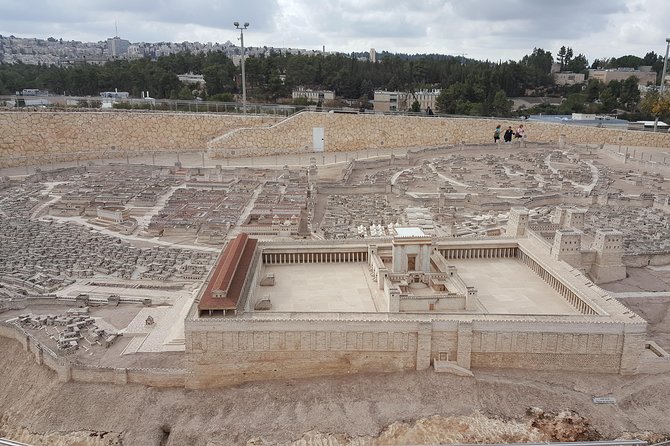
- The Second Temple Jerusalem Model gives you a useful visual map of the city during the time of Jesus.
- The Shrine of the Book displays the Dead Sea Scrolls, including a full facsimile of the Book of Isaiah.
- Uri Goldflam is the central strength of the experience, with a teaching style praised for history, geography, religion, and Israeli culture.
- The private format keeps the pace flexible for your own group of up to six people.
- The listed route takes about 3 hours and 45 minutes, though the advertised duration is approximately 2 to 4 hours.
- Admission details need checking, especially for the archaeological section of the Israel Museum.
Why a guided highlights visit makes sense
The Israel Museum is not a quick little gallery. Its holdings stretch across archaeology, Jewish culture, art, manuscripts, and objects from many periods. Without a plan, you can spend a great deal of time walking between displays without seeing the pieces most connected to your interests.
This tour gives you a focused route through four major parts of the museum complex. I like that the experience begins with a model of ancient Jerusalem, then moves to the Dead Sea Scrolls and archaeological material before turning to Jewish customs and daily life. That order gives the visit a clear shape instead of treating the museum as a random collection of rooms.
The private setup matters here. Your group alone takes part, with a maximum of six people. You can ask questions without competing with a busload of people, and the guide can explain a biblical passage, historical period, or Jewish tradition at the moment it becomes relevant.
The guide, Uri Goldflam, is repeatedly praised for his command of Israeli history and culture. His background also seems to suit a museum visit that crosses religious lines. The praise describes him as proud of his Jewish heritage while respectful toward Christianity, a useful quality when discussing biblical texts and the many ways they are understood.
Several people who spent much longer periods touring Israel with Uri describe him as engaging rather than merely academic. That distinction matters. A museum guide can know dates and names yet still lose you after ten minutes. The available feedback points to a guide who explains difficult material in a lively way and connects sites, events, geography, and religion.
More Museum Tours in Jerusalem:
- Jerusalem Yad Vashem Holocaust History Museum Tour
★ 5.0 · 98 reviews
Stop one: seeing Jerusalem through the Second Temple model
The first stop is the Second Temple Jerusalem Model, also called the Holy Land Model. It is built at a scale of 1 to 50 and shows Jerusalem as it appeared around the time of Jesus.
This is more than a decorative model. Ancient Jerusalem can be hard to picture from written descriptions alone. Hills, walls, valleys, gates, and major buildings do not always line up in your mind, especially if you are reading biblical accounts while moving between modern streets. The model gives you that picture in one glance.
The planned 45 minutes here should give the guide enough time to orient you to the city’s layout. You can begin to understand where important events took place and how the city developed over time. The model also helps connect the museum visit to later sightseeing in Jerusalem, since you will have a clearer sense of the old city’s position and scale.
I would pay close attention to the geography rather than treating this as a fast photo stop. The value is in seeing relationships between places. If you are visiting Jerusalem for religious reasons, the model can add a physical setting to familiar scripture. If your interest is historical, it shows how a city’s buildings and defensive boundaries shaped life in the Second Temple period.
Admission is listed as included for this stop. Still, because admission details elsewhere in the tour description are not perfectly clear, I would confirm the ticket arrangement in advance.
Stop two: the Dead Sea Scrolls at the Shrine of the Book
The Shrine of the Book is the most famous stop on this route. Its purpose is to display the Dead Sea Scrolls, ancient copies of biblical texts found in the Judean Desert.
The collection includes scrolls dating roughly 2,000 and 2,200 years old, along with objects connected to the excavations and the story of their discovery. A facsimile of the entire Book of Isaiah is also displayed. That gives you a chance to see a complete biblical work in one place rather than only a short fragment.
The building itself is part of the experience. The Shrine of the Book has distinctive architecture designed around the scrolls, so the setting feels deliberately different from an ordinary gallery. The visual design helps mark this as a special part of the museum, though your guide’s explanation is what gives the objects their full meaning.
The planned visit lasts about 45 minutes. That is enough for an introduction to the discovery, the objects from the excavations, and the scrolls themselves, but it is not an exhaustive study of every manuscript. If ancient texts are your main reason for visiting the museum, you may want extra independent time afterward.
I like this stop because it connects physical evidence with questions about the transmission of biblical scripture. You are not simply looking at old parchment. You are seeing texts that survived for centuries and became central to the study of Judaism, ancient Israel, and the biblical world.
Admission is listed as included. As with the other ticket information, check the current arrangement before the tour begins.
Stop three: biblical archaeology in the Israel Museum
The archaeological wing receives the longest scheduled visit, about 1 hour and 30 minutes. That makes sense, since this section is intended to place the biblical narrative beside archaeological findings from the ancient Near East and the land of Israel.
The strength of this part depends heavily on the guide. Objects in an archaeological display can be impressive but difficult to understand without dates, place names, and a sense of what changed from one period to the next. Uri’s background in Israeli history, geography, biblical relationships, and the region’s religions is particularly relevant here.
I like the idea of moving through the archaeology in relation to the Bible rather than treating every object as an isolated treasure. You may find that a familiar story becomes easier to picture when you understand the setting, material culture, and political changes around it.
At the same time, this is the one part of the tour where the ticket information gives me pause. The itinerary marks admission as not included for the archaeological section, while the other stops show admission included. That may reflect a separate museum entry arrangement, a listing error, or a ticket distinction. Do not assume that the $512.83 group price covers every museum admission without asking.
The archaeological visit also requires concentration. Ninety minutes of dates, cultures, and biblical references can be a lot, especially in the middle of a longer Israel itinerary. The private format helps because you can ask the guide to slow down, explain a term, or spend more time on a period that matters to you.
More things to do in Jerusalem:
- From Tel Aviv: Jerusalem and Bethlehem Guided Day Trip
★ 4.3 · 1,316 reviews - Tel Aviv: Jerusalem, Bethlehem & Dead Sea
★ 4.0 · 881 reviews - From Tel Aviv: Jerusalem Old & New City Bus Tour
★ 4.2 · 824 reviews - From Jerusalem: Masada & Dead Sea Full Day Tour with Pick Up
★ 4.5 · 815 reviews
Stop four: Jewish culture and the life-cycle displays
The final stop lasts about 45 minutes and turns from ancient archaeology to Jewish culture and traditions. The Jewish Culture and Life-Cycle wing looks at customs shared by Jewish communities across different continents and across many centuries.
This section focuses on weekly, seasonal, and annual events, along with major moments in Jewish life. It can help you see Judaism not only as a historical subject but as a living set of practices. Objects connected to ritual and celebration often explain how communities preserved identity even when separated by geography.
For someone visiting Israel for the first time, this may be the most useful stop for understanding the relationship between tradition and everyday life. It also balances the earlier emphasis on ancient texts and archaeology. You move from the physical remains of the past to customs that continue to shape Jewish families and communities.
The section should appeal to Jewish visitors, Christian visitors, and anyone interested in how religion is practiced outside a synagogue or textbook. The guide’s respectful approach to Judaism and Christianity is a positive feature here, especially for groups with mixed backgrounds.
The 45-minute schedule keeps this section from taking over the day. That is helpful if you want an overview. It is less ideal if you have a special interest in Jewish ritual objects and would like to study each display at length.
What Uri Goldflam adds to the museum visit
The strongest reason to book this experience is not simply the route. It is the guide.
The praise attached to Uri Goldflam repeatedly points to the same qualities: extensive knowledge, warmth, safety, patience, and an ability to make serious history enjoyable. People describe him as someone who can connect Israeli geography, current affairs, biblical references, Jewish heritage, and the history of different religions.
That range is useful inside a museum. A specialist who knows only art may not explain why a biblical text matters. A religious guide may not give enough archaeological context. Uri appears to work across those subjects and connect them for the group in front of him.
I would still keep your own expectations sensible. A 2 to 4-hour museum visit cannot cover everything. The goal is not to master the Israel Museum in one afternoon. The goal is to see important highlights and leave with a better framework for exploring on your own.
The private format also lets you shape the conversation. Families with teenagers can ask for clearer explanations and shorter stops. Adults with a strong interest in archaeology can spend more time on the ancient material. A group visiting for a bat mitzvah or another Jewish milestone may value the culture and life-cycle section more than a group focused on Christian scripture.
Price, pickup, and the practical value
The listed price is $512.83 per group of up to six people. That works out to about $85.47 per person if six people share the cost, before considering any admission charge not covered by the booking. For two people, the effective per-person cost is much higher.
The price is easiest to justify when you have a full group and want a private guide who can keep the visit focused. It is less attractive if you are comfortable reading museum labels, moving at your own pace, or spending only a short time at the Shrine of the Book.
Front-door pickup and drop-off are offered from any location in Jerusalem, and an air-conditioned vehicle is included. The stated meeting point is at the museum shops in Jerusalem, with the activity ending back at the meeting point. Because the information mentions pickup as an option but also gives a museum meeting point, confirm your exact pickup arrangement before the day of the visit.
The advertised duration is approximately 2 to 4 hours. The listed stops total about 3 hours and 45 minutes, so I would plan around the longer figure rather than expecting a very quick visit.
The listed hours show Tuesday from 4:00 PM to 9:00 PM for the stated date range. Museum hours can change, and this narrow schedule may not reflect every day or season. Confirm the operating time and meeting instructions when your booking is confirmed.
The museum is near public transportation, and service animals are allowed. Most people can take part, though the route involves walking through several museum areas.
Who will get the most from this tour
I would recommend this experience to a first-time Jerusalem visitor who wants the Israel Museum explained rather than simply entered. It also suits families, private groups, and visitors whose interests connect archaeology, Judaism, Christianity, and biblical history.
You will likely get the most value if you enjoy asking questions. Uri’s praised teaching style is a major part of the experience, so the tour makes less sense if you prefer silent browsing and long stretches of independent study.
This is also a good choice for a group that wants control over its pace. Six friends or relatives can share one guide and avoid being folded into a larger party. A family with teenagers may appreciate the private setting, since the guide can make the material more accessible and adjust the conversation.
I would be more cautious if you are visiting the museum mainly for modern art, Israeli art, or a broad survey of every collection. Those areas are not part of the stated route. This is a history-focused highlights visit, with a strong emphasis on archaeology, biblical context, Dead Sea Scrolls, and Jewish traditions.
Should you book it?
Book this tour if you want a focused introduction to the Israel Museum and value a guide who can connect objects to the Bible, Jewish life, Israeli history, and the geography of Jerusalem. The private format and Uri Goldflam’s repeated praise make the high group price easier to defend, especially for six people sharing the cost.
Skip it if you want maximum independence, modern art, or several hours to browse at your own speed. Before booking, ask one practical question: exactly which museum admissions are included, especially for the archaeological wing. If that point is clear and the timing suits you, this is a thoughtful way to turn a very large museum into a manageable and meaningful visit.
FAQ
How much does the Israel Museum highlights tour cost?
The price is $512.83 per group, with up to six people included.
How long does the tour last?
The advertised duration is approximately 2 to 4 hours. The scheduled stops add up to about 3 hours and 45 minutes.
Is the tour private?
Yes. Only your group takes part, with a maximum group size of six people.
Is hotel pickup available?
Pickup and drop-off are offered from any location in Jerusalem. The listed meeting point is at the museum shops in Jerusalem, so confirm the exact pickup details before the tour.
What is the first stop?
The first stop is the Second Temple Jerusalem Model, also called the Holy Land Model. The scheduled visit lasts about 45 minutes.
Are the Dead Sea Scrolls included in the visit?
Yes. The tour visits the Shrine of the Book, where the Dead Sea Scrolls are displayed, along with related excavation objects and a facsimile of the entire Book of Isaiah.
Is museum admission included?
Admission is listed as included for the Second Temple model, the Shrine of the Book, and the Jewish Culture and Life-Cycle section. The archaeological Israel Museum stop is marked as admission not included, so confirm the ticket details before booking.
Where does the tour end?
The activity ends back at the meeting point.
Can I cancel for a full refund?
Yes, if you cancel at least 24 hours before the experience start time. Cancellations or changes made less than 24 hours before the start time are not accepted for a refund.
Just added in Jerusalem
- Walking Jerusalem in Russian★ 5.0 · 1 review
- private Full-Day Tour to Bethlehem and Jerusalem★ 5.0 · 2 reviews
- Jerusalem and Dead Sea Trip from Tel Aviv★ 4.0 · 6 reviews
- Tel Aviv & Old City of Jaffa – Tiny group from Tel Aviv★ 4.5 · 9 reviews
- Tel Aviv; Jaffa Old City, Port & Shuk Hapishpishim Walking Tour★ 4.5 · 11 reviews
- Tel Aviv: Food & History Tour of Jaffa Old City & Flea Market★ 5.0 · 1 review
- Discover the Secrets of the Underground Jerusalem with a private tour★ 5.0 · 4 reviews
- Private Tour from Tel Aviv to Jerusalem★ 5.0 · 3 reviews