
Reviewed · SHORE EXCURSIONS
Jaffa: Old City, Port & Shuk Hapishpishim Walking Tour
Jaffa rewards slow feet and curious eyes. This $39 walking tour links the Ottoman-era Mahmoudiya Mosque with the Flea Market, St. Peter’s Church, and a 3,000-year-old port, giving you a useful first look at one of Israel’s oldest urban districts. I like the way it moves between daily life and major landmarks, and I especially like that guides such as Alina explain how Jewish, Muslim, Christian, Ottoman, and modern Israeli stories meet here. The main drawback is the walking itself: about 2 kilometers of hills, stairs, and uneven streets can be hard work in hot weather or for anyone with limited mobility.
I also like the strong coastal views and the chance to enter some sites when they are open. The tour is short enough to fit into a half-day plan, though 90 minutes can feel brisk if you want to browse every market stall or linger over each story. Access to the mosque, church, and some market shops depends on prayer times and opening hours, so treat those interiors as a bonus rather than a promise.
In This Review
- Key points at a glance
- Why Jaffa works best on foot
- Starting at Clock Tower Square and Abulafia Bakery
- Mahmoudiya Mosque and the Ottoman chapter
- Kdumim Square and the old lanes
- Shuk Hapishpishim, where shopping becomes part of the story
- Andromeda’s Rock and the stories of the coast
- St. Peter’s Church and an unusual architectural contrast
- The port, sea views, and the final chapter
- What $39 gets you
- Who will enjoy this walking tour
- Should you book the Jaffa walking tour?
- FAQ
- How long does the Jaffa walking tour last?
- Where do I meet the guide?
- What language is the tour conducted in?
- How much walking is involved?
- Can I enter the mosque and church?
- Is the tour suitable for wheelchairs, strollers, or people with mobility issues?
- What happens if the weather is bad?
Key points at a glance
- Clock Tower Square sets the scene: Begin at the Abulafia Bakery entrance, not the similarly named restaurant.
- The route covers about 2 kilometers: Expect stairs, slopes, and a walk through the Old City, market, and port.
- The Flea Market adds local texture: Browse antiques, art, unusual objects, shops, and cafes with a guide to help explain the area.
- Two very different religious buildings appear: The Mahmoudiya Mosque and St. Peter’s Church show Jaffa’s mix of Islamic, Christian, Ottoman, and European influences.
- Coastline views are part of the reward: The route includes broad views toward the sea and Tel Aviv skyline.
- Alina earns special praise: Her clear explanations, humor, cultural context, and willingness to answer wider questions make her a particularly appealing guide.
Why Jaffa works best on foot
Jaffa is not a place I would reduce to a quick photo stop. Its appeal comes from the changes in scale and mood: a busy square gives way to an old lane, a religious monument appears beside a cafe, and a market street eventually opens toward the sea.
A guide helps you connect those pieces. Without context, you might see attractive stone buildings, old walls, and narrow passages. With a good explanation, you begin to understand why Jaffa feels different from the newer streets of Tel Aviv nearby.
This tour is designed as an introduction rather than a full-day archaeological study. In 90 minutes to two hours, you get the main structure of the district, several major sights, and a sense of how the old Muslim neighborhood functions today. I think that makes it useful early in a visit, especially if you plan to return later for shopping, food, photographs, or a slower walk.
The English-language tour is led by a local guide, and a private group option is available. That matters if you want to ask plenty of questions or prefer a more personal pace. The strongest feedback centers on Alina, who is praised for explaining history in a clear, approachable way, connecting different cultures and periods, and adding humor without losing the serious parts of the story.
More Walking Tours in Jerusalem
- Tel Aviv; Jaffa Old City, Port & Shuk Hapishpishim Walking Tour
★ 4.5 · 11 reviews - Jerusalem Half Day Walking Tour (3 Hours) from Tel Aviv
★ 4.5 · 10 reviews - Jerusalem: Guided Walking Tour of the Old City
★ 4.7 · 386 reviews
Starting at Clock Tower Square and Abulafia Bakery
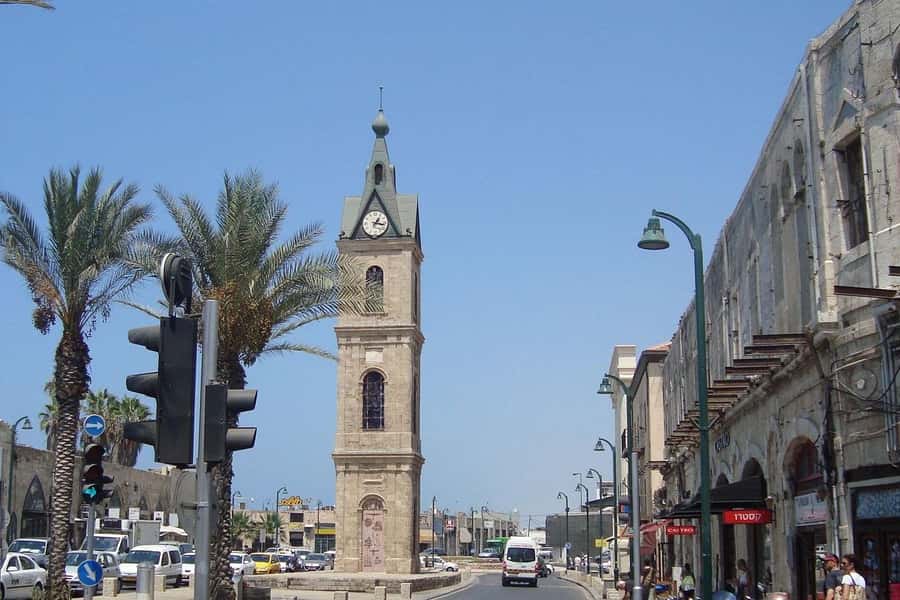
The meeting point is easy to identify once you know the detail that matters: meet at the entrance to the Abulafia Bakery, where pastries sit behind glass and the floor is blue. Do not wait at the Abulafia restaurant, which is also in the square.
Clock Tower Square is a fitting starting point. It acts as a gateway between the modern city and the older streets of Jaffa. Beginning here lets you get your bearings before the lanes become narrower and the route turns more uphill.
The square also gives the tour a practical advantage. You start in a recognizable public place rather than being dropped into a maze of alleys. If you arrive early, the bakery provides a memorable landmark and a chance to orient yourself, though food and drinks are not included in the tour price.
From here, your guide begins setting out Jaffa’s long story. The point is not just to name old buildings. It is to show you how the city’s location, port, faiths, and trade shaped the streets you are about to walk.
Mahmoudiya Mosque and the Ottoman chapter
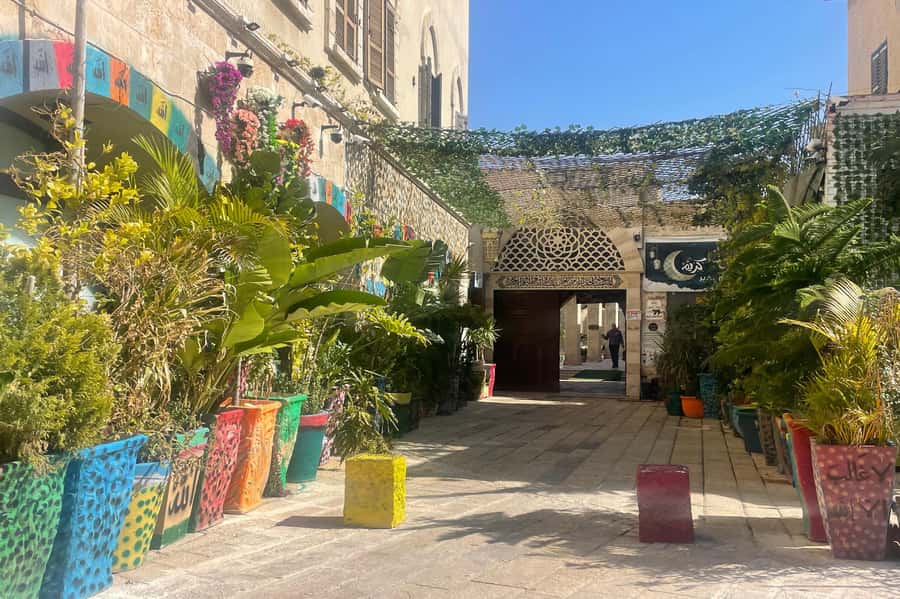
The Mahmoudiya Mosque is one of the route’s most important architectural stops. Its Ottoman-era design gives you a visible link to a period when Jaffa was part of a wider regional world ruled from Istanbul.
The mosque is also a useful reminder that Jaffa is not simply an ancient backdrop for modern Tel Aviv. It remains an Arabic and Muslim neighborhood with active religious and community life. That present-day connection gives the building more meaning than a quick look at a decorative facade.
Entry is optional and depends on prayer times and holy days. If the interior is open, you will need to follow the guide’s instructions and respect the building as a working place of worship. If it is closed, the exterior and surrounding explanation still make the stop worthwhile.
I appreciate this kind of limitation because it keeps expectations honest. A timed tour cannot control religious schedules. Plan to enjoy the mosque as part of the route, not book the walk solely for guaranteed interior access.
Kdumim Square and the old lanes
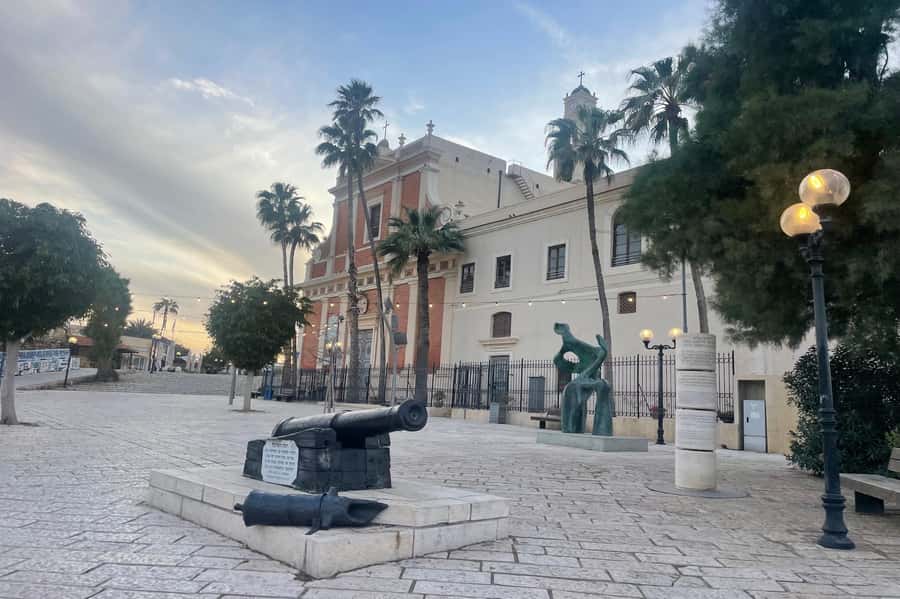
The route continues toward Kdumim Square, an open area framed by cafes, shops, and restaurants. This is where Jaffa’s old stone setting meets everyday social life.
The square helps break up the walking. After narrower streets and stairs, you get a more open place to pause, listen, and look around. It is also a good spot to notice the contrast between the old city’s architecture and its current use.
Your guide can give the monuments a human scale here. Instead of seeing Jaffa as a museum, you see a neighborhood where people eat, shop, meet, and move through streets that have carried many generations.
The winding lanes are part of the pleasure, but they are also where the physical demands become clear. Wear shoes with a firm sole. Bring water, sunscreen, and a hat, since this is an outdoor walk in sun, rain, and whatever weather arrives. The tour operates rain or shine.
More Walking Tours in Tel Aviv
- Walking Tour of Akko (Half-day)
★ 5.0 · 84 reviews - Tel Aviv: Jaffa Half-Day Walking Tour
★ 4.5 · 70 reviews - Tel Aviv: Florentin Saturday Walking Tour
★ 3.5 · 65 reviews - Tel Aviv: Jaffa & Carmel Market Walking Tour
★ 4.7 · 60 reviews
Shuk Hapishpishim, where shopping becomes part of the story
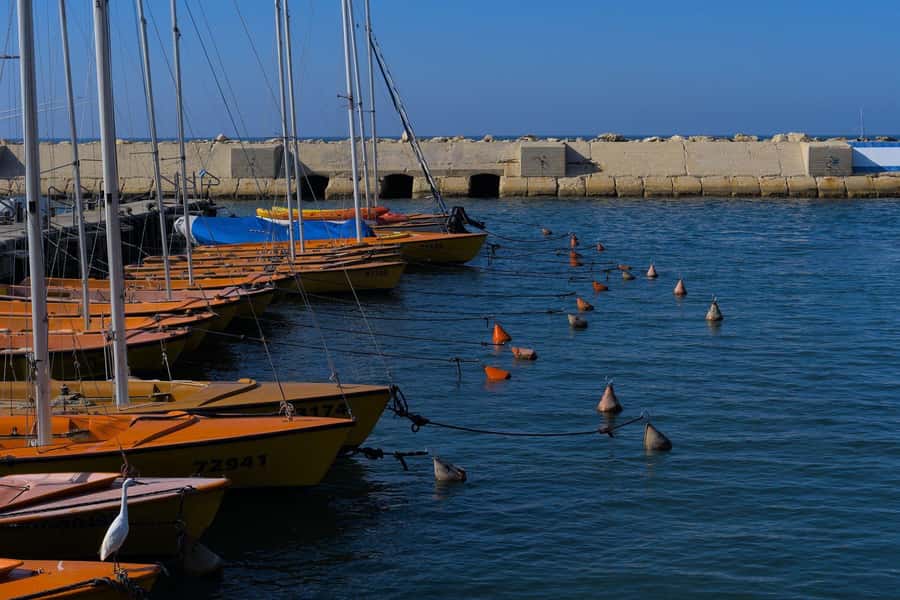
The Flea Market, known as Shuk Hapishpishim, gives the tour its strongest dose of daily color. Here you find antiques, art, unusual objects, and small shops rather than a formal line of historic monuments.
I like this section because it keeps the experience from becoming a procession of old stones. The market shows how Jaffa’s character is expressed through commerce, repair, collecting, display, and browsing. Even if you buy nothing, the shopfronts and objects give you a different way to read the neighborhood.
The tour includes entry into stores when they are open. That does not mean a shopping appointment at every stall, and opening hours can affect the experience. Still, having a local guide nearby can make the market less confusing and help you decide where to slow down.
Do not expect unlimited shopping time. The route has several major stops, and the guide needs to keep the group moving. If a particular antique, art piece, or market stall catches your eye, note its location and return after the walk.
For me, the market is one of the best reasons to choose this tour over a purely architectural walk. It gives the old city a pulse without requiring you to plan a separate visit first.
Andromeda’s Rock and the stories of the coast
Andromeda’s Rock connects Jaffa to Greek mythology and adds a legendary layer to the coastal part of the route. The story gives you a memorable way to think about Jaffa’s position beside the sea, where maritime trade, religious tales, and local identity overlap.
There is an important current restriction: the rock lookout is temporarily closed because of renovations. You may still hear the story and see the surrounding coastal setting, but do not expect normal access to the lookout point.
This is a good example of why the tour is more than a checklist. Even when one viewpoint is unavailable, the guide can explain why the place matters and connect the legend with Jaffa’s wider relationship to the water.
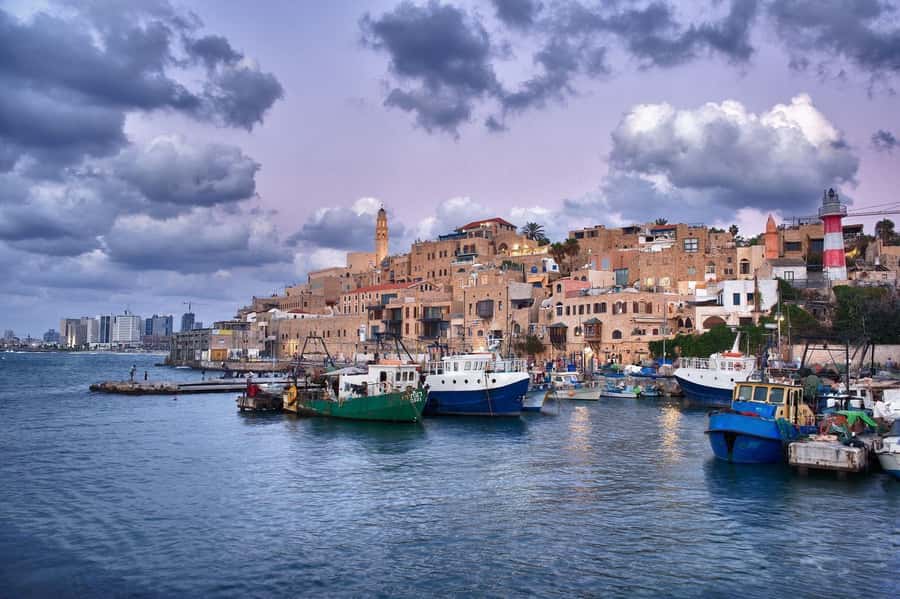
The route also provides panoramic views of the coastline and Tel Aviv skyline. These views are a welcome change after the enclosed lanes, and they help you see how the old port sits beside the modern city.
St. Peter’s Church and an unusual architectural contrast
St. Peter’s Church brings a very different visual note to the walk. The 19th-century building reflects European Catholic design while standing in an area strongly shaped by Middle Eastern and Islamic traditions.
That contrast is one of the tour’s most useful lessons. Jaffa does not present its history in neat separate chapters. Different faiths and periods occupy the same small district, sometimes within a short walk of one another.
Entry to the church is included when opening hours and prayer times allow it. As with the mosque, access is optional and subject to conditions beyond the tour operator’s control. Dress and behave respectfully, particularly if services or prayer are taking place.
The church is worth seeing even if you are not religious. Its position on the route helps explain the district’s layered identity, while the architecture gives your eyes a break from the stone lanes and market displays.
The port, sea views, and the final chapter
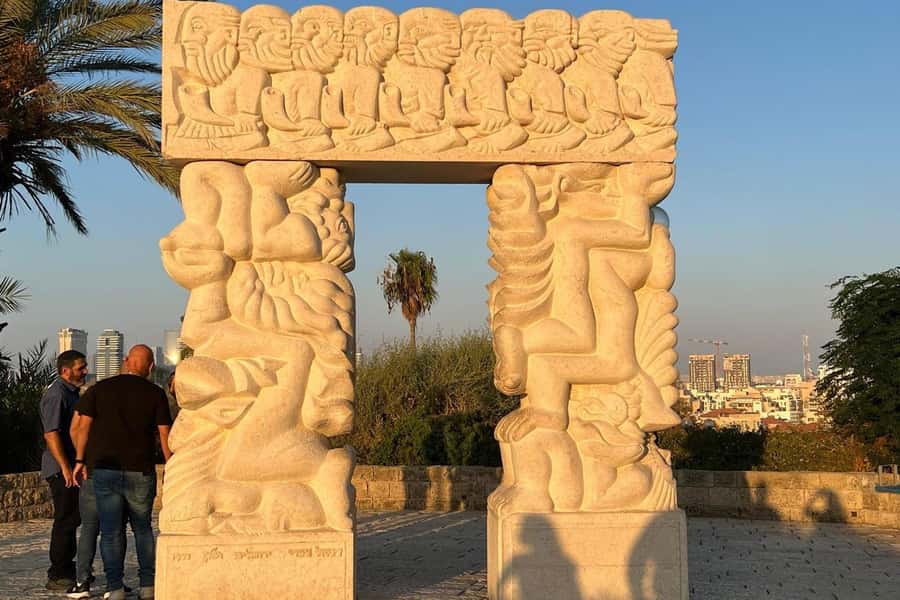
The walk ends at Jaffa Port, a harbor with roughly 3,000 years of maritime history. This is the natural place to finish because the port explains why Jaffa mattered in the first place.
The waterfront gives the tour room to breathe. After the market and old streets, you can look out toward the coast and Tel Aviv skyline. It is also a useful place to continue your day, since the tour ends with you already in one of Jaffa’s major public areas.
The port is not just a pretty closing photograph. It ties together the earlier stops: trade helped shape the market, the coastline explains the city’s importance, and the old religious and civic buildings reflect the people who passed through or settled here.
I would allow extra time after the tour if your schedule permits. The guided walk gives you the framework, but the port and market are better enjoyed when you are no longer watching the clock.
What $39 gets you
At $39 per person, this is a reasonable price for a 90-minute to two-hour guided walk, especially if you value context over simply collecting photographs. The fee covers an English-speaking local guide, the walking route, and entry into some shops and religious buildings when conditions allow.
The value depends on your style. If you are happy to wander without explanations, you can see parts of Jaffa on your own for less. But independent visitors can easily pass through the old lanes without understanding the connections between the mosque, church, market, legends, and port.
The price per person is lower when two or more people book together. Infants aged 0 to 2 are free, but children and infants must be accompanied by at least one paying adult.
A private group option adds flexibility, though the exact price and arrangement should be checked when booking. The standard tour is in English, so choose it only if that suits your group.
Free cancellation is available up to 24 hours before the start time, and you can reserve now and pay later. Those terms are useful if your Israel itinerary is still shifting, but the more important practical point is to choose a time that gives you enough daylight and manageable heat.
Who will enjoy this walking tour
I would recommend it to first-time visitors who want a clear introduction to Jaffa without spending half a day on a formal history tour. It also suits people who like to mix architecture, local shopping, religious sites, legends, and sea views in one compact route.
Families can join, but the stairs and hills deserve attention. Infants are free, yet the route is not suitable for strollers, wheelchairs, or people with mobility impairments. You should be comfortable walking about 2 kilometers on uneven streets and handling steps.
It is also a good choice for curious solo visitors. The guide provides structure, and the short duration leaves time afterward for your own exploration. Alina’s ability to answer questions beyond Jaffa’s immediate history is especially useful if you enjoy connecting local places to broader cultural subjects.
You should choose a different format if your priority is a long market-shopping session, guaranteed access inside the mosque or church, or a fully accessible route. You should also expect the order of stops to change if conditions require it.
Should you book the Jaffa walking tour?
Book it if you want Jaffa explained as a living neighborhood rather than treated as a quick stop between Tel Aviv attractions. The combination of Clock Tower Square, Mahmoudiya Mosque, Kdumim Square, Shuk Hapishpishim, St. Peter’s Church, coastal viewpoints, and the old port gives you a lot in a short time.
The best reason to go is the guide. Alina receives especially warm praise for clear historical explanations, cultural insight, friendliness, humor, and thoughtful answers. The strongest version of this tour is not just a walk through attractive streets. It is a conversation that helps you see why those streets look and feel the way they do.
Skip it if hills, stairs, heat, or a fixed walking pace will make the route uncomfortable. For most able walkers, though, $39 is fair value for a compact and well-rounded first look at Jaffa, with enough local detail to help you plan what to explore next.
FAQ
How long does the Jaffa walking tour last?
The tour lasts between 90 minutes and two hours, depending on the available starting time and the pace of the route.
Where do I meet the guide?
Meet at the entrance to Abulafia Bakery in Clock Tower Square. Look for the blue floor and pastries displayed behind glass. This is the bakery, not the Abulafia restaurant in the same square.
What language is the tour conducted in?
The tour is conducted in English with a live local guide.
How much walking is involved?
The route covers about 2 kilometers, or 1.2 miles, and includes stairs and hills.
Can I enter the mosque and church?
Entry is optional. Access to Mahmoudiya Mosque depends on prayer times and holy days, while St. Peter’s Church is subject to opening hours and prayer times.
Is the tour suitable for wheelchairs, strollers, or people with mobility issues?
No. The route includes stairs and hills and is not suitable for wheelchairs, strollers, or people with mobility impairments.
What happens if the weather is bad?
The tour takes place rain or shine. Bring comfortable shoes, water, a sun hat, and sunscreen.
More Shore Excursions in Tel Aviv
- Ashdod Shore Excursion: Jerusalem and Bethlehem – for cruise ship guests only
★ 4.5 · 149 reviews - From Ashdod Port: Jerusalem and Bethlehem Day Trip
★ 4.0 · 111 reviews - Haifa Shore Excursion: Nazareth and the Galilee – for cruise ship guests only
★ 4.5 · 109 reviews - Ashdod Shore Excursion: Jerusalem and Dead Sea – for cruise ship guests only
★ 4.5 · 104 reviews
Just added in Tel Aviv
- Wine Tour North of Israel from Tel Aviv★ 5.0 · 2 reviews
- private Full-day Tour to Jericho + the Dead Sea★ 5.0 · 3 reviews
- private Full-Day Tour to Bethlehem and Jerusalem★ 5.0 · 2 reviews
- Private wine tour of Northern Israel★ 5.0 · 4 reviews
- Privet Pickup from Tel Aviv Hotels to the Airport★ 5.0 · 1 review
- VIP Tel Aviv airport Terminal 3 Fast Track Skip Line From plane★ 4.5 · 9 reviews
- Package VIP Skip Line Services in BGN Airport with Transfer to Tel aviv Hotels★ 5.0 · 3 reviews
- Private Transfer from Ben Gurion Airport to Tel Aviv, Bat Yam, Rishon LeZion★ 5.0 · 2 reviews
Shore Excursions, compared.
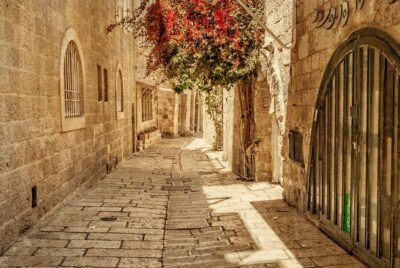
Ashdod Shore Excursion: Jerusalem and Bethlehem – for cruise ship guests only
Read our review →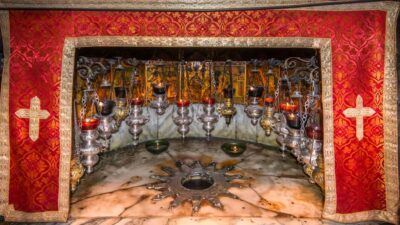
From Ashdod Port: Jerusalem and Bethlehem Day Trip
Read our review →
Haifa Shore Excursion: Nazareth and the Galilee – for cruise ship guests only
Read our review →
Ashdod Shore Excursion: Jerusalem and Dead Sea – for cruise ship guests only
Read our review →
From Ashdod Port: Masada and Dead Sea Guided Day Trip
Read our review →
Haifa Port Shore Excursion: Nazareth and Sea of Galilee Day Tour from Haifa Port
Read our review →
Ashdod Port Shore Excursion: Jerusalem and Bethlehem Day Tour from Ashdod Port
Read our review →
2024 Jerusalem & Bethlehem from Ashdod Port Small Groups
Read our review →Browse the lists this tour appears in