
Reviewed · DEAD SEA DAY TRIPS
Jerusalem and the Dead Sea Tour
Jerusalem packs centuries into a few streets. This full-day trip pairs Mount of Olives views and major Old City holy sites with the wonderfully strange pleasure of floating in the Dead Sea. I like the efficient mix of sacred landmarks and natural wonder, and I like that hotel pickup, transport, guides, and entry fees are included. The tradeoff is time: Jerusalem and the Dead Sea in one day can feel rushed.
The strongest guides make a real difference. Itamar, Abishai, Norbert, Amit, Lorne, Zahi, and Amir are all praised for clear explanations, energy, humor, and personal attention. Still, the day can be less smooth when groups are combined, lunch and shopping stops run long, or the Dead Sea portion gets cut short.
In This Review
- Key points to know before booking
- Why this Jerusalem and Dead Sea pairing works
- The Mount of Olives panorama begins the day
- Gethsemane, the Church of All Nations, and the Kidron Valley
- Entering the Old City through its quarters
- The Western Wall and Jewish Quarter
- Following the Via Dolorosa to the Holy Sepulchre
- The Muslim Quarter and bazaar
- Lunch, shopping, and the practical middle of the day
- Floating in the Dead Sea at 400 meters below sea level
- Guides can make or break the experience
- Who should book this day trip?
- Should you book the Jerusalem and Dead Sea Tour?
- FAQ
- What is included in the Jerusalem and Dead Sea Tour?
- How much does the tour cost?
- How long does the tour last?
- Is hotel pickup offered?
- How much walking is involved?
- What should I wear in Jerusalem?
- What should I bring to the Dead Sea?
- Are children allowed on the tour?
- Can I cancel for a full refund?
Key points to know before booking
- A full day with two very different highlights: Spend the morning among Jerusalem’s holy sites, then float in the Dead Sea.
- The Old City requires steady walking: Expect narrow lanes, uneven surfaces, steps, and a brisk pace over several hours.
- The Mount of Olives is mainly a viewpoint: The panorama toward the Dome of the Rock is excellent, but the stop may be brief.
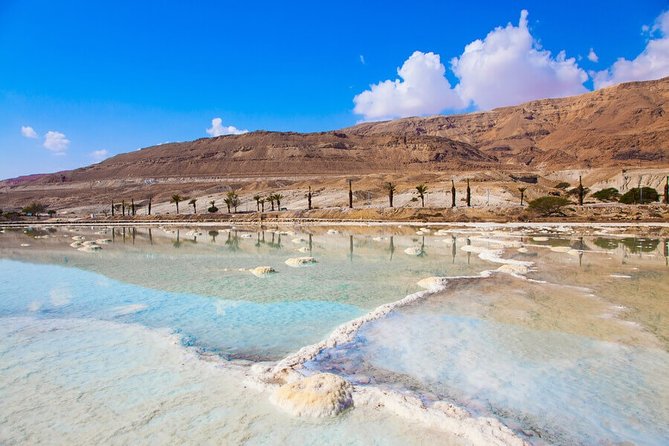
- The Dead Sea visit is the day’s great sensory change: Mineral mud, salty water, and a low shoreline make this more than an ordinary swim.
- Guide quality is a major strength: The best guides explain complicated religious and political history in a lively, understandable way.
- This is a highlights tour, not a slow pilgrimage: Book it to cover ground, not to linger at every church or prayer site.
Why this Jerusalem and Dead Sea pairing works
At about $106 per person, this is a practical way to see two of Israel’s headline sights without arranging separate transport. You get hotel pickup and drop-off, an air-conditioned vehicle, a professional guide, and entrance fees. For a first visit, that bundle has real value, especially when Jerusalem’s Old City lanes feel like a maze and the Dead Sea lies outside the city.
The day lasts roughly 10 hours and begins around 8:30 a.m. That sounds generous, but the schedule covers a lot. You are not simply sightseeing in Jerusalem, then taking a quick dip. You are crossing between major quarters, walking the Via Dolorosa, visiting the Church of the Holy Sepulchre, pausing at the Western Wall, and then making time for a two-hour Dead Sea stop.
I would choose this trip if you have limited time in the area and want a broad first look. I would not choose it if your main goal is quiet prayer, detailed museum visits, or several hours at the Dead Sea. For those priorities, separate day trips give you more control.
More Dead Sea day trips:
- Tel Aviv: Jerusalem, Bethlehem & Dead Sea
★ 4.0 · 881 reviews - From Jerusalem: Masada & Dead Sea Full Day Tour with Pick Up
★ 4.5 · 815 reviews - Masada and the Dead Sea Day Trip from Jerusalem
★ 4.5 · 757 reviews
The Mount of Olives panorama begins the day
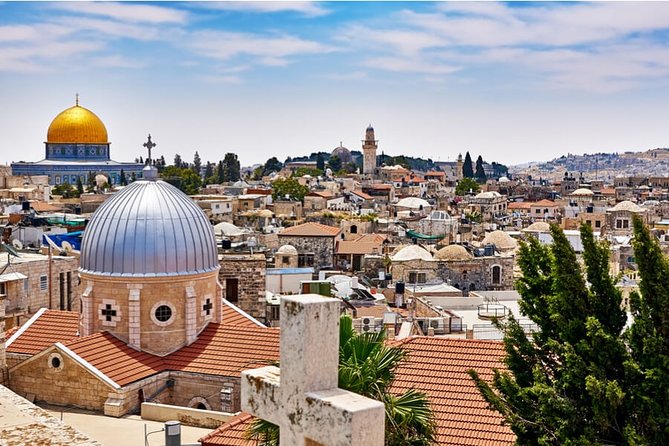
The opening view gives you a useful map of Jerusalem before you enter its tight streets. From the Mount of Olives area, you look across the Old City toward the Dome of the Rock, with the Temple Mount forming the visual center of the scene. The golden shrine is one of Jerusalem’s most recognizable landmarks and an excellent orientation point.
The stop is listed as about 30 minutes, with no separate admission fee. The itinerary also refers to Mount Scopus National Botanical Garden, so the exact overlook can depend on the day’s routing. In practical terms, expect a panoramic viewpoint rather than a long walk among every site on the ridge.
That distinction matters. Some people arrive expecting an extended visit to the Mount of Olives, the Garden of Gethsemane, and nearby churches. Several accounts describe the ridge as a short photo stop, sometimes viewed from the coach. If this part is especially important to you, ask the guide at the start how much time will be spent off the bus.
The panorama is still valuable. Jerusalem’s Old City, its walls, and the Temple Mount make much more sense once you have seen them from above. Bring a hat and water because this is an exposed viewpoint, and do not count on the morning as a slow, shaded walk.
Gethsemane, the Church of All Nations, and the Kidron Valley
The route continues toward the foot of the Mount of Olives, passing the Garden of Gethsemane. Christian tradition identifies this garden as the place where Jesus prayed before his arrest, while the disciples slept nearby. The Church of All Nations is also included in this section of the route.
The itinerary says to see these places, but it does not promise a long interior visit. The amount of time can vary with traffic, group movement, and religious services. One person specifically found that the Garden of Gethsemane was not visited, so I would treat this as a planned sight that may become a brief pass or exterior stop.
The Kidron Valley adds physical context to the route. It sits between the Old City and the Mount of Olives, and crossing it helps you understand how the city’s hills and valleys shaped movement through Jerusalem. Your guide can connect the setting to the events described in the Christian tradition, but you should expect a general explanation rather than a specialist archaeological tour.
Entering the Old City through its quarters
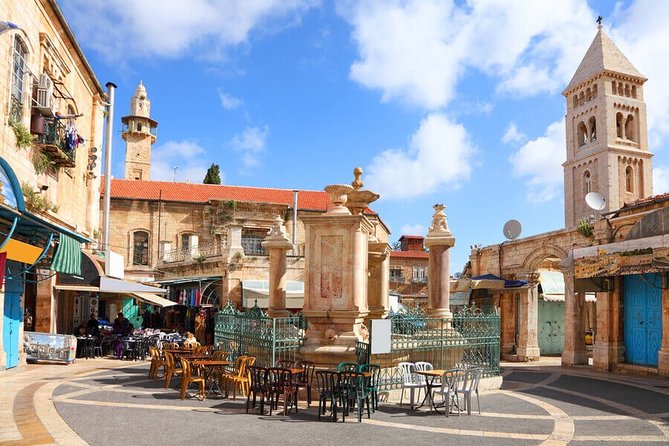
The Old City is the heart of the Jerusalem portion, with about two hours of walking followed by several shorter stops. The tour moves through the Armenian, Jewish, Christian, and Muslim quarters, giving you a quick sense of how close different religious worlds sit to one another.
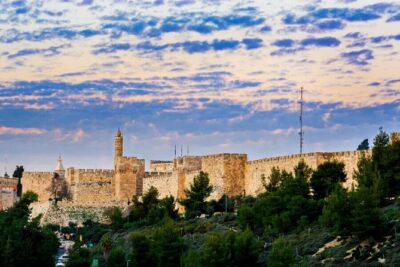
The walls around the Old City date in their present form to the 1530s, when Jerusalem was under Ottoman rule. Once inside, the lanes narrow quickly. The route can be confusing if you are alone, so a guide is useful here, particularly if you want to find the main religious sites without wasting time at every turn.
The main drawback is pace. Two hours is enough to see the core sights, but not enough to explore each quarter at leisure. You may need to keep the group in sight, remember meeting points, and save independent browsing for another day.
The Armenian Quarter and the Byzantine Cardo receive about 40 minutes. The Cardo gives you a glimpse of the city’s Roman and Byzantine street plan, while the quarter itself is quieter than the market lanes elsewhere. This is one of the better places to listen to your guide because the ruins and rebuilt streets can be hard to interpret without context.
The route has a noticeable Jewish focus, especially around the Jewish Quarter and Western Wall. That is not a flaw, but it is useful to know before booking. The tour covers Christian sites in detail as well, while the Muslim Quarter is generally a shorter walk through the bazaar.
More things to do in Jerusalem:
- From Tel Aviv: Jerusalem and Bethlehem Guided Day Trip
★ 4.3 · 1,316 reviews - From Tel Aviv: Jerusalem Old & New City Bus Tour
★ 4.2 · 824 reviews - Day Tour to Jerusalem and Bethlehem from Tel Aviv
★ 4.5 · 720 reviews - From Jerusalem: Nazareth and Sea of Galilee Tour
★ 4.5 · 588 reviews
The Western Wall and Jewish Quarter
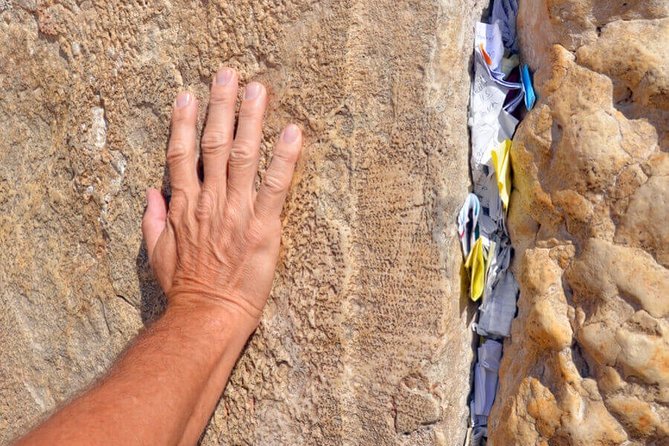
The Western Wall stop lasts about 20 minutes. This is the holiest accessible Jewish prayer site, and the atmosphere can be powerful even during a short visit. You may see people praying, placing notes between the stones, or approaching the wall with great personal focus.
Dress carefully. Knees and shoulders should be covered for both men and women at places of worship, and shorts may lead to refused entry. Comfortable shoes matter too, since the tour includes substantial walking over stone streets and uneven ground.
Twenty minutes gives you time to see the wall and take in the setting, but it may not suit someone who wants to pray at length. If you need personal time, tell the guide early and listen closely to the meeting instructions. The group schedule will continue.
Following the Via Dolorosa to the Holy Sepulchre
The Christian Quarter and Via Dolorosa form the emotional center of the Jerusalem portion. The route follows the traditional path associated with Jesus carrying the cross, with the 14 Stations of the Cross marked along the way.
The planned Via Dolorosa walk lasts about 40 minutes, followed by roughly 30 minutes at the Church of the Holy Sepulchre. The church occupies the traditional site of the Crucifixion and burial, making it one of Christianity’s most important places.
This is where a good guide earns the fee. Norbert is praised for explaining the history clearly and answering questions, while other guides, including Itamar and Zahi, are credited with adding context and showing less obvious views around the Old City. A strong explanation helps you understand why several Christian traditions share one compact, heavily visited building.
Do not assume you will have time to visit every chapel or wait in every line. One account describes starting at the church and seeing only two Stations before moving on, while another notes that the queue for the tomb could not fit into the schedule. The exact order can change, and the church may be crowded.
I suggest you focus on the building’s importance, listen to the guide’s explanation, and treat any personal prayer time as a bonus. If entering the tomb or spending an hour inside the church is your main goal, book a Jerusalem-only tour instead.
The Muslim Quarter and bazaar
The Muslim Quarter stop is about 20 minutes and takes you through part of the bazaar. It is short, but it adds a needed piece to the Old City picture. You see how commercial lanes connect the quarters and how quickly Jerusalem shifts from formal prayer space to everyday shopping.
The brevity limits shopping freedom. Some organized tours use a designated souvenir shop, and this trip has drawn criticism for steering people toward particular shopping and lunch locations. If you prefer choosing your own food or gifts, keep your expectations modest and ask whether you can use free time independently.
This is also a place to stay alert to the group. The lanes are easy to confuse, and one person was separated after missing a meeting time. Write down the meeting point, keep your phone charged, and arrive a few minutes early. That is simple insurance in a crowded old city.
Lunch, shopping, and the practical middle of the day
Food and drinks are not included in the $106 price. Lunch arrangements can be part of the day’s organization, and some people find the assigned restaurant convenient while others consider the food expensive for what you get. The setting may offer views toward the Temple Mount and Mount of Olives, which can partly soften an average meal.
The bigger issue is lost time. Some accounts describe long waits around cafés, restaurants, souvenir shops, or group changes. A café stop may be useful for a restroom and a drink, but prices can be high. Bring water and a snack if you want more control over your morning.
Communication about pickup and transfers also deserves attention. Hotel pickup and drop-off are included, but a few people report being sent to a bus point by taxi, missing promised hotel pickup, or being dropped away from the hotel after a transfer problem. Confirm the pickup instructions before departure and keep the operator’s contact details available.
Floating in the Dead Sea at 400 meters below sea level
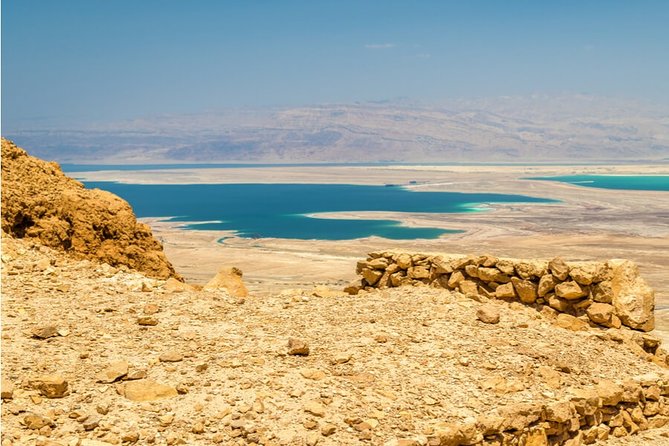
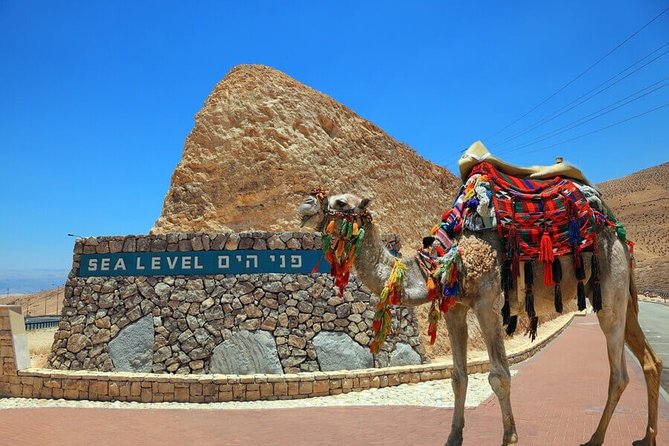
After Jerusalem, the day changes completely. The Dead Sea sits about 400 meters, or 1,312 feet, below sea level, making it the lowest place on Earth. At the shore, you change into swimwear, apply mineral-rich black mud, rinse it away, and enter the famously salty water.
The water is so dense with salt that floating is the point. You do not swim normally so much as lean back and let the water support you. Avoid splashing, especially near your eyes, and do not shave immediately before the visit because salt water can sting irritated skin. The supplied information does not promise medical results, so regard the mud and salt treatment as a fun traditional spa experience, not a cure.
The Dead Sea stop is scheduled for about two hours and admission is included. In practice, the usable water time may be shorter because changing rooms can be crowded and the group must return to the coach. One account describes roughly 20 minutes in the water after a long changing-room wait, while another says the beach and facilities were reasonably clean.
Bring a swimsuit, towel, hat, sun protection, and flip-flops. The last item is especially useful on hot ground and around wet changing areas. Food and drinks are not included, so buy water when the guide offers a chance, rather than waiting until you reach the shore.
This stop is a strong reason to book the combined tour. You can see sacred sites in the morning and then float in an inland salt lake the same afternoon. Just do not confuse a scheduled two-hour stop with two full hours in the water.
Guides can make or break the experience
The highest praise goes to the guides. Itamar receives strong marks for knowledge and service, Abishai for bringing Jerusalem’s story to life, Norbert for clear explanations and patience with questions, and Amir for combining useful commentary with humor. Lorne is also credited with keeping a large group on schedule, while Zahi is praised for taking people through side lanes and unusual viewpoints.
The mixed feedback usually concerns operations, not the subject matter. When the guide speaks clearly and keeps the group together, the day feels informative and well paced. When one group is combined with another, the language balance can change, and explanations may become brief.
If you book a bilingual departure, confirm which language will be used throughout the day. One Spanish-speaking couple found that the Jerusalem portion was mostly in English and that the Dead Sea segment continued with an English-speaking group. That is a serious issue if you need a Spanish tour.
The maximum group size is 40 people. That keeps the price reasonable, but it also means less personal attention and more dependence on strict meeting times. A smaller private tour will cost more, yet it may be worth it if you care about long questions, prayer time, or flexible stops.
Who should book this day trip?
I would recommend it to a first-time visitor with one free day, a hotel in Jerusalem, and a desire to cover the city’s major sacred sights before trying the Dead Sea. It suits people who value an expert overview more than unstructured wandering.
Families can enjoy the Dead Sea, and children over age four may participate. The walking portion is still demanding, so young children may find the Old City schedule tiring. Anyone with mobility concerns should note the stone lanes and moderate amount of walking before booking.
I would choose another plan if you want to study Jerusalem slowly, spend meaningful time inside the Holy Sepulchre, shop on your own, or enjoy a long Dead Sea afternoon. A Jerusalem-only visit would give you more room for the Old City, while a separate Dead Sea trip would reduce the pressure on changing and bathing time.
Free cancellation is available up to 24 hours before the start time. Changes or cancellations inside that window are not accepted for a refund. The tour is not suitable for children under four.
Should you book the Jerusalem and Dead Sea Tour?
Book it if you want the efficient version of Jerusalem and the Dead Sea, and you are comfortable with a brisk group schedule. The $106 price is fair for hotel transport, an air-conditioned coach, a guide, and included entry fees, especially if arranging two separate outings would be difficult.
Skip it if you dislike assigned restaurants and shops, need guaranteed time at every church, or want a full two hours in the water. Before paying, confirm pickup details, language, and the exact Dead Sea facility. Bring covered clothing, water, sun protection, a towel, swimsuit, and flip-flops.
The tour’s best day comes when the guide is strong and the transfers run cleanly. With a guide such as Norbert, Itamar, Abishai, or Zahi, you get a memorable introduction to Jerusalem followed by one of the world’s oddest and most enjoyable swims. Just book it as a broad first look, not the final word on either destination.
FAQ
What is included in the Jerusalem and Dead Sea Tour?
Hotel pickup and drop-off, a professional guide, transportation in an air-conditioned vehicle, and entrance fees are included.
How much does the tour cost?
The listed price is $106 per person.
How long does the tour last?
The full-day experience lasts approximately 10 hours and begins around 8:30 a.m.
Is hotel pickup offered?
Yes. Hotel pickup and drop-off are included, although you should confirm the exact pickup instructions before departure.
How much walking is involved?
The tour includes a moderate amount of walking through Jerusalem’s Old City, including the Jewish, Christian, and Muslim quarters, the Via Dolorosa, and the Cardo. Comfortable walking shoes are recommended.
What should I wear in Jerusalem?
You should wear clothing that covers the knees and shoulders. This dress code applies to both men and women at places of worship and selected museums, and shorts may lead to refused entry.
What should I bring to the Dead Sea?
Bring a swimsuit, towel, hat, sun protection, and flip-flops. Food and drinks are not included.
Are children allowed on the tour?
Children under four are not permitted. The information provided says most people can participate, but the walking and full-day schedule may be tiring for very young children.
Can I cancel for a full refund?
Yes, if you cancel at least 24 hours before the experience begins. Cancellations or changes made less than 24 hours before the start time are not refunded.
Just added in Jerusalem
- Walking Jerusalem in Russian★ 5.0 · 1 review
- private Full-Day Tour to Bethlehem and Jerusalem★ 5.0 · 2 reviews
- Jerusalem and Dead Sea Trip from Tel Aviv★ 4.0 · 6 reviews
- Tel Aviv & Old City of Jaffa – Tiny group from Tel Aviv★ 4.5 · 9 reviews
- Tel Aviv; Jaffa Old City, Port & Shuk Hapishpishim Walking Tour★ 4.5 · 11 reviews
- Tel Aviv: Food & History Tour of Jaffa Old City & Flea Market★ 5.0 · 1 review
- Discover the Secrets of the Underground Jerusalem with a private tour★ 5.0 · 4 reviews
- Private Tour from Tel Aviv to Jerusalem★ 5.0 · 3 reviews
Dead Sea Day Trips, compared.
Masada & Dead Sea Full Day Tour with Pick Up
Read our review →
Masada and the Dead Sea Day Trip from Tel Aviv
Read our review →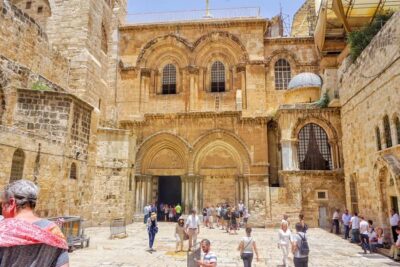
Masada and the Dead Sea Day Trip from Jerusalem
Read our review →
Browse the lists this tour appears in