Reviewed · JERUSALEM TOURS
Jerusalem: Dual Narrative Tour
Jerusalem asks hard questions. This four-and-a-half-hour Old City walk pairs a Jewish guide with a Palestinian guide, giving you two voices at the same street corners, holy sites, and contested spaces. I like the format because it moves beyond dates and monuments, and I like that the guides discuss current tensions without turning the tour into a shouting match.
The strongest part is the human exchange between the guides. Names reported from different departures include Betty, Ameer, Morgi, Amir, Nour, Alex, Beni, Yousef, Shay, and Nol, so your pair may vary. The main drawback is pace: the tour covers a great deal, with no planned meal break, and one departure was described as hot, tiring, and hard to hear in crowded areas.
In This Review
- Key points to know before booking
- Why the dual-guide format matters in Jerusalem
- Starting at Jaffa Gate: reading power in the city
- The Armenian Quarter and a community with its own story
- The Roman Cardo and the Jewish Quarter’s excavated past
- A rooftop view toward East Jerusalem
- The Church of the Holy Sepulchre, where traditions overlap
- Walking through the Muslim Quarter
- The Via Dolorosa and a final exchange
- The Western Wall and Al Buraq Square
- Al Aqsa Mosque and the Temple Mount or Noble Sanctuary
- What the $65 price really buys you
- Pace, heat, sound, and clothing
- Who should book this Jerusalem tour?
- Should you book the Dual Narrative Tour?
- FAQ
- How long does the Jerusalem Dual Narrative Tour last?
- What time does the tour begin?
- Where does the tour start?
- Where does the tour end?
- What sites are included?
- Are admission tickets included?
- What should I wear?
- How large is the group?
- Can I cancel for a refund?
Key points to know before booking
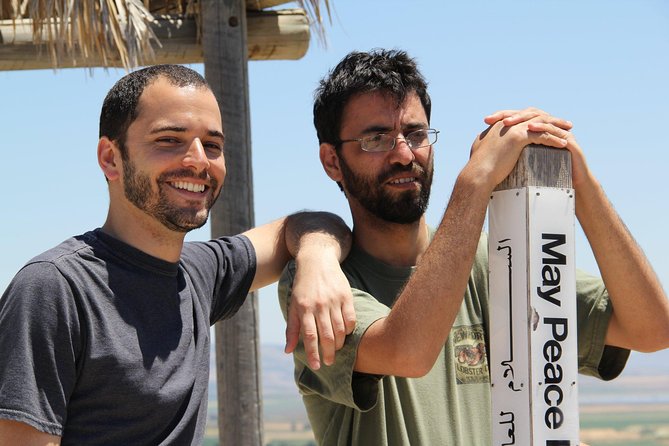
- Two guides, two lived perspectives: A Jewish Israeli guide and a Palestinian guide explain Jerusalem’s religious and political disputes side by side.
- Nine major stops in about 4.5 hours: You visit the Armenian, Jewish, Christian, and Muslim quarters, ending near the Austrian Hospice.
- The holy sites are the focus: The route includes the Church of the Holy Sepulchre, Western Wall, and Temple Mount/Noble Sanctuary area.
- Expect discussion, not just sightseeing: The tour examines borders, excavations, competing claims, and the changes made to shared spaces.
- Plan for heat and walking: Bring water and a hat, cover your knees and shoulders, and expect a moderately strenuous outing.
- Small-group format: The maximum group size is 20, though crowds around the holy sites can still make listening difficult.
Why the dual-guide format matters in Jerusalem
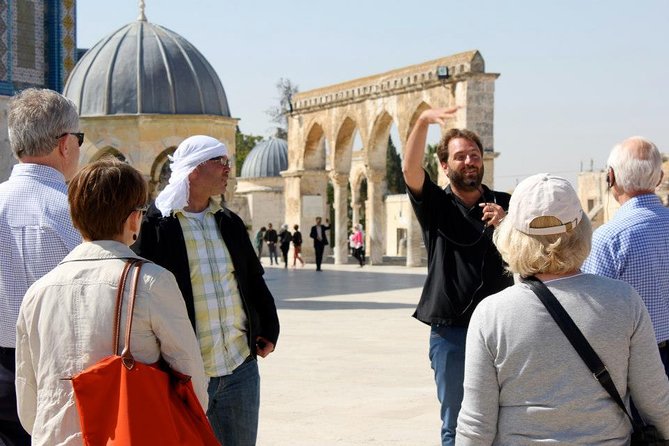
Jerusalem is not a city you can explain with one clean timeline. A wall, plaza, sign, or archaeological dig may carry a different meaning for Jewish, Christian, and Muslim communities. This tour’s main strength is that it makes those differences part of the conversation.
At many stops, one guide explains how Jewish Israelis understand a place, while the Palestinian guide adds how the same location fits Palestinian memory and daily life. The point is not to force you to choose a side. It is to show you why the city remains so difficult to describe in neutral-sounding language.
The guides are expected to disagree at times, but the best departures handle those moments with care. Several guide pairs, including Beni and Yousef and Nour and Alex, were praised for being direct while remaining respectful. That balance matters. Jerusalem’s politics can become either a lecture or a confrontation, and this approach aims for a useful middle ground.
You should come ready to listen and ask questions. The guides reportedly welcome questions, and the question period at the end gives you a chance to sort out points that may have seemed unclear during the walk.
More things to do in Jerusalem:
- From Tel Aviv: Jerusalem and Bethlehem Guided Day Trip
★ 4.3 · 1,316 reviews - Tel Aviv: Jerusalem, Bethlehem & Dead Sea
★ 4.0 · 881 reviews - From Tel Aviv: Jerusalem Old & New City Bus Tour
★ 4.2 · 824 reviews
Starting at Jaffa Gate: reading power in the city
Meet your representatives at 9:30 a.m. in the plaza just outside Jaffa Gate. Look for the person holding a sign naming the tour. The opening 20 minutes use the gate and its setting to explain Jerusalem’s geography, as well as the relationship between Israel and Palestine.
This is a smart starting point because Jaffa Gate is more than an entrance. The tour asks you to notice what the sign at the gate says, and what that wording suggests about the power controlling public space. It is an early lesson in the method used throughout the morning: look at the stone, then ask who named it, restored it, excavated it, or presented it to the public.
You will also get basic bearings for the Old City and the surrounding parts of Jerusalem. That orientation is useful because the compact quarters can feel confusing, especially once narrow lanes and religious sites begin to overlap.
The Armenian Quarter and a community with its own story
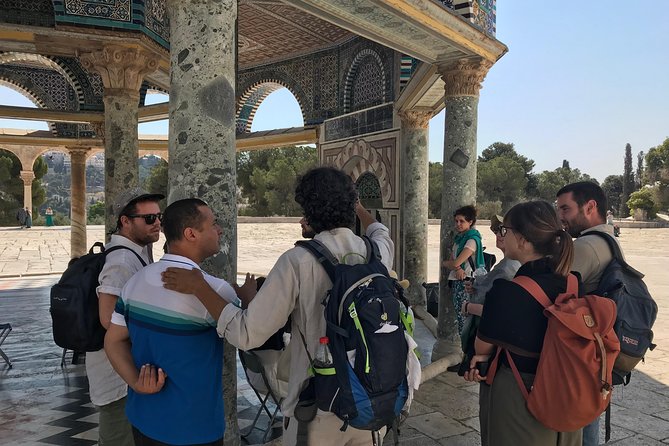
The 10-minute stop in the Armenian Quarter focuses on Armenian identity in Jerusalem. You will see signage commemorating the Armenian genocide and discuss how this community fits into a city divided among several faiths and political claims.
This brief visit is valuable because it keeps the tour from treating Jerusalem as a simple contest between only two sides. The Armenian community has its own religious tradition, historical memory, and place in the Old City. The stop also gives you a reminder that smaller communities can be squeezed by larger political and religious narratives.
Do not expect a long museum visit here. It is a short discussion stop, designed to add another layer before the route continues into the Jewish Quarter.
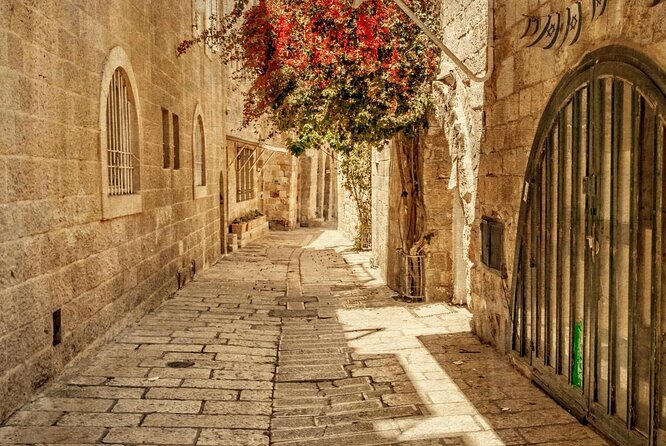
The Roman Cardo and the Jewish Quarter’s excavated past
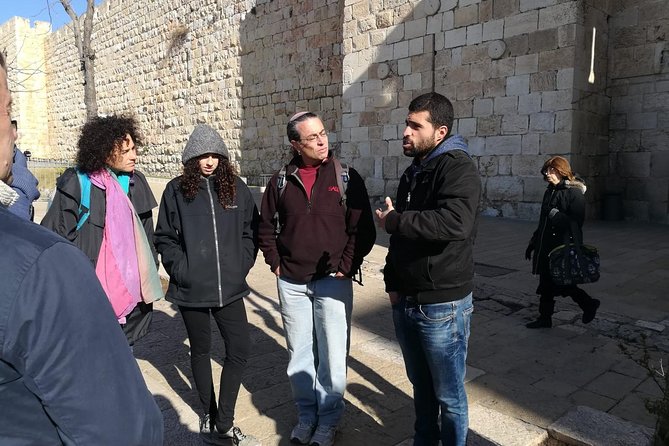
The Jewish Quarter brings you to the Roman Cardo, where the guides explain the Israeli Jewish narrative linking present-day Jewish life with earlier periods in Jerusalem.
The Cardo is also a lesson in what archaeology leaves out. You will hear about the layers beneath the current street level and which layers were removed to reach the configuration you see today. That question is especially important in Jerusalem, where archaeology is never only about old stones. Excavation choices can support one historical story while making another period less visible.
I like this part of the tour because it asks you to think about restoration and removal, not simply admire columns and paving. The stop lasts about 20 minutes, enough for context without attempting to turn the entire Jewish Quarter into an archaeological seminar.
A completely different kind of day:
- From Jerusalem: Masada & Dead Sea Full Day Tour with Pick Up
★ 4.5 · 815 reviews - Masada and the Dead Sea Day Trip from Jerusalem
★ 4.5 · 757 reviews - Day Tour to Jerusalem and Bethlehem from Tel Aviv
★ 4.5 · 720 reviews - From Jerusalem: Nazareth and Sea of Galilee Tour
★ 4.5 · 588 reviews
A rooftop view toward East Jerusalem
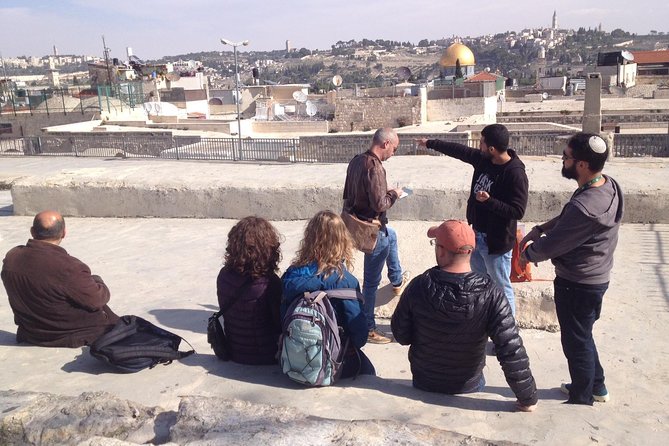
At St. Mark’s Syriac Church, the group pauses above the church at a rooftop looking toward East Jerusalem. The scheduled discussion lasts about 10 minutes and reviews borders, major landmarks, and the way Jerusalem is divided and described.
The view gives the political discussion a physical reference point. Instead of hearing about borders as an abstract issue, you can look across the city while the guides explain the major areas involved. The rooftop stop is also a useful change of pace after the tighter lanes of the Old City.
Because this is a short stop, do not expect a long visit inside the church. The focus is the outlook and the geography around it.
The Church of the Holy Sepulchre, where traditions overlap
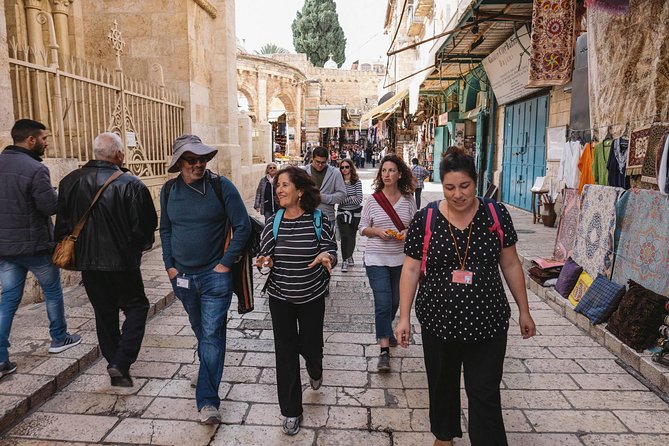
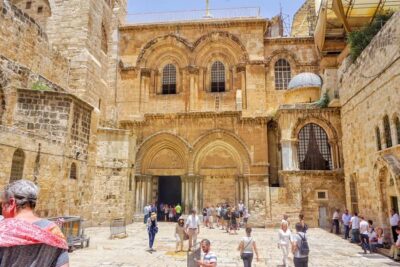
The Church of the Holy Sepulchre receives about 30 minutes. The guides explain its importance in Christian tradition and how the site fits into Israeli and Palestinian narratives. You also visit major areas within the church itself.
This is one of the morning’s essential stops. The church is sacred to Christians because of its connection with the crucifixion and burial of Jesus, but it is also a place shaped by layers of administration, ownership, ritual, and competing claims. Hearing two guides address both the religious meaning and the political setting helps you see why a short visit cannot cover every detail.
There is a practical tradeoff here. Thirty minutes can give you a solid orientation, but it may not allow time to stand in every queue or examine each major shrine at length. If you want to wait to visit the tomb associated with Jesus or walk every section of the Via Dolorosa slowly, plan to return separately.
Crowds can also make the guides hard to hear. Stay close, listen for meeting instructions, and avoid assuming that the group can pause wherever you want inside the church.
Walking through the Muslim Quarter
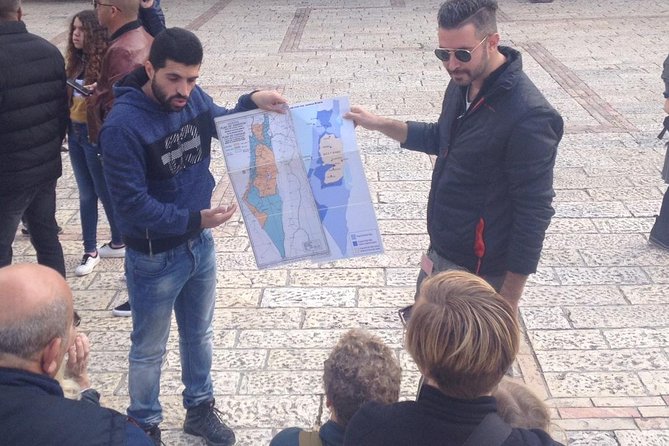
The route then moves through the Muslim Quarter for roughly 15 minutes. This section introduces the communities of the Old City, their connections with the wider Muslim world, and present-day tensions.
It is a short walk, but it helps connect the religious sites to ordinary urban space. The Muslim Quarter is not just a passage between monuments. It is part of a living community, and the guides use the streets to discuss how history, religion, politics, and daily life meet in the same few blocks.
The pace may feel brisk here. You are moving through a working quarter while also listening to a political and historical explanation, so this is not a leisurely shopping walk.
The Via Dolorosa and a final exchange
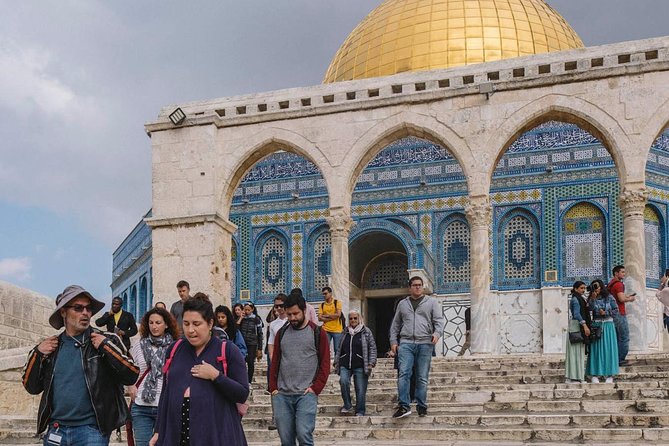
The tour concludes near the Fifth Station of the Cross and the Austrian Hospice, after about 20 minutes focused on the Via Dolorosa. The guides offer final reflections and leave time for questions.
This ending makes sense thematically. The Way of the Cross is one of Jerusalem’s best-known Christian routes, but it also runs through a part of the Old City shared by several communities. Finishing here lets the guides return to the larger issues raised at Jaffa Gate: who controls space, how traditions overlap, and how different groups remember the same city.
The official end point is the Austrian Hospice, at Via Dolorosa Street 37. That is useful to know if you have another appointment afterward. Still, one departure did not have enough time to cover the Via Dolorosa as fully as expected, so treat this section as a guided orientation rather than a complete pilgrimage walk.
The Western Wall and Al Buraq Square
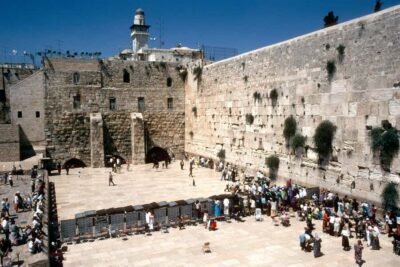
The route also includes the Western Wall, reached after passing through Wadi Road and entering the Western Wall and Al Buraq square area. This section lasts about 25 minutes.
The guides explain the Second Temple and the long Jewish tradition of pilgrimage to the remaining wall. They also introduce Al Buraq and the Islamic account of Muhammad’s flight to Jerusalem. The purpose is to show how one place can carry sacred meaning in more than one tradition.
You will also discuss how the open complex looked before and after it came under Israeli control more than 50 years ago. That historical change is central to understanding why the plaza remains politically sensitive.
This stop may involve security procedures and crowd movement, though the supplied tour details do not give a precise process or waiting time. Dress modestly and follow instructions from the guides. The site is religiously important, so it is not simply another photo stop.
Al Aqsa Mosque and the Temple Mount or Noble Sanctuary
The longest stop is the final major religious visit, about one hour at Al Masjid Al Aqsa and the Temple Mount or Noble Sanctuary complex. You will learn why this platform matters to Judaism, Christianity, and Islam, and view the tiled Dome of the Rock and Al Aqsa Mosque.
This is the most politically charged part of the walk. The guides explain why the compound is a flash point between Israelis and Palestinians, connecting religious belief with control, access, sovereignty, and historical memory.
The tour description says you ascend to the complex and view the Dome of the Rock shrine and Al Aqsa Mosque. It does not promise entry into every building, so you should think of this as a guided visit to the sacred platform and its key sights, not a guaranteed interior tour of each structure.
Rules and access can change at religious sites. Your guides will direct you, but modest clothing is essential. Knees and shoulders must be covered for men and women, and shorts or sleeveless tops are not allowed at places of worship and selected museums.
What the $65 price really buys you
At $65 per person, the value comes from the paired guiding rather than paid admission. The listed stops have no separate admission charge, but two professional guides and a tour host are included.
A normal sightseeing walk can show you the major monuments. This tour adds interpretation from two national and religious perspectives, plus a structured discussion of current conflict. If you are visiting Jerusalem for only a short time, that context can make the price reasonable.
The format is also hard to duplicate on your own. You can read about the Jewish, Christian, and Muslim claims before arriving, but it is different to hear two guides address the same site together and answer questions in real time.
The value is lower if you want long, quiet visits inside each monument. The morning covers nine stops in about 4.5 hours, so the schedule favors breadth and discussion over slow examination. Food and drinks are not included, and transportation to or from the Old City is not included either.
Pace, heat, sound, and clothing
This is a walking tour for people with moderate physical fitness. The Old City includes uneven surfaces, stairs, narrow lanes, and crowds, although the supplied information does not give a total walking distance.
Bring plenty of water and a hat. The combination of heat, constant walking, and serious discussion can wear you down. One departure was specifically described as too long and tiring, with no food break, so eat before the 9:30 a.m. start and carry water.
Sound is another real concern. In crowded parts of the Old City, you may struggle to hear both guides, especially when the group is moving. Stay near the guides and ask for a repeat when needed. A maximum of 20 people keeps the group from becoming huge, but it cannot remove the noise of Jerusalem’s busiest lanes.
Large electronics should not be brought. Service animals are allowed, and the tour is near public transportation. You receive a mobile ticket and booking confirmation at the time of purchase.
Who should book this Jerusalem tour?
I would choose this experience if you want serious context, are open to hearing competing claims, and prefer a guided conversation to a checklist of monuments. It is especially useful early in a Jerusalem visit because it gives you a framework for understanding the Old City before you return to individual sites on your own.
It suits adults, older children who can follow political and religious discussion, history-minded visitors, and anyone trying to understand Israel and Palestine with more care. The guides’ respectful exchanges are a major part of the experience, and the best value comes from listening closely.
I would hesitate if you dislike political discussion, need frequent rest stops, or want to spend a long time inside the Church of the Holy Sepulchre or on the Via Dolorosa. You may prefer separate site visits for those goals.
The cancellation terms are practical: you can receive a full refund if you cancel at least 24 hours before the local start time. Changes or cancellations made later are not accepted for a refund, and the tour requires a minimum number of participants.
Should you book the Dual Narrative Tour?
Book it if your goal is to understand Jerusalem as well as see it. The dual-guide format, the stops at the Western Wall, Holy Sepulchre, and Al Aqsa Mosque, and the frank discussion of borders and contested space make this more than a standard Old City walk.
Do not book it expecting a relaxed morning or a complete tour of every interior shrine. Eat first, dress modestly, carry water, and accept that some stops will be brief. For a first visit, I consider the two-perspective approach worth the $65, especially if you want clarity about why Jerusalem’s most important places mean different things to different people.
FAQ
How long does the Jerusalem Dual Narrative Tour last?
The tour lasts approximately 4 hours and 30 minutes.
What time does the tour begin?
It begins at 9:30 a.m.
Where does the tour start?
The meeting point is the plaza just outside Jaffa Gate in Jerusalem’s Old City. Look for a representative holding a Jerusalem: Dual Narrative Tour sign.
Where does the tour end?
The tour ends at the Austrian Hospice, Via Dolorosa Street 37, Jerusalem.
What sites are included?
The route includes Jaffa Gate, the Armenian Quarter, the Jewish Quarter and Roman Cardo, St. Mark’s Syriac Church, the Church of the Holy Sepulchre, the Muslim Quarter, the Via Dolorosa, the Western Wall, and Al Masjid Al Aqsa.
Are admission tickets included?
The listed stops have free admission, and two professional guides plus a tour host are included. Food, drinks, and transportation to or from the attractions are not included.
What should I wear?
You must cover your knees and shoulders. Shorts and sleeveless tops are not allowed at places of worship and selected museums. The dress rule applies to both men and women.
How large is the group?
The maximum group size is 20 people.
Can I cancel for a refund?
Yes. You can cancel at least 24 hours before the experience’s start time for a full refund. Cancellations or changes made less than 24 hours before the start are not accepted for a refund.
Just added in Jerusalem
- Walking Jerusalem in Russian★ 5.0 · 1 review
- private Full-Day Tour to Bethlehem and Jerusalem★ 5.0 · 2 reviews
- Jerusalem and Dead Sea Trip from Tel Aviv★ 4.0 · 6 reviews
- Tel Aviv & Old City of Jaffa – Tiny group from Tel Aviv★ 4.5 · 9 reviews
- Tel Aviv; Jaffa Old City, Port & Shuk Hapishpishim Walking Tour★ 4.5 · 11 reviews
- Tel Aviv: Food & History Tour of Jaffa Old City & Flea Market★ 5.0 · 1 review
- Discover the Secrets of the Underground Jerusalem with a private tour★ 5.0 · 4 reviews
- Private Tour from Tel Aviv to Jerusalem★ 5.0 · 3 reviews
Jerusalem Tours, compared.
Masada and the Dead Sea Day Trip from Jerusalem
Read our review →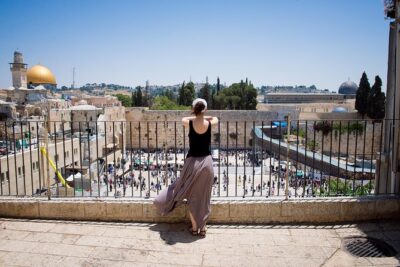
Day Tour to Jerusalem and Bethlehem from Tel Aviv
Read our review →