Reviewed · JERUSALEM TOURS
Jerusalem Half Day Tour: Holy Sepulchre and Western Wall
Jerusalem rewards a good first look. This tour pairs a panoramic city view with a walking route through the Old City, taking in the Western Wall, Via Dolorosa, Church of the Holy Sepulchre, and several historic quarters. I like the efficient mix of Jewish, Christian, and Muslim sites, and I like having hotel pickup, an air-conditioned vehicle, and a professional guide included for $50.
The main caution is timing. The advertised tour lasts about seven hours, but the scheduled sightseeing ends around 1 p.m. in the Old City, with no hotel drop-off. Pickup and group organization can also eat into the morning, and the Mount Scopus viewpoint may replace the promised visit to the Mount of Olives.
In This Review
- Key points before you book
- Starting above Jerusalem at 8:30 a.m.
- Mount Scopus, Mount of Olives, and the Dome of the Rock
- Gethsemane and the Kidron Valley
- Entering the Old City through its quarters
- The Western Wall in the Jewish Quarter
- The Christian Quarter and Via Dolorosa
- Church of the Holy Sepulchre
- Walking through the Muslim Quarter
- What the $50 price really buys you
- Clothing, walking, and practical preparation
- The guide makes or breaks the morning
- Should you book this Jerusalem tour?
- FAQ
- What time does the tour start?
- How long does the tour last?
- Does the tour return me to my hotel?
- Is the Mount of Olives included?
- Will I visit the Church of the Holy Sepulchre?
- How much walking is involved?
- What should I wear?
Key points before you book
- Mount Scopus may replace Mount of Olives: The route provides a Jerusalem panorama and views of the Dome of the Rock, but the exact viewpoint matters if the Mount of Olives is a must-see.
- Three hours in the Old City: Most of the substance comes on foot through the Jewish, Christian, Muslim, and Armenian quarters.
- The major Christian sites are packed together: You visit parts of the Via Dolorosa and the Church of the Holy Sepulchre, though church access can be affected by closures and crowds.
- The Western Wall is a real highlight: You get time to visit this important Jewish holy site rather than simply seeing it from the bus.
- Expect a moderate amount of walking: Wear practical shoes and cover your shoulders and knees for religious sites.
- The guide can shape the whole day: Guides such as Ami, Avi, Eyal, Omri, and Yehudi have received strong praise, but communication and organization have not been consistent on every departure.
Starting above Jerusalem at 8:30 a.m.
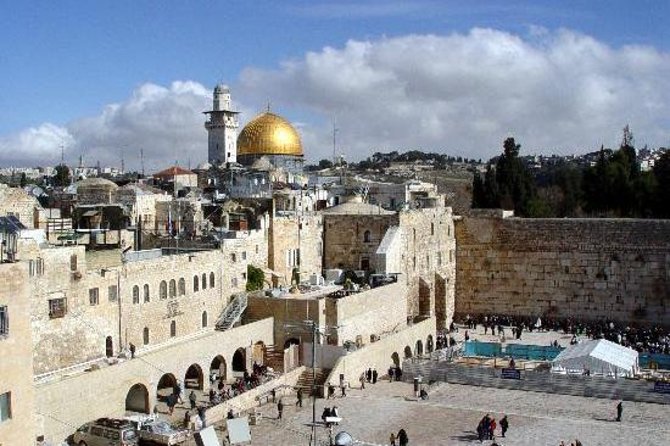
The day begins with pickup in Jerusalem at about 8:30 a.m., using an air-conditioned coach or van. Hotel pickup is included, which is useful in a city where finding a large vehicle in the Old City can be awkward.
That convenience comes with a possible delay. Pickup may involve several hotels or a central transfer point where passengers are sorted into different buses. Some departures have lost close to an hour before the actual sightseeing began. If you have a flight, museum booking, or other fixed plan later in the day, leave plenty of space after the stated end time.
The group can include up to 40 people. That is a fairly large party for narrow Old City lanes, so you need to stay close to the guide and listen carefully when the group stops. A soft-spoken guide or explanations given before everyone gathers can make the walking portion frustrating.
Still, the transport is a practical way to cover the city quickly. You are not spending the morning figuring out buses, taxis, and city viewpoints. The value depends heavily on the guide keeping the group moving.
More things to do in Jerusalem:
- From Tel Aviv: Jerusalem and Bethlehem Guided Day Trip
★ 4.3 · 1,316 reviews - Tel Aviv: Jerusalem, Bethlehem & Dead Sea
★ 4.0 · 881 reviews - From Tel Aviv: Jerusalem Old & New City Bus Tour
★ 4.2 · 824 reviews
Mount Scopus, Mount of Olives, and the Dome of the Rock
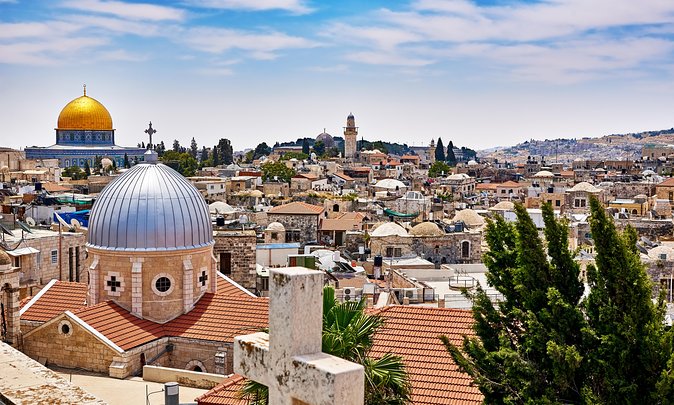
The first viewpoint is described in the schedule as Mount Scopus, with about 30 minutes for a free panorama of Jerusalem. From this high ground, you can look toward the Old City, the Temple Mount, and the golden Dome of the Rock.
The Dome of the Rock is one of Jerusalem’s most recognizable buildings and one of the oldest major works of Islamic architecture. From the viewpoint, the guide explains the domes and major structures below. This is a good way to get your bearings before entering the maze of the Old City.
You should pay close attention to the wording here. The tour description presents the Mount of Olives as the opening stop, but several departures have used Mount Scopus instead. These ridges are close, yet they do not offer exactly the same setting or view. If you specifically want to stand on the Mount of Olives, see its slopes, or visit its churches and cemetery, this tour may not deliver that full experience.
The difference matters because the Mount of Olives is not just a viewpoint. It is linked in Christian tradition to important events in Jesus’ life, including the Ascension. It has also been a place of Christian worship for centuries. A brief view from another ridge is useful for orientation, but it is not the same as visiting the mountain itself.
Gethsemane and the Kidron Valley
The route then passes the Garden of Gethsemane and the Kidron Valley at the foot of the Mount of Olives. Gethsemane is associated with Jesus’ prayer on the night before his crucifixion, while the Kidron Valley forms a natural boundary between the Mount of Olives and the Old City.
This is one of the places where the actual experience may be less satisfying than the description suggests. Some departures have stopped at or passed through the area, while others have shown the Garden of Gethsemane only from a distance or through the coach windows. If Gethsemane is one of your main reasons for booking, confirm the current route before paying.
The limited stop is especially important for Christian pilgrims. You may see the setting and hear its religious context, but you may not receive enough time for a quiet visit, photographs, or a close look at the church and garden. The tour’s strongest Christian sites come later inside the Old City.
Entering the Old City through its quarters
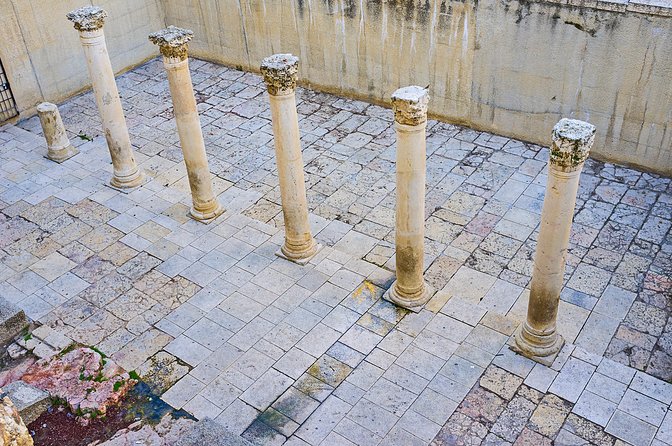
The walking portion lasts about three hours, and this is where the tour earns most of its price. Rather than focusing on one tradition, the route crosses several quarters and shows how closely Jewish, Christian, and Muslim life sits together within Jerusalem’s walls.
The walls surrounding today’s Old City were built in the 1530s, when Jerusalem was part of the Ottoman Empire. You begin to understand the compact shape of the place as soon as you leave the coach. Streets narrow, paths turn sharply, and religious sites appear beside shops, homes, and busy pedestrian routes.
The walking pace can feel rushed if the group loses time earlier. A good guide makes the quarters easy to follow and explains why each area matters. A less effective guide may give short talks while the group is still scattered, leaving you with more photos than understanding.
You should also expect a possible shop stop. Some departures have included a souvenir store, often combined with a bathroom break. You are not required to buy anything, but a forced stop can feel irritating when every minute counts on a half-day route. Consider it part of the practical rhythm of a large group tour, not a cultural highlight.
A completely different kind of day:
- From Jerusalem: Masada & Dead Sea Full Day Tour with Pick Up
★ 4.5 · 815 reviews - Masada and the Dead Sea Day Trip from Jerusalem
★ 4.5 · 757 reviews - Day Tour to Jerusalem and Bethlehem from Tel Aviv
★ 4.5 · 720 reviews - From Jerusalem: Nazareth and Sea of Galilee Tour
★ 4.5 · 588 reviews
The Western Wall in the Jewish Quarter
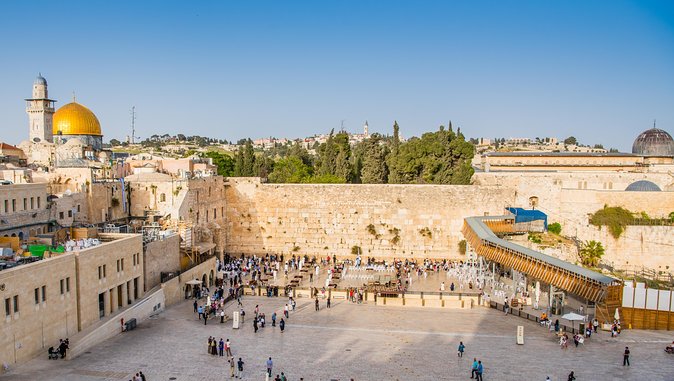
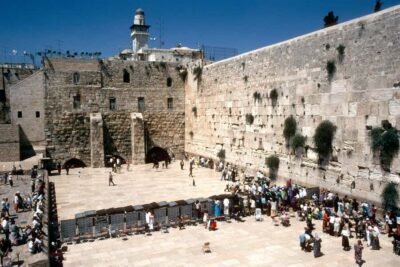
The Western Wall receives about 20 minutes. This is the holiest accessible Jewish prayer site, and it is one of the tour’s most meaningful stops even for visitors who are not religious.
The wall is a surviving section of the retaining structure around the Temple Mount. At close range, the scale and worn stones give the place a different feeling from the wide view seen from above. You can approach the prayer area, observe the customs, and take in the activity around the plaza.
The Jewish Quarter itself receives less formal touring time than some people expect. The route walks through it, but this is not a deep exploration of its archaeology, synagogues, or neighborhoods. If your priority is Jewish Jerusalem, you may want to return independently after the tour.
The short stop also means you should be ready when you arrive. Listen for the meeting point and return time. In a large group, even a few people getting lost can delay everyone else.
The Christian Quarter and Via Dolorosa
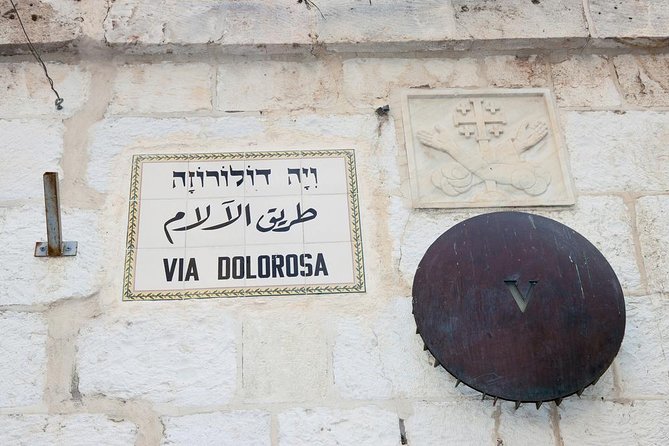
From the Jewish Quarter, the route moves into the Christian Quarter and follows portions of the Via Dolorosa. This is the traditional route associated with Jesus’ walk toward crucifixion.
The tour points out some of the 14 Stations of the Cross. The route is not a silent pilgrimage. It is a busy city street, lined with shops and used by residents, worshippers, and tour groups. That contrast is part of Jerusalem’s character, but it can surprise anyone expecting a secluded religious path.
You get about 30 minutes for the Via Dolorosa. That is enough for an introduction and selected stations, but not enough for a slow, prayerful visit at every station. A guide who is clear and audible adds real value here, especially because the meaning of the stations is not always obvious as you move through crowded lanes.
Ami has been praised for giving detailed explanations and covering the stations carefully. Eyal has also been praised for his command of both the Old and New Testaments, along with a patient and respectful manner. Those strengths matter on this section, where context makes the walk much more rewarding.
Church of the Holy Sepulchre
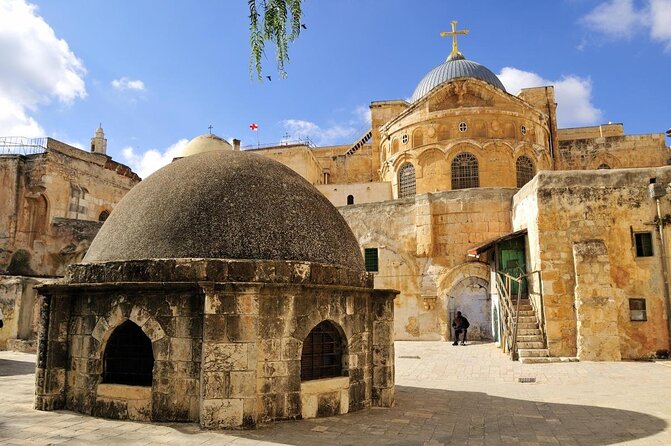
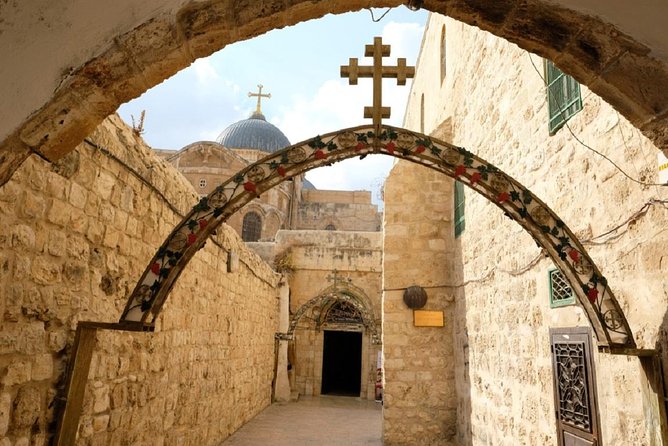
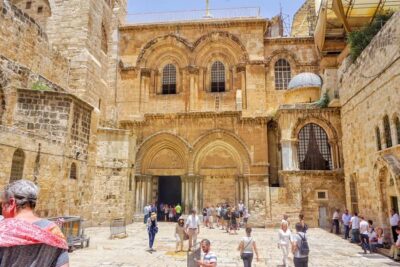
The Church of the Holy Sepulchre is the main Christian destination. It marks the traditional site of Jesus’ crucifixion and burial, and several Christian communities share responsibility for worship inside the building.
The planned visit lasts about 30 minutes. That sounds reasonable on paper, but church access is not fully predictable. Opening hours, religious services, holiday crowds, and delays earlier in the day can affect whether the group enters. One departure arrived after the church had closed, leaving the group outside.
That possibility is the tour’s most serious weakness. The Church of the Holy Sepulchre is not an optional detail if you booked specifically for Christian Jerusalem. Ask at the start of the morning how the guide plans to handle entry, especially during Easter or other major religious periods.
If the church is open, stay alert to the meeting instructions. The interior can be confusing, and the group may not have time to linger. The guide’s explanation helps you understand why the building contains several sacred points rather than one single attraction.
Some visitors have found the Christian history insufficiently explained, while others have praised guides for covering the Christian, Jewish, and Muslim quarters with clarity. That wide range suggests that the guide is not a minor detail here. The right guide can turn a quick visit into a useful introduction. A poor one can leave you wishing you had used a guidebook.
Walking through the Muslim Quarter
The final Old City section takes you through the Muslim Quarter, with about 30 minutes planned. This is a chance to see another side of Jerusalem beyond the major pilgrimage stops.
The route gives you an overview rather than a detailed study. You may pass through lively commercial lanes and see the quarter as part of the city’s daily life, but you should not expect an extended visit to the Dome of the Rock or the Al-Aqsa Mosque. The Dome is viewed from the outside viewpoint, and the tour does not promise entry to the shrine.
That distinction is worth noting. Seeing the Dome of the Rock from above is a strong visual moment, but it is not the same as visiting the Temple Mount complex. Access rules and opening times can also change, so this tour is best understood as an introduction to the area.
What the $50 price really buys you
At $50 per person, the tour offers reasonable value if you want a guided first pass through Jerusalem. Hotel pickup, transport, a guide, and entrance fees are included. You also get a structured route through sites that can be hard to connect efficiently on your own.
The price is less attractive if the morning loses a lot of time to bus changes, waiting, or shopping. A seven-hour experience that ends around 1 p.m. can include substantial transport and organization time, not seven full hours of sightseeing. Food and drinks are not included.
There is also no hotel drop-off. The tour ends in the Old City, so plan to continue exploring on foot or arrange your own return. In one sense, this is useful because you are already in the best place to keep sightseeing. In another, it means the tour is not a complete door-to-door morning service.
I see the best value for first-time visitors who want an organized introduction and do not need long, quiet visits at each site. If you already know the Old City well, the route may feel too general and too compressed.
Clothing, walking, and practical preparation
Wear comfortable walking shoes. The tour includes several hours on foot through the Old City, with uneven surfaces, stairs, narrow lanes, and frequent stops.
Dress conservatively. Shoulders and knees must be covered for both men and women at places of worship and selected museums, and shorts may lead to refused entry. A light layer or scarf is a simple way to meet the dress rule without overpacking.
Bring water, especially in hot weather. Food and drinks are not included, though the route includes practical breaks. You should also carry only what you need, since moving through narrow streets with a large bag is inconvenient.
The activity is not suitable for children under four. Most participants can take part, but the amount of walking and the long morning may be tiring for very young children.
The guide makes or breaks the morning
This tour has produced very different guide experiences. Ami, Eyal, Omri, and Yehudi have each been praised for clear explanations, humor, patience, or strong coverage of the major sights. Eyal in particular has been praised for Bible knowledge and a respectful approach, while Omri kept the route going even in rainy weather.
Avi has received both strong praise and sharp criticism. Some visitors found him excellent, especially in the Muslim, Jewish, and Christian quarters. Others found him too quiet or gruff and felt that explanations were given before the whole group had gathered.
That split is a useful warning about large guided tours. You are buying the structure and access as much as the personality. If you need lengthy questions, a slow pace, or a guide who can adapt the route around your interests, a private guide may suit you better.
Should you book this Jerusalem tour?
Book it if you want a low-cost introduction to Jerusalem, appreciate organized transport, and want the Western Wall, Via Dolorosa, and Church of the Holy Sepulchre in one morning. The cross-cultural route is the tour’s best feature, and the panoramic view gives you a helpful frame for the Old City.
Be cautious if the Mount of Olives and Garden of Gethsemane are your top priorities. The route may use Mount Scopus or show Gethsemane only briefly, and church entry can be lost to delays or closures. If you book, confirm the exact viewpoint, arrive ready for a long walking morning, and treat the 1 p.m. Old City ending as a firm planning point.
For a first visit, I would consider this a useful orientation rather than a complete Jerusalem experience. It gives you the major names and routes. You will still want extra time afterward for the sites that matter most to you.
FAQ
What time does the tour start?
The stated start time is 8:30 a.m., with Jerusalem hotel pickup offered.
How long does the tour last?
The experience is described as approximately seven hours, but the scheduled tour ends around 1 p.m. in the Old City of Jerusalem.
Does the tour return me to my hotel?
No. Hotel pickup is included, but the tour ends in the Old City and does not include hotel drop-off.
Is the Mount of Olives included?
The tour description highlights the Mount of Olives, while the itinerary specifies a viewpoint at Mount Scopus. You should confirm the exact stop if visiting the Mount of Olives itself is important to you.
Will I visit the Church of the Holy Sepulchre?
The itinerary includes a planned visit of about 30 minutes. Entry can be affected by church closures, services, holidays, and delays.
How much walking is involved?
The tour includes a moderate amount of walking, with about three hours allocated to the Old City and additional walking through its quarters and religious sites.
What should I wear?
Shoulders and knees must be covered for both men and women at places of worship and selected museums. Comfortable walking shoes are recommended.
Just added in Jerusalem
- Walking Jerusalem in Russian★ 5.0 · 1 review
- private Full-Day Tour to Bethlehem and Jerusalem★ 5.0 · 2 reviews
- Jerusalem and Dead Sea Trip from Tel Aviv★ 4.0 · 6 reviews
- Tel Aviv & Old City of Jaffa – Tiny group from Tel Aviv★ 4.5 · 9 reviews
- Tel Aviv; Jaffa Old City, Port & Shuk Hapishpishim Walking Tour★ 4.5 · 11 reviews
- Tel Aviv: Food & History Tour of Jaffa Old City & Flea Market★ 5.0 · 1 review
- Discover the Secrets of the Underground Jerusalem with a private tour★ 5.0 · 4 reviews
- Private Tour from Tel Aviv to Jerusalem★ 5.0 · 3 reviews
Jerusalem Tours, compared.
Masada and the Dead Sea Day Trip from Jerusalem
Read our review →
Day Tour to Jerusalem and Bethlehem from Tel Aviv
Read our review →