Reviewed · JERUSALEM TOURS
Jerusalem of 3 Religions in Russian
Three faiths, one compact old city. This six-hour Jerusalem tour brings you to Jewish, Christian, and Armenian sites, with bus transfers and a live Russian-speaking guide. I like the clear focus on the Old City’s three distinct blocks and the chance to visit both the Last Supper Room on Mount Zion and the Church of the Holy Sepulcher. I also like that prayer at the Wailing Wall is part of the day, not an afterthought.
The main consideration is pace. Jerusalem’s holy places can be crowded, emotional, and physically demanding, and this tour covers a lot in six hours. It is not recommended for people with limited mobility, and you will need comfortable shoes, water, and clothing suitable for religious sites.
A verified January 2026 review gives special praise to the guide, Petr, whose explanations made the visit more engaging. That is useful to know if you want history delivered in Russian rather than a simple ride between monuments.
In This Review
- Key points at a glance
- Why this six-hour route works
- Seeing Jerusalem from Mount Zion
- Walking through three parts of the Old City
- Mount Zion and the Last Supper Room
- The last five stops on the Via Dolorosa
- Inside the Church of the Holy Sepulcher
- Prayer and reflection at the Wailing Wall
- The Russian guide and the value of explanation
- Transport, meeting points, and practical planning
- Who should book this Jerusalem tour?
- FAQ
- How long does the Jerusalem of 3 Religions tour last?
- What language is the tour offered in?
- How much does the tour cost?
- Are bus transfers included?
- Is food included?
- Which religious areas of Jerusalem does the tour visit?
- Does the tour visit the Last Supper Room?
- Does the tour include the Via Dolorosa?
- Is the Church of the Holy Sepulcher included?
- Can children join the tour?
- What should I bring?
- What clothing is not allowed?
- Is the tour suitable for people with limited mobility?
- Can I cancel for a full refund?
- Can I reserve now and pay later?
- Should you book it?
Key points at a glance
- Three Old City areas: Visit Jewish, Christian, and Armenian parts of Jerusalem in one organized outing.
- Mount Zion history: Learn about the Last Supper Room, also called the Cenaculum, and the nearby Dormition Abbey.
- The final Via Dolorosa stops: Follow the last five stations connected with the crucifixion, death, and resurrection of Jesus.
- Church of the Holy Sepulcher: See one of Christianity’s most important shrines, with chapels and monasteries serving several denominations.
- Prayer at the Wailing Wall: Spend time at Judaism’s most sacred prayer site.
- Russian-language guidance: The tour includes a live guide, with Petr specifically praised for interesting explanations.
Why this six-hour route works
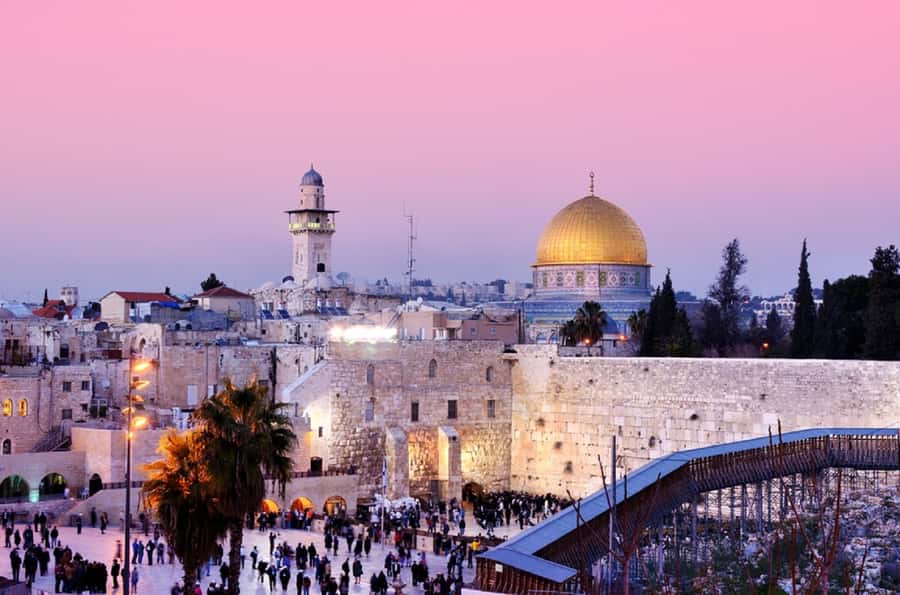
Jerusalem can feel like several cities pressed together. A modern street may end at an ancient stone gate, and a short walk can take you from a Jewish prayer site to Christian shrines and Armenian churches. This tour gives you a broad first look without asking you to arrange several separate visits.
The price is $63 per person. Since that includes guide services and bus transfers during the tour, I see it as a reasonable choice for someone who wants structure and transport rather than a self-guided day. Food and drinks are not included, so bring water and plan for your own meal or snack.
The Russian-language format is important. Religious history comes with names, dates, traditions, and competing claims. A guide who can explain these subjects clearly in your strongest language can make the difference between recognizing famous buildings and understanding why they matter.
The tradeoff is time. Six hours sounds generous, but Jerusalem has many layers and the route includes several major locations. You should expect an overview rather than long, quiet visits at every site. If you want to study one church or walk every part of the Old City at leisure, a private or longer visit would suit you better.
More things to do in Jerusalem:
- From Tel Aviv: Jerusalem and Bethlehem Guided Day Trip
★ 4.3 · 1,316 reviews - Tel Aviv: Jerusalem, Bethlehem & Dead Sea
★ 4.0 · 881 reviews - From Tel Aviv: Jerusalem Old & New City Bus Tour
★ 4.2 · 824 reviews
Seeing Jerusalem from Mount Zion
Mount Zion provides an early sense of Jerusalem’s unusual mixture of sacred memory and city views. The tour includes a panoramic view of historical and modern parts of Jerusalem, giving you a useful orientation before the walk through the Old City.
The main stop here is the Last Supper Room, also known as the Cenaculum. It is traditionally held to be the site of the Last Supper. The value of this visit is not only the room itself, but the way tradition has shaped the site over centuries.
You will also see the Dormition Abbey on Mount Zion. Together, these places show how Christian memory is tied to specific rooms, hills, and routes. They also give the guide a chance to explain the difference between what is held by tradition and what can be firmly established through historical evidence.
Do not expect a lavish interior at every stop. Sacred buildings can be altered, shared, rebuilt, or partly preserved. That is part of Jerusalem’s story, and a good explanation helps you read the stones instead of judging each site only by appearance.
Walking through three parts of the Old City
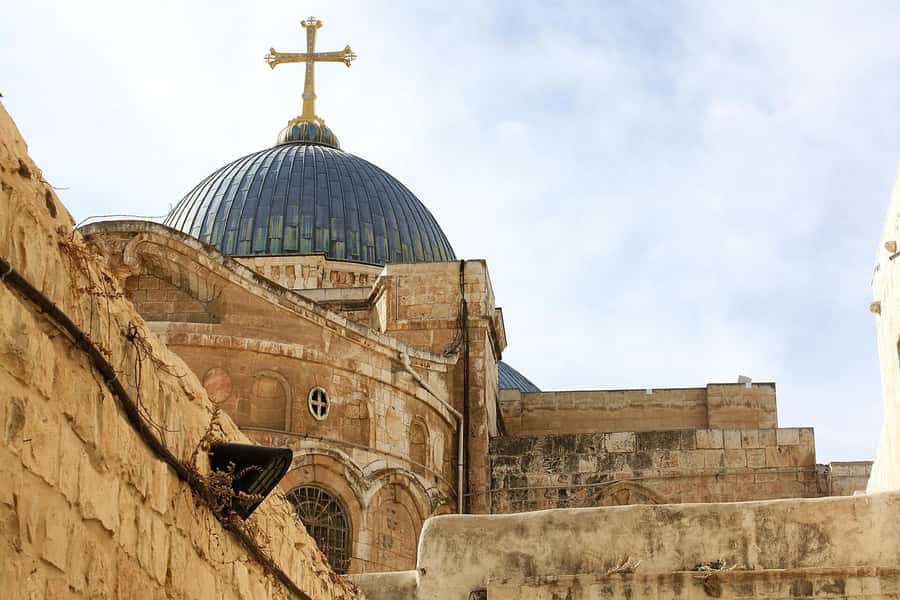
The Old City portion is designed around Jewish, Christian, and Armenian areas. Each block has its own religious identity, though the borders are not simply lines on a map. You will move through narrow streets and historic spaces where daily life continues alongside pilgrimage.
The Jewish area leads toward the Wailing Wall. The Christian area includes the route of the Via Dolorosa and the Church of the Holy Sepulcher. The Armenian section adds another part of Jerusalem’s religious story, showing that Christian Jerusalem is not represented by one tradition alone.
The Armenian presence is especially useful for understanding why the tour is not just a two-faith visit. Armenian sites and communities are part of the Old City’s identity, and their inclusion gives you a wider view of Jerusalem’s religious life.
The walk can be demanding. The information does not specify the exact walking distance, surface conditions, or group size, so you should plan for uneven city walking and periods on your feet. Comfortable shoes are essential. The tour is specifically not recommended for people with limited mobility.
Mount Zion and the Last Supper Room
The Last Supper Room is one of those places where the story matters as much as the room. It is traditionally associated with the Last Supper, making it an important stop for Christian visitors. The name Cenaculum may be used by the guide, so do not be surprised if you hear both terms.
The nearby Dormition Abbey adds another major Christian site to the Mount Zion section. Visiting both places together helps connect the hill with the wider traditions surrounding the final days of Jesus and the early Christian community.
I would listen closely here to the guide’s explanation of tradition. Jerusalem has many locations identified through long religious memory, and the meaning of a site does not always depend on a modern sign or a single archaeological conclusion. The tour’s strength is its ability to place the room within that larger story.
Petr’s praised explanations are particularly relevant at stops like this. The space itself may be quiet and relatively simple, but the background gives it weight. Without context, you might spend only a few minutes looking around. With a clear explanation, you can understand why generations have come here.
A completely different kind of day:
- From Jerusalem: Masada & Dead Sea Full Day Tour with Pick Up
★ 4.5 · 815 reviews - Masada and the Dead Sea Day Trip from Jerusalem
★ 4.5 · 757 reviews - Day Tour to Jerusalem and Bethlehem from Tel Aviv
★ 4.5 · 720 reviews - From Jerusalem: Nazareth and Sea of Galilee Tour
★ 4.5 · 588 reviews
The last five stops on the Via Dolorosa
The tour includes the final five stops on the Via Dolorosa, the route traditionally connected with Jesus carrying the cross toward crucifixion. These stations lead toward the place associated with his crucifixion, death, and resurrection.
This part of the tour works best if you think of it as a walk through layered belief, not as a modern museum display. The route passes through the living Old City, where shops, homes, and religious buildings share limited space. You may find the contrast striking: an intensely sacred route running through ordinary city life.
The last five stops are especially important because they lead directly to the Church of the Holy Sepulcher. The sequence gives the visit a clear shape. You are not simply arriving at a church by bus. You are approaching it through a route with centuries of Christian meaning.
The drawback is that this is a popular and confined part of Jerusalem. The supplied information does not promise a private route, guaranteed quiet, or extended time at every station. Keep your expectations practical. The value comes from the guide’s explanation and the connection between the stations, not from having each stop to yourself.
Inside the Church of the Holy Sepulcher
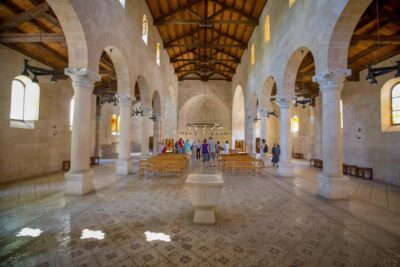
The Church of the Holy Sepulcher is one of the most important shrines in the Christian world. It is associated with Golgotha, the place of crucifixion, and with the Holy Sepulcher, connected with the resurrection.
The modern church occupies the site where earlier churches and chapels once stood. The complex includes numerous chapels and monasteries used by different Christian denominations. That shared arrangement is one of the most revealing parts of the visit. The building is not simply one congregation’s church. It reflects centuries of devotion, division, rebuilding, and cooperation.
You may find the church visually dense. There are several chapels, traditions, and religious communities within the same complex, and a short visit cannot explain every corner. This is another place where a Russian-speaking guide adds real value.
Try to stay alert to the structure of the visit. The tour description specifically connects the church with the final Via Dolorosa stops, so the guide should be able to explain how the route and the church fit together. The church may be the day’s most powerful stop for Christian visitors, but it can also feel intense and crowded. Allow yourself a moment to take in the setting without rushing from one feature to the next.
Prayer and reflection at the Wailing Wall
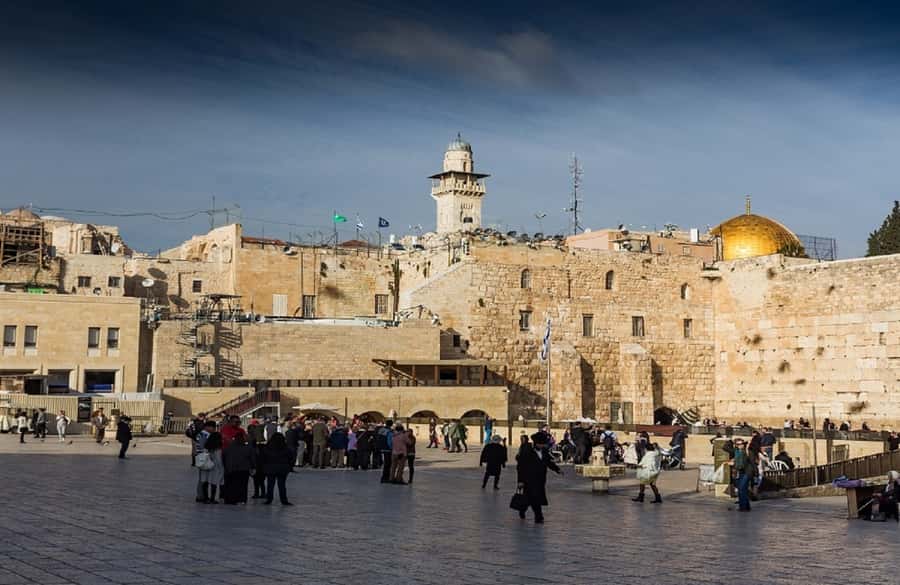
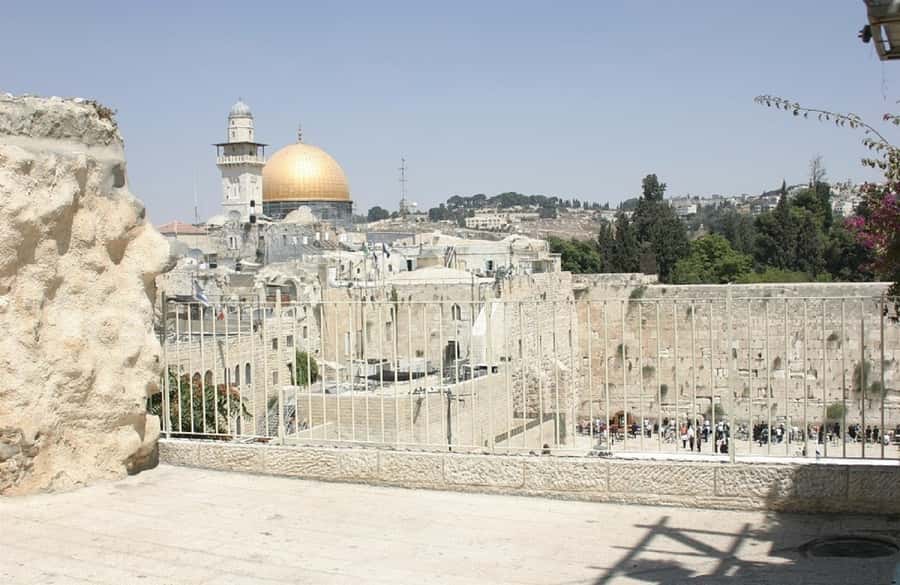
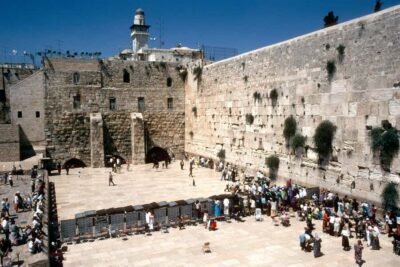
The Wailing Wall is described as Judaism’s most holy place. It carries the memories and prayers of the Jewish people connected with the First and Second Temples, as well as the hope associated with a Third Temple.
The visit offers a different kind of religious experience from the Christian sites. At the church, you follow a route and enter a complex of chapels. At the Wailing Wall, the focus is prayer, memory, and personal reflection. You can approach the wall with respect, even if you are visiting as an observer rather than for religious reasons.
The tour highlights the chance to pray near the wall. Dress appropriately, since ripped and see-through clothing is not allowed. Comfortable, modest clothing is the sensible choice for the entire day because the route includes several religious sites.
The wall is not just a photo stop. Give yourself time to notice the atmosphere and the meaning people attach to the place. The tour may not provide a long period for private reflection, given the six-hour schedule, but even a short visit can help balance the Christian and Armenian parts of the route with Jewish Jerusalem.
The Russian guide and the value of explanation
Language is central to this experience. The live tour guide speaks Russian, and the booking information specifically identifies guide services as included. For a route filled with sacred traditions, that is more useful than a simple audio recording or printed map.
The only detailed written praise available singles out Petr and his interesting explanations. That positive note deserves emphasis because the route depends heavily on storytelling. The Last Supper Room, Via Dolorosa, Holy Sepulcher, and Wailing Wall all require context. Their importance is not always obvious from the outside.
The overall rating is 4.4 from three reviews. That is a positive signal, though it is based on a small number of ratings, so I would treat it as encouraging rather than conclusive.
Transport, meeting points, and practical planning
Pickup is included from the listed points:
- Sderot Haatsmaut 64
- Keren HaYesod and Haim Moshe Shapira
- Hagshama Street 2
- Talpiot Market in Haifa
The information notes that departure from Talpiot Market is available only on Saturdays. Check the available starting time and pickup point carefully before booking, especially if you are relying on that Haifa departure.
Bus transfers during the tour reduce the need to arrange transportation between parts of the visit. That matters on a six-hour schedule, since time spent solving local transport problems can quickly cut into time at the holy sites.
Food and drinks are not included. Bring water, and do not assume that refreshments will be supplied. Comfortable shoes are also essential. Children must be at least five years old, and children under five cannot join.
The tour allows free cancellation up to 24 hours before departure for a full refund. You can also reserve now and pay later, which is helpful if your Jerusalem plans are still shifting.
Who should book this Jerusalem tour?
I would choose this tour if you want a structured introduction to Jerusalem’s three religious traditions, prefer a Russian-speaking guide, and have only half a day available. It suits first-time visitors who want the major sacred sites without arranging their own transport and route through the Old City.
It is also a good fit if you care more about historical and religious explanation than about free time. Petr’s positive mention suggests the guide can make the difference at sites whose importance is not immediately visible.
I would hesitate if you have limited mobility, need a slow pace, or want long periods inside each church. The tour covers several major places in six hours, and the Old City portion requires walking. It may also be less suitable for very young children, since the minimum age is five and the subject matter and pace are better suited to older children.
At $63, the tour offers solid value for a guided overview with bus transfers. You still need to budget for food and drinks, and you should not expect an exhaustive study of every quarter or chapel. Think of it as a focused first encounter with Jerusalem’s sacred core.
FAQ
How long does the Jerusalem of 3 Religions tour last?
The tour lasts six hours.
What language is the tour offered in?
The tour is offered in Russian with a live Russian-speaking guide.
How much does the tour cost?
The price is $63 per person.
Are bus transfers included?
Yes. Bus transfers during the tour are included, and pickup is available from the listed meeting points.
Is food included?
No. Food and drinks are not included.
Which religious areas of Jerusalem does the tour visit?
The route includes Jewish, Christian, and Armenian areas of the Old City.
Does the tour visit the Last Supper Room?
Yes. The tour visits the Last Supper Room, also known as the Cenaculum, on Mount Zion.
Does the tour include the Via Dolorosa?
Yes. It includes the last five stops on the Via Dolorosa.
Is the Church of the Holy Sepulcher included?
Yes. The tour visits the Church of the Holy Sepulcher.
Can children join the tour?
Children must be at least five years old. Children under five are not allowed.
What should I bring?
Bring comfortable shoes and water.
What clothing is not allowed?
Ripped clothing and see-through clothing are not allowed.
Is the tour suitable for people with limited mobility?
No. The tour is not recommended for people with limited mobility.
Can I cancel for a full refund?
Yes. You can cancel up to 24 hours in advance for a full refund.
Can I reserve now and pay later?
Yes. The tour offers a reserve-now, pay-later option.
Should you book it?
Book this tour if you want the main Jewish and Christian holy places, an introduction to the Armenian quarter, and Russian-language explanations in one six-hour route. The combination of Mount Zion, the final Via Dolorosa stops, the Church of the Holy Sepulcher, and the Wailing Wall gives you a strong first look at Jerusalem.
Skip it if you need a relaxed pace, have mobility limits, or want to explore every site in detail. For most fit visitors seeking an organized overview, the $63 price is sensible, especially with transportation included and a guide such as Petr helping connect the places to their traditions.
Just added in Jerusalem
- Walking Jerusalem in Russian★ 5.0 · 1 review
- private Full-Day Tour to Bethlehem and Jerusalem★ 5.0 · 2 reviews
- Jerusalem and Dead Sea Trip from Tel Aviv★ 4.0 · 6 reviews
- Tel Aviv & Old City of Jaffa – Tiny group from Tel Aviv★ 4.5 · 9 reviews
- Tel Aviv; Jaffa Old City, Port & Shuk Hapishpishim Walking Tour★ 4.5 · 11 reviews
- Tel Aviv: Food & History Tour of Jaffa Old City & Flea Market★ 5.0 · 1 review
- Discover the Secrets of the Underground Jerusalem with a private tour★ 5.0 · 4 reviews
- Private Tour from Tel Aviv to Jerusalem★ 5.0 · 3 reviews
Jerusalem Tours, compared.
Masada and the Dead Sea Day Trip from Jerusalem
Read our review →
Day Tour to Jerusalem and Bethlehem from Tel Aviv
Read our review →