
Reviewed · CITY TOURS
Jerusalem Old City & Mount Zion Day Tour
Jerusalem rewards a slower start. This 7 to 8-hour tour gives you a welcome 10 a.m. departure, then packs Mount Scopus, the Old City, Mount Zion, and major Christian and Jewish sites into one long day. I like the late start and the chance to see so much without arranging several buses or taxis. I also like the focus on guides such as Yoav, Hava, Eithan, and Avi, whose clear, respectful commentary has been a major strength.
The tradeoff is pace. You will walk a fair amount, spend up to four hours in and around the Old City, and share the day with as many as 40 people. Pickup is not provided, so you must reach the Grand Court Hotel yourself, and one past experience included confusion at the meeting point.
In This Review
- Key points before you book
- Why the 10 a.m. departure works
- Mount Scopus gives you the right opening view
- Gethsemane brings the day down to ground level
- Four hours inside Jerusalem’s Old City
- The Jewish Quarter and Byzantine Cardo
- The Western Wall requires respect and patience
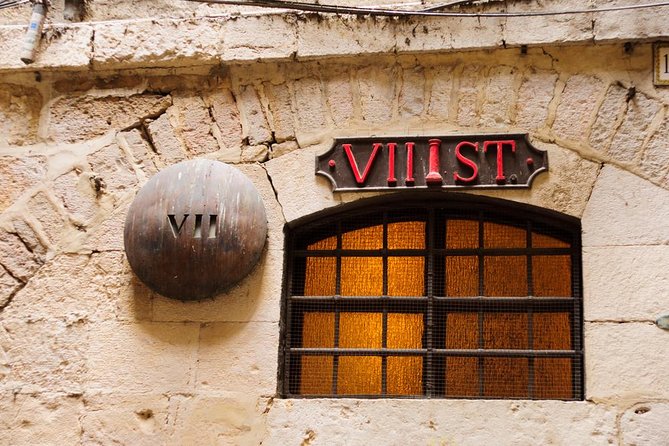
- Walking the Via Dolorosa
- The Church of the Holy Sepulchre
- Mount Zion and the Cenacle
- King David’s Tomb completes the route
- What the $70 price really covers
- Guides can make or break this day
- Walking, clothing, and the group setting
- Who should book this Jerusalem day tour?
- Should you book it?
- FAQ
- What time does the Jerusalem Old City tour start?
- How long does the tour last?
- Where does the tour end?
- Is hotel pickup included?
- What should I wear?
- Is food included in the price?
Key points before you book
- The 10 a.m. start is unusual: You can sleep in, have breakfast, and still spend most of the day sightseeing.
- Mount Scopus sets the scene: The opening view helps you understand Jerusalem’s hills, walls, and major religious sites before you enter the Old City.
- The Old City portion is the heart of the day: Expect about four hours of walking through Jewish and Christian quarters, with stops at the Cardo, Western Wall, Via Dolorosa, and Church of the Holy Sepulchre.
- Mount Zion adds biblical landmarks: The tour visits the Cenacle, traditionally linked with the Last Supper, and King David’s Tomb.
- The group can reach 40 people: That keeps the price low, but it may make movement and listening less personal than on a small-group outing.
- Dress and shoes matter: Covered shoulders and knees are required at holy sites, and comfortable walking shoes are essential.
Why the 10 a.m. departure works
Many Jerusalem sightseeing tours begin at an hour that feels cruel on vacation. This one starts at 10 a.m. from the Grand Court Hotel on St George Street, giving you time for breakfast and a calmer morning.
That timing is especially useful if you are staying in Jerusalem and want to avoid rushing out before public transport is running smoothly. It also suits anyone arriving from another part of Israel who prefers not to begin a major sightseeing day at dawn. The tour still lasts roughly 7 to 8 hours, so the later start does not mean a short introduction.
You need to make your own way to the Grand Court Hotel. Hotel pickup and drop-off are not included. The meeting point is described as easy to find and close to public transport, but I would still arrive early and confirm the vehicle or tour markings. One past pickup problem involved people waiting outside the hotel while the first driver apparently failed to connect with them. That appears to be an exception, but it is a useful reminder to pay attention at the start.
The day ends at Giv’at Hamivtar Light Rail Station, or another light rail station in Jerusalem. This is practical if you plan to continue sightseeing or return by rail, but it is not a hotel return. Plan your evening with that endpoint in mind.
More things to do in Jerusalem:
- From Tel Aviv: Jerusalem and Bethlehem Guided Day Trip
★ 4.3 · 1,316 reviews - Tel Aviv: Jerusalem, Bethlehem & Dead Sea
★ 4.0 · 881 reviews - From Tel Aviv: Jerusalem Old & New City Bus Tour
★ 4.2 · 824 reviews
Mount Scopus gives you the right opening view
The first stop lasts about 30 minutes at Mount Scopus. From here, you get a broad view over Jerusalem before entering its narrow lanes and enclosed courtyards.
This is more than a photo stop. Jerusalem can feel confusing on foot, with hills rising around the Old City and important sites packed close together. A view from above gives you a basic sense of direction. Your guide can point out the city and explain how the Old City fits into the wider setting.
Because admission is free, this stop adds real value without an extra ticket. The limitation is time. Thirty minutes is enough for orientation and photographs, but not for a long scenic pause. Treat it as a useful introduction rather than a full Mount Scopus visit.
Gethsemane brings the day down to ground level
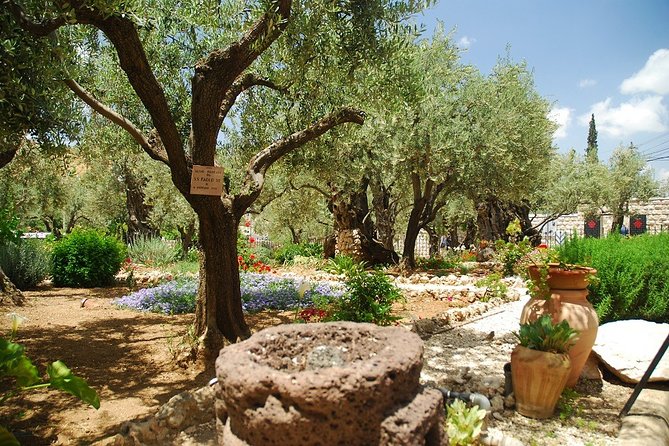
The tour then spends about 20 minutes at the Garden of Gethsemane. This is one of the day’s Christian sites, linked by tradition with the final hours of Jesus before his arrest.
The stop is brief, yet its place early in the route helps set the tone. You move from a wide city view to a quieter religious setting, then toward the Old City. If you care about biblical locations, this is an important moment. If your interests are mainly architecture or daily life, your guide’s explanation will be what makes the visit meaningful.
You should remember that this is a stop within a packed schedule. You will not have unlimited time for quiet reflection or detailed exploration. That is the pattern for the whole day: a well-chosen sequence of major places, with enough time to understand each one but not enough to linger everywhere.
Four hours inside Jerusalem’s Old City
The main section lasts about four hours in the Old City. That is where the tour earns most of its $70 price.
You will walk through the walled city and visit both the Jewish Quarter and Christian sites. The route includes the Byzantine Cardo, the Western Wall, sections of the Via Dolorosa, and the Church of the Holy Sepulchre. Instead of seeing one religious tradition in isolation, you get a broad introduction to several parts of Jerusalem in one continuous visit.
A guide is especially useful here. The Old City is compact but layered, and its lanes can feel like a maze. Religious meaning, old stonework, modern shops, and active places of worship all occupy the same small area. A clear guide helps you understand what you are seeing rather than simply following a group from one doorway to the next.
The cost also makes sense in this section. Admission to many of these places is free, and you are not paying for a large collection of ticketed attractions. You are paying mainly for transport, route planning, and live explanation. That is valuable in a place where a poor route can waste hours.
The drawback is the group size. With up to 40 people, the guide may need to gather everyone repeatedly, and you may be near the back of the group in narrow passages. The shared format keeps the price reasonable, but it does not promise the easy questions and close attention of a private guide.
More city tours in Jerusalem:
- From Tel Aviv: Jerusalem Old City & Dead Sea Guided Day Tour
★ 4.4 · 389 reviews - Jerusalem: Guided Walking Tour of the Old City
★ 4.7 · 386 reviews - Full Day City Tour of Jerusalem
★ 4.1 · 367 reviews - From Jerusalem Small group tour Old&New City ENTRY FEES INCL
★ 4.0 · 135 reviews
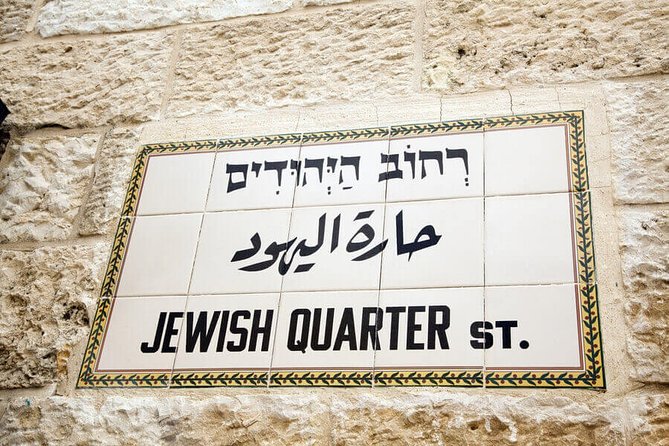
The Jewish Quarter and Byzantine Cardo
The Jewish Quarter receives about 30 minutes, followed by 20 minutes at the Cardo. These stops give you a change of focus from the Christian sites that come later.
The Jewish Quarter offers a look at one of the Old City’s distinct sections, while the Cardo reveals an older urban plan beneath the present streets. The Byzantine Cardo was a central street in the city’s late Roman and Byzantine period. A short visit lets you see how Jerusalem has been rebuilt and reused across many centuries.
I like this pairing because it prevents the day from becoming only a procession of famous shrines. You get a glimpse of neighborhoods and city structure as well as sacred landmarks. Still, 20 minutes is a quick look. You should expect an introduction, not a detailed archaeological visit.
The Western Wall requires respect and patience
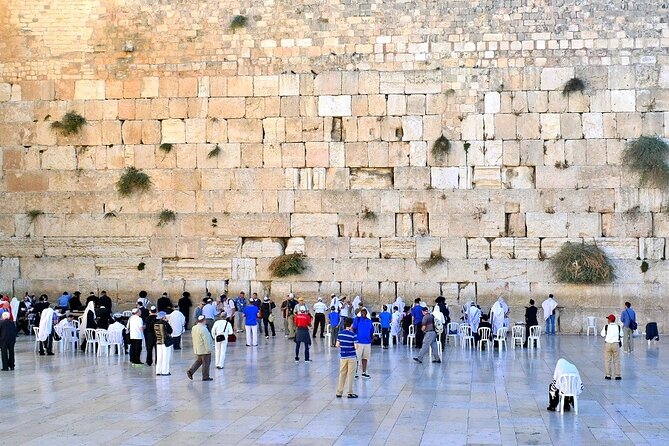
The Western Wall stop lasts around 20 minutes. It is one of the most important Jewish prayer sites in Jerusalem and one of the most recognizable places in the city.
Your guide can explain the site before you approach, but the visit also asks for personal awareness. Keep your clothing modest, follow posted expectations, and remember that this is an active place of worship rather than just a sightseeing backdrop. The requirement to cover your knees and shoulders applies throughout visits to holy sites.
Twenty minutes can be enough to see the wall and absorb the setting. It may feel short if you want to spend time praying or watching the activity. The advantage of a guided visit is that you know where the stop fits into the day and do not need to work out the route alone.
Walking the Via Dolorosa
The tour visits some of the Stations of the Cross along the Via Dolorosa for about 30 minutes. This is a central Christian pilgrimage route through the Old City.
You should expect walking through streets that are also part of everyday city life. The route is not presented as a quiet museum corridor. It is a functioning urban area, and your experience will depend on the group’s pace, the conditions on the street, and access at each point.
For a first visit, the guide’s narration is important. The Stations are not always obvious from the street, and the meaning of each location can be missed if you simply pass through. This is one of the places where the tour format saves effort: someone else handles the sequence while you concentrate on the setting and explanation.
The Church of the Holy Sepulchre
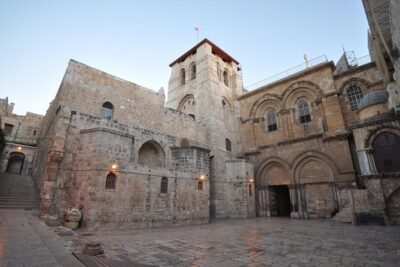
The Church of the Holy Sepulchre gets about 30 minutes. For many Christian visitors, this is the emotional center of the Jerusalem day.
The church is traditionally associated with the crucifixion and burial of Jesus. It is also a working place of worship shared by different Christian communities. That combination makes it important, but it can also make the visit feel complex and crowded. Your guide’s respectful approach matters here.
Several guides associated with this tour have been praised for treating different religious sites with care. Yoav Malachi was described as organized, clear, passionate about Jerusalem, and respectful toward the city’s varied traditions. Eithan Amitai was also praised for informative commentary and attention to group needs. Those qualities are worth looking for in a site where a rushed or careless explanation can flatten the experience.
Do not expect 30 minutes to cover every chapel or corner. The value is in gaining an orientation and seeing one of the city’s central Christian places. If this church is your main reason for visiting Jerusalem, you may want separate time on another day.
Mount Zion and the Cenacle
After the Old City, the route reaches Mount Zion and visits the Cenacle, also called the Room of the Last Supper. The stop lasts about 20 minutes.
The room is traditionally linked with the Last Supper. As with several biblical sites in Jerusalem, tradition and faith are central to the experience. The tour gives you the setting and the basic context, but it does not turn the visit into a long theological lesson.
The Cenacle is a good fit for you if you want to connect familiar biblical stories with physical places. It is less satisfying if you expect definitive proof about every traditional location. A good guide should explain the tradition without presenting it as a simple archaeological certainty.
King David’s Tomb completes the route
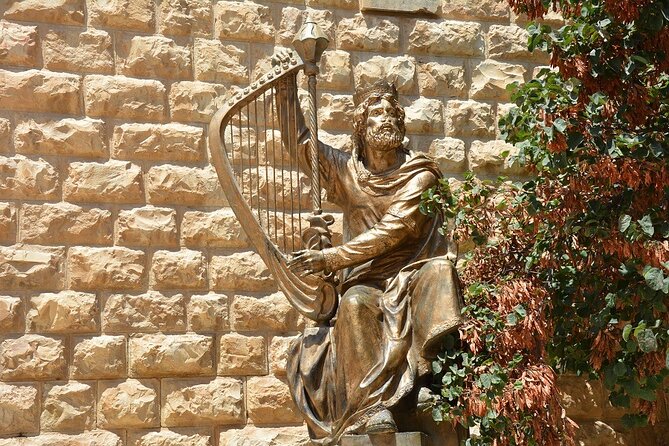
The final listed site is King David’s Tomb, with about 20 minutes for the visit. It adds a Jewish and biblical focus to the Mount Zion section.
Together, the Cenacle and King David’s Tomb create a useful closing sequence. You finish with two places connected to major religious traditions, after spending much of the day seeing how those traditions share a very small part of Jerusalem.
Again, modest dress is required. Covering your shoulders and knees is not just a packing suggestion for this tour. It is part of being ready to enter the places on the route without creating an avoidable problem.
What the $70 price really covers
At $70 per person, this is priced as an accessible shared tour rather than a private Jerusalem guide. An air-conditioned vehicle, a professional guide, and entrance fees are included. Food and drinks are not included, and the supplied details do not identify a meal stop, so bring money and plan for your own food.
The value is strongest if you have only one day for Jerusalem or if you want a structured introduction before exploring alone. Transport between the opening viewpoint and the city saves you from piecing together the route. The guide also gives you context at places where signage alone would not be enough.
The value is weaker if you already know the Old City well, dislike group tours, or want long periods at one religious site. The maximum group size of 40 is fairly large. You may get an excellent guide, but you should not expect a custom route or a slow private visit.
The tour is often booked about 82 days ahead, which suggests that advance planning is sensible. It also requires a minimum number of participants. If that minimum is not reached, the operator may offer another date or experience, or provide a full refund.
Guides can make or break this day
The strongest pattern in the feedback is the praise for the guides. Yoav Malachi was singled out for organization, clear explanations, passion, and respect. Hava was appreciated for her information, good management, and sense of humor. Eithan Amitai was described as attentive, friendly, and respectful of different religions.
Avi received especially warm praise for his explanations and friendly manner. One person had taken a Jerusalem tour with him twice and still found the second visit useful, a good sign if you want more than a basic checklist of sights.
Guide quality can vary by departure, so you cannot assume you will receive one particular person. Still, the repeated emphasis on clear commentary and respectful conduct is encouraging. In Jerusalem, those traits matter as much as the route.
Walking, clothing, and the group setting
This is an active day. The Old City section alone lasts four hours, and the route includes several holy sites reached on foot. Wear comfortable walking shoes, and avoid treating this as a ride-and-photograph outing.
The tour is not suitable for children under four. Most people can participate, but the supplied details do not promise a special accessible route or a reduced walking option. If you have mobility concerns, ask the operator before booking rather than assuming the Old City streets will be easy.
Bring water and arrange food for yourself. Since meals are not included, you will need to manage your own energy during a long sightseeing day. Keep your clothing modest from the start, with shoulders and knees covered, so you are ready for each religious site.
Who should book this Jerusalem day tour?
I would choose this tour if you want a first look at Jerusalem’s major religious and historic places, prefer a 10 a.m. start, and value having a guide explain the route. It suits solo visitors, couples, and anyone with limited time who wants the main Old City sights without planning every turn.
It also works well if you appreciate a broad view of Jerusalem rather than a single-theme pilgrimage. In one day, you see Mount Scopus, Gethsemane, Jewish and Christian quarters, the Cardo, Western Wall, Via Dolorosa, Holy Sepulchre, Cenacle, and King David’s Tomb.
I would think twice if your priority is solitude, photography, or extended prayer time. A group of up to 40 people and a packed schedule mean you will keep moving. I would also confirm the pickup instructions carefully and allow time to find the Grand Court Hotel.
Should you book it?
Book it if you want strong coverage for $70, a later start, air-conditioned transport, and a guide who can connect Jerusalem’s many traditions in one day. The route is broad, practical, and well suited to a first visit.
Skip it if you want a private guide, a slow religious pilgrimage, or a hotel-to-hotel service. The best way to use this tour is as an introduction: see the major places, listen closely, note what deserves more time, and return later to the sites that speak most to you. Free cancellation is available if you cancel at least 24 hours before the start time.
FAQ
What time does the Jerusalem Old City tour start?
The tour starts at 10:00 a.m. from the Grand Court Hotel Jerusalem at 15 St George Street.
How long does the tour last?
The experience lasts approximately 7 to 8 hours.
Where does the tour end?
The tour ends at Giv’at Hamivtar Light Rail Station, or at one of the light rail stations in Jerusalem.
Is hotel pickup included?
No. Hotel pickup and drop-off are not included. You must reach the Grand Court Hotel meeting point yourself.
What should I wear?
Modest dress is obligatory at holy sites. Your shoulders and knees should be covered, and comfortable walking shoes are recommended.
Is food included in the price?
No. Food and drinks are not included. The tour price does include an air-conditioned vehicle, a professional guide, and entrance fees.
Just added in Jerusalem
- Walking Jerusalem in Russian★ 5.0 · 1 review
- private Full-Day Tour to Bethlehem and Jerusalem★ 5.0 · 2 reviews
- Jerusalem and Dead Sea Trip from Tel Aviv★ 4.0 · 6 reviews
- Tel Aviv & Old City of Jaffa – Tiny group from Tel Aviv★ 4.5 · 9 reviews
- Tel Aviv: Food & History Tour of Jaffa Old City & Flea Market★ 5.0 · 1 review
- Tel Aviv; Jaffa Old City, Port & Shuk Hapishpishim Walking Tour★ 4.5 · 11 reviews
- Discover the Secrets of the Underground Jerusalem with a private tour★ 5.0 · 4 reviews
- Private Tour from Tel Aviv to Jerusalem★ 5.0 · 3 reviews
City Tours, compared.


From Jerusalem Small group tour Old&New City ENTRY FEES INCL
Read our review →
Best seller! Jerusalem old city four quarters tour
Read our review →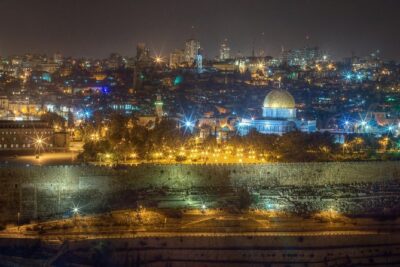
Browse the lists this tour appears in