
Reviewed · HAIFA AND THE GALILEE TOURS
Private tour: Caesarea, Haifa, and Mt. Carmel
Israel’s coast packs centuries into one day. This private outing links Caesarea’s Roman ruins, Haifa’s Bahá’í Gardens, Druze food in Daliat El Carmel, and a high view from Mt. Carmel. I especially like the flexible itinerary and the chance to travel with Dr. David Gurevich, whose PhD in archaeology gives the ancient sites extra depth.
I also like the family-friendly format. David has guided groups ranging from children around age nine to adults in their eighties, and he has handled family groups as large as ten people. The main consideration is cost: the $475 group price covers guiding, but transportation, entrance fees, and lunch cost extra.
In This Review
- Key points to know before booking
- Why this private coastal route works
- Caesarea: Roman power beside the sea
- The ancient harbor and new museum
- Haifa’s Bahá’í Gardens and hillside views
- Daliat El Carmel: a useful lunch stop
- Muhraqa Monastery above the Jezreel Valley
- Optional Megiddo and Akko additions
- How the guide affects the experience
- Timing, transport, and total cost
- Who should book this tour?
- FAQ
- Where does the tour start?
- Where does the tour end?
- How long does the tour last?
- Is hotel pickup available?
- How many people can join the private tour?
- Is transportation included in the price?
- Are entrance fees included?
- Is lunch included?
- What should I wear?
- Can Megiddo or Akko be added?
Key points to know before booking
- Caesarea gets the most time: Plan on about two and a half hours among the theater, palace remains, hippodrome, harbor, and museum.
- Dr. David Gurevich leads the tour: His archaeology background suits travelers who want more than a quick list of dates and names.
- The $475 rate is per group: Up to 15 people can join, making the price more attractive for a larger family or private party.
- Lunch is part of the day, but not part of the price: The Daliat El Carmel stop gives you a chance to eat traditional Middle Eastern food in a Druze village.
- The route can be adjusted: Megiddo and Akko are possible additions, but adding them means discussing how much time to give up elsewhere.
- Modest dress matters: You will visit religious sites, so pack clothing suitable for Holy Places.
Why this private coastal route works
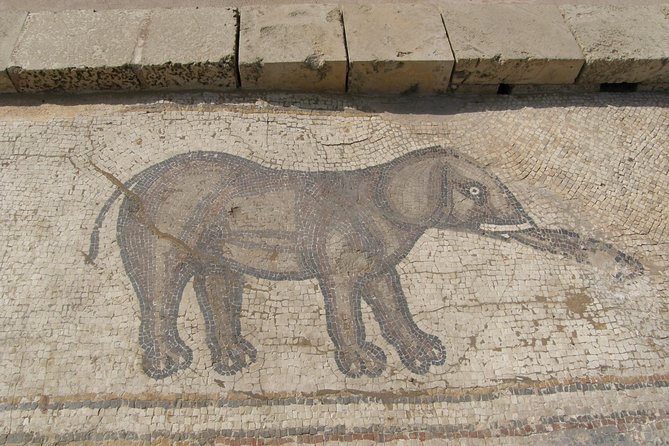
This is a long day, but it covers several different sides of northern Israel without forcing you into a fixed group schedule. You get Roman archaeology at Caesarea, a major modern religious center in Haifa, Druze culture and food in the Carmel area, and broad views toward the Jezreel Valley.
I like that the day does not treat every stop as another pile of stones. Caesarea gives you political and engineering history. Haifa introduces the Bahá’í faith and its carefully ordered gardens. Daliat El Carmel shifts the focus to food and local life, while Muhraqa adds a biblical and religious layer.
The private format also matters. If one person wants to linger at the harbor or ask about Roman building methods, you have a better chance to shape the pace than you would on a large coach tour. David’s background is especially useful here. His past tours have included university groups studying Israel, as well as families with very different ages and interests.
The tradeoff is that a private tour does not automatically mean all-inclusive service. The advertised price is $475 per group, up to 15 people, and guiding is included. You still need to budget for private transportation, admission tickets, and lunch. For a group of ten or fifteen, that base price can be sensible. For one or two people, it becomes a much bigger expense.
More things to do in Tel Aviv:
- From Tel Aviv: Masada & Dead Sea Full Day Tour with Pick Up
★ 4.5 · 1,496 reviews - From Tel Aviv: Jerusalem and Bethlehem Guided Day Trip
★ 4.3 · 1,316 reviews - Masada and the Dead Sea Day Trip from Tel Aviv
★ 4.5 · 1,014 reviews
Caesarea: Roman power beside the sea
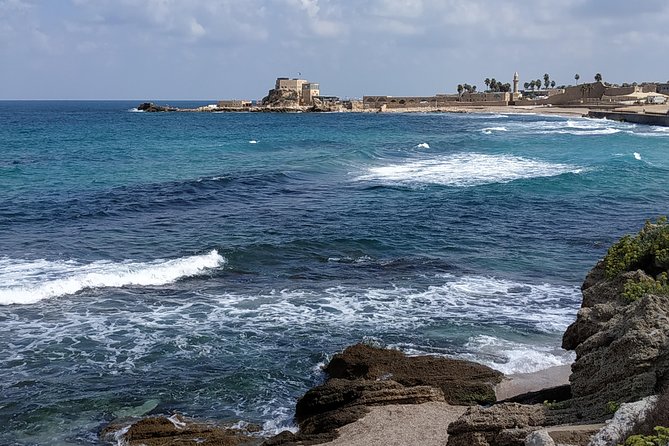
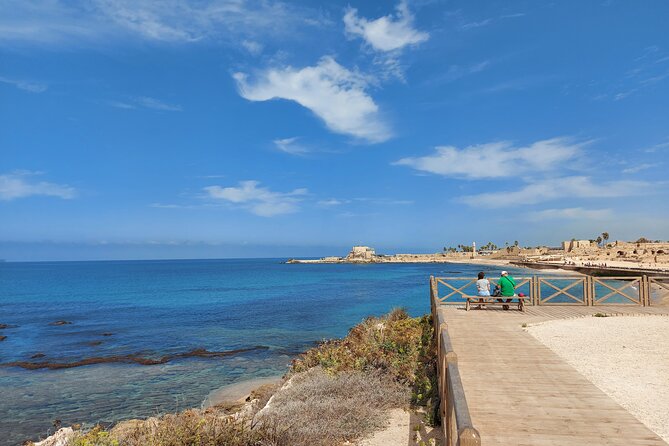
The drive from Tel Aviv to Caesarea takes about 40 minutes, giving you a quick transition from the modern city to one of Israel’s best-known ancient port sites. The city was established by Herod the Great and became the capital of the Roman province, so this is not a minor provincial outpost. It was built to project power.
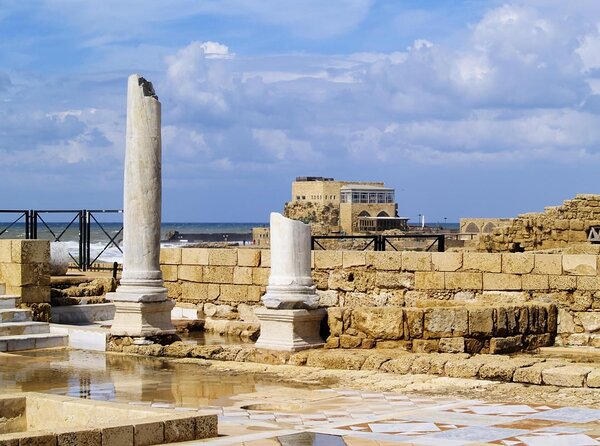
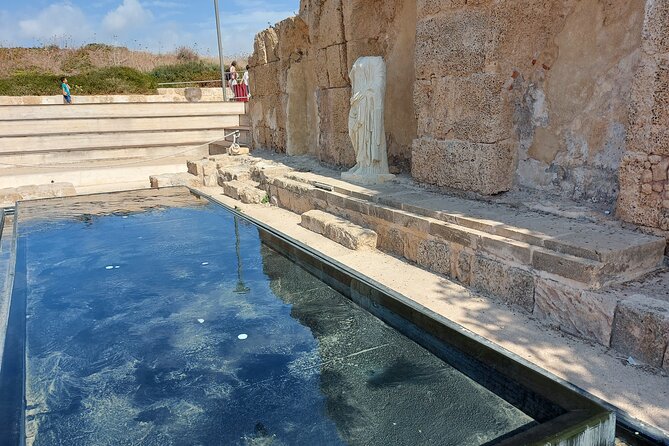
You begin with the Roman theater, one of the clearest reminders that Caesarea was designed for public life and entertainment. From there, the route includes the remains of Herod’s coastal palace, where the sea provides a striking setting for the ruins. The combination of architecture and open water is one of the reasons this stop feels more memorable than a standard archaeological walk.
The hippodrome adds another useful piece of the picture. This was the venue for horse races, and it helps you imagine the city as a place of spectacles, crowds, politics, and status. I find that the hippodrome is often more revealing than a museum label because it shows how public entertainment fit into Roman urban life.
The first Caesarea visit is listed at about two hours. That is enough time for a solid guided walk, but not enough for a slow, unhurried examination of every display or ruin. If archaeology is your main interest, tell David early. The itinerary is customizable, and the group’s interests can help decide where to spend the extra minutes.
Admission is not included. Since the tour description separates the main archaeological visit from a later harbor and museum stop, ask how the entrance arrangement works when you confirm the booking. That small check can prevent confusion on the morning of the tour.
The ancient harbor and new museum
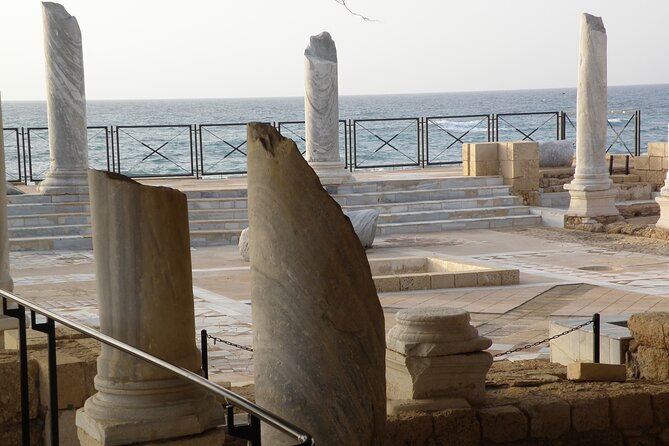
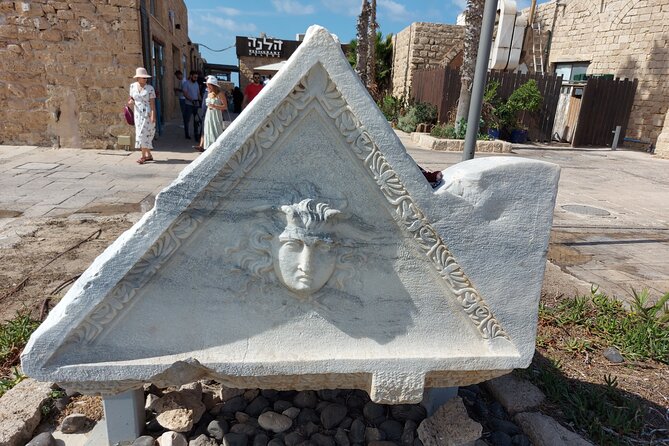
A second Caesarea segment lasts about 30 minutes and focuses on the ancient harbor and the newly opened museum. The harbor is particularly important because it explains why Herod built the city here. Caesarea was not merely a settlement on the coast. Its port connected the city to wider Roman trade and political networks.
Thirty minutes is a brisk visit. You will get an introduction and a chance to see the main points, but this is not a full museum afternoon. I would treat it as a continuation of the larger Caesarea story rather than a separate major attraction.
The harbor also gives the day a welcome change of pace after the theater, palace, and hippodrome. Instead of looking only at inland ruins, you see the relationship between the city and the Mediterranean. Depending on your group’s interests, this may be the place to ask David about construction, commerce, or the role of Caesarea under Roman rule.
Haifa’s Bahá’í Gardens and hillside views
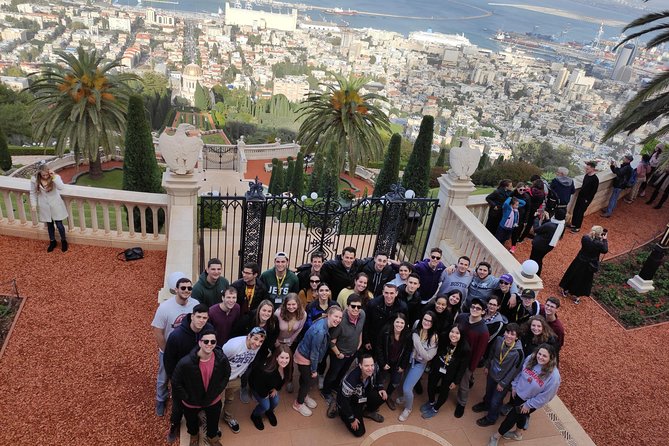
The route then continues to Haifa for about 40 minutes at the Bahá’í Gardens. The gardens are a UNESCO World Heritage site and the worldwide center of the Bahá’í faith. Even if you know little about the religion before arriving, the site offers a clear change from Caesarea’s ancient Roman setting.
The gardens are famous for their formal design and their position on Haifa’s slope. You get a different kind of visual experience here: carefully arranged terraces, strong symmetry, and views across the city and coast. The visit is free, according to the tour details, though the time is limited.
I would not expect a long religious or botanical tour in 40 minutes. The stop is better suited to seeing the main setting, learning the basic significance of the site, and taking in the view. Modest clothing is required for Holy Sites, so dress with the later monastery visit in mind rather than packing a beach-day outfit.
The private format helps if your group has questions. The gardens are not just a photo stop, and David can place the site within the wider religious and political story of the region. Still, the short time means you should keep your expectations realistic. You are getting an introduction, not every terrace and detail.
More trips into the Galilee:
- From Tel Aviv: Guided Day Trip to Nazareth & Sea of Galilee
★ 4.4 · 824 reviews - From Tel Aviv: Caesarea, Haifa and Akko Day Trip
★ 4.4 · 744 reviews - Nazareth and the Sea of Galilee Day Trip from Tel Aviv
★ 4.5 · 541 reviews - Caesarea, Rosh Hanikra and Acre Day Trip from Tel Aviv
★ 4.5 · 406 reviews
Daliat El Carmel: a useful lunch stop
After the formal gardens, the day turns toward food at the Druze village of Daliat El Carmel. The stop lasts about an hour and includes the weekend market, along with traditional Middle Eastern cuisine.
This is one of the most appealing parts of the route because it adds a living cultural setting to a day otherwise filled with monuments and viewpoints. Food gives you a direct way to experience the Druze community, and the market offers a more informal break from guided sightseeing.
Lunch is not included, so plan to pay separately. The information provided does not name a particular restaurant or set menu, which is another reason to ask David how the stop will work for your group. A family with children may want a simple meal and a little browsing time, while a group focused on culture may prefer to spend longer learning about the village and its food.
The one-hour limit is practical but not generous. If you want a relaxed meal, market browsing, and coffee, the stop may feel short. On the other hand, a defined lunch window helps keep the full day from running late.
Muhraqa Monastery above the Jezreel Valley
The final listed stop is the Discalced Carmelite Order Muhraqa Monastery on Mt. Carmel. The visit lasts about an hour and combines a religious site with a broad view over the Jezreel Valley.
The monastery is dedicated to Elijah the prophet, giving this stop a strong biblical connection. After Roman ruins, a modern faith center, and a Druze market, the monastery rounds out the day with another distinct religious tradition.
The view is likely to be the main visual reward here. From Mt. Carmel, you can look across the Jezreel Valley and understand the region’s geography in a way that a city street or museum map cannot provide. I would save a few quiet minutes for the view rather than filling the entire stop with questions and photographs.
As with the Bahá’í Gardens, modest clothing is important. Admission is not included, and the tour details do not specify the ticket amount. You should include entrance fees in your budget and confirm current costs before departure.
Optional Megiddo and Akko additions
Megiddo and Akko can be added to a customized day, but they should be treated as choices, not automatic stops. The core route already includes Caesarea, Haifa, Daliat El Carmel, and Mt. Carmel over eight to nine hours, including driving.
Megiddo would appeal most to you if biblical and archaeological sites are your priority. Akko would suit you if you want another historic coastal city. Adding either one could make the day much more demanding, and adding both may require cutting time from the listed stops.
This is where a private guide has a real advantage. Before booking, tell David what matters most: Roman archaeology, religious sites, food, views, or a particular city. A clear priority list will produce a better day than trying to collect every possible location.
David has also guided groups through Caesarea, Megiddo, and Akko, so he can help compare the sites. Do not assume that every optional location fits automatically. Ask for a proposed schedule and decide which stops deserve your limited daylight and energy.
How the guide affects the experience
The strongest praise for this tour centers on David’s teaching and attention to detail. His PhD in archaeology is not just a line on a profile. It suggests a guide who can explain how political choices, construction, religion, and daily life connect.
That level of background was especially valued by a university group visiting Caesarea, and it also worked for a family ranging from age nine to 83. I like that range because it points to a guide who can adjust the amount of detail instead of giving everyone the same lecture.
David’s role may also extend beyond the ruins. One family received help arranging travel and hotel accommodations in another city. That is useful, but you should view it as an example of personal assistance rather than a guaranteed planning service included in the price.
The feedback on the tour is uniformly strong, with a five-star rating based on seven reviews. That is an encouraging record, though the sample is small. I would place the greatest weight on the repeated themes: strong historical explanation, careful attention to questions, and the ability to keep mixed-age groups interested.
Timing, transport, and total cost
The tour starts at 8:00 a.m. and ends back at the meeting point at Tel Aviv Savidor Train Station. Pickup is offered, but the stated start and end point is the station, so confirm the exact pickup arrangement before the day begins.
Private transportation is not included in the $475 price. This is the most important cost detail to clarify. Ask whether the provider can arrange the vehicle, what type of vehicle is planned for your party, and how that charge will be added.
The group limit is up to 15 people. For a large family, school group, or private party, $475 divided among the group can be good value for a full day of guiding. For a couple, the same price may feel high once transport, entry fees, and lunch are added.
The eight to nine-hour duration also has a practical effect. You will cover a lot of ground, but this is not a slow-paced retreat. Wear comfortable clothing and shoes suitable for walking around archaeological sites, and keep water with you, since the day includes outdoor stops. The provided details do not specify vehicle amenities or walking distances, so ask if anyone in your group has mobility concerns.
Free cancellation is available if you cancel at least 24 hours before the 8:00 a.m. start. Changes or cancellations within 24 hours are not accepted for a refund, and confirmation arrives within 48 hours, subject to availability.
Who should book this tour?
I would recommend this experience to families, private groups, and curious history fans who want one guide for a full day. It is especially well suited to people who value explanation over simply checking off viewpoints.
You should also consider it if your group has mixed interests. One person can focus on Roman sites, another on religious architecture, and another on food and scenery. The flexible format gives David room to adjust the emphasis.
I would be more cautious if you want a low-cost outing for two people, a relaxed beach day, or a tour with every expense bundled into one price. The extra costs matter, and the schedule is full.
Book it if you want a private, high-content day and are willing to confirm the transport and admission details first. Skip it if you prefer to explore independently or would rather spend an entire day at one site. For a group that wants Caesarea, Haifa, and Mt. Carmel in one carefully explained route, this is a strong choice.
FAQ
Where does the tour start?
The stated meeting point is Tel Aviv Savidor Train Station in Tel Aviv-Yafo. The start time is 8:00 a.m.
Where does the tour end?
The experience ends back at the meeting point at Tel Aviv Savidor Train Station.
How long does the tour last?
The full experience takes approximately eight to nine hours.
Is hotel pickup available?
Pickup is offered, but the listed meeting point is Tel Aviv Savidor Train Station. Confirm the exact pickup arrangement when booking.
How many people can join the private tour?
The tour is private for your group and can include up to 15 people.
Is transportation included in the price?
No. Private transportation is not included in the $475 group price.
Are entrance fees included?
No. Entrance fees for the listed sites are paid separately.
Is lunch included?
No. Lunch is not included. You have about one hour for traditional Middle Eastern food at Daliat El Carmel.
What should I wear?
Wear modest clothing suitable for visiting Holy Sites. This is particularly important for the Bahá’í Gardens and Muhraqa Monastery.
Can Megiddo or Akko be added?
Megiddo and Akko are optional locations. Since the tour lasts eight to nine hours, discuss the timing and possible changes with the guide before adding either site.
Just added in Tel Aviv
- Wine Tour North of Israel from Tel Aviv★ 5.0 · 2 reviews
- private Full-day Tour to Jericho + the Dead Sea★ 5.0 · 3 reviews
- private Full-Day Tour to Bethlehem and Jerusalem★ 5.0 · 2 reviews
- Private wine tour of Northern Israel★ 5.0 · 4 reviews
- Privet Pickup from Tel Aviv Hotels to the Airport★ 5.0 · 1 review
- VIP Tel Aviv airport Terminal 3 Fast Track Skip Line From plane★ 4.5 · 9 reviews
- Package VIP Skip Line Services in BGN Airport with Transfer to Tel aviv Hotels★ 5.0 · 3 reviews
- Private Transfer from Ben Gurion Airport to Tel Aviv, Bat Yam, Rishon LeZion★ 5.0 · 2 reviews
Haifa and the Galilee Tours, compared.
Nazareth and the Sea of Galilee Day Trip from Tel Aviv
Read our review →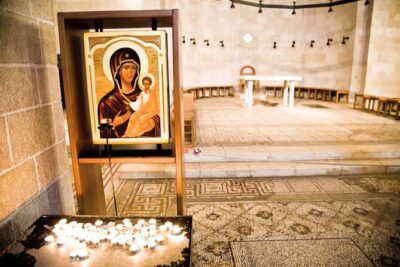
Nazareth and the Sea of Galilee Day Trip from Jerusalem
Read our review →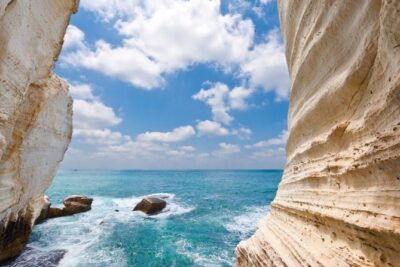
Caesarea, Rosh Hanikra and Acre Day Trip from Tel Aviv
Read our review →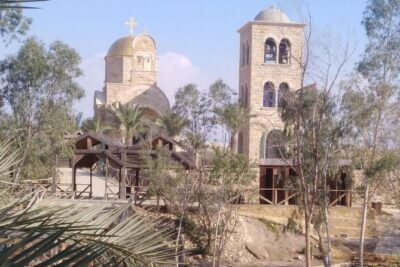
Travel To Bethlehem, Jericho & Jordan River – Group Guided Tour from Jerusalem
Read our review →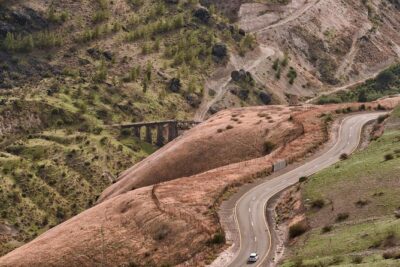
Haifa Shore Excursion: Nazareth and the Galilee – for cruise ship guests only
Read our review →Browse the lists this tour appears in