
Reviewed · PRIVATE
Private Tour in Jaffa, Tel Aviv
Old stones, new Tel Aviv. This private tour links Jaffa’s ancient port with Neve Tzedek, Rothschild Boulevard, the UNESCO-listed White City, and Sarona. I like the one-to-one feel of having a guide for your own group, and I like that the day can be arranged as a morning or afternoon outing. The taxi transfer from your hotel to Jaffa is also included, which makes the start easy.
The main drawback is the price: $525 for up to three people is a serious spend, especially since food and taxis between some stops are extra. The tour also covers a lot of ground in six hours, so you should expect an overview rather than long visits inside museums or a slow, leisurely afternoon in every neighborhood.
In This Review
- Key points to know before booking
- Why this private Tel Aviv route works
- Jaffa Old City, where the port story begins
- Neve Tzedek, from poor quarter to luxury address
- Rothschild Boulevard and the birth of Tel Aviv
- The White City and Tel Aviv’s Bauhaus center
- Sarona, from German Templar colony to food hall
- Transportation, timing, and what you pay
- Who will get the most from this tour
- Should you book the Jaffa and Tel Aviv private tour?
- FAQ
- How long does the private tour last?
- How many people can join the private tour?
- Is hotel pickup included?
- Are taxis between the sightseeing stops included?
- Are food and drinks included?
- What should I wear for places of worship and selected museums?
Key points to know before booking
- Jaffa gives the tour its strongest sense of place: Egyptians, Romans, Muslims, Crusaders, Napoleon’s French forces, the British, and Jewish residents all shaped this old port.
- The private format lets you adjust the day: Morning and afternoon departures can be customized to fit your schedule.
- The route moves from old port to modern city: Jaffa, Neve Tzedek, Rothschild Boulevard, the White City, and Sarona show several sides of Tel Aviv.
- Sarona is the final stop: You can finish with food, shopping, bars, boutiques, and the indoor Sarona Market.
- The strongest praise goes to the guide: One five-star assessment singled out the guide’s fluent English, strong command of the subject, and excellent presentation.
- Politics may enter the commentary: One unhappy participant felt the guide spent too long discussing United Nations resolutions instead of the sights.
Why this private Tel Aviv route works
Tel Aviv is young compared with Jaffa, but the two places now form one city. That gives this tour a useful shape. You begin with a port whose story reaches back thousands of years, then move through the first Jewish neighborhood outside Jaffa, the city’s early planned streets, its Bauhaus center, and a former German Templar settlement.
I like this kind of route because it shows change rather than presenting Tel Aviv as one single style. You get old stone, early Zionist urban planning, European modernism, British rule, Israeli state history, and present-day food and shopping in one day.
The private arrangement matters most if you want to ask questions or adjust the pace. A guide can spend more time on Jaffa if that is your priority, or move more quickly there to give the White City and Sarona extra attention. The tour is designed for up to three people, so it suits a couple, a small family, or a few friends who want a more personal outing.
The advertised duration is about six hours. The listed visits add up to roughly five hours, before transfers and any taxi rides between areas. In practical terms, you should plan for a substantial half-day, with some time spent moving around the city.
More things to do in Tel Aviv:
- From Tel Aviv: Masada & Dead Sea Full Day Tour with Pick Up
★ 4.5 · 1,496 reviews - From Tel Aviv: Jerusalem and Bethlehem Guided Day Trip
★ 4.3 · 1,316 reviews - Masada and the Dead Sea Day Trip from Tel Aviv
★ 4.5 · 1,014 reviews
Jaffa Old City, where the port story begins
The first two hours are devoted to Jaffa Old City. This is the most important stop for understanding the route, since Jaffa was an active port long before Tel Aviv existed.
The guide traces the city through a long line of rulers and communities. Egyptians, Romans, Muslim administrations, Crusaders, Napoleon’s French forces, the British, and Jewish residents all left their mark. That list can sound like a roll call, but in Jaffa it gives you a useful way to read the streets. The old port was not a quiet relic. It was a place repeatedly taken, administered, and reshaped.
The religious story is also part of the walk. According to the tour’s account, Peter used Jaffa as a base before spreading Christianity westward. Jewish residents later moved north from Jaffa at the end of the 18th century, helping set the stage for Jewish neighborhoods outside the old port.
I would give Jaffa your full attention. Two hours is enough to hear the main stories and get a feel for the old city, but not enough for every historical detail. Wear comfortable shoes, since the experience is primarily a walking tour, and remember that entry to the stops is listed as free, not necessarily that every optional attraction or museum visit is included.
Jaffa is also the place where a private guide can make the biggest difference. Without context, the old port can seem like a pretty collection of stone lanes and sea views. With good storytelling, it becomes a place shaped by migration, conquest, religion, and trade.
The guide quality is a major part of the value here. One very positive assessment praised a guide for fluent English and a strong, engaging presentation. That is worth noting because the historical material spans many centuries and involves several religious and political traditions. Clear explanation matters.
Neve Tzedek, from poor quarter to luxury address
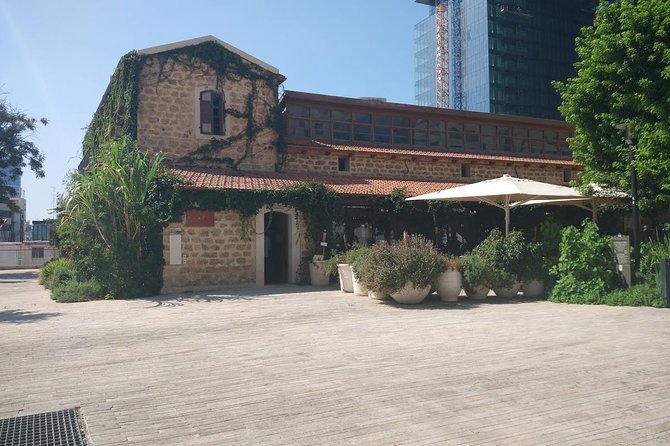
The tour spends about an hour and a half in Neve Tzedek, the first Jewish neighborhood built outside Jaffa. This is the route’s clearest example of urban change.
The neighborhood began as a poor 19th-century district that was close to being erased. Today it is associated with boutiques, cafes, restaurants, fashion shops, and jewelry stores. The transformation is dramatic enough to deserve explanation, not just a quick photo stop.
The tour describes Neve Tzedek as home to more than a dozen billionaires. That detail helps show how far property values and status have shifted, though it also points to a question you may want to raise with your guide: who benefited from the neighborhood’s renewal, and who could no longer afford to remain?
I like this stop because it gives you more than attractive streets. It shows how Tel Aviv’s older quarters have been reclaimed and repackaged. You will see the polished side of the city, but the neighborhood’s earlier condition remains an important part of the story.
The drawback is that Neve Tzedek can become a shopping stop if the conversation stays on boutiques and restaurants. If you are more interested in architecture or social history, tell the guide early. The private format gives you a better chance to shape the discussion.
Rothschild Boulevard and the birth of Tel Aviv
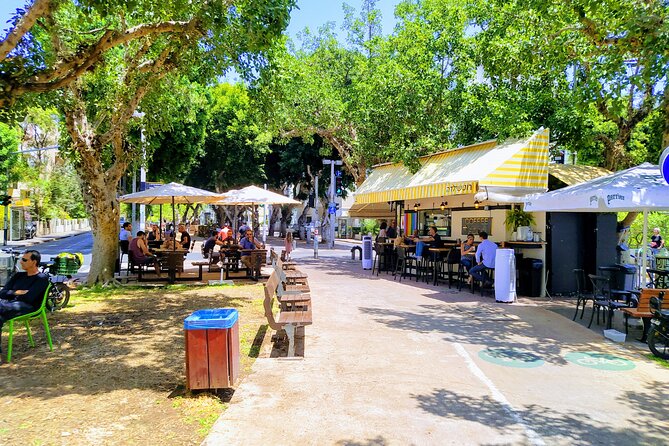
Rothschild Boulevard receives about an hour. Here the focus shifts from old Jaffa to the planned beginnings of Tel Aviv.
In 1909, affluent Jewish residents, many of them from Eastern Europe, wanted a neighborhood with modern services. They built Ahuzat Bayit with electricity, running water, and a sewage system. The neighborhood took the name Tel Aviv the following year.
That story is practical as well as historical. It explains why Tel Aviv developed as a planned urban center rather than simply spreading outward from Jaffa. Basic infrastructure was part of the ambition from the start.
Rothschild Boulevard is a good place to connect people, money, planning, and migration. The residents were not only building houses. They were trying to create a different kind of city, with better services and a modern civic identity.
You should expect this section to be a guided walk rather than a formal museum visit. Admission is free, and the value comes from the explanation of how the city began. If you have already read about the founding of Tel Aviv, you may find this portion familiar. If not, it provides a helpful bridge between Jaffa and the White City.
A few more options to weigh up in Tel Aviv
- Jerusalem Private Full Day Tour
★ 5.0 · 110 reviews - Exclusive Private Tour in The Israel Diamond Exchange
★ 5.0 · 60 reviews - Tel Aviv Airport (TLV) to Tel Aviv Hotels – Private Transfer
★ 4.0 · 59 reviews - Bethlehem Half Day Private Tour – Pick up from Jerusalem/Tel Aviv/Ashdod
★ 5.0 · 54 reviews
The White City and Tel Aviv’s Bauhaus center
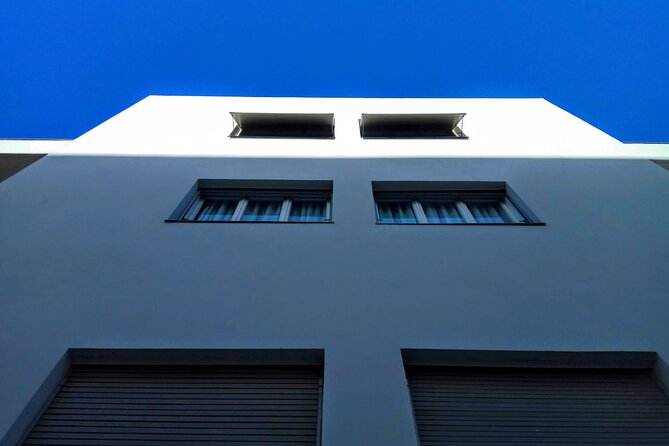
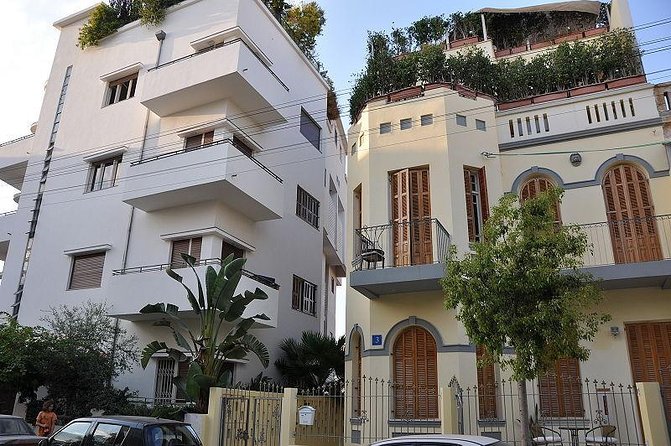
The White City portion lasts about 45 minutes. You walk through the world’s largest concentration of buildings in the International Style, an architectural movement often linked with Bauhaus design.
The area has UNESCO World Heritage status, which gives this stop international importance. But you do not need to be an architecture specialist to appreciate it. The key point is that Tel Aviv became home to an unusually large collection of modernist buildings, shaped by European architectural ideas and adapted to a new city.
This is a short visit, so expect an introduction rather than a detailed building-by-building study. I would listen for the larger picture: how the city’s early growth, immigrant population, and modern ambitions came together in its architecture.
The White City also offers a useful contrast with Jaffa. Jaffa is associated with old stone, port life, and successive empires. The White City reflects the planned, modern city that Tel Aviv wanted to become. Seeing both in one route makes each more understandable.
If architecture is your main interest, tell the guide before the tour begins. The standard schedule gives the White City less time than Jaffa or Neve Tzedek, so you may want to arrange the emphasis around your priorities.
Sarona, from German Templar colony to food hall
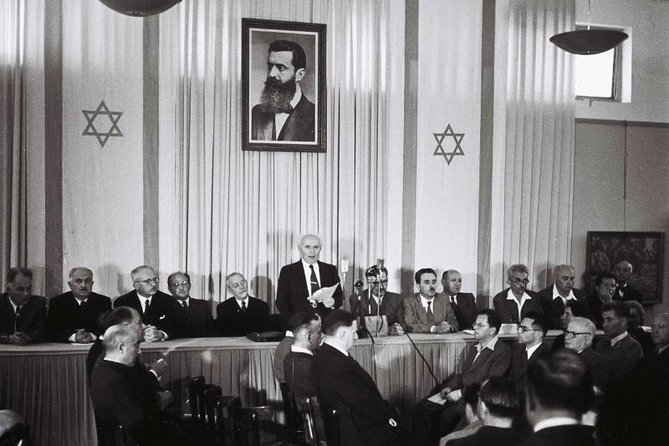
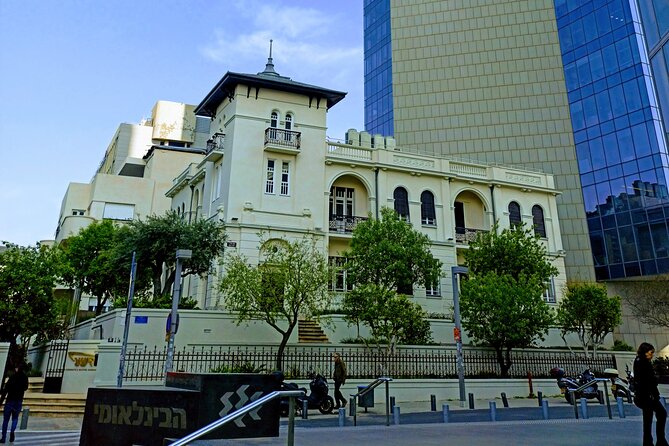
The final 45 minutes are in Sarona. This former agricultural settlement was founded in the second half of the 19th century by German Templars.
Sarona’s later wartime story is difficult. In the 1930s, some German residents displayed swastika flags. During World War II, most were expelled to Australia by the British. In 1948, Sarona became the headquarters of the Israeli government and army.
The original buildings have since been renovated, and the area now contains boutique shops, bars, restaurants, and the indoor Sarona Market. That change gives the tour a strong final contrast: a former agricultural colony and government center has become one of Tel Aviv’s popular places for eating and shopping.
Ending at Sarona is convenient because you are not rushed onto another sightseeing stop. You can browse the market, buy food, or sit down for a meal. Food and drinks are not included, so budget for this separately. You are also free to leave the tour here and continue on your own.
Sarona works best as a relaxed finish, but it may feel commercial after the historical sections. If you prefer old streets and archaeological sites to boutiques and food stalls, this will probably be the least compelling part of the route. If you enjoy ending a sightseeing day with something to eat, it is a sensible choice.
Transportation, timing, and what you pay
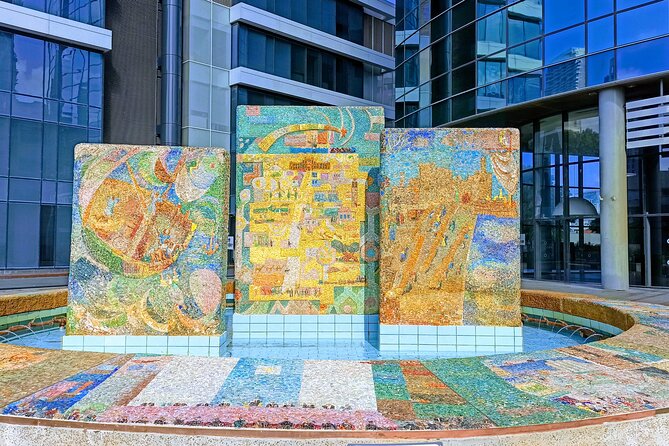
The price is $525 per group of up to three people. That means the cost works out to $175 per person for three people, or $262.50 per person for two. For a solo participant, the price is difficult to justify unless the private guide and flexible schedule are especially important to you.
A professional guide and taxi transportation from your hotel to Jaffa are included. Transportation between the sightseeing areas is not fully included, and you may need taxis between sites. That detail matters because the route covers several separate parts of Tel Aviv. Ask how the day will be handled before setting out, especially if you want firm control over extra costs.
The free cancellation policy is useful if your plans may change. You can receive a full refund by canceling at least 24 hours before the local start time. Cancellations or changes inside that 24-hour window are not refunded.
The tour offers a mobile ticket and hotel pickup. Confirmation is normally provided at booking, but bookings made within seven days of departure may take up to 48 hours to confirm, subject to availability.
Who will get the most from this tour
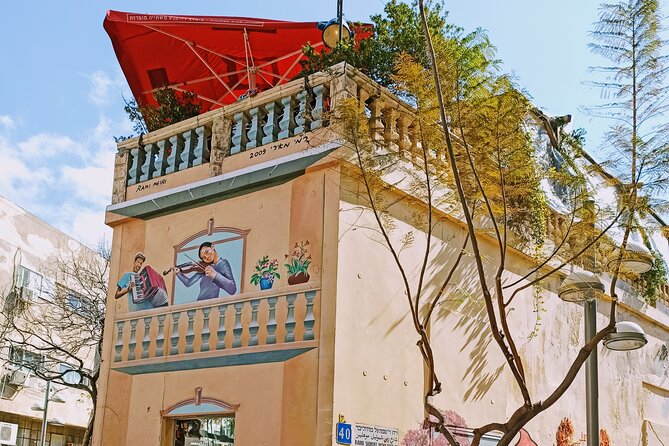
I would recommend this outing to someone visiting Tel Aviv for the first time who wants a broad introduction without joining a large group. It is also a good fit if you have only half a day and want Jaffa, early Tel Aviv, modern architecture, and Sarona in one outing.
It suits people who enjoy history presented through neighborhoods rather than only through museums. The route covers migration, religion, urban planning, architecture, wartime politics, and modern redevelopment.
The experience may be less satisfying for you if you want long independent breaks, extensive museum time, or a purely neutral discussion of every political subject. One negative assessment objected to a guide spending 25 minutes or more on United Nations resolutions near Independence Hall. That is a useful warning: the guide’s personal approach can shape the day. If you want the focus kept on buildings and history rather than political commentary, say so at the start.
Places of worship and selected museums may require covered knees and shoulders for both men and women. Shorts and sleeveless tops can lead to refused entry, so dress with that rule in mind. Service animals are allowed, public transportation is nearby, and the activity is suitable for most people, according to the available information.
Should you book the Jaffa and Tel Aviv private tour?
Book it if you value a private guide, need a flexible morning or afternoon schedule, and want a connected story from ancient Jaffa to modern Tel Aviv. The route is broad, well organized, and especially useful for first-time visitors.
Think twice if your group has only two people and is watching costs, since $525 is high before extra taxis and food. You should also set expectations about the pace and tell the guide what interests you most.
My call: this is a good choice for three people who want personal attention and a strong city overview. The guide is the key variable. A clear, fluent guide can turn the route into a memorable walk through time, while an overly political approach could distract from the sights.
FAQ
How long does the private tour last?
The tour lasts approximately six hours. The listed stops total about five hours, with additional time needed for transportation and movement between areas.
How many people can join the private tour?
The price covers one private group of up to three people. Only your group participates.
Is hotel pickup included?
Yes. Taxi transportation from your hotel to Jaffa with your guide is included.
Are taxis between the sightseeing stops included?
No. Transportation to and from the attractions is not included, and taxis may be needed between some sites.
Are food and drinks included?
No. Food and drinks are not included. The tour ends at Sarona Market, where you can buy a meal or refreshments.
What should I wear for places of worship and selected museums?
Knees and shoulders must be covered for both men and women. Shorts and sleeveless tops are not allowed at those locations, and you may be refused entry if you do not follow the dress requirements.
Just added in Tel Aviv
- Wine Tour North of Israel from Tel Aviv★ 5.0 · 2 reviews
- private Full-day Tour to Jericho + the Dead Sea★ 5.0 · 3 reviews
- private Full-Day Tour to Bethlehem and Jerusalem★ 5.0 · 2 reviews
- Private wine tour of Northern Israel★ 5.0 · 4 reviews
- Privet Pickup from Tel Aviv Hotels to the Airport★ 5.0 · 1 review
- VIP Tel Aviv airport Terminal 3 Fast Track Skip Line From plane★ 4.5 · 9 reviews
- Package VIP Skip Line Services in BGN Airport with Transfer to Tel aviv Hotels★ 5.0 · 3 reviews
- Private Transfer from Ben Gurion Airport to Tel Aviv, Bat Yam, Rishon LeZion★ 5.0 · 2 reviews
Private, compared.
JERUSALEM private tour with ELAD VAZANA – Life in Israel & Palestine Then & Now
Read our review →
Palestine Revealed: 2-Day Private Tour from Jerusalem
Read our review →

Exclusive Private Tour in The Israel Diamond Exchange
Read our review →
Tel Aviv Airport (TLV) to Tel Aviv Hotels – Private Transfer
Read our review →
Bethlehem Half Day Private Tour – Pick up from Jerusalem/Tel Aviv/Ashdod
Read our review →
Private Tour: Best of Jerusalem and the Dead Sea from Tel Aviv
Read our review →Browse the lists this tour appears in