
Reviewed · DEAD SEA DAY TRIPS
Private Tour: The Best of Jerusalem and the Dead Sea
Jerusalem rewards a guide who knows when to pause. I like the private vehicle and flexible schedule, and I like the rare chance to pair the Old City with a float in the Dead Sea on one long day. The main drawback is the $430 per-person price, especially since food and entrance fees are extra.
This 10-hour outing gives you undivided attention from a driver-guide and covers major Jewish, Christian, and Muslim sites. Guides such as Gil, Sara, Zahi, and Sheffer Meir have earned especially warm praise for their insight and pacing, though one poor experience involved an unhelpful guide who pushed specific restaurants and ended the day early.
In This Review
- Key points to know before booking
- One long day linking Jerusalem and the Dead Sea
- Mount of Olives and the first view of Jerusalem
- Garden of Gethsemane and the Kidron Valley
- Entering the Old City through its quarters
- Western Wall: allow time for the atmosphere
- The Via Dolorosa and Church of the Holy Sepulchre
- Crossing the Judean Desert to the Dead Sea
- Two hours for mud, salt water, and floating
- What $430 per person buys you
- Who should book this private day?
- My recommendation
- FAQ
- What time does the tour begin?
- How long does the experience last?
- Is hotel pickup included?
- Is this a private tour?
- Can the itinerary be changed?
- What should I wear at the holy sites?
- What should I bring to the Dead Sea?
- Are food and drinks included?
- Are entrance fees included?
- Is there an extra charge on Saturdays and holidays?
- Can I cancel for a full refund?
Key points to know before booking
- Mount of Olives views: You get a broad look across Jerusalem, including the Dome of the Rock, before entering the Old City.
- Three faiths in one walk: The route connects the Western Wall, Via Dolorosa, and Church of the Holy Sepulchre.
- Private means flexible: You can spend more time at a favorite site instead of following a fixed group schedule.
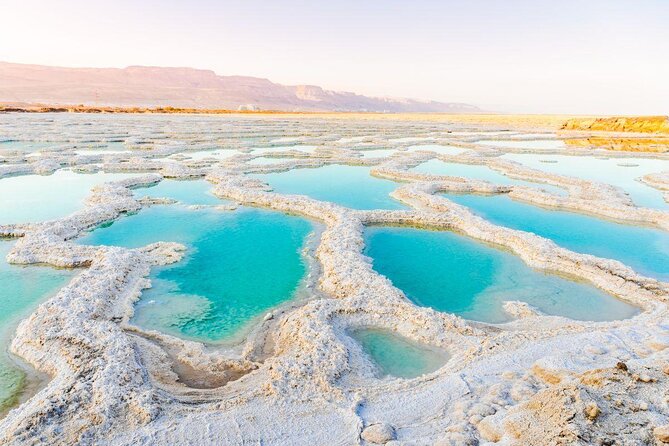
- The Dead Sea finishes the day: Two hours are set aside for floating, mud, and a swim in water 400 meters below sea level.
- Extra costs matter: Food, drinks, and entrance fees are not included, and Saturdays and holidays cost an additional $125.
- Dress and gear are practical concerns: Cover your shoulders and knees at holy sites, and bring swimwear, a towel, water, walking shoes, and sun protection.
One long day linking Jerusalem and the Dead Sea
This private excursion is built for you if you have only one full day and want to see Jerusalem’s headline sights before adding Israel’s most unusual natural stop. Pickup begins around 8:30 a.m. at your Jerusalem hotel, with transport in a private, air-conditioned vehicle.
I like the basic plan. Jerusalem’s Old City can easily fill a whole day by itself, while the Dead Sea requires a drive through the Judean Desert. Combining both saves you from arranging separate transport and gives the day a clear rhythm: views first, sacred sites in the middle, floating at the end.
The trade-off is pace. Ten hours sounds generous, but Jerusalem has plenty of places where you will want to linger. The Old City portion includes roughly three hours of listed stops, followed by a two-hour Dead Sea visit and the driving between them. Your guide can adjust the order and timing, but you should not expect a slow, detailed study of every quarter, church, and archaeological feature.
The private format helps. You are not waiting for a large group to gather, and you can explain your interests at the start. If the Western Wall matters most to you, or if you have a strong Christian focus, ask for that emphasis before the day begins.
More Dead Sea day trips:
- Tel Aviv: Jerusalem, Bethlehem & Dead Sea
★ 4.0 · 881 reviews - From Jerusalem: Masada & Dead Sea Full Day Tour with Pick Up
★ 4.5 · 815 reviews - Masada and the Dead Sea Day Trip from Jerusalem
★ 4.5 · 757 reviews
Mount of Olives and the first view of Jerusalem
The tour opens on the Mount of Olives, where you spend about 30 minutes looking across Jerusalem. This is the right first stop because it gives you a mental map before the narrow lanes of the Old City begin.
From the ridge, you can see the Old City walls, the Temple Mount, and the golden Dome of the Rock. The view also helps you understand Jerusalem’s setting, with the Mount of Olives east of the Old City and the Kidron Valley between them.
Your guide can put the scene into its religious and historical context. Jerusalem matters deeply to Judaism, Christianity, and Islam, and the Dome of the Rock is one of the city’s most recognizable landmarks. You are not simply checking off a viewpoint here. You are getting your bearings before walking into a place where every street seems to carry several layers of meaning.
The stop is short, so use it well. Bring a phone or camera, but also listen to the orientation. A good explanation here makes the rest of the day easier to follow. Guides named Gil, Sara, Zahi, and Sheffer Meir received particularly strong praise for making Jerusalem easier to understand and for matching the pace to the group.
Garden of Gethsemane and the Kidron Valley
After the Mount of Olives, the route passes through the Garden of Gethsemane for about 20 minutes. Christian visitors will recognize this as the place associated with Jesus praying before his arrest. The garden is also linked with the disciples who slept there that night.
This is a brief stop, not an extended garden visit. You should expect time to walk through the grounds and hear the religious context rather than a long period of quiet reflection. The setting leads toward the Kidron Valley, which separates the Mount of Olives from Jerusalem’s Old City.
The route matters because it connects the biblical account with the city’s physical shape. You can see why the approach from the east has such importance, and you are already moving through the geography connected with the final days of Jesus.
Modest clothing is needed at holy sites. Covered shoulders and knees are required, so it is best to dress for both religious visits and the hot Dead Sea later in the day.
Entering the Old City through its quarters
The Old City portion lasts about 90 minutes as a general stroll, with separate time listed for the Armenian, Jewish, and Christian quarters. That gives you a useful introduction, but it is not enough time to explore every lane.
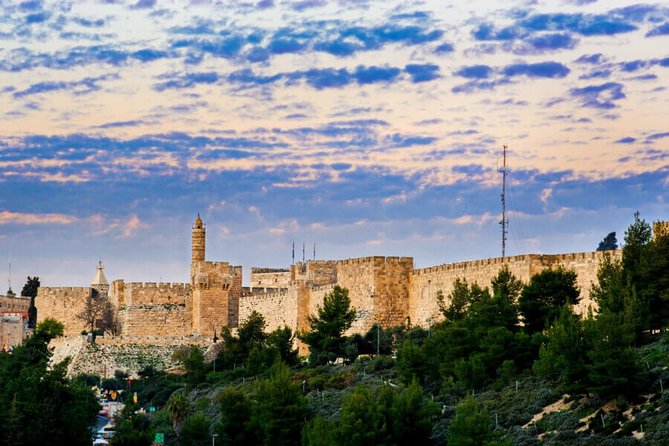
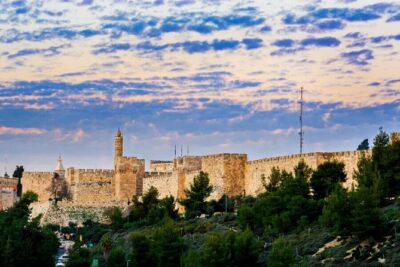
The walls around Jerusalem’s Old City were built in the 1530s, during Ottoman rule, to protect the city from intruders. Once inside, your route moves through several distinct areas rather than treating the Old City as one single attraction.
The Armenian Quarter is allotted about 20 minutes. The Jewish Quarter receives about 30 minutes, giving you a little more time to see its streets and reach the Western Wall. You also visit the Cardo, the old Byzantine street. This stop adds an archaeological layer to the day, showing that the Old City is not only a place of active worship but also a record of earlier urban life.
I appreciate this mix of living religion and older remains. You can move from a functioning place of prayer to a historic street plan within a short walk. The drawback is that the schedule may feel compressed if you want time for shopping, quiet observation, or a closer look at architectural details.
Because the itinerary can be customized, tell your guide what you want to skip. A private tour is most valuable when you use that freedom. If you have already seen one quarter, request more time in another rather than accepting every stop for the same length of time.
More things to do in Jerusalem:
- From Tel Aviv: Jerusalem and Bethlehem Guided Day Trip
★ 4.3 · 1,316 reviews - From Tel Aviv: Jerusalem Old & New City Bus Tour
★ 4.2 · 824 reviews - Day Tour to Jerusalem and Bethlehem from Tel Aviv
★ 4.5 · 720 reviews - From Jerusalem: Nazareth and Sea of Galilee Tour
★ 4.5 · 588 reviews
Western Wall: allow time for the atmosphere
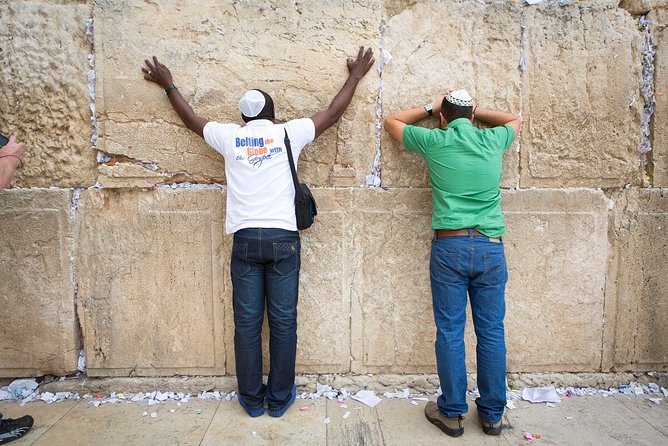
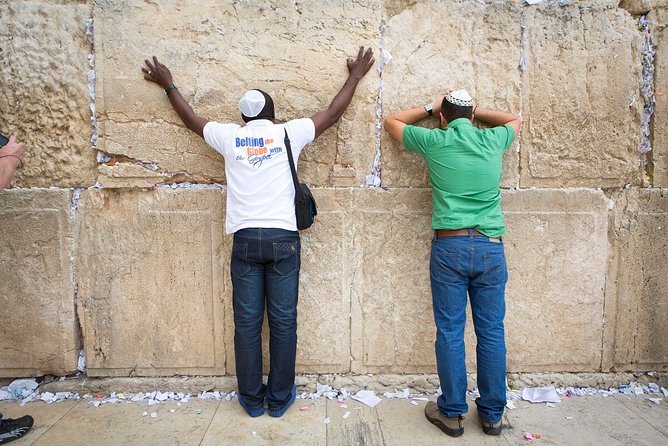
The Western Wall receives about 25 minutes. It is Judaism’s holiest accessible prayer site, and the experience is more than an architectural photo stop. People come here to pray, touch the stones, and place written prayers in the cracks.
Your guide can explain the wall’s place within the Temple Mount area and help you approach respectfully. You should be prepared for separate prayer areas for men and women, though the exact experience can vary with religious observance and timing.
Keep your voice low and dress with care. This is an active religious site, not a museum. The short scheduled visit is enough for a first look, but you may want more time if the site is central to your interests. The private format gives you a better chance to request that extra time.
The Western Wall also provides a useful contrast with the Christian Quarter later in the walk. In a single morning or early afternoon, you move between sacred places that are close together geographically but very different in practice and meaning.
The Via Dolorosa and Church of the Holy Sepulchre
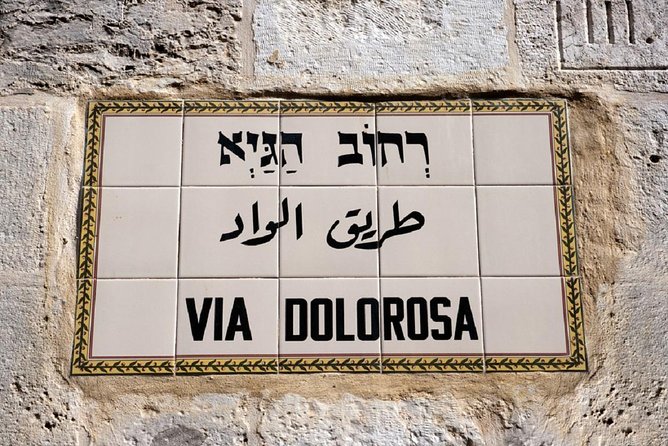
The Christian Quarter receives about 30 minutes, followed by approximately 40 minutes along the Via Dolorosa. This is the route associated with Jesus carrying the cross toward crucifixion. Along the way, your guide can point out the 14 Stations of the Cross.
The walk is one of the most meaningful parts of the day for Christian visitors, but it is also where the Old City’s narrow streets can make the schedule feel tight. You will be walking, stopping, and listening in lanes shared by residents, worshippers, and shops. Comfortable shoes are important.
The route ends at the Church of the Holy Sepulchre, where you have about 20 minutes. The church is associated with the crucifixion and burial of Jesus, making it one of Christianity’s most important sites.
Twenty minutes may be enough for a first visit, but it is not a guarantee of a full church tour. Crowds, services, and lines can affect how much you see. Since entrance fees are not included, ask your guide at the start which sites require payment and what the day’s plan covers.
The best guides will do more than recite names and dates. Sara was praised for quickly understanding her group’s level of historical interest and preferred pace. That sort of adjustment matters here, since some people want religious explanation, while others want architecture, archaeology, or a basic orientation.
Crossing the Judean Desert to the Dead Sea
After Jerusalem, the private vehicle heads through the rugged Judean Desert toward the Dead Sea. This drive changes the mood of the day. You leave the dense lanes and sacred sites behind and move into a dry, open setting before reaching the lowest point on earth.
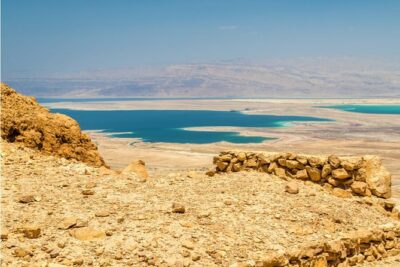
The Dead Sea lies about 400 meters below sea level. Its salt-rich water is famous for making you float with unusual ease. The water is not a normal swimming experience, so listen carefully to your guide and follow the instructions at the bathing facility.
The drive is one reason private transport earns its keep. You do not need to navigate the route yourself after a tiring walking tour, and you can keep your personal items in the air-conditioned vehicle. The tour returns you to your original departure point after the Dead Sea stop.
Two hours for mud, salt water, and floating
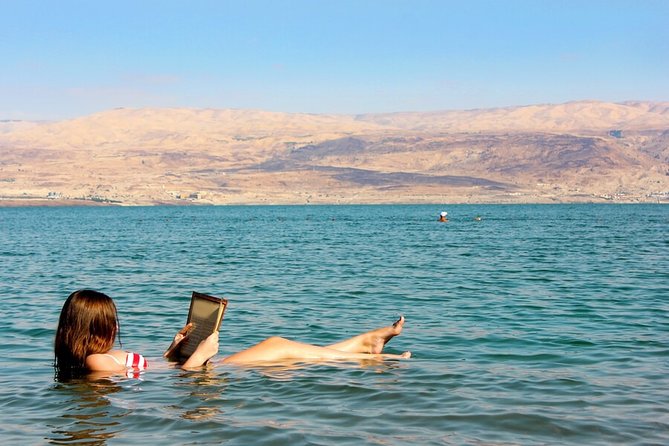
The Dead Sea visit lasts about two hours. You change into swimwear, apply mineral-rich black mud, wash it off in a sulfur pool, and then spend time floating or swimming in the famous water.
I like this as the day’s final stop because it is active, simple, and unlike the Jerusalem portion. After hours of history and religious sites, you get a chance to relax. The mud and buoyant water create a memorable experience without requiring special skill.
Bring a towel, water, sun protection, and swimwear. The sun can be strong, and you will want to rinse off properly after the mud and salt. Water and food are not included, so plan accordingly.
The Dead Sea entrance is also not included in the tour price. That matters when you compare the advertised $430 per-person cost with the final amount. Ask for the exact entrance fee before departure, especially if you are booking for several people.
What $430 per person buys you
At $430 per person, this is not a budget sightseeing day. The value comes from the private guide, hotel pickup and drop-off, private air-conditioned transport, and the ability to change the schedule around your interests.
For a couple or small group, the cost may make sense if you place a high value on efficiency and personal attention. You are paying to connect two major destinations without arranging buses, taxis, and separate admissions on your own.
For a larger group, ask about the available group discount. The tour is private, so only your party participates. That can make the per-person cost easier to justify, particularly if everyone wants the same mix of Jerusalem and Dead Sea time.
The price is harder to defend if you want a slow Old City visit, extensive shopping time, or a long church tour. It is also important to add food, drinks, entrance fees, and the extra $125 charge for Saturdays and holidays.
The strongest guides seem to be the biggest value. Gil was praised for his expertise and for making the Jerusalem portion meaningful before ending with the Dead Sea. Zahi received warm praise for teaching the group a great deal in a limited time. Sheffer Meir was thanked for making Jerusalem and Bethlehem fit the group’s hopes, though Bethlehem is not part of the standard route described here, so confirm any requested changes before booking.
There was also one serious poor experience involving restaurant pressure, limited information, an unfriendly manner, and an early departure. That is a reminder to state your expectations clearly and confirm the return plan with the office if anything changes during the day.
Who should book this private day?
I would choose this tour if you have one free day in Jerusalem and want the city’s major sacred sites plus the Dead Sea without managing transport. It suits couples, families, and small groups with different interests because the guide can adjust the pace.
It is especially useful for first-time visitors who want an overview of Jerusalem’s Jewish, Christian, and Muslim connections. The Mount of Olives viewpoint, Old City walk, Western Wall, Via Dolorosa, and Church of the Holy Sepulchre create a strong first introduction.
It may not suit you if you want a specialist religious tour, a long archaeological study, or several hours in one church. The schedule covers a lot of ground, and the Dead Sea stop takes a substantial part of the day.
Book at least 24 hours before the start time if you want the option of a full refund. Changes and cancellations made within 24 hours are not accepted for a refund. Confirmation is normally issued at booking, although bookings made within 12 hours of departure are subject to availability.
My recommendation
I would book this tour for a first visit when convenience and range matter more than slow exploration. The combination of Jerusalem’s most important sites and two hours at the Dead Sea is efficient, memorable, and hard to arrange as smoothly without a private vehicle.
I would book it only after confirming entrance costs, the Saturday or holiday surcharge, and the guide’s planned emphasis. Ask for your priorities in writing: more time at the Western Wall, a Christian-focused walk, extra explanation in the Jewish Quarter, or a longer Dead Sea visit.
The tour earns its price when you get a strong guide. Names such as Gil, Sara, Zahi, and Sheffer Meir have been linked with thoughtful pacing and clear explanations, but guide quality can vary. If you want a flexible overview and can accept a full, fast day with extra fees, this is a solid choice.
FAQ
What time does the tour begin?
Pickup begins at approximately 8:30 a.m. from your Jerusalem hotel or an agreed pickup point around the city.
How long does the experience last?
The tour lasts approximately 10 hours, including the Jerusalem visits, drive through the Judean Desert, Dead Sea stop, and return trip.
Is hotel pickup included?
Yes. Pickup and drop-off around Jerusalem are included, with transport in a private, air-conditioned vehicle.
Is this a private tour?
Yes. Only your group participates, with a professional private guide.
Can the itinerary be changed?
Yes. The itinerary is a proposal and can be customized according to your interests. You can request more time at one location over another.
What should I wear at the holy sites?
Modest dress is required. Your shoulders and knees should be covered when entering the holy sites.
What should I bring to the Dead Sea?
Bring swimwear, a towel, water, sun protection, and comfortable walking shoes.
Are food and drinks included?
No. Food and drinks are not included in the tour price.
Are entrance fees included?
No. Entrance fees are not included. The Dead Sea stop and Christian Quarter also list admission as not included.
Is there an extra charge on Saturdays and holidays?
Yes. An additional $125 charge applies on Saturdays and holidays.
Can I cancel for a full refund?
Yes, if you cancel at least 24 hours before the experience start time. Cancellations or changes made less than 24 hours before departure are not refunded.
Just added in Jerusalem
- Walking Jerusalem in Russian★ 5.0 · 1 review
- private Full-Day Tour to Bethlehem and Jerusalem★ 5.0 · 2 reviews
- Jerusalem and Dead Sea Trip from Tel Aviv★ 4.0 · 6 reviews
- Tel Aviv & Old City of Jaffa – Tiny group from Tel Aviv★ 4.5 · 9 reviews
- Tel Aviv; Jaffa Old City, Port & Shuk Hapishpishim Walking Tour★ 4.5 · 11 reviews
- Tel Aviv: Food & History Tour of Jaffa Old City & Flea Market★ 5.0 · 1 review
- Discover the Secrets of the Underground Jerusalem with a private tour★ 5.0 · 4 reviews
- Private Tour from Tel Aviv to Jerusalem★ 5.0 · 3 reviews
Dead Sea Day Trips, compared.
Masada & Dead Sea Full Day Tour with Pick Up
Read our review →
Masada and the Dead Sea Day Trip from Tel Aviv
Read our review →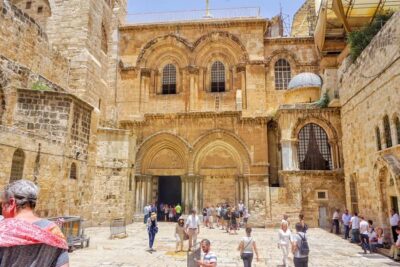
Masada and the Dead Sea Day Trip from Jerusalem
Read our review →
Browse the lists this tour appears in