Reviewed · JERUSALEM TOURS
Skip the Line:1.5Hour AudioTour – Yad Vashem Holocaust Remembrance Center Ticket
Memory has a human face. Yad Vashem combines museum admission with a self-guided audio tour, giving you time to consider personal stories, photographs, documents, artwork, and video testimonies from the Holocaust. The experience is short enough to fit into a Jerusalem sightseeing day, yet serious enough to stay with you long after you leave.
I like the personal stories behind the exhibits, rather than a visit built only around dates and broad events. I also like the freedom to pause, listen, and move on at your own speed. The main drawback is that the museum is emotionally heavy, and the advertised 1.5 hours may feel rushed if you want to study all nine galleries carefully.
In This Review
- Key points to know before you go
- Why Yad Vashem deserves time in Jerusalem
- Starting with the 13-meter Living Landscape artwork
- Nine galleries filled with evidence and testimony
- The value of hearing individual stories
- Ending in the Hall of Names
- Is the self-guided format right for you?
- What the $11 price really includes
- Timing, admission, and practical planning
- Who will get the most from this visit?
- Should you book the Yad Vashem audio tour?
- FAQ
- How long does the Yad Vashem audio tour last?
- What does the ticket include?
- Is parking included in the price?
- What is the minimum age for the Holocaust History Museum?
- How many people can join the experience?
- Can I explore Yad Vashem at my own pace?
- What is the cancellation policy?
Key points to know before you go
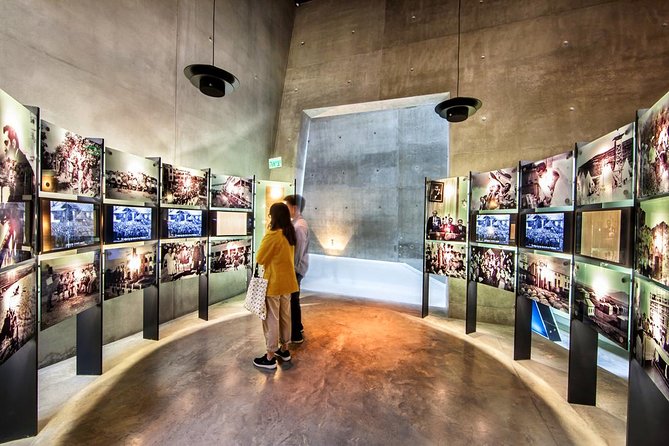
- Living Landscape comes first: A 13-meter video artwork introduces the Jewish life that existed in Europe before World War II through original film clips and photographs.
- Nine galleries tell a broad story: You will see hundreds of artifacts, photographs, documents, video testimonies, and works of art.
- The audio guide adds human detail: Headsets help you hear recorded explanations about individual victims and survivors.
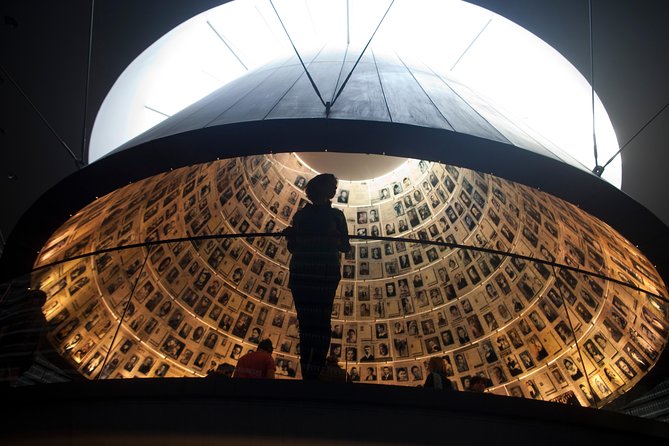
- The Hall of Names provides a powerful ending: A circular hall with a 10-meter-high upper dome closes the museum visit on a monumental note.
- The pace is yours: The experience is listed at roughly one to two hours, but you can spend longer with displays that speak to you.
- Budget for parking: Admission and the audio equipment are included, but parking costs an additional $8 on site.
Why Yad Vashem deserves time in Jerusalem
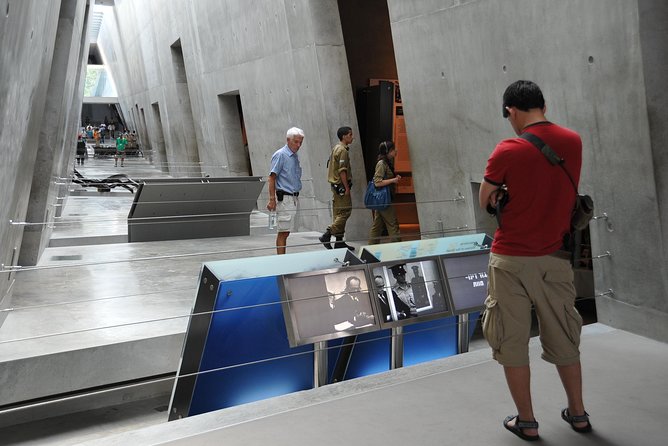
Yad Vashem is not a quick photo stop. It is the World Holocaust Remembrance Center, and the museum asks you to pay attention. The displays focus on the Holocaust, but the visit begins before the destruction, showing the Jewish life that existed in Europe before World War II.
That opening matters. It gives you a sense of the people, communities, and daily life that were later attacked and destroyed. Instead of meeting only statistics, you first encounter evidence of lives that had texture and identity.
The museum presents hundreds of artifacts, photographs, documents, video testimonies, and works of art across nine galleries. This variety keeps the experience from feeling like a single long wall of text. One room may ask you to study an object, while another may lead you toward a photograph, recorded testimony, or piece of visual art.
I appreciate that the audio tour focuses on people. The Holocaust can be difficult to understand when presented only through large numbers. Recorded explanations about victims and survivors help you connect the historical events to individual lives. That approach may be the strongest reason to choose this experience rather than simply entering and walking through without guidance.
More things to do in Jerusalem:
- From Tel Aviv: Jerusalem and Bethlehem Guided Day Trip
★ 4.3 · 1,316 reviews - Tel Aviv: Jerusalem, Bethlehem & Dead Sea
★ 4.0 · 881 reviews - From Tel Aviv: Jerusalem Old & New City Bus Tour
★ 4.2 · 824 reviews
Starting with the 13-meter Living Landscape artwork
Your first display is Living Landscape, a 13-meter video artwork made from original film clips and photographs. It depicts Jewish life in Europe before World War II.
The scale is important. This is not a small introductory panel that you glance at while looking for the next room. The work is meant to set the tone for the museum. It gives you a visual sense of the communities that existed before the Holocaust, making the later galleries more personal and difficult.
I suggest giving this opening your full attention. The audio tour can help explain what you are seeing, but the images themselves also carry weight. Take a moment to absorb the contrast between the life shown here and the events covered later.
Because the visit is self-guided, you are not forced to move on at a set moment. If the opening makes you want to pause, you can do that. This is one place where the flexible format works well.
Nine galleries filled with evidence and testimony
The main museum continues through nine galleries. Together, they present artifacts, photographs, documents, video testimonies, and artwork connected to the Holocaust.
That mix gives you several ways into the subject. Some people respond most strongly to objects. Others need photographs, written documents, or first-person testimony to understand what happened. The museum’s range allows you to move between these forms rather than relying on one type of display.
The audio guide is especially useful here. You receive a headset so you can hear the recorded material clearly, and the guide offers insight into the individual stories connected to the displays. You can listen at your own pace and spend more time with sections that matter most to you.
Do not treat the 1.5-hour estimate as a strict timetable. The experience is described as lasting one to two hours, but your actual pace will depend on how closely you examine the exhibits. If you listen to every available explanation and stop often, you may want more time.
The short format does have an advantage. It makes Yad Vashem easier to fit into a day of sightseeing in Jerusalem. You can have a focused visit without committing an entire day. The tradeoff is simple: a shorter visit gives you an introduction, not unlimited time with every display.
The value of hearing individual stories
The most praised part of this experience is its emotional force and the amount of information it provides about the Holocaust beyond the places most often named in basic lessons. The audio guide helps widen your understanding by connecting the exhibits to individual victims and survivors.
That human focus also keeps the tour from feeling detached. A document is not merely a document when you learn about the person connected to it. A photograph is not just an image when the audio explains the life behind it.
You should expect touching and emotional moments. This is not entertainment, and the mood does not lighten simply because you are visiting at your own pace. The freedom to pause is helpful if you need a quiet moment before continuing.
I would recommend planning the visit when you can give it your attention. Trying to squeeze it between several rushed stops may weaken the experience. The museum asks for patience, and the audio guide works best when you listen rather than race from gallery to gallery.
A completely different kind of day:
- From Jerusalem: Masada & Dead Sea Full Day Tour with Pick Up
★ 4.5 · 815 reviews - Masada and the Dead Sea Day Trip from Jerusalem
★ 4.5 · 757 reviews - Day Tour to Jerusalem and Bethlehem from Tel Aviv
★ 4.5 · 720 reviews - From Jerusalem: Nazareth and Sea of Galilee Tour
★ 4.5 · 588 reviews
Ending in the Hall of Names
At the close of the museum, you enter the Hall of Names. The circular hall includes a 10-meter-high upper dome, creating a large and solemn final space.
The Hall of Names works as an ending because the visit has moved from life before World War II, through the evidence and testimonies of the Holocaust, to a place focused on remembrance. Its scale changes the feeling of the visit. After the tighter concentration of galleries and displays, the circular hall gives you room to reflect.
I would save a few minutes for this final section rather than treating it as a corridor on the way out. The museum builds toward it, and leaving immediately may make the visit feel unfinished.
The supplied details do not describe every feature inside the hall, so I would not promise a particular presentation beyond the circular space and its upper dome. What is clear is that it is intended as a monumental conclusion to the museum route.
Is the self-guided format right for you?
A self-guided tour suits you if you want control. You can listen to the explanation for a display, stay longer, or continue when you are ready. You are not tied to a guide’s walking speed or to the needs of a larger group.
The experience has a maximum of five participants, which keeps the arrangement small even though the tour is not led by a live guide. That can be useful for a family or a small group that wants to remain together while still moving independently.
The audio format also avoids a common museum problem: trying to hear a guide while standing in a crowd. With headsets included, you can focus on the recorded material and the exhibits in front of you.
The limitation is that no live guide is available to answer questions as they occur. If you want discussion, personal interpretation, or the chance to ask about a display, this may feel less satisfying than a guided visit. If you prefer quiet concentration, the audio format is likely the better match.
The minimum entrance age for the Holocaust History Museum is 10 years old. That rule matters for families, but age alone does not tell you whether a child is ready. You know your own child best. The subject matter is serious, and the emotional impact should be part of your planning.
What the $11 price really includes
At $11 per person, the price is reasonable for admission, the audio tour, headsets, and the included taxes, fees, and handling charges. You are paying for a structured museum experience, not just entry through the door.
The value improves if you would otherwise walk through without context. The audio guide gives you a way to understand the personal meaning behind the artifacts and images. For a relatively modest fee, you receive both access and interpretation.
Parking changes the calculation if you are arriving by car. An additional $8 parking fee is payable on the premises, so a solo driver should include that cost in the overall budget. For a group of up to five, the parking charge is easier to spread among several people.
Food and drinks are not included. That is not unusual for a museum admission, but you should plan around it if you expect to spend more than two hours on site. The experience itself is focused on the museum visit rather than on refreshments.
The 93 percent recommendation rate and 4.7 rating from 59 reviews indicate strong satisfaction, with the emotional quality of the visit receiving particular praise. Ratings cannot tell you how you will respond to the subject matter, but they support the idea that the audio format delivers a serious and worthwhile experience.
Timing, admission, and practical planning
Your booking confirmation includes the entrance time reservation link. Use that information carefully, even though the voucher can be presented for admission at any time. The practical lesson is to check the confirmation before setting out, rather than relying only on the general voucher wording.
The stated opening information for 2025 lists Tuesday hours from 8:30 a.m. to 4 p.m. Because the supplied schedule specifies Tuesday, confirm the available date and time shown with your booking. A museum visit is much easier when you arrive with enough time for the galleries and the Hall of Names, rather than arriving near closing.
The mobile ticket is convenient. You do not need to manage a printed ticket if your phone can display the voucher. Keep the confirmation accessible before you reach the entrance, especially if you need the reservation link.
Free cancellation is available if you cancel at least 24 hours before the experience start time. Cancellations made less than 24 hours ahead are not refunded, and changes inside that period are not accepted. The cut-off uses local time, so check the clock in Jerusalem when making changes.
Who will get the most from this visit?
I would choose this experience if you want a focused introduction to Yad Vashem and prefer to move independently. It suits solo visitors, couples, families with children aged 10 or older, and small groups of no more than five people.
It is also a good fit if you value context. The audio guide does more than point out objects. It connects the museum material to victims and survivors, which helps turn a large historical subject into a series of human stories.
You may want to look for a longer visit if you read every document, study each photograph, and listen to every recording in detail. The stated one to two hours is enough for a meaningful visit, but not necessarily enough for a slow examination of all nine galleries.
I would not choose this as a casual stop between unrelated attractions. The experience calls for attention and emotional space. You can visit independently, but you should not expect it to feel light or easy.
Should you book the Yad Vashem audio tour?
Book it if you want museum admission, a clear audio introduction, and the freedom to set your own pace for about one to two hours. The strongest reasons are the personal stories, the opening Living Landscape artwork, the nine galleries, and the closing Hall of Names.
Skip it only if you know you need a live guide or if the subject matter is not right for your schedule. Also check the Tuesday opening information, your entrance reservation link, and the extra $8 parking cost before you commit.
For $11 per person, this is a thoughtful way to visit one of Jerusalem’s most important remembrance centers. Give it enough time, use the audio guide fully, and approach it as a serious museum visit rather than a quick sightseeing stop.
FAQ
How long does the Yad Vashem audio tour last?
The experience is listed as lasting approximately one to two hours, with the audio tour described as about 1.5 hours.
What does the ticket include?
The ticket includes admission to Yad Vashem, the self-guided audio tour, headsets, and all taxes, fees, and handling charges.
Is parking included in the price?
No. Parking costs an additional $8, payable on the premises.
What is the minimum age for the Holocaust History Museum?
The minimum entrance age is 10 years old.
How many people can join the experience?
The activity has a maximum of five participants.
Can I explore Yad Vashem at my own pace?
Yes. The audio tour is self-guided, so you can spend as much time as you want with each display within the time available to you.
What is the cancellation policy?
You can cancel for a full refund at least 24 hours before the experience start time. Cancellations or changes made less than 24 hours in advance are not accepted for a refund.
Just added in Jerusalem
- Walking Jerusalem in Russian★ 5.0 · 1 review
- private Full-Day Tour to Bethlehem and Jerusalem★ 5.0 · 2 reviews
- Jerusalem and Dead Sea Trip from Tel Aviv★ 4.0 · 6 reviews
- Tel Aviv & Old City of Jaffa – Tiny group from Tel Aviv★ 4.5 · 9 reviews
- Tel Aviv; Jaffa Old City, Port & Shuk Hapishpishim Walking Tour★ 4.5 · 11 reviews
- Tel Aviv: Food & History Tour of Jaffa Old City & Flea Market★ 5.0 · 1 review
- Discover the Secrets of the Underground Jerusalem with a private tour★ 5.0 · 4 reviews
- Private Tour from Tel Aviv to Jerusalem★ 5.0 · 3 reviews
Jerusalem Tours, compared.


Masada and the Dead Sea Day Trip from Jerusalem
Read our review →
Day Tour to Jerusalem and Bethlehem from Tel Aviv
Read our review →