
Reviewed · PRIVATE
Tel Aviv and Jaffa Most Exciting Private Tour
Ancient streets meet modern city life. This private Tel Aviv and Jaffa tour links the old port of Jaffa with Tel Aviv’s Bauhaus center, waterfront, markets, memorials, and German colony in about five hours. I like the private format for up to four people, and I like having an art-historian guide to explain why the buildings and public spaces matter, not just point them out.
The main trade-off is pace. There is a lot to cover, and one past participant found the amount of historical explanation a little heavy and the walking somewhat slow. You should also know that the advertised timing varies between about four and five hours, depending on how the stops and driving are handled.
In This Review
- The key facts at a glance
- Starting among Jaffa’s ancient stones
- Art inside the Ilana Goor Museum
- St. Peter’s Church and Jaffa’s religious crossroads
- From the American Colony to early Tel Aviv
- Rothschild Boulevard and the making of Tel Aviv
- Reading the White City’s Bauhaus details
- Tel Aviv’s cultural center and Rabin’s memorial site
- Tel Aviv port, markets, and the city’s everyday side
- Sarona’s German colony and the final stretch
- What the private vehicle changes
- Is $1,099 good value for four people?
- Who should book this tour?
- Practical details before you reserve
- Should you book it?
- FAQ
- How long is the Tel Aviv and Jaffa tour?
- What time does the tour start?
- Does the tour include hotel pickup and drop-off?
- How many people can join the private tour?
- Are entrance fees included?
- Is the tour physically demanding?
The key facts at a glance
- Jaffa begins the day with 4,000 years of port history, archaeological remains, churches, galleries, and narrow lanes.
- Ilana Goor Museum admission is included, adding art and an unusual historic building to the Jaffa walk.
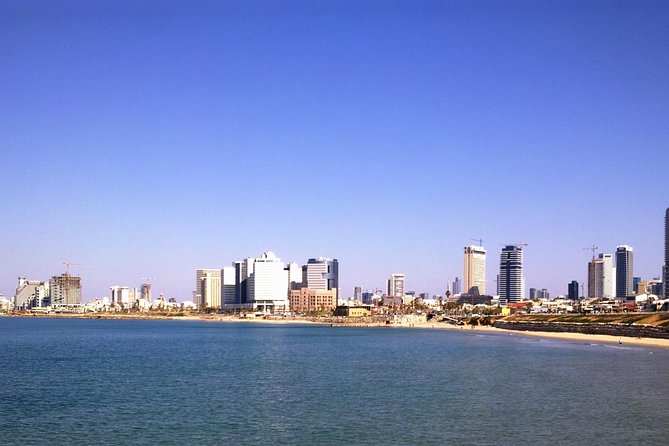
- Tel Aviv’s White City is the architectural centerpiece, with UNESCO-listed Bauhaus buildings and later modern designs.
- Hotel pickup and drop-off are included, a useful touch when you want to cover several separated parts of the city.
- Levi Zelkind is specifically praised for his history, context, and driving, using a modern, comfortable SUV according to one detailed account.
- The $1,099 price is per group of up to four, so the value improves sharply when four people share the cost.
Starting among Jaffa’s ancient stones
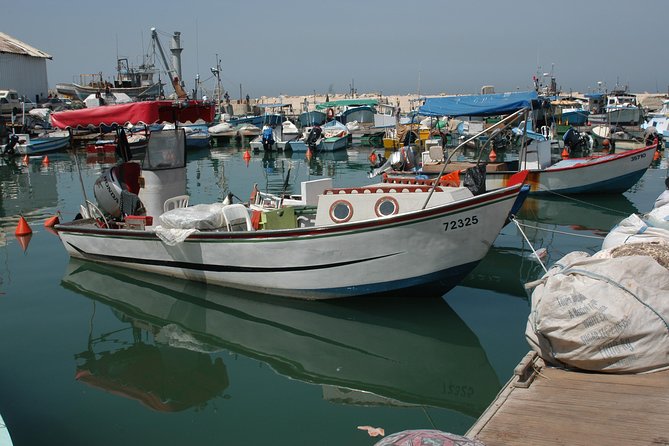
The tour starts at Old Jaffa, where the city’s age is not hidden behind a polished museum display. You walk through an old port settlement with Phoenician, Roman, and Crusader connections, along with archaeological remains and winding lanes that make the place feel compact but layered.
The port is described as the oldest in Asia, and the area includes the gateway associated with a pharaonic governor’s palace, St. Peter’s Church, galleries, and old stone passages. I like this opening because it gives you a strong sense of place before moving into modern Tel Aviv.
Your guide’s role matters here. A short lane or ruined wall can look like background scenery if you do not know what you are seeing. With an art historian beside you, the focus should extend beyond dates and rulers to include buildings, religious imagery, sculpture, and the way Jaffa’s port shaped the city.
Allow about an hour for the Old Jaffa portion. The surface can be uneven, and the tour requires a moderate level of fitness. Wear practical shoes, since this is a walking-driving outing rather than a ride where you simply step out for photographs.
More things to do in Tel Aviv:
- From Tel Aviv: Masada & Dead Sea Full Day Tour with Pick Up
★ 4.5 · 1,496 reviews - From Tel Aviv: Jerusalem and Bethlehem Guided Day Trip
★ 4.3 · 1,316 reviews - Masada and the Dead Sea Day Trip from Tel Aviv
★ 4.5 · 1,014 reviews
Art inside the Ilana Goor Museum

The Ilana Goor Museum occupies one of Old Jaffa’s notable buildings and gives the tour a welcome change of pace. Instead of only looking at streets and exterior architecture, you spend about 30 minutes with an art collection inside a historic setting.
Admission is included. That makes this stop more useful than a quick exterior visit, especially if you enjoy sculpture, decorative arts, or unusual interiors. The museum also fits the guide’s art-focused background, giving you a chance to ask about artistic choices rather than relying on a standard city history talk.
Thirty minutes is enough for a focused visit, though not enough for every work or room. I would treat it as an introduction rather than a full museum afternoon. If art is your main interest, tell the guide early so the time can be used in the way you prefer.
St. Peter’s Church and Jaffa’s religious crossroads
St. Peter’s Church receives another 30-minute stop. Its position and orientation are part of the story: it faces west toward Rome rather than east toward Jerusalem, a detail that gives the building a distinct place in Christian tradition.
This is a good example of why a private guide can add value. A church visit can otherwise become a quick look inside, followed by a rushed photograph. Here, you have time to hear why the church matters and how it fits into Jaffa’s long religious and political story.
The stop is free to enter according to the tour details. As with any active place of worship, the visit may feel more observational than theatrical. I would approach it as a cultural and architectural stop, not as a guaranteed private religious experience.
From the American Colony to early Tel Aviv
The route then shifts from ancient Jaffa to the American Colony Quarter in Tel Aviv. This brief 15-minute stop focuses on wooden houses brought by settlers from the State of Maine in the 19th century.
The contrast is the point. Jaffa is built around old stone, sacred sites, and port history. The American Colony shows another strand of the city’s past through wooden homes and an early settlement story. Fifteen minutes will not allow for a long visit, but it can help you notice a part of Tel Aviv that is easy to miss when your attention is fixed on Bauhaus buildings and beaches.
I would expect this to be a short orientation stop rather than a major attraction. That is not a flaw, but you should keep your expectations in line with the time allotted.
A few more options to weigh up in Tel Aviv
- Jerusalem Private Full Day Tour
★ 5.0 · 110 reviews - Exclusive Private Tour in The Israel Diamond Exchange
★ 5.0 · 60 reviews - Tel Aviv Airport (TLV) to Tel Aviv Hotels – Private Transfer
★ 4.0 · 59 reviews - Bethlehem Half Day Private Tour – Pick up from Jerusalem/Tel Aviv/Ashdod
★ 5.0 · 54 reviews
Rothschild Boulevard and the making of Tel Aviv
Rothschild Boulevard receives about 30 minutes and offers a useful bridge between the city’s beginnings and its present-day center. It was once the only street in the new Tel Aviv. Today, it is lined with restaurants, shops, trees, and important buildings.
This is where the tour can make Tel Aviv’s growth easier to understand. You are not just seeing a pleasant central avenue. You are seeing a place that grew from a young modern city into Israel’s major cultural and commercial center.
I like the inclusion of Rothschild Boulevard because it gives the White City a human scale. Buildings are easier to understand when you walk among them instead of viewing them only from a vehicle. The time is short, so the guide will need to select the most useful examples rather than discuss every façade.
Reading the White City’s Bauhaus details
The White City is likely to be the architectural high point of the tour. Downtown Tel Aviv contains one of the world’s largest collections of Bauhaus-influenced buildings, and the area is recognized by UNESCO.
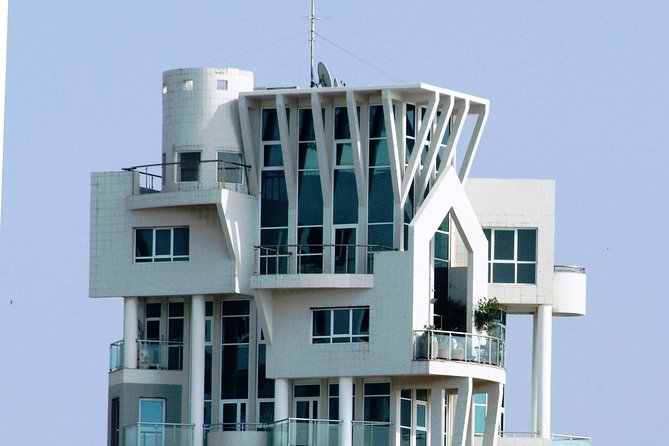
You will see white façades, clean lines, curved balconies, horizontal windows, and buildings shaped to suit Tel Aviv’s light and climate. The tour also points out the relationship between famous Bauhaus designs and newer architecture, creating a city scene that changes from block to block.
The important thing is not simply counting white buildings. I would listen for the guide’s explanation of how the style works: why balconies curve, why windows are arranged as they are, and how modern architects added to the area without erasing its earlier character.
The White City stop lasts about an hour, which gives it more breathing room than several of the smaller stops. Still, five hours is not enough for an exhaustive architectural study. If you already know Bauhaus design well, ask for the buildings or details that interest you most.
Tel Aviv’s cultural center and Rabin’s memorial site
Two additional points are listed without separate stop numbers. One is a major square surrounded by the Tel Aviv Art Museum, the Opera House, and the Chamber Theater. The other is near Tel Aviv City Hall, where Israeli Prime Minister Yitzhak Rabin was assassinated.
These stops broaden the tour beyond architecture. The cultural square shows Tel Aviv as a center for museums, performance, and public life. The Rabin site carries a more solemn weight and connects the city to a defining moment in modern Israeli history.
Entrance to an Itzhak Rabin Memorial Observation Balcony is included. The exact amount of time at these points is not specified, so I would ask the guide at the start how they fit into the day. That simple question helps you understand how much time remains for the port and market areas.
Tel Aviv port, markets, and the city’s everyday side
The tour description also highlights the remodeled Tel Aviv port and Nahalat Benyamin street market. These are important because they show the city away from formal monuments.
The port is a waterfront area filled with cafés, bars, and shops. It is a place to see how an older working harbor area has been adapted for leisure and city life. You may have time to stroll, look out over the water, or note the contrast between the port’s practical past and its current social role.
Nahalat Benyamin is known for colorful arts-and-crafts stalls. This is the most natural place on the route for browsing handmade items or looking for a small keepsake. One point worth clarifying: a past participant wanted to make a couple of quick purchases, but the guide preferred to keep the visit focused on information, and they did not reach an agreement.
That does not mean shopping is impossible. It does mean you should state your priorities clearly before the tour begins. A private tour gives you more flexibility than a group outing, but the guide may still have a firm plan for covering the major sights.
Sarona’s German colony and the final stretch
Sarona is scheduled for about an hour. This former German colony is one of Tel Aviv’s major attractions and preserves historic buildings from the settlement’s earlier period.
The stop adds another architectural layer to the day. Jaffa gives you ancient port buildings and religious sites. The American Colony brings wooden 19th-century houses. The White City shows Bauhaus modernism. Sarona adds a German colonial chapter, now set within a modern urban district.
The details do not list an entrance fee for Sarona, although the tour includes admission to the Ilana Goor Museum and the Rabin observation balcony. If you plan to enter any separate attraction or spend money at shops and cafés, carry a little extra for those costs and for lunch, which is not included.
An hour is a generous amount of time compared with the American Colony stop. It should allow the guide to explain the district and give you a chance to look around rather than simply pause for a photograph.
What the private vehicle changes
Hotel pickup and drop-off in Tel Aviv are included, and the tour combines driving with substantial walking. This matters because the stops are spread across Jaffa and Tel Aviv. You spend less energy arranging taxis or figuring out the order of neighborhoods.
One detailed account describes Levi Zelkind driving a modern, comfortable SUV. Levi is also praised for explaining the history, architecture, and wider context of the places along the route. Other feedback describes him as friendly and exceptionally informed, with one person calling the tour a seven-star experience.
The private vehicle does not turn this into a low-effort sightseeing trip. You still need moderate physical fitness, and you should expect to walk through old lanes, boulevards, museum areas, and historic districts. The vehicle is best understood as a practical link between neighborhoods.
Is $1,099 good value for four people?
At first glance, $1,099 is a serious price for a half-day outing. The calculation changes when four people share it: that is about $275 per person before any lunch or personal purchases. For two people, it is about $550 per person, which is much harder to justify unless you place a high value on a private guide and door-to-door transport.
The price includes hotel pickup and drop-off, a private guide, the vehicle service described above, and entry to the Ilana Goor Museum and Rabin observation balcony. Lunch is extra. The strongest value comes from the combination of several neighborhoods in one outing, plus the ability to ask questions and adjust the emphasis.
I would consider it good value for a group of four that wants a guided first look at both cities without organizing separate transport. It is less compelling for a couple on a tight budget, especially if you prefer to explore markets and waterfront areas at your own speed.
Before booking, confirm the final timing. The experience is described in different places as approximately four or five hours, while the listed stops add up to a full schedule. The actual day may depend on traffic, walking speed, museum time, and how the guide handles the additional Rabin and cultural-center stops.
Who should book this tour?
I would recommend it most strongly to first-time visitors who want context quickly. You see ancient Jaffa, Tel Aviv’s early streets, Bauhaus architecture, a memorial site, a historic German colony, the port, and an arts market in one concentrated outing.
It also suits anyone who enjoys architecture and wants more than a basic sightseeing loop. The guide’s art background is a real advantage when you want to understand design, sculpture, historic buildings, and the links between old and new parts of the city.
Families or friends traveling as a group of four can get the best price per person. Couples should compare the cost with arranging their own taxis and visiting fewer sites at a slower pace.
I would be more cautious if you dislike walking, prefer unstructured shopping time, or find long historical explanations tiring. One person specifically felt the pace was slow and the history became heavy. Another wanted quick shopping stops that did not fit the guide’s preferred format.
Practical details before you reserve
The tour starts at 10:00 a.m. and offers Tel Aviv hotel pickup and drop-off. Confirmation is provided at booking, and the activity is private, so only your group participates.
The stated recommendation rate is 92 percent, with an overall rating of 4.5 from 13 ratings. The strongest praise centers on Levi Zelkind’s command of Jaffa and Tel Aviv, his clear explanations, his friendly manner, and the comfort of the SUV.
You can cancel for a full refund up to 24 hours before the local start time. Changes or cancellations inside that 24-hour window are not accepted for a refund. Bring comfortable shoes, keep lunch money separate, and tell the guide at the outset if shopping, churches, art, or architecture matters most to you.
Should you book it?
Book this tour if you want a private, history-led introduction to both Jaffa and Tel Aviv and value hotel transport, museum entry, and personal commentary. A group of four gets the fairest price, and the route covers far more ground than a simple Jaffa walk.
Skip it if you want a slow market morning, a beach-focused day, or a cheap hop-on sightseeing option. The schedule is full, the walking is real, and the guide’s historical approach may take priority over spontaneous shopping. For the right group, though, this is a smart way to see the city’s biggest contrasts in one well-packed morning.
FAQ
How long is the Tel Aviv and Jaffa tour?
The experience lasts approximately five hours, although it is also described as a four-hour tour. The final length may depend on traffic, walking speed, and time spent at each stop.
What time does the tour start?
The scheduled start time is 10:00 a.m.
Does the tour include hotel pickup and drop-off?
Yes. Pickup and drop-off at Tel Aviv hotels are included.
How many people can join the private tour?
The price covers one private group of up to four people. Only your group participates.
Are entrance fees included?
Admission to the Ilana Goor Museum and the Itzhak Rabin Memorial Observation Balcony is included. Lunch is not included, and no separate admission is listed for the other stops.
Is the tour physically demanding?
A moderate level of physical fitness is recommended. The experience combines driving with plenty of walking through Old Jaffa, Tel Aviv streets, and historic districts.
Just added in Tel Aviv
- Wine Tour North of Israel from Tel Aviv★ 5.0 · 2 reviews
- private Full-day Tour to Jericho + the Dead Sea★ 5.0 · 3 reviews
- private Full-Day Tour to Bethlehem and Jerusalem★ 5.0 · 2 reviews
- Private wine tour of Northern Israel★ 5.0 · 4 reviews
- Privet Pickup from Tel Aviv Hotels to the Airport★ 5.0 · 1 review
- VIP Tel Aviv airport Terminal 3 Fast Track Skip Line From plane★ 4.5 · 9 reviews
- Package VIP Skip Line Services in BGN Airport with Transfer to Tel aviv Hotels★ 5.0 · 3 reviews
- Private Transfer from Ben Gurion Airport to Tel Aviv, Bat Yam, Rishon LeZion★ 5.0 · 2 reviews
Private, compared.

JERUSALEM private tour with ELAD VAZANA – Life in Israel & Palestine Then & Now
Read our review →
Palestine Revealed: 2-Day Private Tour from Jerusalem
Read our review →

Exclusive Private Tour in The Israel Diamond Exchange
Read our review →
Tel Aviv Airport (TLV) to Tel Aviv Hotels – Private Transfer
Read our review →
Bethlehem Half Day Private Tour – Pick up from Jerusalem/Tel Aviv/Ashdod
Read our review →
Private Tour: Best of Jerusalem and the Dead Sea from Tel Aviv
Read our review →Browse the lists this tour appears in