
Reviewed · CITY TOURS
The White City: A Self-Guided Audio Tour of the History of the Bauhaus Style
Start with Tel Aviv’s buildings, not its beaches. This 40-minute to one-hour audio walk explains how Bauhaus design helped shape the White City, with stops around Dizengoff Square, Dizengoff Street, Beit Lessin Theatre, and the Cinema Hotel. I like the freedom to pause or restart the narration whenever you wish, and I like that the audio, map, and location data work offline. The main drawback is that this is an exterior walking tour, so museum admissions, food, transport, a phone, and headphones are not included.
At $9.99 per person, the tour is a low-cost way to give your walk through central Tel Aviv some structure. I also appreciate the lifetime access, since you can replay the route later instead of trying to absorb every architectural detail in one pass. Still, you need to be comfortable navigating with your own smartphone, and the non-refundable booking policy means you should choose your date carefully.
In This Review
- Key points to know before you go
- Why Tel Aviv is called the White City
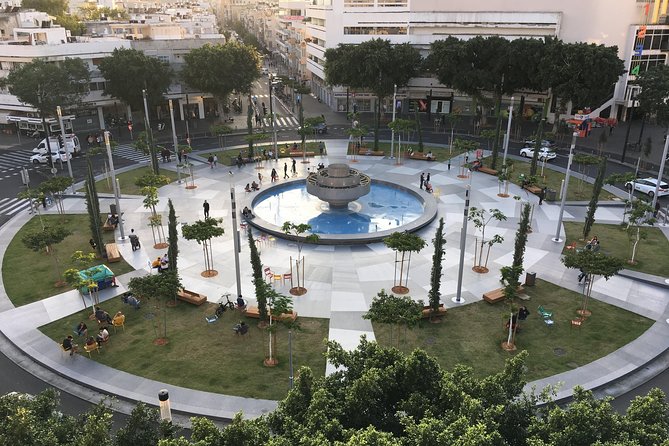
- Starting at Dizengoff Square
- Dov Hoz Community Center and the city’s public life
- Walking along Dizengoff Street
- Beit Lessin Theatre and Tel Aviv’s secular identity
- Ending at the Cinema Hotel
- What the audio format does well
- Where the experience has limits
- Is $9.99 a fair price?
- Who should choose this White City walk?
- Practical advice before starting
- Should you book it?
- FAQ
- Where does the tour begin?
- Where does the tour end?
- How long does the tour take?
- What language is the audio tour in?
- Do I need Wi-Fi or mobile data?
- What do I need to bring?
- Are entrance fees included?
- Can I cancel or change the booking?
Key points to know before you go
- The route begins and ends at Dizengoff Square, making it easy to fit into a day of exploring central Tel Aviv.
- Bauhaus architecture is the main subject, with historical context about why the style became so important in Israel.
- The audio works offline, so you do not need Wi-Fi or mobile data once the tour is set up.
- You control the pace, stopping, restarting, or lingering at your own choice.
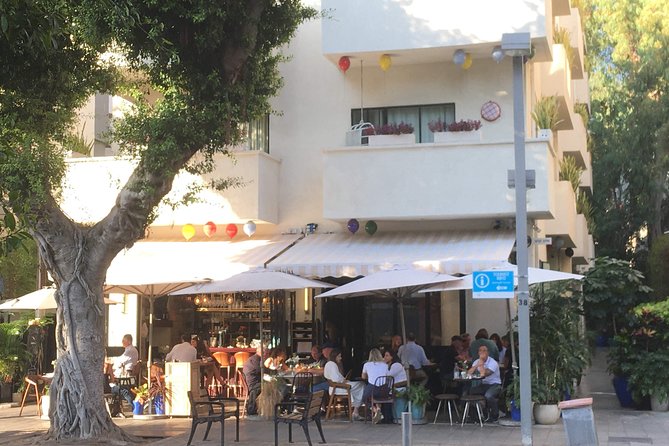
- Dizengoff Street, Beit Lessin Theatre, and the Cinema Hotel add social and cultural context to the architecture.
- The $9.99 price includes lifetime English access, but not a smartphone, headphones, transport, food, or attraction tickets.
Why Tel Aviv is called the White City
Tel Aviv’s White City nickname is tied to its large collection of Bauhaus and International Style buildings. The name points to the pale, clean-lined appearance of many structures in central Tel Aviv, but the story is larger than color alone.
This tour helps connect architecture with the city’s development. You are not simply looking at white façades. You are learning why a modern European design movement took root in Israel and how it became part of Tel Aviv’s identity.
The Bauhaus style is known for practical design, simple forms, and an emphasis on function. In Tel Aviv, those ideas took on a local character. The city’s streets, public buildings, theatres, hotels, and residential blocks became part of a modern urban project.
The tour is especially useful if you have walked through the White City before and wondered what you were seeing. Without context, Bauhaus buildings can look like a collection of plain apartment blocks. With the narration, details such as clean lines and restrained decoration become clues to a much bigger story.
The area is also recognized by UNESCO, which gives the route added importance. You are walking through a part of Tel Aviv that is valued not only by local residents but also by international heritage organizations.
More History Tours in Tel Aviv:
- Jerusalem Christian Heritage Private Tour
★ 5.0 · 9 reviews - Full-Day Private Luxury and Cultural Tour in Tel Aviv
★ 5.0 · 5 reviews - Jerusalem World Heritage Private Tour
★ 5.0 · 5 reviews
Starting at Dizengoff Square
The walk begins at Dizengoff Square, a practical meeting point in central Tel Aviv. The square gives you a clear place to start and makes the route easy to combine with other plans before or after the audio tour.
The opening section sets up the White City theme and introduces the connection between Tel Aviv and Bauhaus design. Since the route is self-guided, you are not trying to catch up with a group or listen over the sound of a crowd. You can start the narration when you are ready.
That freedom matters. You might want to begin in the morning, take the route before dinner, or use it as a short architectural break during a longer day in the city. The listed opening hours run around the clock, Monday through Sunday, so the format is far more flexible than a scheduled walking tour.
Dizengoff Square also gives the experience a strong sense of place. This is not a route that begins at an isolated bus stop and sends you straight into a lecture. You start in a recognizable part of the city, then move outward through streets connected with Tel Aviv’s public and cultural life.
Dov Hoz Community Center and the city’s public life
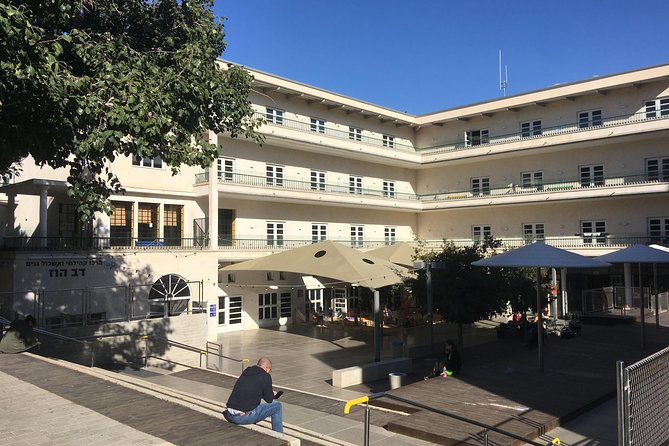
The route pauses briefly outside the Dov Hoz Community Center. The stop adds a human side to the architectural story by explaining the history of this all-age, inclusive community space.
That detail is important because the tour does not treat Bauhaus as a purely visual style. Buildings matter because people use them. A community center shows how Tel Aviv’s public spaces can serve many age groups and different parts of city life.
You should not expect to go inside as part of the tour. The experience is designed around exterior stops, and no entrance tickets are included. The value here comes from the narration and the ability to connect a building with its social purpose.
This is also a good place to use the pause function. If you want to look more carefully at the building or take photographs, you do not need to choose between paying attention to the audio and observing your surroundings. Stop the narration, take your time, and restart it when you are ready.
Walking along Dizengoff Street
The audio takes you through part of Dizengoff Street, named for Meir Dizengoff, Tel Aviv’s first mayor. The street adds a civic and historical layer to the tour, linking the city’s architecture with the people who helped shape its early public identity.
A self-guided route works well here because you can listen while walking at a comfortable speed. If the street is active, you can pause near a safer or quieter spot rather than trying to follow a guide while crossing roads. You are responsible for your own navigation, so keep your attention on traffic and the route as well as the narration.
The tour’s map and geodata are available offline. That is one of its most useful features. You do not need to rely on a constant signal while moving through the city, and you can avoid using mobile data during the walk.
Still, offline access does not remove every practical concern. You need to download or prepare the VoiceMap app and bring a charged smartphone. You also need headphones if you want to listen privately. Neither item is supplied.
Dizengoff Street is also where the tour’s pacing becomes most personal. You can move briskly if you want a short introduction, or slow down when a building catches your eye. The advertised duration is approximate, so the exact length depends on how long you stop and how much time you spend looking around.
More self-guided tours in Tel Aviv:
- From Tel Aviv: Dead Sea Self-Guided Chill-Out Day Trip
★ 4.2 · 64 reviews - Classic Jerusalem Old City Tour – Dguide Self Guiding App
★ 5.0 · 9 reviews - In The Footsteps of Jesus Day Tour – Dguide Self Guiding App
★ 4.5 · 3 reviews - Scavengerhunt app, with riddles, take funny pictures, activity to be remembered!
★ 5.0 · 2 reviews
Beit Lessin Theatre and Tel Aviv’s secular identity
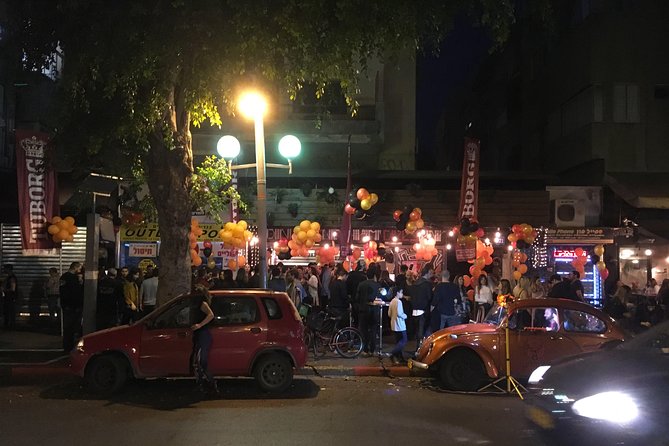
Another short stop is outside the Beit Lessin Theatre. The theatre is described as a landmark in Tel Aviv’s cultural life and is connected with the former Cameri Theatre.
This stop broadens the subject beyond architecture. Tel Aviv’s modern identity was shaped not only by apartment buildings and public squares but also by theatres and other secular institutions. The narration explains how this setting connects with the city’s nonreligious public character.
You will not be buying a theatre ticket as part of the audio tour. No attraction admissions are included, and the tour does not promise an interior visit. Think of the stop as a piece of historical context presented from outside.
That approach suits people who like to understand a city through ordinary streets and public places. You are not being taken from one grand monument to another. Instead, you are shown how a square, street, community center, theatre, and hotel can tell different parts of the same urban story.
The theatre stop may be especially useful for visitors who want more than architectural vocabulary. It shows that the White City is connected with questions of public life, entertainment, and the way Tel Aviv presented itself as a modern city.
Ending at the Cinema Hotel

The route finishes outside the Cinema Hotel, back near the starting point. Ending where you began is convenient, especially if you are using public transport or have plans nearby.
The Cinema Hotel also fits the theme of modern Tel Aviv. As the final exterior stop, it gives the tour a closing point connected with the city’s built environment rather than ending on an anonymous corner.
A circular route has practical advantages. You do not need to arrange a second ride back to your starting point, and you can easily continue to another activity in central Tel Aviv. You can also stop before the final point if you need to leave, although the full route is short enough to fit into most sightseeing schedules.
The finish is not designed as a grand finale with a museum visit or a formal guide-led discussion. If you want a large collection of interiors, exhibits, or original architectural drawings, you will need to plan those separately. This experience is best understood as a focused street walk with commentary.
What the audio format does well
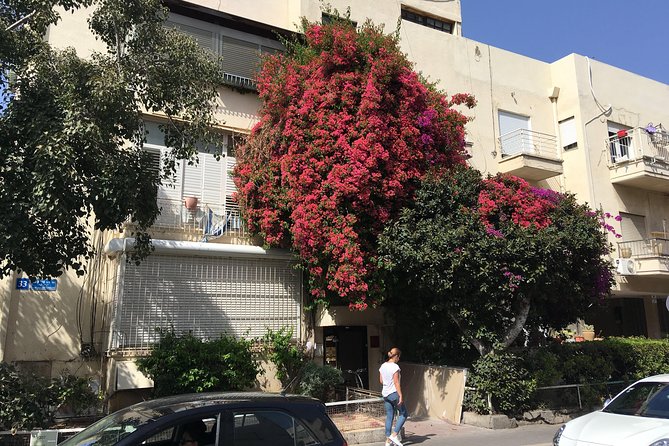
The biggest advantage is control. You decide when to start, how quickly to walk, and when to pause. There is no group timetable, no need to remain beside a guide, and no pressure to ask questions in front of strangers.
The private format also means only your group participates. That can make the experience more comfortable for couples, families, or solo visitors who prefer quiet sightseeing.
The audio provides more than a simple list of addresses. It explains why Bauhaus matters to Israel and places the buildings within Tel Aviv’s wider story. That makes the route useful even if you are not an architecture specialist.
Offline maps and geo-data are another strong point. Once available in the app, the route does not require Wi-Fi or mobile data. This is particularly helpful if you are using a limited data plan or want to avoid depending on a signal while walking.
The lifetime access changes the value calculation, too. You are not buying only one short walk. You can return to the audio later, replay sections, or use it again if you want a slower look at the route.
Where the experience has limits
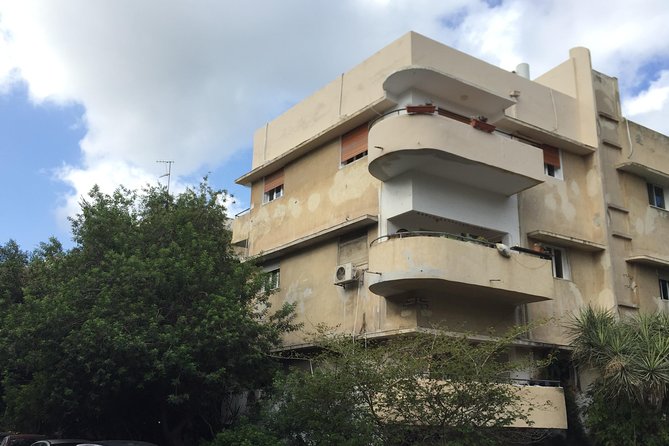
Self-guided audio tours require a little more independence than guided walks. If you miss a turn, have trouble with the app, or want to ask a question about a building, there is no guide beside you to provide an immediate answer.
The route also focuses on exteriors. The included stops do not provide admission to museums, theatres, or other attractions. If you want to go inside somewhere along the way, you will need to arrange and pay for that separately.
The short duration is both a strength and a limitation. Forty minutes to one hour is easy to fit into a busy itinerary, but it will not provide an exhaustive study of Tel Aviv’s architecture. The published praise focuses on Bauhaus-lined streets around HaBima Square and the Tel Aviv Museum of Art, but those places are not listed as formal stops in the route details, so you should not book this expecting a full citywide architecture tour.
Finally, the booking is non-refundable and cannot be changed. At $9.99, the financial risk is modest, but you should still check your plans before purchasing.
Is $9.99 a fair price?
I think the price is fair for the right kind of visitor. A conventional guided walking tour usually offers live interaction, but this format gives you flexibility and lifetime access for less than the cost of many paid attractions.
The value is strongest if you enjoy walking independently and want a clear subject to focus on. The audio can turn an ordinary stroll through central Tel Aviv into a planned cultural activity without taking up half a day.
The price is less attractive if you already know Tel Aviv’s Bauhaus story or prefer a guide who can respond to questions. It is also not a complete sightseeing package. You still need to provide your own phone and headphones, and you pay separately for anything you enter or consume along the route.
For a solo visitor, $9.99 can be particularly reasonable because you are not paying a private guide’s full rate. For a couple or small group, the per-person charge remains manageable, though each person is charged separately.
Who should choose this White City walk?
I would recommend it to:
- First-time visitors who want a simple introduction to Tel Aviv’s Bauhaus identity.
- Architecture fans who prefer looking at buildings in context rather than only visiting museums.
- Independent walkers who dislike fixed schedules.
- Solo visitors seeking a private activity at a modest price.
- Families or small groups who want to pause often and set their own rhythm.
- Anyone with limited mobile data who values offline maps and audio.
I would be more cautious about recommending it to someone who expects interior access, a live guide, or a long architectural survey. It is also not the best choice if you want a flexible refund policy.
The tour suits a short city visit particularly well. Its circular route, central meeting point, and one-hour maximum make it easy to place before lunch, after a museum visit, or between other plans.
Practical advice before starting
Download and prepare the VoiceMap app before you begin. Bring a charged smartphone and headphones, since both are your responsibility.
Wear comfortable walking shoes and keep the route’s approximate length in mind. The experience is short, but you may want extra time to pause, look at façades, take photographs, or replay a section.
Use the offline function rather than assuming you will have a reliable connection. The tour includes offline access to the narration, map, and geodata, which is one of the main reasons to set it up in advance.
Start at Dizengoff Square and make sure you are ready to follow the route from there. Since this is self-guided, you are responsible for staying with the map and listening at the correct points.
You can take the tour at any time because the stated hours cover every day and all hours. That does not mean every outside setting will feel the same at every hour, so choose a time that fits your comfort and sightseeing plans.
Should you book it?
Book this tour if you want an inexpensive, private introduction to Tel Aviv’s White City and like the freedom to walk at your own speed. The best features are the offline access, circular route, clear Bauhaus focus, and lifetime English use.
Skip it if you need a live expert, interior visits, or a refund option. At $9.99, it is not trying to replace a full architectural tour. It is a compact audio walk that gives your central Tel Aviv sightseeing a useful historical frame.
FAQ
Where does the tour begin?
The tour begins at Dizengoff Square in Tel Aviv-Jaffa.
Where does the tour end?
The tour ends back near the starting point, outside the Cinema Hotel.
How long does the tour take?
The approximate duration is 40 minutes to one hour.
What language is the audio tour in?
The included lifetime access is in English.
Do I need Wi-Fi or mobile data?
No. The audio, maps, and geodata can be accessed offline.
What do I need to bring?
You need to provide your own smartphone and headphones.
Are entrance fees included?
No. Tickets or entrance fees for museums and other attractions along the route are not included.
Can I cancel or change the booking?
No. The experience is non-refundable and cannot be changed for any reason.
Just added in Tel Aviv
- Wine Tour North of Israel from Tel Aviv★ 5.0 · 2 reviews
- private Full-day Tour to Jericho + the Dead Sea★ 5.0 · 3 reviews
- private Full-Day Tour to Bethlehem and Jerusalem★ 5.0 · 2 reviews
- Private wine tour of Northern Israel★ 5.0 · 4 reviews
- Privet Pickup from Tel Aviv Hotels to the Airport★ 5.0 · 1 review
- VIP Tel Aviv airport Terminal 3 Fast Track Skip Line From plane★ 4.5 · 9 reviews
- Package VIP Skip Line Services in BGN Airport with Transfer to Tel aviv Hotels★ 5.0 · 3 reviews
- Jerusalem and Dead Sea Trip from Tel Aviv★ 4.0 · 6 reviews
City Tours, compared.



From Jerusalem Small group tour Old&New City ENTRY FEES INCL
Read our review →
Best seller! Jerusalem old city four quarters tour
Read our review →
Browse the lists this tour appears in