

Reviewed · SELF-GUIDED TOURS
In The Footsteps of Jesus Day Tour – Dguide Self Guiding App
Jerusalem unfolds beneath your feet. This $7 self-guided walk traces Jesus’ route from the Mount of Olives, down the Palm Sunday Road, through Gethsemane and the Old City, and on to the Garden Tomb. I like the freedom to pause for prayer, coffee, photos, or extra sightseeing without keeping pace with a group.
I also like the simple pricing and small scale. The DGuide app lets you follow the planned route or wander briefly and return later, while the route brings together several major Christian sites in about four hours. The main consideration is that this is not a live guided tour, and one piece of feedback found the information too general and wanted more exact details about locations and events.
In This Review
- Key points to know before you go
- Why this self-guided Jerusalem walk works
- Starting above Jerusalem at the Mount of Olives
- Dominus Flevit and the view toward the Old City
- Gethsemane and the ancient olive trees
- The Tomb of the Virgin Mary in the Kidron Valley
- Bethesda, St. Ann, and the first entrance fee
- Following the Via Dolorosa to the Austrian Hospice
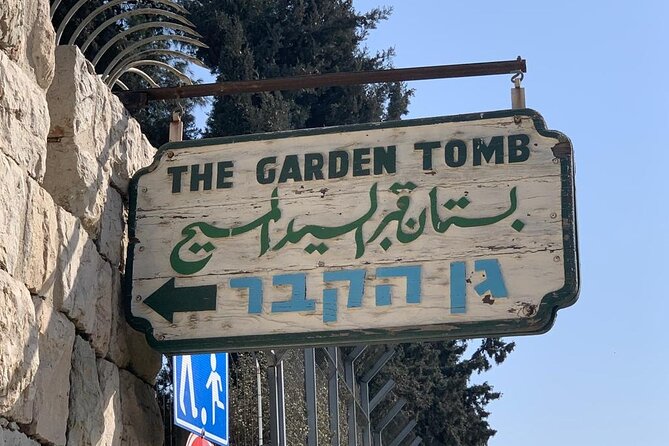
- Damascus Gate and the walk toward the Garden Tomb
- Ending at the Garden Tomb
- Cost, timing, and what you really receive
- Who should choose this tour?
- Should you book In the Footsteps of Jesus?
- FAQ
- How much does the tour cost?
- How long does the walking tour take?
- Where does the tour begin?
- Where does the tour end?
- Is the Garden Tomb open every day?
- Are entrance fees included?
- Do I need a live guide?
- How many people can join?
- Is the tour physically demanding?
Key points to know before you go
- A $7 walking route with no live guide: Your phone supplies the directions and commentary through the DGuide app.
- A downhill route from the Mount of Olives: The walk includes stairs, uneven sections, and a long stretch through Jerusalem’s streets.
- The Garden Tomb is the finale: It is a possible site of Jesus’ crucifixion, burial, and resurrection, and includes quiet areas for prayer.
- Two small extra costs matter: The Pools of Bethesda charge 5 shekels, and the Austrian Hospice rooftop also uses a 5 shekel turnstile.
- Sunday and Monday require planning: The Garden Tomb is closed on those days, so you need to return Tuesday through Saturday to complete that stop.
- The tour ends near both the Old City and New City: From the Garden Tomb, you can walk back toward the Old City or uphill toward hotels and restaurants.
Why this self-guided Jerusalem walk works
This experience is best understood as a route with a narrator, not a traditional tour. After booking, you receive a coupon code in the confirmation email, then download the free DGuide app and use the code to open the In the Footsteps of Jesus experience.
That setup keeps the price low. At $7 per person, you are paying for a prepared route and interpretation rather than a guide’s time, private transport, or entrance tickets. If you already have a working phone and mobile access, it can be an excellent way to cover several important places without paying for a half-day private guide.
The route was designed by Uri Goldflam, a professional guide and educator with 30 years of guiding experience and the founder of Travel Trailer Israel. That background gives the tour a useful foundation, but you should still set your expectations correctly. The app cannot answer a question, adjust the explanation to your interests, or point out something you missed in the way a person standing beside you can.
The suggested duration is about four hours. That estimate includes eight stops, walking between them, time for the sites, and possible pauses at the Austrian Hospice. You can move faster, but the route rewards a slower pace, especially at Dominus Flevit, Gethsemane, and the Garden Tomb.
The experience is limited to a maximum of two people. That makes it feel more private than a large organized outing, even though there is no personal guide. It also suits couples or two friends who want to use the same route while setting their own rhythm.
More self-guided tours in Jerusalem:
- Classic Jerusalem Old City Tour – Dguide Self Guiding App
★ 5.0 · 9 reviews - From Tel Aviv: Dead Sea Self-Guided Chill-Out Day Trip
★ 4.2 · 64 reviews - Scavengerhunt app, with riddles, take funny pictures, activity to be remembered!
★ 5.0 · 2 reviews
Starting above Jerusalem at the Mount of Olives
The walk begins at Seven Arches on the Mount of Olives. This is a strong place to get your bearings because the view looks across to Jerusalem’s Old City and gives you a clear sense of the route ahead.
The first stop takes about 15 minutes and has no admission fee. The view is the main attraction, but the observation area can be busy with peddlers. You may also find a camel available for rides and photographs. Treat that part of the stop carefully, and do not let the sales activity distract you from the reason you came.
From here, the route heads down the Palm Sunday Road. That downhill direction is helpful, but it does not mean the walk is effortless. You should be ready for pavement changes, stairs, and streets that require attention. Comfortable shoes are essential, and a small bottle of water is sensible.
Dominus Flevit and the view toward the Old City
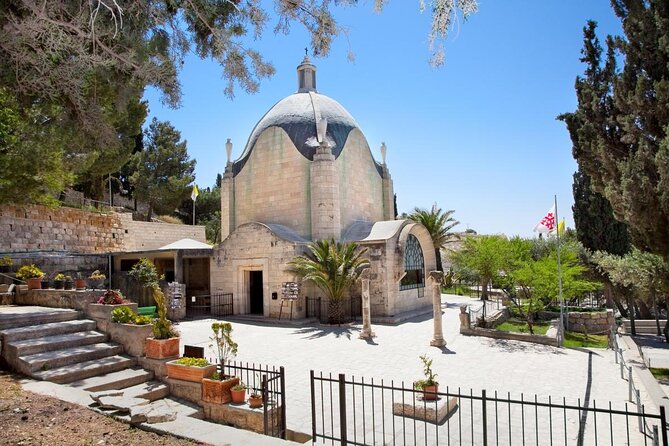
Dominus Flevit is a small church with a distinctive tear-shaped design. Its form refers to the traditional account of Jesus weeping over Jerusalem and predicting the city’s destruction.
Allow about 20 minutes here. The church interior has a special window looking toward the Old City and the Church of the Holy Sepulchre. I would give yourself time to stand quietly by the adjacent viewing area rather than treating this as a quick photograph stop.
This is also one of the places where self-guiding can work well. You can listen to the explanation, then pause without feeling that a group is waiting for you. If religious reflection matters to you, the site offers a natural break before the route continues downhill.
Gethsemane and the ancient olive trees
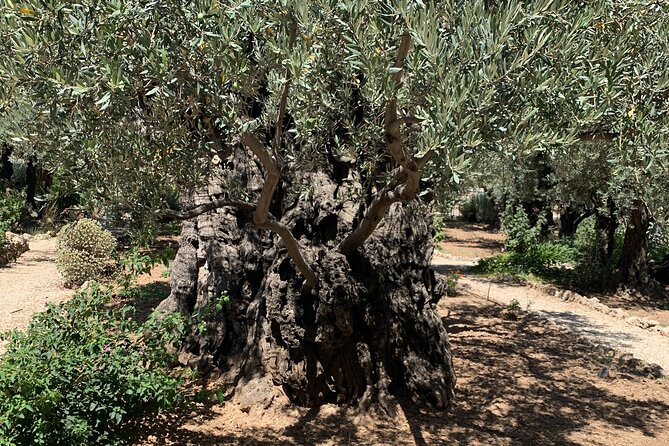
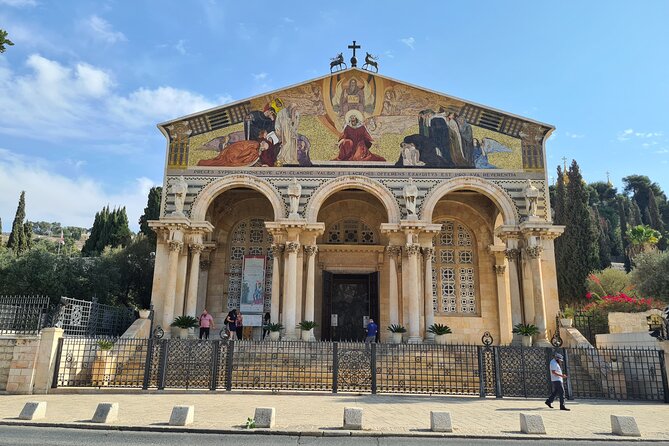
The Palm Sunday Road winds toward the Kidron Valley. Near the bottom, the route turns away from the noisy street and enters the quieter Garden of Gethsemane.
The garden is traditionally linked with the night Jesus prayed before his arrest. The Church of All Nations, also called the Church of the Agony, occupies the traditional site. The olive trees are the emotional center of this stop, with some described as hundreds or even thousands of years old.
Plan for about 30 minutes. The value here is not only the church but the chance to slow down. You can sit, pray, or simply take in the contrast between the traffic outside and the calm among the trees.
Because this area can be meaningful for people of many Christian traditions, the app’s commentary helps connect the physical setting with the Gospel accounts. Still, the visit depends on your willingness to pause. If you rush through, it becomes just another garden and church on a long walking route.
More things to do in Jerusalem:
- From Tel Aviv: Jerusalem and Bethlehem Guided Day Trip
★ 4.3 · 1,316 reviews - Tel Aviv: Jerusalem, Bethlehem & Dead Sea
★ 4.0 · 881 reviews - From Tel Aviv: Jerusalem Old & New City Bus Tour
★ 4.2 · 824 reviews - From Jerusalem: Masada & Dead Sea Full Day Tour with Pick Up
★ 4.5 · 815 reviews
The Tomb of the Virgin Mary in the Kidron Valley
The next stop is the Tomb of the Virgin Mary, located below street level in the Kidron Valley. The descent leads into a Crusader-period structure, and the stairway itself is part of the experience.
Allow about 10 minutes. On the right side of the broad stairway, you can see the tomb of Queen Melisende of Jerusalem, the daughter of King Baldwin II.
This stop is short but gives the route a wider historical frame. The day is not limited to locations directly associated with Jesus. It also takes you through Jerusalem’s later religious and political layers, which helps explain why this small area holds so many sacred places close together.
Stairs are unavoidable here. If you have trouble with steps, this is one of the points to consider before booking. The tour requires a moderate level of physical fitness and involves both walking and stair use.
Bethesda, St. Ann, and the first entrance fee
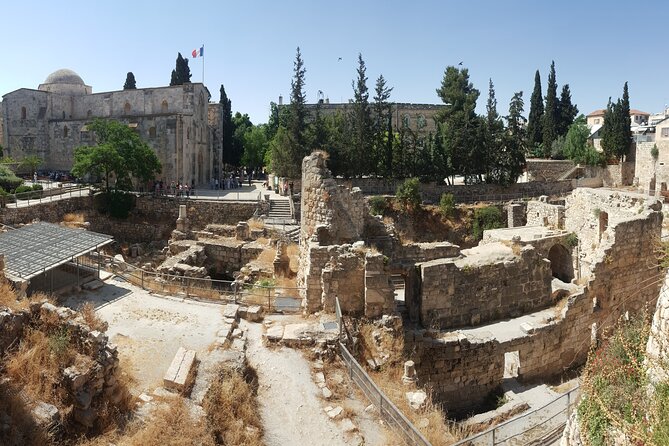
From the Kidron Valley, the route reaches the Pools of Bethesda. The site is linked to the story in John 5, in which Jesus heals a man who had been unable to walk for 38 years.
The adjacent Church of St. Ann is another reason to stop. It is a neoclassical church known for its strong acoustics. Even without a formal performance, the building’s echo makes it a memorable place to hear singing or quiet voices.
Plan for about 40 minutes. Admission is not included and costs 5 shekels per person. That is a small extra charge, but you should carry local currency or be prepared to pay in the manner accepted at the site.
The Pools of Bethesda help you picture the setting behind a Gospel passage rather than encountering the story only as text. At the same time, ruins can be difficult to read without context. This is one area where the app’s explanations matter, particularly if you want to understand which remains belong to which period.
Following the Via Dolorosa to the Austrian Hospice
After Bethesda, you begin walking along the Via Dolorosa, known as the Way of the Suffering or the Passion of Christ. The stations are marked with round bronze plates, giving you physical signs to follow through the Old City.
The streets become more crowded and commercial here. Market alleys, shop doors, and passing pedestrians replace the quiet of Gethsemane. That contrast is part of the experience, but it can also make the route harder to follow if you are listening to the app while watching your footing.
The Austrian Hospice is a welcome pause. Large wooden doors open from the market area into a small corner of European-style hospitality. The rooftop view costs 5 shekels through a turnstile, and the stop also allows time for coffee and the hospice’s famous apple strudel.
The itinerary allows about 45 minutes here, which is generous enough for a real break. I like this practical touch because a four-hour walking tour needs somewhere to sit and reset. You do not have to treat every stop as solemn. A coffee and pastry can make the rest of the route more comfortable.
The Austrian Hospice is also a useful test of the app’s flexible format. You can linger, take the rooftop view, and return to the route when ready. A live group might not wait for that extra time.
Damascus Gate and the walk toward the Garden Tomb
From the Austrian Hospice, follow the market alley slightly uphill, then leave the Old City through Damascus Gate. The present gate belongs to the Ottoman construction of Jerusalem’s walls from around 1536, while remains of earlier Roman-period gates can be seen below.
Allow about 20 minutes for this part. Damascus Gate is both a historical structure and a working entrance into the city. The route then follows the road toward the Garden Tomb, described as the road to Damascus.
This transition can feel less polished than the earlier sacred sites. You are moving through ordinary Jerusalem streets rather than from one enclosed monument to another. Keep the app available, watch the route closely, and allow extra attention for traffic and changes in the pavement.
The gate also marks a useful shift in the day. You have followed the traditional Passion route through the Old City, and now you are heading toward a Protestant site linked by some traditions to the final events of Jesus’ life.
Ending at the Garden Tomb
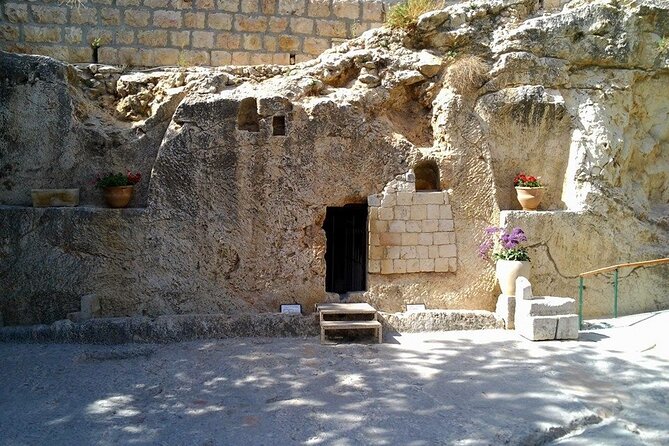
The Garden Tomb is the final and longest stop, with about one hour recommended. It is one of the possible locations associated with Jesus’ crucifixion, burial, and resurrection. The site was identified in the late 19th century and is managed by the Protestant Garden Tomb Association, a charitable trust based in the United Kingdom.
You can see the skull caves associated with the hill of Golgotha, enter the empty tomb, and find chapels and quiet corners for prayer, communion, or reflection. Admission is free.
The Garden Tomb is not presented as the only possible site. That distinction matters. Jerusalem’s sacred places often carry different traditions, and this tour acknowledges the Garden Tomb as one possible location rather than treating the question as settled fact.
For many people, the Garden Tomb gives the route a peaceful ending. After several busy streets and historic structures, the gardens provide room to sit and think about the full journey. If this stop is central to your visit, check the day carefully. The Garden Tomb is closed Sunday and Monday, so you can take the rest of the route then but return Tuesday through Saturday to visit the garden.
The supplied opening information lists hours of 8:00 AM to 5:00 PM from Monday through Thursday for the stated operating period, while the specific closure notice says Sunday and Monday are unavailable. Because those details do not perfectly match, I would confirm the Garden Tomb’s current hours before setting out.
Cost, timing, and what you really receive
The $7 price is the strongest practical feature. You receive access to the DGuide app and a code for this particular route, but entrance fees and parking are separate.
The known extra charges are modest:
- Pools of Bethesda: 5 shekels per person
- Austrian Hospice rooftop: 5 shekels per person
- Parking: not included
The tour begins at Seven Arches and ends at the Garden Tomb on Conrad Schick Street. From the end point, you can walk back to the Old City or go uphill toward hotels and restaurants in the New City.
That end point gives you useful flexibility. You do not need to return to the starting point, and you can combine the tour with other plans in central Jerusalem. Public transportation is nearby, though no particular bus or train route is supplied.
The route is not suited to anyone hoping to avoid stairs or extended walking. You need moderate physical fitness, comfortable footwear, and enough time to stop without rushing. If you have only a short window in Jerusalem, the four-hour estimate may feel tight once you add photos, prayer, food, or time waiting to enter sites.
Who should choose this tour?
I would recommend it to independent visitors who want a low-cost route through major Christian sites and prefer to control the pace. It is especially useful for two people who want a private experience without paying for a full private guide.
It also suits visitors who already know a little about the Gospel stories and want a clear walking sequence through Jerusalem. The combination of app commentary, free sites, and optional pauses makes it easy to shape the day around your own interests.
I would be more cautious if you want detailed historical debate, precise archaeological explanations, or answers to questions as they arise. One published 3 out of 5 assessment found the experience merely okay and wanted more information, including clearer details about how, when, and where events took place. That is a fair warning: the app gives you structure, but it may not satisfy someone seeking the depth of an expert live guide.
It is also a poor fit if you want transportation between sites. This is a walking route from the Mount of Olives to the Garden Tomb, with stairs and uneven sections along the way.
Should you book In the Footsteps of Jesus?
Book it if you value freedom, a low price, and a thoughtful route through Jerusalem’s Christian landmarks. The strongest parts are the opening view from the Mount of Olives, the quiet pauses at Gethsemane and the Garden Tomb, and the chance to stop for coffee and apple strudel at the Austrian Hospice.
Skip it if you need a highly detailed guide, easy access, or a fully escorted day. For the best experience, use it Tuesday through Saturday so you can include the Garden Tomb, start with enough time for the four-hour route, and carry at least 10 shekels per person for the two stated optional charges.
Free cancellation is available if you cancel at least 24 hours before the start time. That gives you some useful protection while you check the Garden Tomb schedule and your walking plans.
FAQ
How much does the tour cost?
The tour costs $7 per person. The DGuide app is free, and your booking confirmation includes a coupon code for access to the tour.
How long does the walking tour take?
The route takes approximately four hours. This includes eight stops and walking between the Mount of Olives and the Garden Tomb.
Where does the tour begin?
The starting point is Seven Arches on the Mount of Olives in Jerusalem.
Where does the tour end?
The tour ends at the Garden Tomb on Conrad Schick Street in Jerusalem. From there, you can walk back toward the Old City or uphill toward New City hotels and restaurants.
Is the Garden Tomb open every day?
No. The Garden Tomb is closed on Sunday and Monday. You can still take the rest of the route on those days and return Tuesday through Saturday for the Garden Tomb visit.
Are entrance fees included?
Most listed stops are free, but the Pools of Bethesda charges 5 shekels per person. The Austrian Hospice rooftop also has a 5 shekel turnstile fee. Parking fees are not included.
Do I need a live guide?
No. This is a self-guided experience using the DGuide mobile app. You can follow the suggested route, pause, or leave the route briefly and return to it later.
How many people can join?
The activity has a maximum of two travelers.
Is the tour physically demanding?
The tour requires a moderate level of physical fitness. You should expect extended walking, stairs, and uneven sections along the route.
Just added in Jerusalem
- Walking Jerusalem in Russian★ 5.0 · 1 review
- private Full-Day Tour to Bethlehem and Jerusalem★ 5.0 · 2 reviews
- Jerusalem and Dead Sea Trip from Tel Aviv★ 4.0 · 6 reviews
- Tel Aviv & Old City of Jaffa – Tiny group from Tel Aviv★ 4.5 · 9 reviews
- Tel Aviv; Jaffa Old City, Port & Shuk Hapishpishim Walking Tour★ 4.5 · 11 reviews
- Tel Aviv: Food & History Tour of Jaffa Old City & Flea Market★ 5.0 · 1 review
- Discover the Secrets of the Underground Jerusalem with a private tour★ 5.0 · 4 reviews
- Private Tour from Tel Aviv to Jerusalem★ 5.0 · 3 reviews
Self-Guided Tours, compared.

Classic Jerusalem Old City Tour – Dguide Self Guiding App
Read our review →
Scavengerhunt app, with riddles, take funny pictures, activity to be remembered!
Read our review →
The White City: A Self-Guided Audio Tour of the History of the Bauhaus Style
Read our review →Browse the lists this tour appears in