
Reviewed · HAIFA AND THE GALILEE TOURS
2-Day Israel Tour from Jerusalem: Caesarea, Acre, Haifa and Nazareth
History comes quickly on Israel’s northern road. This two-day trip links Roman ruins, Crusader tunnels, holy Christian sites, Galilee viewpoints, and the Jordan River without asking you to arrange several hotels or long-distance transfers yourself. I like the wide range of places covered, from Caesarea’s ancient harbor to the grottoes of Rosh Hanikra, and I also like the practical overnight kibbutz stay, which gives the trip a more local feel than a standard city hotel.
The drawback is the pace. You leave Jerusalem at about 6:00 a.m., spend much of the first day moving between major sights, and return after another full day of touring. I also suggest confirming the language of the guide before booking, since one passenger felt the guide’s fluency did not match expectations, even though Saul was praised for his helpful attitude and interesting commentary.
In This Review
- Key points to know before booking
- Why this two-day route works from Jerusalem
- Caesarea: Rome beside the sea
- Haifa and the Bahá’í Gardens
- Rosh Hanikra: cable cars and sea caves
- Acre: Crusader history underground
- The kibbutz night: a useful pause
- Mount of Precipice and Nazareth
- The Sea of Galilee and Capernaum
- The Church of the Multiplication
- Yardenit and the Jordan River
- Guide quality, group size and daily effort
- Who should book this tour?
- Should you book it?
- FAQ
- Where does the tour start?
- How long does the tour last?
- Is accommodation included?
- Is breakfast included?
- Which major places are visited?
- Are entrance tickets included?
- What should I wear?
- Is the tour suitable for young children?
- How large is the group?
Key points to know before booking
- Caesarea combines Roman ruins and Mediterranean views in a compact first stop.
- Rosh Hanikra includes a cable-car descent to sea-level grottoes, one of the most unusual stops on the route.
- Acre adds Crusader history, with an underground city and seaside ramparts.
- The overnight kibbutz stay breaks up the long route and includes breakfast.
- Day two follows the Christian story through Nazareth, Capernaum and the Jordan River.
- A group of up to 40 people and a 6:00 a.m. start make this a practical tour, but not a leisurely one.
Why this two-day route works from Jerusalem

Northern Israel is spread across a large area. Caesarea sits on the Mediterranean coast, Haifa rises on Mount Carmel, Acre lies farther north, and Nazareth and the Sea of Galilee sit inland. Trying to connect all of these places by public transport in two days would take careful planning and leave little room for error.
This tour solves that problem with hotel pickup, an air-conditioned vehicle, a professional guide, and an overnight stay. I see the main value in the transportation. You are not simply paying for entry tickets. You are paying to cover a complicated route while someone else handles the driving and general timing.
The price is $355 per person. That is not a bargain-basement day trip, but it includes two days of transport, a guide, admission to several major sites, overnight accommodation, and breakfast. Food and drinks are not included, so you should budget separately for meals.
The group can reach 40 people. That keeps the cost below a private tour, but it can also mean slower boarding and less personal time with the guide. If you want a quiet, flexible journey with long pauses at each site, this is probably too packed. If you want to see a lot of northern Israel in a short visit, the structure is useful.
More things to do in Jerusalem:
- From Tel Aviv: Jerusalem and Bethlehem Guided Day Trip
★ 4.3 · 1,316 reviews - Tel Aviv: Jerusalem, Bethlehem & Dead Sea
★ 4.0 · 881 reviews - From Tel Aviv: Jerusalem Old & New City Bus Tour
★ 4.2 · 824 reviews
Caesarea: Rome beside the sea
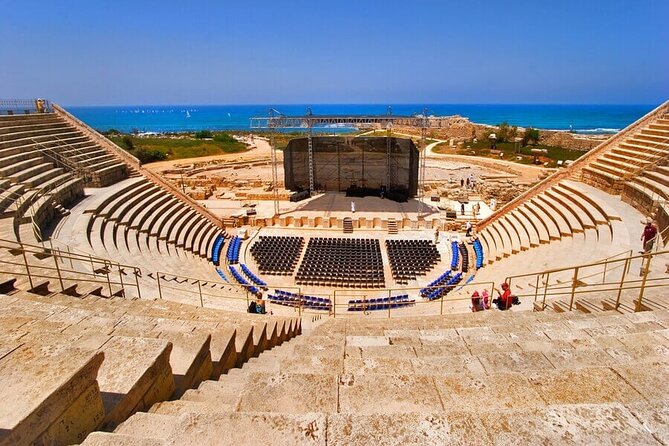
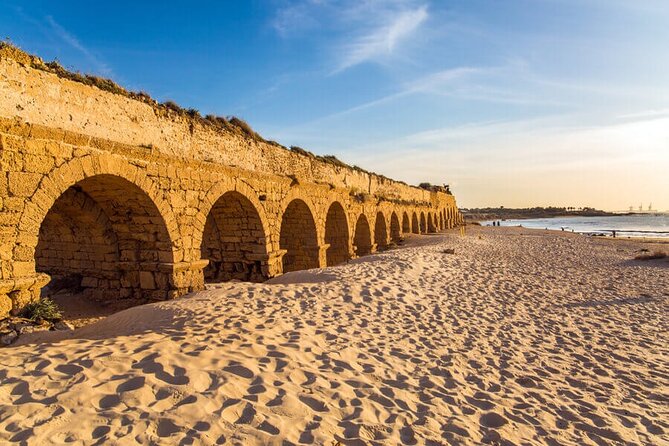
The first major stop is Caesarea National Park, the ancient port built under Herod the Great. You have about an hour here, with admission included. The setting matters as much as the ruins. This is a place where Roman engineering, royal ambition and the Mediterranean meet in one compact site.
You then spend about 20 minutes at the ancient theater. The theater dates to the first century AD and gives you a direct look at the scale of Roman public entertainment. The visit is short, so I would not expect a slow archaeological walk or time to examine every remaining structure.
Still, Caesarea is an excellent opening stop. It offers immediate visual impact, and the ruins are easier to appreciate with a guide who can explain how the port functioned. Saul, one of the named guides associated with the tour, was praised for sharing interesting information and maintaining a good attitude throughout the trip. That sort of commentary can make a brief stop feel much more useful.
Haifa and the Bahá’í Gardens
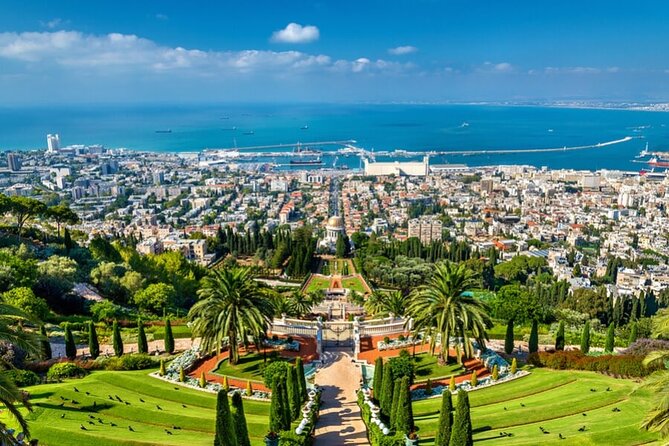
The route continues to Haifa and the Bahá’í Gardens on the slopes of Mount Carmel. The scheduled visit lasts about 30 minutes and focuses on the view from the upper gardens. From here, you look across Haifa and toward the coast.
The gardens are famous for their long terraces, exact symmetry and carefully maintained planting. This is mainly a viewpoint stop rather than a full garden tour. Your time is limited, so you should treat it as a chance to take in the city’s layout and see how Haifa climbs from the water up Mount Carmel.
I like the contrast after Caesarea. You move from ancient stone and Roman remains to a modern city arranged around a formal religious site. The stop is also less physically demanding than some of the others, although the wider tour still includes a fair amount of walking.
Rosh Hanikra: cable cars and sea caves
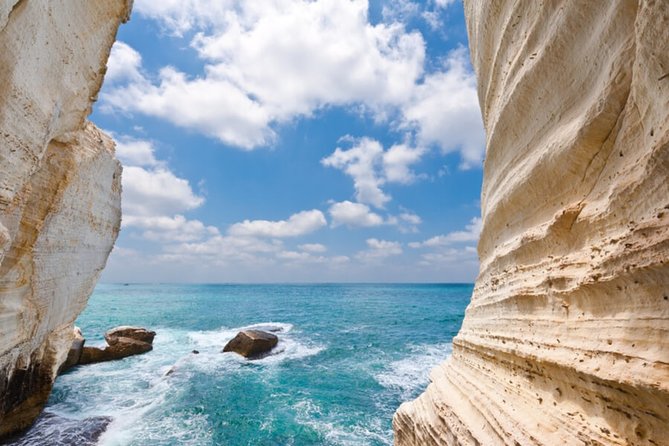
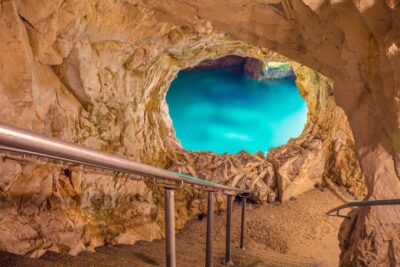
At Rosh Hanikra, the experience changes again. You ascend to the summit by cable car, then visit the limestone grottos below. The total scheduled time is about 90 minutes, including the cable-car stop and the grotto visit.
The grottos are the highlight. Waves have cut into the pale rock, creating short underground passages and chambers beside the sea. You do not need to be an archaeology expert to enjoy this stop. The setting is dramatic, and it provides a welcome change from churches, forts and ruins.
You also get a view toward the Lebanese border. It is a brief geographic reminder that Israel’s northern edge is close to an international frontier. The tour description lists admission to the grottos as included, while the cable-car stop is listed separately without an admission charge, so your confirmation details should clarify exactly how the tickets are handled.
Wear shoes with a firm sole. The tour already recommends comfortable walking shoes, and the combination of uneven ground, steps and grotto paths makes that advice worth following. A hat and water are also sensible, particularly during the warmer months.
More trips into the Galilee:
- From Jerusalem: Nazareth and Sea of Galilee Tour
★ 4.5 · 588 reviews - Nazareth and the Sea of Galilee Day Trip from Jerusalem
★ 4.5 · 446 reviews - Travel To Bethlehem, Jericho & Jordan River – Group Guided Tour from Jerusalem
★ 4.5 · 128 reviews - Caesarea, Haifa & Akko Day Trip from Jerusalem
★ 4.3 · 96 reviews
Acre: Crusader history underground
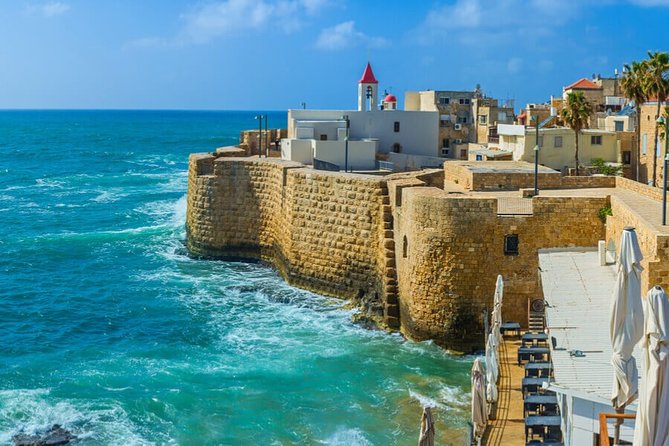
Acre gives the first day its strongest medieval chapter. You have about an hour to visit the city, followed by another hour at the Citadel and underground Crusader City. Admission to the underground site is included.
Acre is especially rewarding because the history is not confined to a few walls above ground. The Crusader remains below the modern city show how earlier builders used vaulted halls and underground spaces. I find this more memorable than simply looking at a ruined fortress from outside.
The city visit also brings you close to the Mediterranean. The route includes Acre’s seaside setting and views from its ramparts, although the exact time spent on the ramparts can depend on the day’s schedule. The city portion is listed as free admission, while the underground Crusader site requires the included ticket.
This is another place where a guide adds real value. Acre’s layers can be confusing without context. Roman, Crusader and later periods overlap, and the short visit leaves little time to piece everything together alone.
The kibbutz night: a useful pause
The overnight stay is in a traditional kibbutz and includes breakfast. The specific kibbutz is not named in the supplied details, so you should not expect a particular property or room style until your booking information confirms it.
I like this part of the plan because it breaks up the driving. Without an overnight stop, the northern coast and Galilee would be difficult to combine from Jerusalem in just two days. A kibbutz also gives the trip a different setting from a standard urban hotel.
Do not read too much into the word traditional. The accommodation is included, but the details of room size, facilities and meal arrangements beyond breakfast are not provided. Food and drinks other than the specified breakfast are your responsibility.
Mount of Precipice and Nazareth
Day two begins at Mount of Precipice, where you have about 20 minutes at the lookout. The stop offers a broad view connected with Nazareth and the surrounding countryside. It is short, so use the time to orient yourself rather than expecting a long walk or a detailed site visit.
Nazareth itself receives about 90 minutes. That is enough to see the main religious center of town, but not enough for a relaxed exploration of every street. The route then focuses on two important churches.
The Church of the Annunciation is scheduled for about 40 minutes. It is one of the key Christian sites in Nazareth and the main reason many visitors come into the city. The church’s importance comes from its connection to the Annunciation, so this is a central stop for anyone interested in Christian history and pilgrimage.
St. Joseph’s Church follows, with about 20 minutes. The visit is shorter, but it adds another major Christian site to the morning. I would pay attention to the guide here, since the churches are best understood through their religious and historical setting, not just their architecture.
Modest dress is obligatory at holy sites. Cover your knees and shoulders, even if the rest of your clothing is light and casual. This is one of the easiest ways to avoid an awkward pause at the entrance.
The Sea of Galilee and Capernaum
After Nazareth, the route travels along the shore of the Sea of Galilee. You also pass Kfar Cana, the Mount of Beatitudes and Tiberias. These are passing views rather than full scheduled visits, so keep your expectations in check.
The drive still matters. It connects the places associated with the Galilee stories and gives you a sense of the region’s geography. You are not just jumping between isolated religious sites. You are following a route around the lake and through the places named in the Christian tradition.
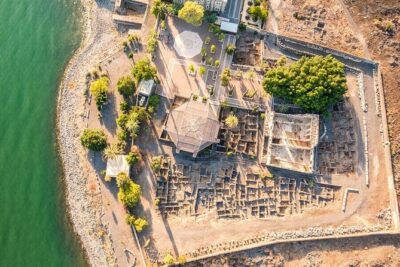
Capernaum, called Kfar Nahum National Park, receives about 40 minutes, with admission included. The main draw is the ancient synagogue, where Jesus was believed to have taught. The remains make the site valuable even if you are not visiting for religious reasons, because they show the scale and style of an ancient lakeside settlement.
Forty minutes is enough for a focused visit. It is not enough for a leisurely archaeological study, so stay close to the guide and listen for the key details. The stone remains can look spare at first, and context helps you understand why the site matters.
The Church of the Multiplication
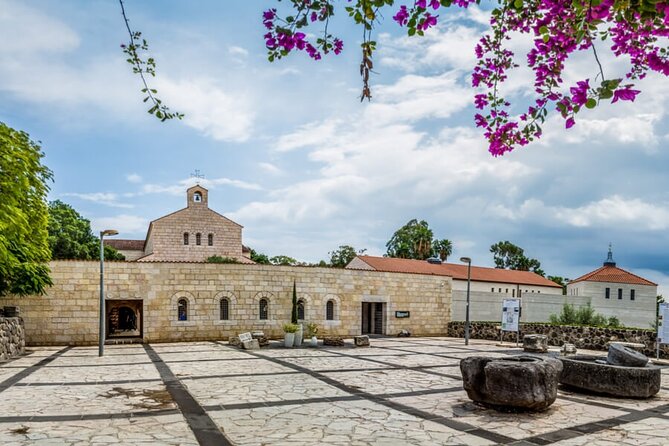
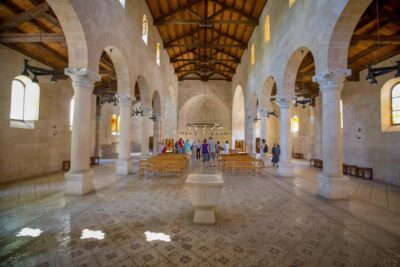
The Church of the Multiplication is a brief 15-minute stop. The church is linked to the biblical account of the feeding of the multitude, and its location adds another religious site to the Galilee portion of the day.
This is one of the tour’s quicker visits. If you prefer long periods in each church, the schedule may feel rushed. If you want to see several important locations in one day, the short stop lets the route keep moving.
The mix of scheduled visits and passing views is worth noting. Nazareth, Capernaum and the Jordan River receive set blocks of time, while Kfar Cana, the Mount of Beatitudes, Tiberias and Mount Tabor are viewed while traveling. That distinction helps you decide if the tour matches your priorities.
Yardenit and the Jordan River
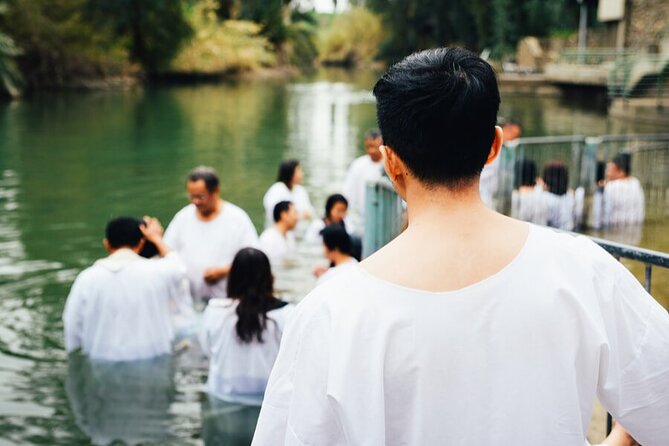
The final major stop is Yardenit, a baptism site on the Jordan River. You have about 40 minutes of free time here. That gives you more breathing room than at the Church of the Multiplication and lets you experience the place at your own pace.
Yardenit is important to Christian pilgrims who want to reflect on baptism in the Jordan River. You do not need to take part in a ceremony to appreciate the setting. The stop works as a quieter close to a day filled with churches and ancient sites.
The route also includes views of Mount Tabor, associated with the Transfiguration. Like the other passing points, this is a view from the vehicle rather than a full mountain visit. The tour then returns you to Jerusalem with hotel drop-off included.
Guide quality, group size and daily effort
The guide can shape the whole experience. The strongest praise connected to this tour went to Saul, who was described as friendly, informative and consistently helpful. That is exactly what this route needs, since many stops are short and the historical context comes quickly.
At the same time, one passenger felt the guide’s language fluency was not strong enough. The operator responded that its guides are licensed by Israel’s Ministry of Tourism and should provide full commentary. I would still confirm your preferred tour language before paying, especially if detailed explanation is central to your trip.
The maximum group size is 40. You should expect a shared coach rather than a private experience. Hotel pickup and drop-off reduce the stress of getting to a meeting point, but the early start means you need to be ready at around 6:00 a.m.
Most people can take part, but the tour includes a reasonable amount of walking. Children under four cannot join. Bring water, wear good walking shoes, and keep your clothing suitable for religious sites.
Who should book this tour?
I would choose this tour if you have only a few days in Israel and want to connect the northern coast, Acre, Nazareth and Galilee in one organized trip. It suits first-time visitors who value coverage and clear transportation more than free time.
It is also a good fit if you would rather not arrange a separate rental car, hotel night and multiple entrance tickets. The included breakfast, accommodation, guide, vehicle and admissions make the $355 price easier to justify.
I would hesitate if you dislike early mornings, long road days or group touring. The itinerary is full, and several stops last only 15 to 40 minutes. You should also think carefully about the language of the guide before booking.
Should you book it?
Book this two-day tour if your priority is seeing a large share of northern Israel from Jerusalem with minimal planning. Caesarea, Rosh Hanikra, Acre, Nazareth, Capernaum and Yardenit create a strong mix of Roman, Crusader, Christian and coastal experiences.
Skip it if you want slow meals, long museum visits or private guiding. For everyone else, the route offers solid practical value, especially because the overnight kibbutz stay prevents the trip from becoming an exhausting round-trip drive each day.
FAQ
Where does the tour start?
The tour starts in Jerusalem, with hotel pickup offered. The stated start time is 6:00 a.m.
How long does the tour last?
The experience lasts approximately two days and includes overnight accommodation.
Is accommodation included?
Yes. Overnight accommodation in a traditional kibbutz is included.
Is breakfast included?
Yes. Breakfast is included, but other food and drinks are not included unless specifically stated.
Which major places are visited?
The route includes Caesarea, Haifa, Rosh Hanikra, Acre, Nazareth, Capernaum and Yardenit. It also passes or views Kfar Cana, the Mount of Beatitudes, Tiberias and Mount Tabor.
Are entrance tickets included?
Admission is included for Caesarea National Park, the theater at Caesarea, the grottos at Rosh Hanikra, the underground Crusader City in Acre and Capernaum. Other stops are listed as free admission.
What should I wear?
Modest dress is required at holy sites. Your knees and shoulders should be covered.
Is the tour suitable for young children?
The tour is not suitable for children under four. Most other people can participate, although the route includes a reasonable amount of walking.
How large is the group?
The tour can have a maximum of 40 participants. It uses an air-conditioned vehicle and includes a professional guide.
Just added in Jerusalem
- Walking Jerusalem in Russian★ 5.0 · 1 review
- private Full-Day Tour to Bethlehem and Jerusalem★ 5.0 · 2 reviews
- Jerusalem and Dead Sea Trip from Tel Aviv★ 4.0 · 6 reviews
- Tel Aviv & Old City of Jaffa – Tiny group from Tel Aviv★ 4.5 · 9 reviews
- Tel Aviv; Jaffa Old City, Port & Shuk Hapishpishim Walking Tour★ 4.5 · 11 reviews
- Tel Aviv: Food & History Tour of Jaffa Old City & Flea Market★ 5.0 · 1 review
- Discover the Secrets of the Underground Jerusalem with a private tour★ 5.0 · 4 reviews
- Private Tour from Tel Aviv to Jerusalem★ 5.0 · 3 reviews
Haifa and the Galilee Tours, compared.
Nazareth and the Sea of Galilee Day Trip from Tel Aviv
Read our review →
Nazareth and the Sea of Galilee Day Trip from Jerusalem
Read our review →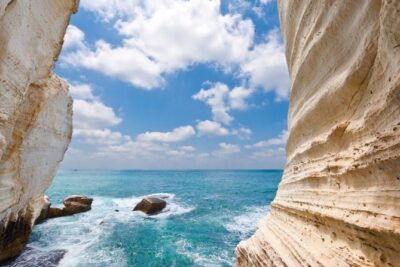
Caesarea, Rosh Hanikra and Acre Day Trip from Tel Aviv
Read our review →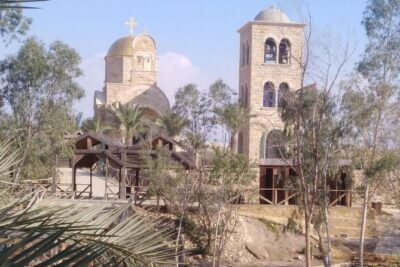
Travel To Bethlehem, Jericho & Jordan River – Group Guided Tour from Jerusalem
Read our review →
Haifa Shore Excursion: Nazareth and the Galilee – for cruise ship guests only
Read our review →Browse the lists this tour appears in