
Reviewed · ISRAEL FOOD TOURS AND MARKETS
Dine on a Combo Druze Culinary and History Tour
Food opens doors. This private northern Israel day trip combines Druze cooking, family stories, a prize-winning garden, natural beauty products, and the ancient town of Peki’in. I love the generous Galilean brunch in Julis and the chance to meet people whose personal stories connect Druze life, Jewish history, and modern Israel.
I also like the tour’s small-group format, with private pickup anywhere in Israel and an air-conditioned vehicle for a long day on the road. The main consideration is time: ten hours includes all driving, so you should expect a full day with several stops rather than a slow, unhurried village visit.
In This Review
- Key points at a glance
- Why this northern Israel day trip feels different
- Al-Muna Garden and the story of Naji Abbas
- A Galilean Druze brunch in Julis
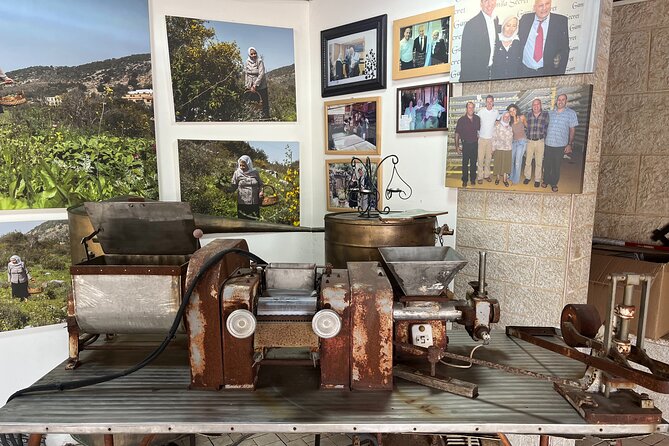
- Grandma Gamila’s natural soap factory
- Peki’in and the cave of Rabbi Shimon bar Yochai
- Peki’in’s old synagogue and its last Jewish resident
- What the ten-hour schedule is really like
- The food, culture, and history balance
- Who should book this tour
- FAQ
- Where does the tour take place?
- How long does the tour last?
- Is pickup included?
- How many people can join the private tour?
- What food is served?
- Is the meal included in the price?
- What is made at Gamila Secret?
- Is the tour physically demanding?
- What is the cancellation policy?
- Should you book it?
Key points at a glance
- A private day for up to four people: The $700 group price works out to $175 per person for four, with transportation and pickup included.
- Druze brunch in Julis: Expect salads, eggs, cheeses, olives, falafel, fresh pita, and black coffee at a kosher Druze restaurant.
- Al-Muna Garden’s family story: Naji Abbas created the garden for his parents, Mona and Rasheed, and it won second place in a worldwide garden competition.
- Natural products made in the Galilee: Grandma Gamila’s factory uses fifteen local healing herbs and pure plant oils, without artificial colors or fragrances.
- Peki’in’s layered past: The day ends with Rabbi Shimon bar Yochai’s cave, an ancient synagogue, and the story of a Jewish community that has lived in the town for 2,000 years.
- A guide who adds context: Simon is described as patient, clear, and able to explain lesser-known places even to people who have lived in Israel for decades.
Why this northern Israel day trip feels different
Many day trips from Jerusalem focus on major archaeological sites or famous viewpoints. This one takes a quieter route. Its subject is not one grand monument, but the way several communities and traditions meet in northern Israel.
You move from a Druze garden to a Druze kitchen, then to a natural cosmetics workshop and an old multi-faith town. The result is a day built around people and working places, not just photo stops. I find that approach especially useful if you want to understand how local identity is carried through food, family businesses, religion, and memory.
The tour is private, so your group of up to four does not have to match the pace or interests of a large busload. At $700 per group, the price is high for one or two people, but it becomes much more reasonable when four people share it. Pickup from any location in Israel is also important, since the drive to the northern sites would otherwise require extra planning.
Simon leads the day, and the available feedback describes him as patient, educated, easy to understand, and able to explain places that even long-term residents had not visited. That matters here. Peki’in and the Druze towns are not simply a sequence of attractions. You will get more from them if someone can explain the people, customs, and old stories behind what you see.
More Food Tours in Jerusalem
- Private Guided Tour to the Culinary World of Jerusalem Market
★ 5.0 · 14 reviews - Mahane Yehuda Market food tour jerusalem
★ 5.0 · 11 reviews - Israel private tours,wine tours,off-road, tailor made,culinary,the best
★ 5.0 · 6 reviews
Al-Muna Garden and the story of Naji Abbas
The first stop lasts about an hour and a half, and it sets the tone for the rest of the day. Al-Muna Garden was created by Naji Abbas and dedicated to his parents, Mona and Rasheed. The garden won second place in a competition to find the most beautiful garden in the world, which gives you a useful sense of its scale and care.
The appeal is not only the planting. Naji’s personal story is part of the visit, including his father’s support for the Israel Defense Forces in 1948. Through that story, Simon explains parts of Druze culture and the community’s place in Israel.
I like this kind of introduction because it avoids treating the Druze community as a museum display. You begin with one family, one son’s tribute to his parents, and one carefully built garden. From there, the wider discussion becomes easier to understand.
The stop includes admission and lasts long enough to hear the story without rushing through the grounds. Still, you should not expect a formal botany lesson or a major historical site. The garden is valuable because of its design and its human story, not because it presents a long list of monuments.
A Galilean Druze brunch in Julis
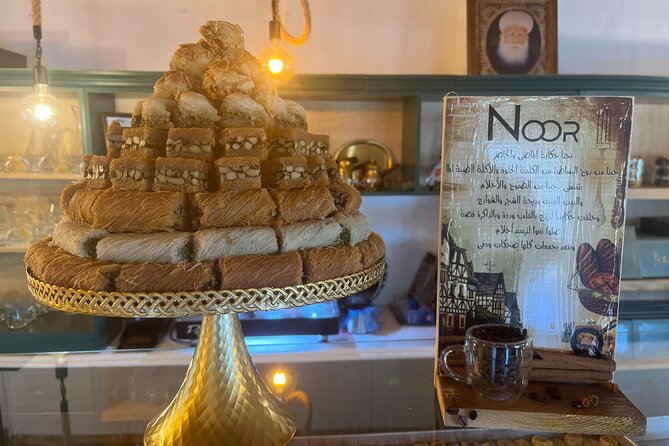
After the garden, you go to Julis for a two-hour brunch at a kosher Druze restaurant founded by Basma Henno. The restaurant is in the center of town, and the meal is based on local ingredients picked from nearby fields.
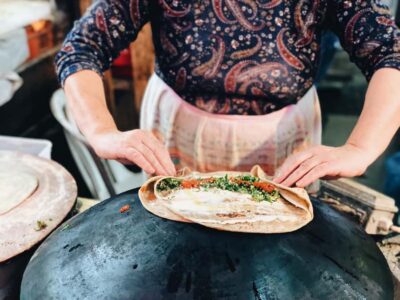
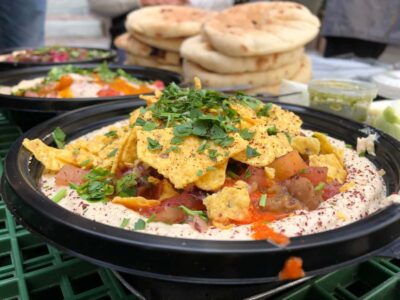
This is the food-focused heart of the experience. You can expect a spread of Druze salads, eggs, cheeses, olives, falafel, and other local dishes. Freshly baked Druze pita accompanies the meal, followed by fragrant black coffee.
The menu sounds simple, but that is part of its strength. You are not being offered a theatrical tasting menu designed for tourists. You are getting the kind of shared table that explains a place through vegetables, bread, dairy, olive products, and coffee.
Basma’s story adds another layer. She is an IDF war widow and named the restaurant after her son, Noor. That personal detail gives the meal a sense of purpose beyond eating. It also connects the restaurant to the family-centered stories you hear at Al-Muna Garden.
The meal is described as brunch, while the price information says lunch is not included. I would treat the Julis meal as the included food stop, but confirm the exact meal arrangement when booking if your group has special dietary needs or expects a separate lunch. Bottled water and snacks for the day are provided, which helps during the long drive.
Two hours is a generous amount of time for this stop. You can eat at a relaxed pace and listen to the explanation of the dishes instead of grabbing a quick plate between attractions. If you prefer a fast sightseeing schedule, this may feel long. If food is one of your main reasons for booking, it is a welcome pause.
Grandma Gamila’s natural soap factory
The next stop lasts about an hour and a half at Gamila Secret, the soap factory associated with Gamila Hiar. For more than 30 years, she has used fifteen healing herbs grown in the Galilee, combining them with pure plant oils to make face oils, hand and foot creams, cleansing bars, candles, and other products.
The factory does not use artificial colors or fragrances in these products. You will hear how the ingredients are used and have the chance to buy something if you wish.
This stop works best if you are interested in traditional plant knowledge, small businesses, or practical souvenirs. A bar of soap or a skin-care product is easier to pack than most food items, and it has a clearer connection to the place than a generic gift-shop purchase.
There is also a social side to the business. Gamila employs Druze, Muslim, Christian, and Jewish women. That detail fits the tour’s wider theme: northern Israel is not presented as one single culture, but as a place where several communities work and live alongside one another.
I would keep your expectations sensible. This is not described as a medical treatment or a full workshop where you make your own products. It is a visit to a working business, an explanation of Gamila’s methods, and an opportunity to shop. You are never required to buy anything, but the stop may be less interesting if natural cosmetics hold no appeal for you.
More History Tours in Jerusalem
- Jerusalem Yad Vashem Holocaust History Museum Tour
★ 5.0 · 98 reviews - Jerusalem Christian Heritage Private Tour
★ 5.0 · 9 reviews - Jerusalem World Heritage Private Tour
★ 5.0 · 5 reviews - Jerusalem Heritage Private Tour
★ 5.0 · 3 reviews
Peki’in and the cave of Rabbi Shimon bar Yochai
The final part of the day takes you to Peki’in, an ancient town with Druze, Christian, Muslim, and Jewish connections. The first stop here is the Cave of the Rashbi, referring to Rabbi Shimon bar Yochai.
According to the story, Rabbi Shimon bar Yochai and his son, Rabbi Elazar, fled the Romans in 149 CE and hid in the cave for 12 years. They are said to have survived on fruit from a carob tree and water from a spring.
The cave visit lasts about 30 minutes, so this is a short historical stop rather than a long site visit. Its value comes from the story and the religious tradition attached to the place. You should also be prepared for uneven ground or a modest amount of walking, since the tour calls for a moderate level of physical fitness.
This is one of the moments when a good guide makes a real difference. Simon can explain who Rabbi Shimon was, why the Roman period mattered, and how the story became part of Jewish tradition. Without that context, the cave itself may seem small and plain.
Peki’in’s old synagogue and its last Jewish resident
The final visit lasts about two hours and focuses on Peki’in’s old synagogue and visitor center. The town is described as having a Jewish presence for 2,000 years. According to the local account, Jews who fled Jerusalem after the destruction of the Second Temple in 70 CE settled here.
Today, only one elderly Jewish woman remains in the town’s Jewish community. That fact gives the visit a quiet, sad edge. You are not just looking at an old building. You are hearing the story of a community that survived for centuries and is now close to disappearing.
The synagogue contains two plaques on the wall. The Israel Antiquities Authority recently carbon-dated them to the period when the Cohanim fled Jerusalem to escape the Romans. Local tradition holds that the plaques were brought from the Second Temple.
The wording matters here. The connection to the Second Temple is a legend, while the dating of the plaques is presented as archaeological evidence. A careful explanation should help you separate documented findings from religious tradition without taking either one lightly.
The visitor center and synagogue give you more time than the cave stop. That is useful because Peki’in contains several layers of memory: Jewish tradition, Roman-era flight, Druze life, Christian and Muslim communities, and the changing character of a very old town.
What the ten-hour schedule is really like
The advertised duration is about ten hours, starting at 9:00 a.m. The total includes pickup, transportation between the stops, and the return journey. That makes the day efficient, but it also means you should not read ten hours as ten hours of sightseeing.
The schedule includes:
- About 90 minutes at Al-Muna Garden
- Two hours for brunch in Julis
- About 90 minutes at Gamila Secret
- About 30 minutes at the cave in Peki’in
- Two hours at the old synagogue and visitor center
The remaining time is used for driving. Since pickup is available from any location in Israel, the actual day length can depend on where you begin and end. An air-conditioned vehicle and bottled water are included, both of which matter on a long route.
The private format is a strong practical advantage. You can ask questions, discuss the stories, and avoid being folded into a large group. The tradeoff is price. At $700 for up to four people, it is best suited to a family, two couples, or a small group that values a dedicated guide and door-to-door transport.
The food, culture, and history balance
The tour does not treat food as a separate activity from history. The Julis meal links local produce and Druze cooking to Basma Henno’s family story. Gamila’s products connect plants from the Galilee with a business employing women from four religious communities. Peki’in then shifts the focus to Jewish memory and the survival of an old town.
That balance is the tour’s main strength. You get more than an explanation of religious sites, but you also get more than a meal with a little sightseeing attached. Each stop gives you a different way to think about northern Israel.
The day is also useful for people who have already seen the major sites around Jerusalem. Simon has guided people who had lived in Israel for more than 26 years, yet still introduced them to places they had not known. That is a good sign if you want lesser-known stops rather than another standard city tour.
Still, this is not the right choice if your priority is a slow culinary class, a long archaeological excavation, or extensive free time in each village. The schedule is carefully packed, and the travel between stops is part of the experience.
Who should book this tour
I would recommend it to you if you want:
- A private tour for a small group
- Druze food and culture presented through family-owned businesses
- A guide who can explain complex religious and historical subjects clearly
- A day away from the best-known Israeli attractions
- A mix of food, gardens, shopping, and old religious sites
- Pickup and return transportation arranged for you
Families and small groups will get the best value from the $700 price. Couples can still find it worthwhile if they care strongly about private guiding and do not want to plan the northern route themselves.
You should think twice if you dislike long drives, have limited mobility, or want a relaxed day with only one or two main sights. Moderate physical fitness is requested, and the cave and old-town portions may involve walking over uneven surfaces.
Free cancellation is available if you cancel at least 24 hours before the start time. The tour depends on good weather and a minimum number of participants. If poor weather or low numbers cause cancellation, you are offered another date or a full refund.
FAQ
Where does the tour take place?
The tour visits two Druze towns in northern Israel, along with the ancient town of Peki’in. The listed stops are Al-Muna Garden, Julis, Gamila Secret, the Cave of the Rashbi, and Peki’in’s old synagogue.
How long does the tour last?
The experience lasts about 10 hours, starting at 9:00 a.m. The total includes transportation from your pickup location to the attractions and the return journey.
Is pickup included?
Yes. Pickup is offered from any location in Israel, and transportation is provided in an air-conditioned vehicle.
How many people can join the private tour?
The price covers one private group of up to four people. Only your group participates in the activity.
What food is served?
The Julis brunch includes Galilean Druze salads, eggs, cheeses, olives, falafel, freshly baked Druze pita, and fragrant black coffee.
Is the meal included in the price?
The Julis brunch is part of the scheduled experience, but the price information says lunch is not included. Confirm the meal details when booking if you need clarification.
What is made at Gamila Secret?
Gamila Hiar makes face oils, hand and foot creams, cleansing bars, candles, and other products using fifteen healing herbs grown in the Galilee and pure plant oils. The products contain no artificial colors or fragrances.
Is the tour physically demanding?
A moderate level of physical fitness is required. The visit to the cave and the old areas of Peki’in may involve walking, and the tour includes several stops during a long day.
What is the cancellation policy?
You can cancel at least 24 hours before the start time for a full refund. Cancellations or changes made less than 24 hours before the start time are not accepted for a refund. Poor weather or failure to meet the minimum number of participants may lead to a new date or a full refund.
Should you book it?
Book this tour if you want northern Israel explained through ordinary places with extraordinary stories: a family garden, a Druze breakfast, a women-run natural-products business, a cave, and an ancient synagogue.
The $700 price makes the most sense for four people sharing the vehicle and guide. For a small group that values comfort, personal attention, and a route that would be difficult to arrange alone, it offers solid value. If you want famous landmarks, free time, or a less structured day, choose another outing. For food, Druze culture, and Peki’in’s layered past, this is a thoughtful and unusual choice.
Just added in Jerusalem
- Walking Jerusalem in Russian★ 5.0 · 1 review
- private Full-Day Tour to Bethlehem and Jerusalem★ 5.0 · 2 reviews
- Jerusalem and Dead Sea Trip from Tel Aviv★ 4.0 · 6 reviews
- Tel Aviv & Old City of Jaffa – Tiny group from Tel Aviv★ 4.5 · 9 reviews
- Tel Aviv; Jaffa Old City, Port & Shuk Hapishpishim Walking Tour★ 4.5 · 11 reviews
- Tel Aviv: Food & History Tour of Jaffa Old City & Flea Market★ 5.0 · 1 review
- Discover the Secrets of the Underground Jerusalem with a private tour★ 5.0 · 4 reviews
- Private Tour from Tel Aviv to Jerusalem★ 5.0 · 3 reviews
Israel Food Tours and Markets, compared.


Browse the lists this tour appears in