
Reviewed · HISTORICAL TOURS
Jerusalem Heritage Private Tour
Jerusalem’s past is under your feet. This private day trip links the Western Wall with the Cardo, Hurva Synagogue, Herodian Quarter, and Yad Vashem, giving you a clear route through 3,000 years of Jewish religious and cultural history. I like the private vehicle and flexible schedule, and I also like the chance to explore difficult subjects with a local guide rather than rush between sights with a large group. The main drawback is the price: at $1,199 for up to four people, this makes the most sense for a small group that values personal attention.
The day runs about six to eight hours, including travel from Tel Aviv. You should also plan for a serious amount of walking, religious dress requirements, and extra charges at the Herodian Quarter and Hurva Synagogue. Guide Levi Zelkind is specifically praised for his language skills, patience, and willingness to adjust the day, even helping one family with souvenir shopping after the formal sightseeing was over.
In This Review
- Key points to know before booking
- From Tel Aviv to Jerusalem in a private vehicle
- The Western Wall, Jerusalem’s spiritual heart
- The Herodian Quarter and the homes of Jerusalem’s elite
- The rebuilt Jewish Quarter and its layers of time
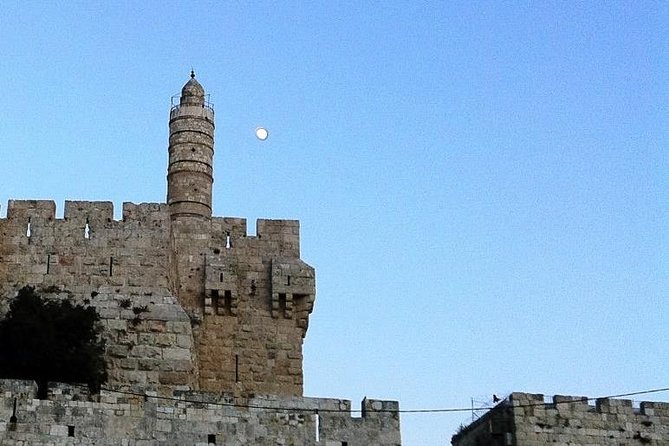
- The Cardo, a Roman street under the modern quarter
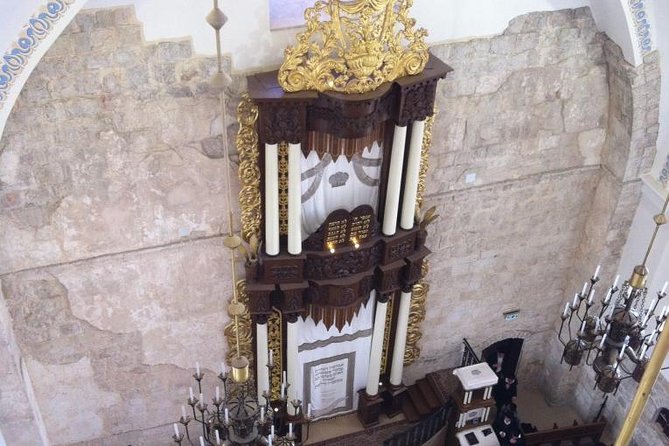
- Hurva Synagogue and the story of rebuilding
- Two hours at Yad Vashem
- What the private guide adds
- Is $1,199 good value for up to four people?
- Practical advice for a smoother day
- Who should book this Jerusalem heritage tour?
- FAQ
- Where does the Jerusalem Heritage Private Tour begin?
- How long does the tour last?
- How many people can join the private tour?
- Is transportation included?
- Are entrance fees included?
- What should I wear?
- Is lunch included?
- Can the itinerary be changed?
- What is the cancellation policy?
Key points to know before booking
- The Western Wall gives the day its spiritual center, with about an hour to take in the prayer plaza and the surviving Herodian retaining wall.
- The Herodian Quarter reveals private life, through mosaics, ritual baths, wine cellars, bathing rooms, pillars, and tableware from the late Second Temple period.
- Yad Vashem needs time and emotional energy, since the museum spends about two hours tracing the Holocaust and the Jewish struggle to survive.
- The private format suits families and small groups, with a maximum of four people and a guide who can respond to your interests.
- The Jewish Quarter layers several periods together, including the Roman-Byzantine Cardo, the rebuilt Hurva Synagogue, and remnants of the ancient Wide Wall.
- The $1,199 price is per vehicle group, not per person, so the value improves when four people share the cost.
From Tel Aviv to Jerusalem in a private vehicle
The tour begins with a 9:00 a.m. pickup from your Tel Aviv hotel. You travel east in a private, air-conditioned vehicle, with the guide introducing Jerusalem’s long story on the way.
That private ride matters more than it may first appear. You are not waiting for a large coach to load, and you can tell the guide what matters most to you before reaching the Old City. If your family wants more time at the Western Wall, more archaeology, or a slower visit at Yad Vashem, the schedule can be adjusted within the available day.
The advertised duration is approximately six to eight hours. That is enough time for the listed sights, but it is not an invitation to linger endlessly at every stop. Yad Vashem alone is scheduled for about two hours, while the Western Wall, Herodian Quarter, Jewish Quarter, Cardo, and Hurva Synagogue fill out the rest of the day.
The tour ends with a hotel drop-off in Tel Aviv. Lunch is not included, so you should ask the guide how food fits into the schedule. The supplied details do not specify a restaurant or a set lunch break.
More History Tours in Jerusalem
- Jerusalem Yad Vashem Holocaust History Museum Tour
★ 5.0 · 98 reviews - Jerusalem Christian Heritage Private Tour
★ 5.0 · 9 reviews - Jerusalem World Heritage Private Tour
★ 5.0 · 5 reviews
The Western Wall, Jerusalem’s spiritual heart
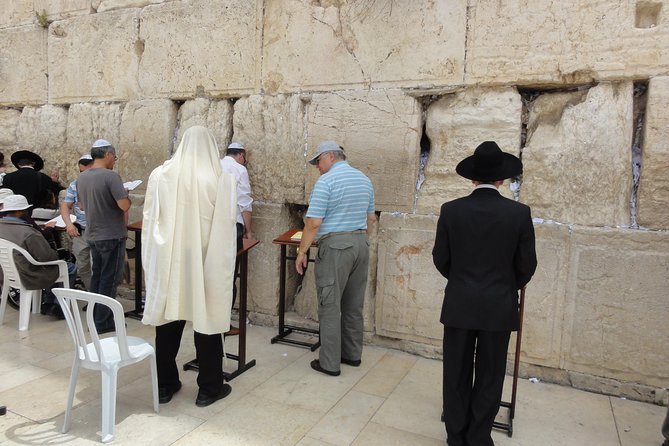
The first major stop is the Western Wall, also called the Kotel. You have about an hour here, and there is no admission charge.
The wall is the surviving section of the retaining wall built around the Second Temple complex under Herodian rule. The temple itself was destroyed in AD 70, making this ancient stonework one of the most important Jewish religious sites in the world.
Your guide can explain what you are seeing, but this is also a place where quiet observation matters. The prayer area is active and deeply personal. You should move respectfully, follow any instructions on where to stand, and avoid treating the site like an ordinary photo stop.
The Western Wall is a strong opening because it connects faith, archaeology, and modern Jewish identity in one place. It also gives you a useful reference point for the rest of the day. Later, when you see homes from the Second Temple period or the remains of the Jewish Quarter after 1948, you have already encountered the living center of Jewish Jerusalem.
Dress carefully from the start. Knees and shoulders must be covered for men and women at places of worship and selected museums. Shorts and sleeveless tops can lead to refused entry, so modest clothing is not a minor suggestion here.
The Herodian Quarter and the homes of Jerusalem’s elite
The Herodian Quarter, also known as the Wohl Archaeological Museum, is one of the day’s best stops for understanding ordinary details of ancient life among wealthy residents. About an hour is set aside, but admission is not included.
The excavations reveal large homes dating to the Second Temple period. Instead of seeing only monumental walls, you see the domestic side of ancient Jerusalem: mosaic floors, pillars, bathing areas, ritual baths called mikvaot, wine cellars, and household tableware.
This is where the tour moves from national and religious history to daily life. The remains suggest the wealth and social standing of Jerusalem’s priestly and upper-class families in the late Second Temple period. A floor pattern or bathing room can tell you how people lived in a way that a broad historical lecture cannot.
I would give this stop your full attention. The buildings are preserved below the modern Jewish Quarter, and the value comes from noticing the small features. Ask the guide to explain the ritual baths, the use of the rooms, and how the archaeological evidence helps identify the people who lived there.
The extra admission fee is worth considering when you judge the tour price. The $1,199 fee does not cover every paid site, so ask for the current cost before booking if you want a precise total.
The rebuilt Jewish Quarter and its layers of time
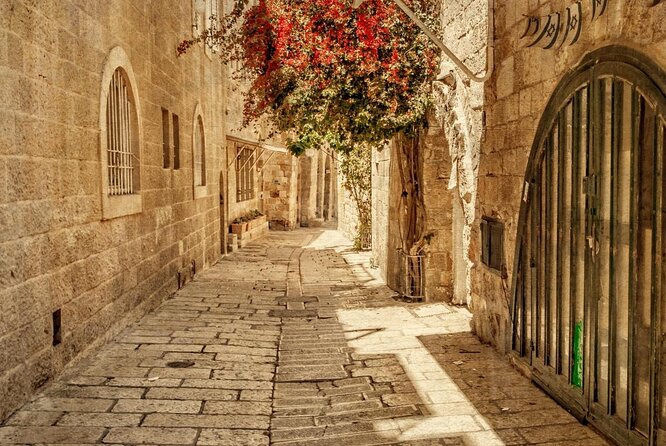
The Jewish Quarter brings together ancient remains and modern reconstruction. It was destroyed in 1948 during the war and later rebuilt, creating a neighborhood where old stone, modern buildings, archaeological remains, and religious sites share tight streets.
One of the less obvious features here is the remnant of the Wide Wall, built by King Hezekiah in 702 BC. It is an earlier layer than the Second Temple sites, and it helps show that Jerusalem’s Jewish story did not begin with the Herodian period.
The quarter is compact, but the history is not. You may pass from a biblical defensive wall to a Roman street, then to a synagogue destroyed in 1948 and rebuilt in the modern era. A private guide is useful here because the remains can otherwise look like isolated pieces of masonry.
This part of the tour also requires steady walking over old streets and uneven surfaces. The supplied information says most people can participate, but it does not provide detailed accessibility information. If mobility is a concern, discuss the route with the tour provider before reserving.
A completely different kind of day:
- From Tel Aviv: Jerusalem and Bethlehem Guided Day Trip
★ 4.3 · 1,316 reviews - Tel Aviv: Jerusalem, Bethlehem & Dead Sea
★ 4.0 · 881 reviews - From Tel Aviv: Jerusalem Old & New City Bus Tour
★ 4.2 · 824 reviews - From Jerusalem: Masada & Dead Sea Full Day Tour with Pick Up
★ 4.5 · 815 reviews
The Cardo, a Roman street under the modern quarter
The Cardo is scheduled for about 30 minutes and has no separate admission charge. It was once a main Roman-Byzantine thoroughfare through Jerusalem, and the preserved section gives you a good sense of the city’s later urban life.
The word Cardo refers to a north-south street in a Roman city. Here, you can see the restored street within the Jewish Quarter, along with columns and the architectural remains associated with Roman and Byzantine Jerusalem.
This is a shorter stop, but it works well as a bridge between periods. At the Western Wall and Herodian Quarter, the focus is mainly on Jewish Jerusalem before the destruction of the Second Temple. At the Cardo, you see how the city changed under Roman and Byzantine rule.
Do not expect a full ancient street to remain intact from end to end. The appeal is the contrast between the exposed Roman remains and the rebuilt neighborhood around them. The guide’s explanation makes the archaeology easier to read, especially if you are not already familiar with Roman city planning.
Hurva Synagogue and the story of rebuilding

The Hurva Synagogue gets about 30 minutes, and admission is not included. It was first established by Ramban in the 13th century, then destroyed and rebuilt several times.
The synagogue was destroyed again in 1948, when the Jordanian Army blew it up during the fighting. It was finally rebuilt and reopened in 2010. That repeated cycle of destruction and reconstruction gives the building a meaning beyond its architecture.
The name Hurva means ruin, and the site’s history makes the rebuilt synagogue a useful symbol of the Jewish Quarter itself. You are not simply looking at an old house of worship. You are seeing a building tied to the quarter’s losses, return, and renewal.
The visit may be brief, especially if the day is running long. If synagogue architecture or modern Jewish history interests you, tell the guide early so this stop receives the attention you want. As with the Herodian Quarter, check the admission cost because it is separate from the tour fee.
Two hours at Yad Vashem
Yad Vashem, the World Holocaust Remembrance Center, is the most solemn stop of the day. About two hours are planned, and admission is listed as free.
The museum follows the development of Nazi persecution and the Holocaust, then presents the Jewish struggle to survive. This is not a light final attraction. You should allow yourself time to process what you see rather than treat it as one more item on a sightseeing checklist.
The structure of the visit gives the day a difficult but important arc. You begin with ancient worship at the Western Wall, see the homes and institutions of earlier Jewish communities, walk through the rebuilt Jewish Quarter, and then confront the destruction of European Jewish life in the 20th century.
The museum’s terrace offers wide views over modern Jerusalem. After the exhibits, that outlook carries strong meaning. It connects remembrance with the survival and rebuilding of Jewish national life, though you may find the shift emotionally demanding.
The two-hour allocation is useful, but your actual time may depend on your interests and the pace of the rest of the day. If Yad Vashem is your main reason for booking, make that clear before departure. If your group includes children, consider their age and ability to handle the subject matter. The tour data does not provide a separate children’s program or age guidance.
What the private guide adds

A private tour is only as good as the person guiding it. The strongest feedback connected with this experience praises Levi Zelkind for being attentive, fluent in several languages, and willing to shape the day around the group’s interests.
One family appreciated that he helped with souvenir shopping after the main sightseeing. That detail is useful because it shows the tour can include ordinary travel needs, not only formal commentary. Another couple booked their first Israel trip at short notice and found that Levi accepted the request despite uneven communication before the visit.
Levi may not personally lead every departure. The provider has also used another guide when he was unexpectedly away, with the tour leader describing responsibility for maintaining the company’s standards. If having Levi specifically matters to you, request him when booking and confirm availability.
The private format also gives you room to ask direct questions. You can pause over a mosaic, compare the Cardo with the Herodian homes, or ask how the Jewish Quarter changed after 1948. In a large group, those questions may be lost. Here, they can shape the day.
Is $1,199 good value for up to four people?
The price is $1,199 per group of up to four people. For one person, that is expensive. For four people sharing the cost, it works out to roughly $300 per person before paid entrance fees and lunch.
You are paying for a private air-conditioned vehicle, hotel pickup and drop-off, a professional guide, and a flexible day in Jerusalem. You are also avoiding the compromises of a standard group excursion. There is no larger party setting the pace, and the guide’s attention stays with your group.
The value is strongest for families, couples traveling with friends, or anyone visiting Jerusalem for the first time who wants the Jewish Quarter explained in context. It is weaker if you prefer to spend a full day at one museum, explore independently, or keep costs low by using public transportation and self-guided visits.
The extra charges matter. Lunch is not included, and paid entrance fees for the Herodian Quarter and Hurva Synagogue are separate. Yad Vashem, the Western Wall, the Cardo, and the Jewish Quarter stops are listed without admission charges.
Practical advice for a smoother day
Wear shoes suitable for walking on old streets. The route combines religious sites, archaeological areas, museum interiors, and urban sidewalks, so comfort will help you focus on the sights.
Dress with the strictest stop in mind. Cover your knees and shoulders from the beginning, for both men and women. This avoids having to change clothes or risk being denied entry.
Start with a short list of priorities. The schedule includes six stops, but the day is still limited to six to eight hours. If you care most about the Western Wall and ancient homes, say so. If Yad Vashem is essential, protect its two-hour visit.
The tour has a maximum of four participants and is described as suitable for most people. Because detailed accessibility information is not provided, ask the provider about walking distances and surfaces if anyone in your group has mobility limits.
Free cancellation is available when you cancel at least 24 hours before the start time. Changes or cancellations made less than 24 hours ahead are not accepted for a refund.
Who should book this Jerusalem heritage tour?
I would choose this tour if you want one focused day that connects Jewish religious sites, archaeology, the modern Jewish Quarter, and Holocaust remembrance. It is especially useful for a first visit, when the city’s many periods can otherwise blur together.
Families and small groups will get the best financial value. The private setting also helps if your group has different interests, since the guide can adjust the balance between archaeology, worship, modern history, and shopping.
I would think twice if you want a slow, unstructured day or if the total cost is a concern. You will need to add lunch and selected entrance fees, and Yad Vashem can make the day emotionally heavy.
For the right group, this is a thoughtful and efficient introduction to Jewish Jerusalem. Request Levi Zelkind if his guiding style appeals to you, confirm the extra admission costs, dress properly, and agree on your priorities before leaving Tel Aviv. Those simple steps will help you get the most from a demanding but worthwhile day.
FAQ
Where does the Jerusalem Heritage Private Tour begin?
The tour begins with pickup at your Tel Aviv hotel at 9:00 a.m.
How long does the tour last?
The experience lasts approximately six to eight hours, including the journey between Tel Aviv and Jerusalem.
How many people can join the private tour?
The tour is limited to a maximum of four participants, and only your group takes part.
Is transportation included?
Yes. The tour includes transport in a private air-conditioned vehicle, along with hotel pickup and drop-off.
Are entrance fees included?
Paid entrance fees are not included. The Herodian Quarter and Hurva Synagogue list separate admission charges. The Western Wall, Jewish Quarter, Cardo, and Yad Vashem are listed with no admission charge.
What should I wear?
You must cover your knees and shoulders at places of worship and selected museums. This rule applies to both men and women, and entry may be refused if you do not follow it.
Is lunch included?
No. Lunch is not included in the tour price.
Can the itinerary be changed?
Yes. Because the tour is private, you can tell the guide which sights you want to see in greater detail, subject to the available tour time.
What is the cancellation policy?
You can cancel at least 24 hours before the start time for a full refund. Cancellations or changes made less than 24 hours before the experience are not accepted for a refund.
Just added in Jerusalem
- Walking Jerusalem in Russian★ 5.0 · 1 review
- private Full-Day Tour to Bethlehem and Jerusalem★ 5.0 · 2 reviews
- Jerusalem and Dead Sea Trip from Tel Aviv★ 4.0 · 6 reviews
- Tel Aviv & Old City of Jaffa – Tiny group from Tel Aviv★ 4.5 · 9 reviews
- Tel Aviv: Food & History Tour of Jaffa Old City & Flea Market★ 5.0 · 1 review
- Tel Aviv; Jaffa Old City, Port & Shuk Hapishpishim Walking Tour★ 4.5 · 11 reviews
- Discover the Secrets of the Underground Jerusalem with a private tour★ 5.0 · 4 reviews
- Private Tour from Tel Aviv to Jerusalem★ 5.0 · 3 reviews
Historical Tours, compared.


Full-Day Private Luxury and Cultural Tour in Tel Aviv
Read our review →

Private Historical Tour of Masada & Dead Sea from Jerusalem
Read our review →Browse the lists this tour appears in