
Reviewed · BETHLEHEM AND THE WEST BANK TOURS
Full Day Jerusalem and Bethlehem
Sacred places fill this long day. This private tour links Bethlehem and Jerusalem in about eight hours, giving you a local guide, private transport, and time at major Christian, Jewish, and Muslim sites. I like the flexible private format, and I like that the tour includes both Bethlehem’s Church of the Nativity and Jerusalem’s Old City in one outing. The main drawback is pace: with so many stops, your visits are brief, and the walking, stairs, and standing call for moderate fitness.
I also like the broad range of viewpoints. You move from Manger Square to the Western Wall, from the Church of the Holy Sepulchre to the Temple Mount, with stops in all four quarters of the Old City. Guide quality is a major part of the experience. Past guide assignments have included Gadi, Simon, Allan Rabinowitz, Leontine, and Menno, all praised for clear explanations, patience, and strong command of the city’s past and religious traditions.
In This Review
- Key things to know before booking
- Why this private day works well
- Starting in Bethlehem at Manger Square
- The Western Wall and the meaning of the Old City
- The Temple Mount and its changing access
- Walking through the Jewish Quarter
- Rooftops, the Austrian Hospice, and the Via Dolorosa
- The Church of the Holy Sepulchre
- What the four quarters add to the walk
- Guide quality is central to the experience
- Timing, transport, and what to bring
- Is $450 per person a fair price?
- Who should book this Jerusalem and Bethlehem tour?
- FAQ
- How long does the tour last?
- Is this a private tour?
- Is hotel pickup available?
- Is transportation included?
- Does the tour visit Bethlehem?
- Does the tour visit the Church of the Nativity?
- Can I visit the Temple Mount on any day?
- What clothing should I wear?
- Do I need to bring my passport?
- Is food included?
- Can I cancel for a refund?
Key things to know before booking
- Two holy cities in one day: You visit Bethlehem and Jerusalem without arranging separate transport.
- Private vehicle and guide: Only your group takes part, with hotel pickup and drop-off offered from central Jerusalem.
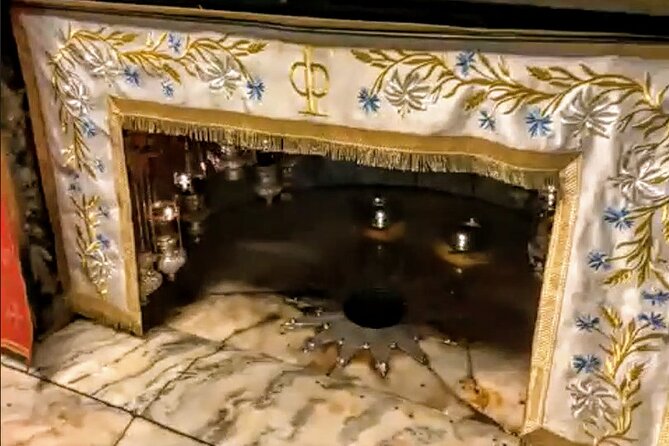
- The Church of the Nativity is a centerpiece: A local guide explains the traditions connected with Jesus’s birth.
- Rooftop views add a welcome pause: The route includes a view toward the Mount of Olives from the Austrian Hospice.
- The Old City route is packed: Expect the Western Wall, Temple Mount, Cardo, Broad Wall, Via Dolorosa, and all four quarters.
- Dress and fitness matter: Cover your knees and shoulders, bring your passport, and prepare for stairs and extended walking.
Why this private day works well
At $450 per person, this is not a budget sightseeing outing. Its value depends on how much you want handled for you. Private transport, hotel pickup, a dedicated guide, and two major destinations save you from arranging border-area transport, city navigation, and several separate visits.
The private setup is especially useful for families, couples, and small groups with a shared interest in religious sites. You can ask questions as you go, and the guide can spend more time on the subjects that matter to you. It also avoids the fixed group dynamic of a large bus tour, though the published schedule still covers a lot of ground in one day.
You should not expect a slow, reflective visit at every location. The listed stops range from 10 to 30 minutes, and the full day includes numerous walks between sites. The experience is best viewed as a well-packed introduction rather than a detailed study of each church, wall, or quarter.
More Bethlehem and West Bank tours:
- From Tel Aviv: Jerusalem and Bethlehem Guided Day Trip
★ 4.3 · 1,316 reviews - Tel Aviv: Jerusalem, Bethlehem & Dead Sea
★ 4.0 · 881 reviews - Day Tour to Jerusalem and Bethlehem from Tel Aviv
★ 4.5 · 720 reviews
Starting in Bethlehem at Manger Square
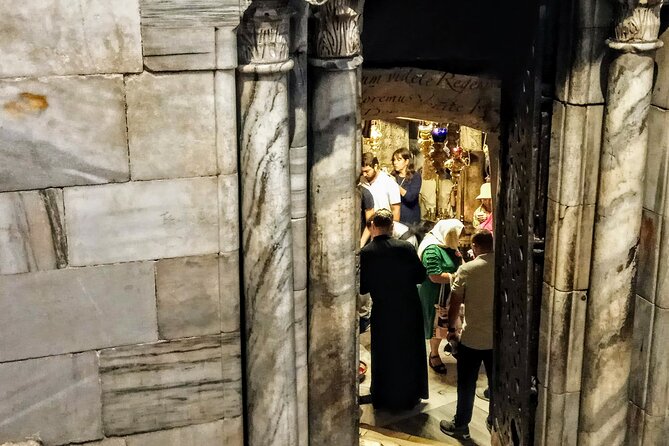
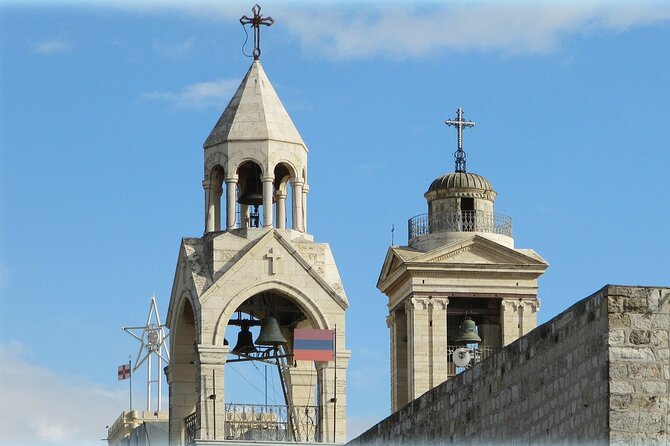
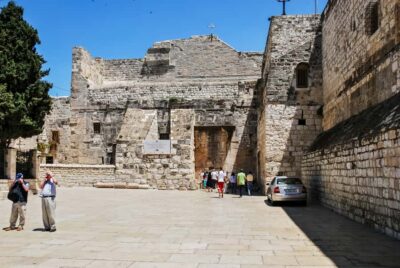
The Bethlehem portion focuses on Manger Square, Bethlehem’s Old City, and the Church of the Nativity. The church is built over the cave traditionally identified as the place where Jesus was born, making it the clearest focal point of this part of the day.
You receive about 30 minutes at the Church of the Nativity, with a local guide explaining the birth stories and the traditions tied to the site. That guidance matters here. The church is not simply a photo stop. Its meaning comes from layers of belief, ceremony, and place, and a guide can give you the basic context before you move on.
The short time also creates a practical limitation. You may have only enough time for the main church visit and an explanation of the setting, not an unhurried look at every detail. If Bethlehem is your main reason for booking, tell the guide early so your questions receive attention.
Manger Square gives the Bethlehem visit a clear starting point, while the Old City adds a sense of the surrounding town. The supplied schedule does not promise a meal or free time for shopping, and food and drinks are not included, so plan to ask about a break if you need one.
The Western Wall and the meaning of the Old City
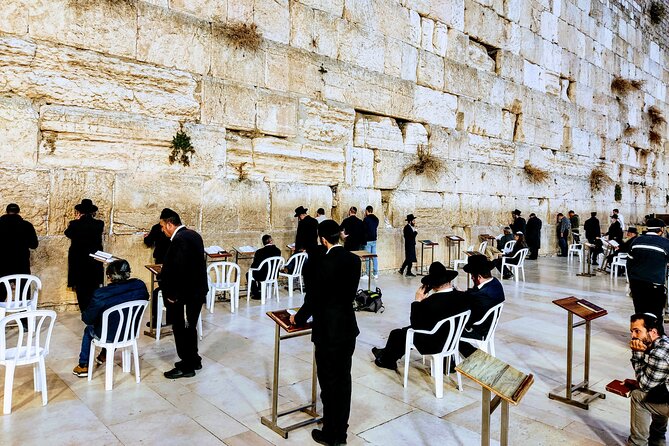
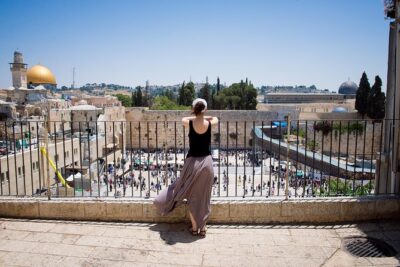
Back in Jerusalem, the Western Wall is one of the day’s essential stops. It is the surviving section of the retaining wall associated with the Second Temple, destroyed in 70 CE, and an important place of Jewish prayer.
The visit is listed at about 15 minutes. That is enough to see the wall, observe the prayer area, and hear a short explanation, but it is not a long period for quiet reflection. Dress respectfully, follow instructions at the site, and remember that the atmosphere is religious rather than simply historic.
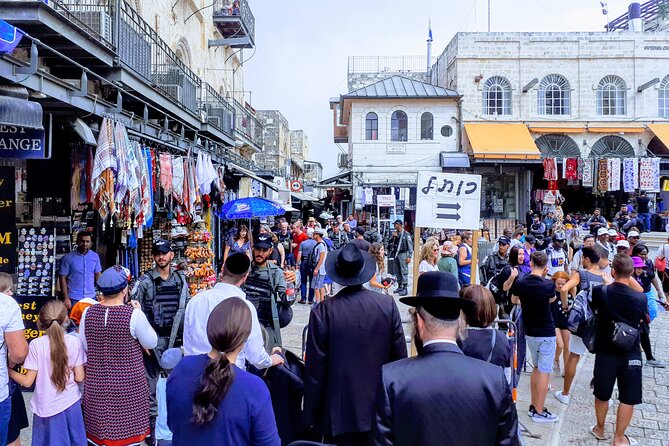
From there, the route moves through the Old City, with time in the Jewish, Christian, Muslim, and Armenian quarters. Each quarter receives about 15 minutes as a named stop. That gives you a useful orientation, but you should expect a walking overview rather than a full exploration of each neighborhood.
The route’s value is the comparison. Within a compact area, you see different religious communities, architectural traces, and commercial streets. Your guide’s ability to explain how these areas fit together can make the difference between a confusing walk and a memorable one. Several guide names connected with this experience, including Gadi, Simon, Allan Rabinowitz, Leontine, and Menno, have been praised for explaining different religious and cultural viewpoints with care. Your actual guide may be different.
The Temple Mount and its changing access
The Temple Mount is scheduled for about 30 minutes, but access is not guaranteed every day. The tour information specifically says it cannot be visited on Fridays, Saturdays, or Jewish and Muslim holidays.
That restriction is important when choosing your date. The site carries significance for Judaism, Christianity, and Islam. It is associated with the location of the two Jewish Temples, the former headquarters of European Christian Crusaders, and the present-day Al Aqsa Mosque and Dome of the Rock shrine.
You may be able to view or discuss the area even when direct access is closed, but the stated tour details do not promise an alternative visit. Ask about the schedule before booking if the Temple Mount is a priority. This is one of the tour’s clearest examples of why religious-site access can shape your day.
More things to do in Jerusalem:
- From Tel Aviv: Jerusalem Old & New City Bus Tour
★ 4.2 · 824 reviews - From Jerusalem: Masada & Dead Sea Full Day Tour with Pick Up
★ 4.5 · 815 reviews - Masada and the Dead Sea Day Trip from Jerusalem
★ 4.5 · 757 reviews - From Jerusalem: Nazareth and Sea of Galilee Tour
★ 4.5 · 588 reviews
Walking through the Jewish Quarter
The Jewish Quarter brings several distinct stops close together. At the Broad Wall, you look at an archaeological remnant linked with Jerusalem in the time of Hezekiah, traditionally dated here to the seventh century BCE. The stop lasts about 10 minutes, so listen closely to the explanation and use the moment to connect the visible stones with the city’s ancient defenses.
The Cardo receives about 20 minutes. This Roman-era street once served as a major commercial and social route, and its location in the Jewish Quarter helps show how Jerusalem changed under different rulers and periods.
These stops reward a guide who can connect archaeology with the biblical and later periods without turning the walk into a lecture. The route is short, but the subject matter is large. You will get more from it if you ask questions about what is original, what has been reconstructed, and how the street functioned in daily life.
Rooftops, the Austrian Hospice, and the Via Dolorosa
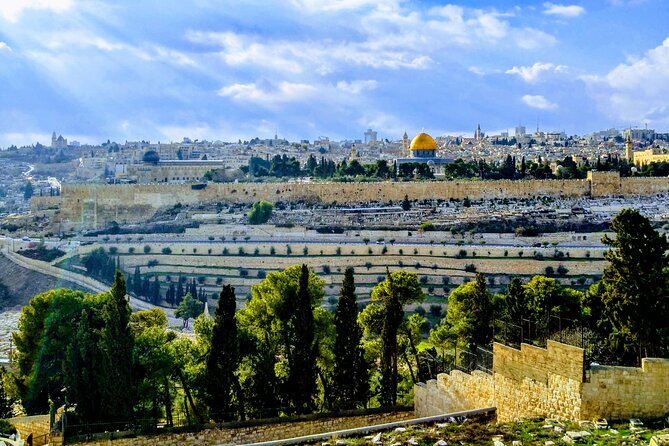
One of the more unusual features is the rooftop viewpoint at the Austrian Hospice. The route gives you a view toward the Mount of Olives before joining the Via Dolorosa at the third station.
This is a smart change of pace. After churches, walls, and narrow streets, a higher view helps you understand Jerusalem’s layout. You can see how the Old City relates to the Mount of Olives, rather than experiencing each site as an isolated stop.
The Via Dolorosa follows the traditional route associated with Jesus’s path to crucifixion. The tour includes about 20 minutes here, beginning at the third station after the rooftop view. That is enough for an introduction and a walk along part of the route, but not a complete, slow examination of every station.
The rooftop access also comes with a practical warning: the day includes stairs and uneven walking. One direct account connected with the experience notes that good condition is useful for walking parts of the old walls and climbing many steps. You do not need to be an athlete, but comfortable shoes and a steady pace will help.
The Church of the Holy Sepulchre
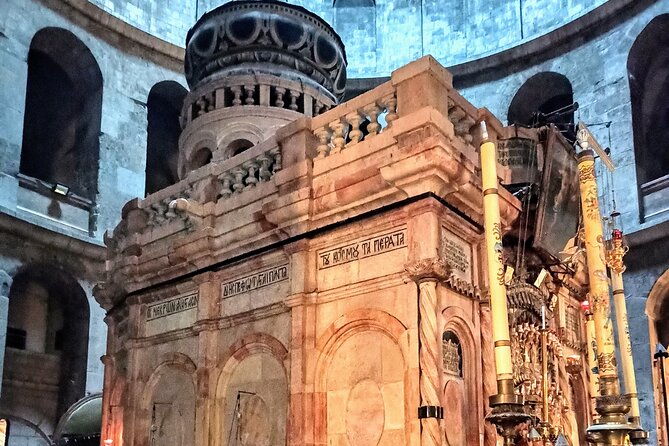
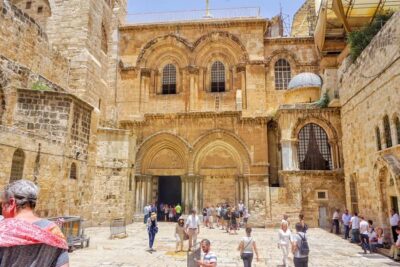
The Church of the Holy Sepulchre is allotted about 30 minutes. It commemorates Golgotha, the traditional hill of crucifixion, along with the tomb associated with Jesus’s burial and resurrection.
This is one of the most important Christian sites in Jerusalem, but it can feel complex even with a guide. Several traditions and worship communities share the church, and the building contains multiple areas of religious importance. A good explanation helps you know what you are looking at and why each location matters.
Thirty minutes gives you a focused introduction. You may see the principal areas included in the route, but the schedule does not promise a long period for personal prayer or close inspection. If you want a quieter visit, ask your guide how to use the available time.
The church also shows why this tour’s broad religious approach is useful. The day does not present Jerusalem through only one tradition. The Western Wall, Temple Mount, Church of the Nativity, and Holy Sepulchre are treated as parts of a shared, complicated city.
What the four quarters add to the walk
The Armenian, Jewish, Christian, and Muslim quarters each receive a short visit. These are not separate museum tours. They are orientation stops that help you read the Old City as a collection of communities rather than a single attraction.
The Armenian Quarter is one of the four traditional quarters and gives the route another religious and cultural perspective. The Jewish Quarter connects with the Broad Wall and Cardo. The Christian Quarter relates closely to the Holy Sepulchre and Via Dolorosa, while the Muslim Quarter helps place the Temple Mount and surrounding streets in context.
You will cover these areas on foot, so the order and pace matter. The route can feel full, especially after Bethlehem. The reward is range: you get a useful first look at Jerusalem’s different districts in one day. The tradeoff is that you will likely leave wanting more time in the places that interest you most.
Guide quality is central to the experience
The guide is not a minor extra here. The strongest praise attached to this experience focuses on guides who are punctual, patient, easy to talk with, and able to explain Jerusalem across religious and cultural lines.
Gadi has been praised for being friendly, accommodating, and clear about different viewpoints. Simon has been described as easy to spend a day with and strong at explaining the sites. Allan Rabinowitz has been praised for his passion and humility, while Leontine and Menno have been associated with detailed historical explanations and practical briefings.
Those names do not guarantee who will lead your tour. Still, they show what you should expect from a good day: not just directions from one monument to the next, but explanations that connect the sites. When you meet your guide, tell them your interests. A religious pilgrim, an archaeology fan, and a first-time visitor may need very different explanations.
Timing, transport, and what to bring
The tour lasts about eight hours. Pickup is offered from central Jerusalem hotels, and private vehicle transport is included. The listed meeting point is Omar Ben el-Khatab Street 26 in Jerusalem, and the activity ends back at the meeting point.
Because pickup language and the listed meeting point serve different purposes, confirm the exact pickup arrangement when you book. The private vehicle is valuable because you do not need to organize transport between Bethlehem and Jerusalem yourself.
Bring your passport. That is specifically required, and it is not a detail to overlook on a cross-city visit. Food and drinks are not included, so carry water and budget for your own meals or refreshments.
Places of worship require modest clothing. Both men and women must cover knees and shoulders, with no shorts or sleeveless tops permitted. Failure to meet the dress rules can mean refused entry, so light trousers or a longer skirt and a shirt with covered shoulders are the safe choice.
The tour is near public transportation, and service animals are allowed. You should still expect a physically active day with walking, stairs, and standing. A moderate fitness level is recommended.
Is $450 per person a fair price?
At $450 per person, the tour makes the most sense when you place a high value on privacy and convenience. The cost covers a professional guide, private transport, and hotel pickup and drop-off. For a small group, that can compare favorably with arranging separate taxis, guides, and visits on your own.
The price is harder to justify if you mainly want a slow visit to one or two sites. The schedule is packed, and the short stops limit personal time. You are paying for range and logistics, not extended stays at every church or quarter.
Group discounts may be available, which could improve the value for families or larger parties. The mobile ticket is convenient, and free cancellation is available when you cancel at least 24 hours before the start time. Last-minute cancellations or changes within 24 hours are not refunded.
Who should book this Jerusalem and Bethlehem tour?
I would choose this tour if you have one full day, want both cities, and prefer a private guide to a large group. It suits first-time visitors who want the major religious sites explained in a clear order, as well as families who benefit from private transport and the chance to ask questions.
It is also a good fit for people interested in how Judaism, Christianity, and Islam intersect in Jerusalem. The route gives you the Western Wall, Temple Mount, Holy Sepulchre, Church of the Nativity, and the four Old City quarters in one day.
I would think twice if you dislike tight schedules, have difficulty with stairs, or want long periods of quiet at each sacred site. You should also check the date carefully if the Temple Mount is essential, since access is not possible on Fridays, Saturdays, or Jewish and Muslim holidays.
For most first-time visitors with limited time, the tour offers a useful and well-supported introduction. Just arrive dressed for religious sites, ready to walk, and willing to accept a fast pace.
FAQ
How long does the tour last?
The tour lasts approximately eight hours.
Is this a private tour?
Yes. Only your group participates in the private activity.
Is hotel pickup available?
Yes. Pickup and drop-off are offered from central Jerusalem hotels. The listed meeting point is Omar Ben el-Khatab Street 26 in Jerusalem.
Is transportation included?
Yes. Transport by private vehicle is included.
Does the tour visit Bethlehem?
Yes. The route includes Manger Square, Bethlehem’s Old City, and the Church of the Nativity.
Does the tour visit the Church of the Nativity?
Yes. About 30 minutes are scheduled at the Church of the Nativity, with a local guide explaining the traditions connected with Jesus’s birth.
Can I visit the Temple Mount on any day?
No. The Temple Mount cannot be visited on Fridays, Saturdays, or Jewish and Muslim holidays according to the tour information.
What clothing should I wear?
You must cover your knees and shoulders. Shorts and sleeveless tops are not allowed in places of worship and selected museums.
Do I need to bring my passport?
Yes. A passport is required for the tour.
Is food included?
No. Food and drinks are not included.
Can I cancel for a refund?
Yes, if you cancel at least 24 hours before the experience start time. Cancellations or changes made less than 24 hours in advance are not refunded.
Just added in Jerusalem
- Walking Jerusalem in Russian★ 5.0 · 1 review
- private Full-Day Tour to Bethlehem and Jerusalem★ 5.0 · 2 reviews
- Jerusalem and Dead Sea Trip from Tel Aviv★ 4.0 · 6 reviews
- Tel Aviv & Old City of Jaffa – Tiny group from Tel Aviv★ 4.5 · 9 reviews
- Tel Aviv; Jaffa Old City, Port & Shuk Hapishpishim Walking Tour★ 4.5 · 11 reviews
- Tel Aviv: Food & History Tour of Jaffa Old City & Flea Market★ 5.0 · 1 review
- Discover the Secrets of the Underground Jerusalem with a private tour★ 5.0 · 4 reviews
- Private Tour from Tel Aviv to Jerusalem★ 5.0 · 3 reviews
Bethlehem and the West Bank Tours, compared.
Day Tour to Jerusalem and Bethlehem from Tel Aviv
Read our review →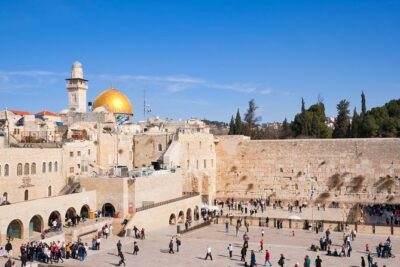
Jerusalem, Dead Sea, and Bethlehem from Tel Aviv
Read our review →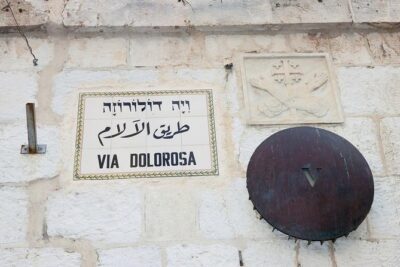
Jerusalem and Bethlehem Day Tour from Jerusalem
Read our review →
Travel to Bethlehem Half Day Guided Tour from Jerusalem & TelAviv
Read our review →
Ashdod Shore Excursion: Jerusalem and Bethlehem – for cruise ship guests only
Read our review →Browse the lists this tour appears in