
Reviewed · BETHLEHEM AND THE WEST BANK TOURS
Full-Day Trip of Jerusalem and Bethlehem
Two holy cities, one long day. This tour gives you a direct introduction to Jerusalem and Bethlehem, combining Mount of Olives views, the Old City’s sacred lanes, the Western Wall, Via Dolorosa, and the Church of the Nativity. I especially like the wide range of major sights packed into one outing and the chance to see both Israeli and Palestinian religious landmarks without arranging separate transport. The air-conditioned minivan is another welcome touch for a day that involves road time and plenty of walking.
The main drawback is the large-group format. The advertised maximum is 55 people, and some departures have involved bus changes, language mixing, or groups larger than expected. That can make it harder to hear the guide in crowded places and may reduce the time available at each stop.
In This Review
- Key points to know before booking
- What the eight-hour day is really like
- Mount of Olives: the view that makes Jerusalem click
- Mount Zion and Jerusalem’s sacred layers
- Through the Old City and into the Armenian Quarter
- The Western Wall and the Jewish Quarter
- Via Dolorosa and the Church of the Holy Sepulchre
- Bethlehem and the Church of the Nativity
- Guide quality, group size, and language issues
- Food, clothing, walking, and what to pack
- Is $120 a fair price?
- Who should book this day trip?
- Should you book the Jerusalem and Bethlehem tour?
- FAQ
- How long is the Jerusalem and Bethlehem tour?
- Does the tour depart from Tel Aviv?
- Is transportation included?
- Is food included in the price?
- Is a passport required?
- What should I wear?
- Does the tour visit the Dome of the Rock and Al-Aqsa Mosque?
- Can I cancel for a full refund?
Key points to know before booking
- Mount of Olives opens the day with Jerusalem’s best broad view, helping you understand the shape of the Old City before walking inside it.
- The route covers major Jewish and Christian sites, including King David’s Tomb, the Room of the Last Supper, the Western Wall, Via Dolorosa, and the Church of the Holy Sepulchre.
- Bethlehem adds a second country and a different political setting to the same day, with the Church of the Nativity and Shepherds’ Field on the schedule.
- The tour is built for orientation, not leisurely sightseeing, with roughly five hours focused on Jerusalem and about two hours in Bethlehem.
- Guide quality matters greatly here. Riki, Ron, and Elias received especially warm praise for clear explanations, good pacing, and a calm approach.
- Bring a passport and cover your shoulders and knees, since entry to religious sites can be refused if you are dressed too casually.
What the eight-hour day is really like
At $120 per person, this is a fairly practical way to see two difficult-to-organize destinations in one day. The price includes air-conditioned transport, a group guide, and admission to the listed sites, but not food or drinks. You are paying mainly for the route, transportation, and coordination, not for a slow, private exploration.
The day is also physically demanding. You will walk over uneven stone streets, stand at busy religious sites, and move through several quarters of Jerusalem. The operator asks for a moderate fitness level, and that is a fair warning. You should also expect a full schedule rather than long breaks for shopping or sitting.
The trip leaves Tel Aviv and heads toward Jerusalem, though pickup organization can affect the start. Some departures have involved groups being combined and separated, with bus changes that added substantial time. One account described nearly three hours lost during the road portion because of this process, while another found pickup prompt and smooth. I would confirm the pickup details carefully and avoid planning an important evening activity immediately after the tour.
More Day Trips in Jerusalem
- From Tel Aviv: Jerusalem and Bethlehem Guided Day Trip
★ 4.3 · 1,316 reviews - Masada and the Dead Sea Day Trip from Jerusalem
★ 4.5 · 757 reviews - Nazareth and the Sea of Galilee Day Trip from Jerusalem
★ 4.5 · 446 reviews
Mount of Olives: the view that makes Jerusalem click
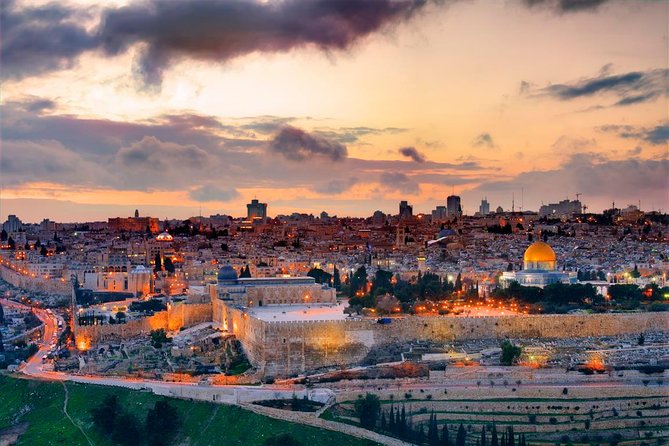
The first major stop is the Mount of Olives. From here, you get a panoramic view toward Jerusalem’s Old City, with its walls and tightly packed quarters spread below. This is one of the most useful stops on the whole tour because it gives you a visual map before you enter the maze of alleys.
A guide can point out the main areas from above and explain why the city matters to Judaism, Christianity, and Islam. The view also helps you understand that Jerusalem is not one single sight. It is a compact collection of sacred places, neighborhoods, walls, gates, and religious traditions layered together.
The stop is brief compared with what there is to see. You should treat it as an orientation point rather than a long photo session. Crowds, road conditions, and the pace of the group can affect how much time you have at the viewpoint.
The tour also includes a glimpse of the Garden of Gethsemane. Its importance comes from the Christian story of Jesus’ final days, and the setting provides useful context before you walk the Via Dolorosa later in the day. You may not have time for a detailed visit, so listen closely while the guide explains what you are seeing.
Mount Zion and Jerusalem’s sacred layers
Next comes Mount Zion, where the route includes King David’s Tomb, the Room of the Last Supper, and Dormition Abbey. These sites show how several religious traditions connect their stories to the same hill.
King David’s Tomb is an important Jewish site, though the identification of the actual burial place is a matter of tradition rather than something the tour can prove. The Room of the Last Supper is associated with the final meal of Jesus and his disciples. Dormition Abbey adds a major Christian landmark with its distinctive religious setting.
This part of the tour works best if you see it as a short introduction to Jerusalem’s competing claims and sacred memories. The sites are close together, but you will still be moving through a busy schedule. Ask your questions when the guide pauses, since explanations can be difficult to hear when the group is spread out.
Guides named Riki, Ron, and Elias were particularly praised for handling this kind of material well. Riki was appreciated for her experience, direct style, and diplomatic explanations. Ron was praised for keeping the day moving without rushing every stop, while Elias was described as well prepared. Those qualities are valuable here because the subject matter is sensitive and the schedule leaves little room for confusion.
Through the Old City and into the Armenian Quarter
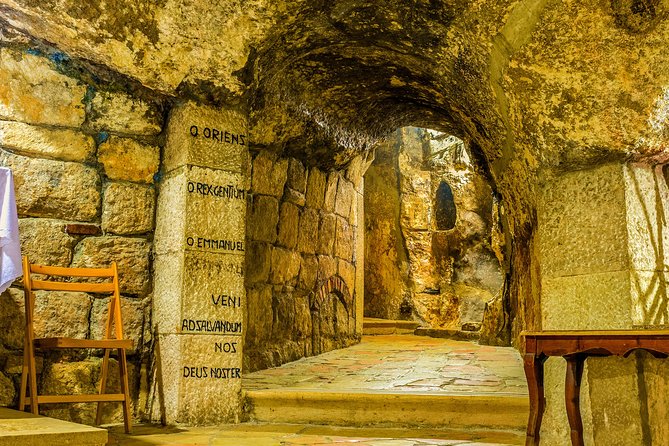
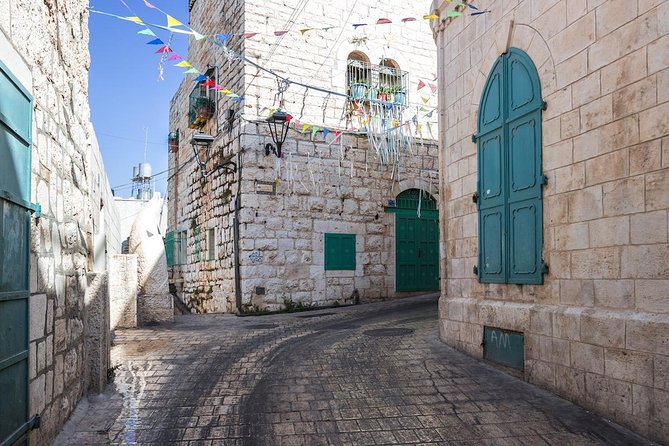
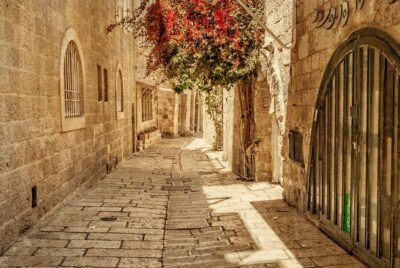
The Old City portion begins through Zion Gate, followed by a walk through the Armenian and Jewish quarters. The stone lanes can feel crowded and confusing, which is exactly why a guide is useful. Without context, it is easy to see only shops, walls, and passing religious groups. With a good explanation, the route becomes a lesson in how the city is divided and shared.
The tour continues to the Cardo, the old Roman road that once served as Jerusalem’s main street about 1,500 years ago. The recently excavated and restored section gives you a glimpse of the city’s Byzantine period. It is a useful counterpoint to the living religious sites because it shows that Jerusalem’s story includes ancient urban planning, trade, and public life as well as worship.
You will also pass through markets. This is not a dedicated shopping stop, and the schedule may not allow much time to browse. Still, the market streets add ordinary daily life to a day otherwise focused on sacred monuments. If buying gifts matters to you, ask the guide early whether a short shopping pause is possible rather than assuming one is built in.
The group format can be a problem in this section. One person reported being unable to hear the guide in crowded areas, and another felt the guide relied too much on the group to supply answers. I would stay near the guide, especially at turning points, and use quieter moments to ask for clarification.
More Bethlehem and West Bank tours:
- Tel Aviv: Jerusalem, Bethlehem & Dead Sea
★ 4.0 · 881 reviews - Day Tour to Jerusalem and Bethlehem from Tel Aviv
★ 4.5 · 720 reviews - Jerusalem, Dead Sea, and Bethlehem from Tel Aviv
★ 4.0 · 299 reviews - Jerusalem and Bethlehem Day Tour from Jerusalem
★ 4.5 · 258 reviews
The Western Wall and the Jewish Quarter
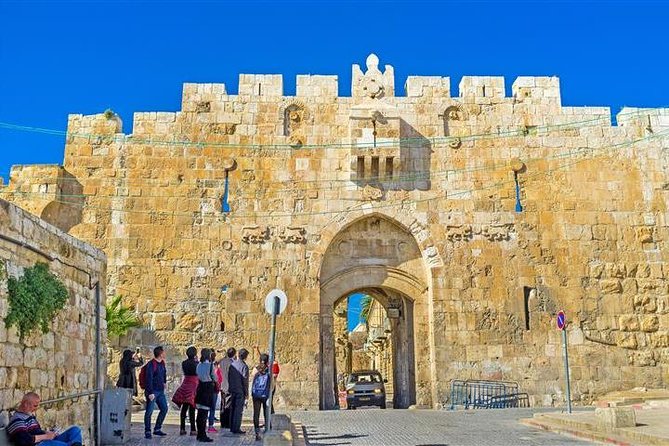
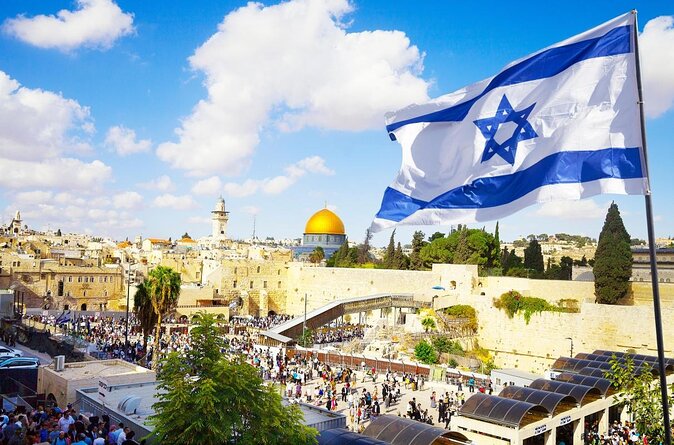
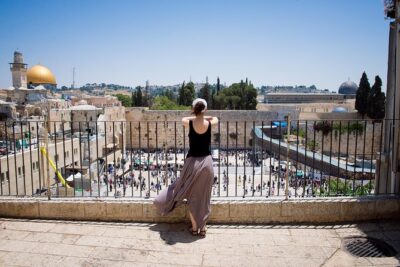
The Western Wall, also called the Kotel or Wailing Wall, is one of Jerusalem’s central Jewish holy sites. The exposed section is part of the retaining structure connected with the ancient Temple Mount. People come to pray, place written requests in the cracks, and observe Jewish religious customs.
The tour gives you the chance to see the wall up close, though the exact experience depends on crowd levels and religious observances. The area is divided into men’s and women’s prayer sections, and respectful behavior is essential. Your guide should explain how to approach the site, but it is wise to watch what people are doing and avoid treating the prayer area like a stage set.
This is another point where modest clothing matters. Men and women must have shoulders and knees covered at religious sites, and shorts or sleeveless tops may lead to refused entry. Lightweight long trousers or a below-knee skirt, plus a shirt that covers the shoulders, is the safest choice.
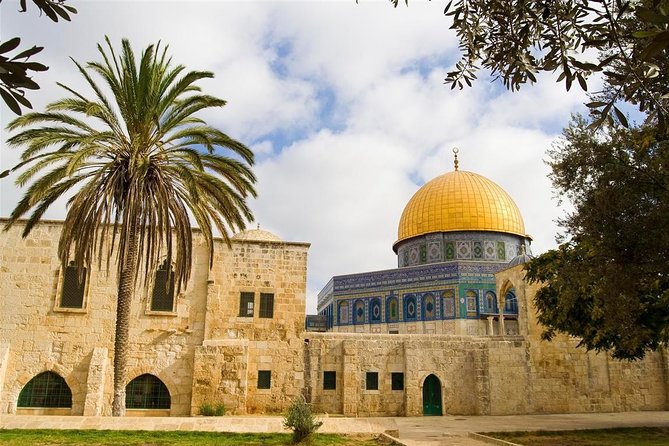
The tour does not include the Dome of the Rock or Al-Aqsa Mosque. One departure could not include access to that area during Ramadan, and those sites are not part of the stated route. If seeing them is a priority, you should not assume this day trip will provide it.
Via Dolorosa and the Church of the Holy Sepulchre
From the Jewish Quarter, the route continues into the Christian Quarter and along the Via Dolorosa. This traditional path follows the final route associated with Jesus before his crucifixion. It passes through narrow streets where shops, homes, pilgrims, and religious processions share limited space.
The setting is more crowded and less solemn than some first-time visitors expect. That is part of the reality of Jerusalem. You may hear vendors calling out, see people hurrying through the lanes, and need to step aside as groups pass. The value of the guided walk is not silence. It is learning what the different stations mean while standing in the actual streets connected with Christian tradition.
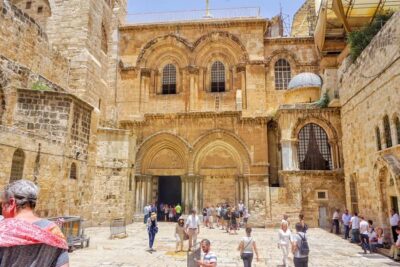
The Church of the Holy Sepulchre is the major Christian stop. It is associated with both the crucifixion and burial of Jesus, making it one of the most important Christian pilgrimage sites in the world. Inside, several Christian communities share responsibility for different areas, and the building can feel visually crowded and religiously complex.
You should expect lines or congestion at important points. The tour includes a visit, but it cannot guarantee a long private moment at any shrine. If your main goal is extended prayer or careful architectural study, a private or smaller tour would suit you better.
Bethlehem and the Church of the Nativity
After Jerusalem, the group continues to Bethlehem, the town associated with Jesus’ birth. This adds a major change in setting to the day. Bethlehem is in the West Bank, and the crossing between areas can involve practical delays, so keep your passport with you and expect the schedule to be affected by local conditions.
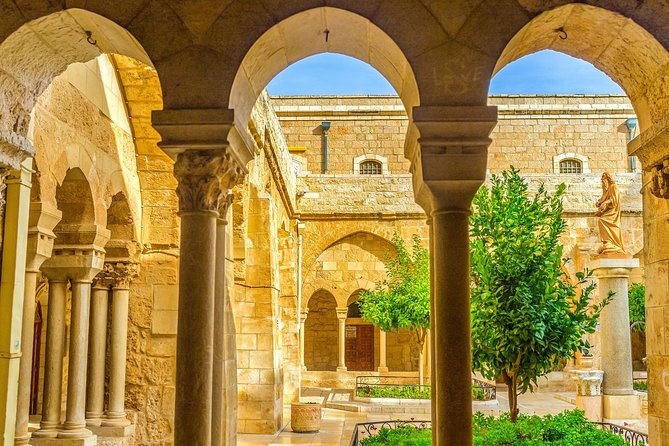
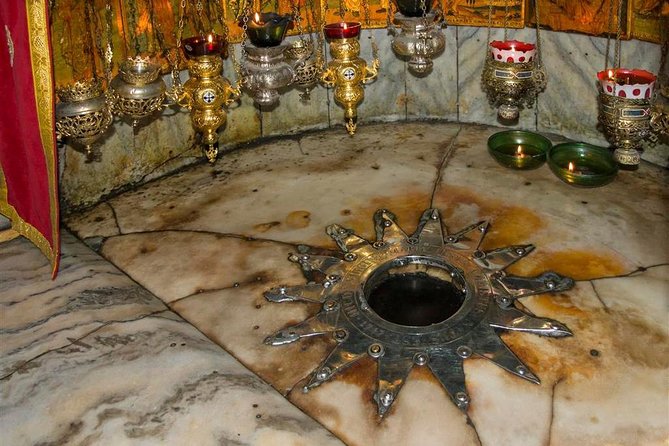
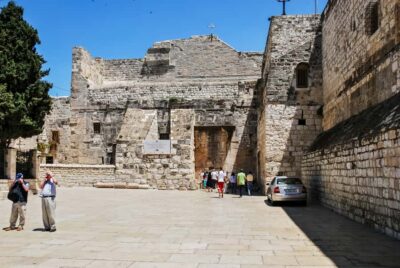
Manger Square is the main gathering point for the Bethlehem visit. From there, you visit the Church of the Nativity, one of Christianity’s oldest and most important churches. The church is built over the traditional location of Jesus’ birth, with the exact place marked in an underground grotto.
The grotto is the emotional center of this portion of the tour. A star marks the traditional birthplace, and the setting connects the biblical story with a physical place you can visit. The space is not large, so crowds may make the stop feel hurried. Stay close to the guide and listen for instructions about lines and meeting points.
The Bethlehem visit is listed at about two hours, while the Jerusalem section takes about five hours. That division gives Bethlehem enough time to feel like a real part of the day, though not enough for an expansive exploration of the town. The route also includes a view of Shepherds’ Field, connected with the biblical account of the shepherds who heard of Jesus’ birth.
This part can be especially meaningful if Christian history is your main reason for visiting Israel. At the same time, the schedule means you will see only selected sites. You should think of Bethlehem as an important first look, not a complete tour of the area.
Guide quality, group size, and language issues
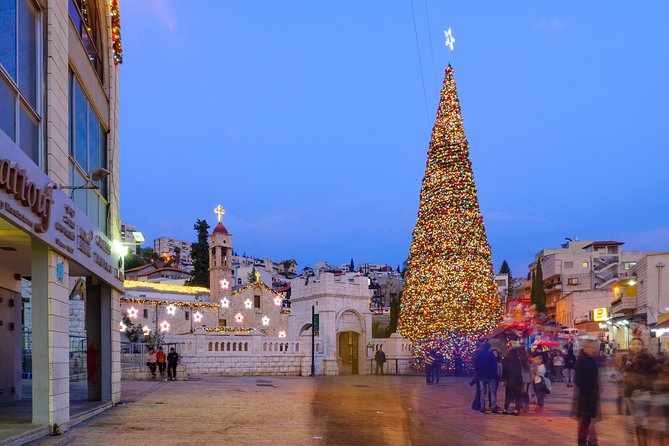
The guide can make or break this experience. Jerusalem and Bethlehem require more than directions because each stop carries religious, historical, and political meaning. Riki earned strong praise for her clear knowledge, personal experience, steady pacing, and straightforward style. Ron was noted for warmth and useful explanations, and Elias for preparation.
The group can contain up to 55 people. That is a lot of voices in narrow streets and crowded courtyards. Some outings have included mixed language groups, including Italian or Russian speakers, with translation taking place during the guide’s explanation. This can slow the tour and make it harder for English speakers to follow every detail.
There were also cases where people paid for a smaller group and found the final group larger than expected, including one account describing about 16 people instead of eight. If group size is central to your decision, ask for written confirmation before booking and understand that the listed maximum is not the same as a small-group promise.
For a first visit, a strong guide can still make the group format worthwhile. If you need detailed answers to specialist questions, quiet time at each site, or a fixed small group, pay more for a private tour instead.
Food, clothing, walking, and what to pack
Food and drinks are not included. Bring water and something easy to eat unless you prefer to buy food during the day. The supplied information does not promise a formal meal stop, so do not count on a long restaurant break.
Wear practical shoes for stone streets and extended walking. Dress modestly from the start rather than trying to cover up at the last minute. Knees and shoulders must be covered for men and women at places of worship and selected museums.
Carry your current valid passport. It is required on the day of the trip, particularly because the itinerary includes Bethlehem. The tour runs in all weather, so check the forecast and dress in layers, with sun protection or rain protection as needed.
A mobile ticket is provided, and confirmation is received when you book. Cancellation is free if you cancel at least 24 hours before the start time. Changes or cancellations made inside that window are not accepted for a refund.
Is $120 a fair price?
The value depends on what you want from the day. For $120, you get transport from Tel Aviv, a guide, and a planned route linking two places that are not simple to combine independently. That is useful if you have limited time or prefer not to manage directions, border-related logistics, and admissions yourself.
The price is less attractive if you expect a small group, long visits, included meals, or detailed specialist guiding. Food and drinks cost extra, and the day may lose time through pickup changes or group coordination. You also need to accept that the most famous sites can be crowded.
I see this as a reasonable orientation tour rather than a final word on Jerusalem and Bethlehem. It lets you identify the places you most want to revisit, while giving you enough historical and religious context to understand what you are seeing.
Who should book this day trip?
I would recommend it to first-time visitors from Tel Aviv who want the major sights in one organized day. It suits you particularly well if the Western Wall, Via Dolorosa, Church of the Holy Sepulchre, and Church of the Nativity are your priorities.
It also works for people who want an expert-led introduction and do not mind a brisk pace. Families can book, but children must be accompanied by an adult, and the walking and long day may test younger children.
I would be cautious if you dislike large groups, need guaranteed quiet, or want to spend substantial time shopping. Anyone with detailed religious, archaeological, or political questions should consider a private option. The experience is at its best when the guide is strong, the pickup runs on time, and you treat the day as a broad first look.
Should you book the Jerusalem and Bethlehem tour?
Book it if you want an efficient first impression of both holy cities and accept that efficiency comes with crowds and a packed schedule. The Mount of Olives view, Western Wall, Via Dolorosa, Church of the Holy Sepulchre, and Bethlehem grotto give you the essential landmarks in one day.
Before paying, confirm the pickup arrangement, expected group size, and guiding language. Pack a passport, water, comfortable shoes, and modest clothing. If you need more personal attention, do not rely on the maximum group size being small. Choose this tour for coverage and convenience, not for a slow, private encounter with every site.
FAQ
How long is the Jerusalem and Bethlehem tour?
The experience lasts approximately eight hours. About five hours are assigned to the Jerusalem portion and about two hours to Bethlehem, with additional time used for transport and coordination.
Does the tour depart from Tel Aviv?
Yes. The tour is a full-day trip from Tel Aviv to Jerusalem and Bethlehem.
Is transportation included?
Yes. Transport is provided by air-conditioned minivan as part of the group tour.
Is food included in the price?
No. Food and drinks are not included unless specifically stated.
Is a passport required?
Yes. You must bring a current valid passport on the day of the tour.
What should I wear?
You should dress modestly, with your knees and shoulders covered. Shorts and sleeveless tops are not allowed at places of worship and selected museums, and entry may be refused if you do not follow the dress code.
Does the tour visit the Dome of the Rock and Al-Aqsa Mosque?
No. They are not included in the stated itinerary. The route focuses on the Mount of Olives, Mount Zion, the Old City, the Western Wall, Christian sites, and Bethlehem.
Can I cancel for a full refund?
Yes, if you cancel at least 24 hours before the experience start time. Cancellations or changes made less than 24 hours before the start time are not accepted for a refund.
Just added in Jerusalem
- Walking Jerusalem in Russian★ 5.0 · 1 review
- private Full-Day Tour to Bethlehem and Jerusalem★ 5.0 · 2 reviews
- Jerusalem and Dead Sea Trip from Tel Aviv★ 4.0 · 6 reviews
- Tel Aviv & Old City of Jaffa – Tiny group from Tel Aviv★ 4.5 · 9 reviews
- Tel Aviv; Jaffa Old City, Port & Shuk Hapishpishim Walking Tour★ 4.5 · 11 reviews
- Tel Aviv: Food & History Tour of Jaffa Old City & Flea Market★ 5.0 · 1 review
- Discover the Secrets of the Underground Jerusalem with a private tour★ 5.0 · 4 reviews
- Private Tour from Tel Aviv to Jerusalem★ 5.0 · 3 reviews
Bethlehem and the West Bank Tours, compared.
Day Tour to Jerusalem and Bethlehem from Tel Aviv
Read our review →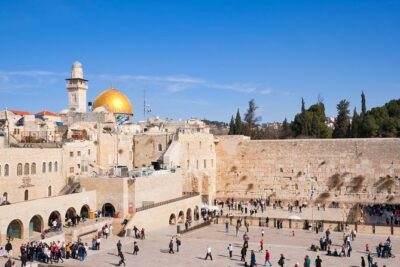
Jerusalem, Dead Sea, and Bethlehem from Tel Aviv
Read our review →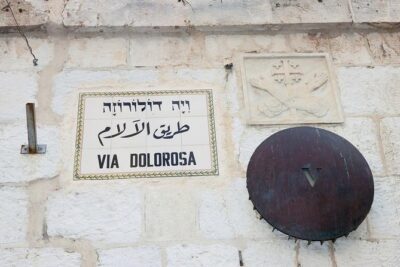
Jerusalem and Bethlehem Day Tour from Jerusalem
Read our review →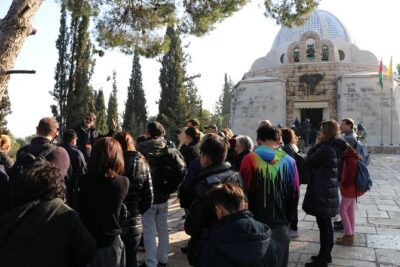
Travel to Bethlehem Half Day Guided Tour from Jerusalem & TelAviv
Read our review →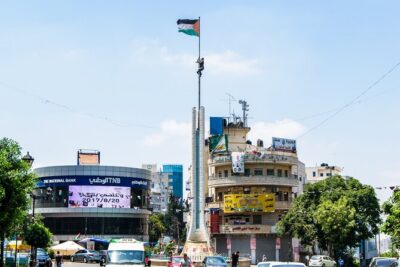
Ashdod Shore Excursion: Jerusalem and Bethlehem – for cruise ship guests only
Read our review →Browse the lists this tour appears in