
Reviewed · HAIFA AND THE GALILEE TOURS
Gems of the North: Galilee & Golan Heights 2-Days Package
Northern Israel rewards patience. This two-day journey links Roman ruins, Golan viewpoints, sacred sites, and a kibbutz stay in one well-packed route. I especially like the chance to see Beit Shean’s Roman excavations and the quiet rural character of an overnight kibbutz, rather than returning to a city each night. The main drawback is the pace: you cover a lot of ground, and meals beyond breakfast are not included.
I also like the range of places on the schedule. One moment you are looking across the Kuneitra valley from Mount Bental, and the next you are walking through a synagogue or tracing the Jordan River to its source at Banias. At $348 per person, this is not a cheap side trip, but transport, admissions, a guide, hotel pickup and drop-off, and one night with breakfast are included.
In This Review
- Key points at a glance
- Why this northern route works
- Day one: from Beit Shean to the Golan Heights
- Roman Beit Shean
- Yardenit and the Jordan Valley
- Hamat Gader and the climb to the Golan
- Katzrin, the Talmudic city
- Mount Bental and the Kuneitra valley
- A kibbutz night, with breakfast included
- Day two: Banias, Nimrod Fortress, and Birkat Ram
- Banias, or Caesarea Philippi
- Nimrod Fortress, a Crusader stronghold
- Birkat Ram, an extinct volcano
- Safed, synagogues, and the artists’ quarter
- Is $348 a fair price?
- Who should book this tour?
- Should you book the northern Israel package?
- FAQ
- How long is the tour?
- What language is the tour conducted in?
- Is transportation included?
- Where do you stay overnight?
- Is breakfast included?
- Which ancient sites are visited?
- Are religious sites part of the itinerary?
- Can children join the tour?
Key points at a glance
- Roman Beit Shean: Walk among extensive remains from the ancient city, including the well-preserved Roman setting that gives the first day real historical weight.
- Kibbutz overnight: Stay in a kibbutz guesthouse in a double room with breakfast, then tour the settlement the next morning.
- Mount Bental viewpoint: Look toward former Syrian fortifications and the city of Kuneitra across the border.
- Banias and the Jordan River: Visit one of the river’s sources at the Banias nature reserve, also known as Caesarea Philippi.
- Golan variety: See the extinct volcanic setting at Birkat Ram, ancient synagogues, and the Talmudic city of Katzrin.
- Safed finale: Finish in the city associated with Jewish mysticism, with time for synagogues, a visitors center, and the artists’ quarter.
Why this northern route works
Northern Israel can be awkward to explore without a car. The sites are spread across the Jordan Valley, Galilee, and Golan Heights, and public transport does not always make a tidy sightseeing loop. This package solves that problem with an air-conditioned coach, hotel pickup and drop-off, and a guide who provides the historical thread between stops.
The route is not built around one single headline attraction. Its appeal comes from the contrasts: Roman streets at Beit Shean, a Christian baptism site at Yardenit, Jewish heritage in Katzrin and Safed, military history on Mount Bental, and rural life at a kibbutz.
You should also know what this is not. It is not a slow retreat with long breaks at each stop. The schedule moves north, up into the Golan, across to the far northeastern sites, and then back toward Safed. I would choose it if you value variety and efficient transport. If you prefer lingering at one archaeological site or spending a full day hiking, the pace may feel tight.
More things to do in Jerusalem:
- From Tel Aviv: Jerusalem and Bethlehem Guided Day Trip
★ 4.3 · 1,316 reviews - Tel Aviv: Jerusalem, Bethlehem & Dead Sea
★ 4.0 · 881 reviews - From Tel Aviv: Jerusalem Old & New City Bus Tour
★ 4.2 · 824 reviews
Day one: from Beit Shean to the Golan Heights
The first day begins with a drive north along the coastal plain, passing the area of Megiddo before reaching Beit Shean. The journey itself helps you understand the shape of northern Israel, moving from the central coastal region toward the Jordan Valley and the high ground of the Golan.
Roman Beit Shean
Beit Shean is one of the strongest stops on the entire trip. The excavated city presents ancient Roman urban life on a large scale, with extensive remains rather than a few isolated stones. You can expect broad ruins and a setting that makes the size and planning of the old city easier to grasp.
I like this stop because it gives you physical evidence to study. A guide can explain the layers of settlement and the Roman period, but the site does much of the work itself. The surviving architecture helps turn abstract dates into streets, public buildings, and a functioning city.
Wear shoes suited to uneven walking surfaces. The tour includes several archaeological and outdoor locations, so comfortable footwear, water, and a hat are sensible throughout the trip. Since the schedule includes many stops, you may not have unlimited time at Beit Shean. Focus on the major remains and stay aware of the group’s meeting instructions.
Yardenit and the Jordan Valley
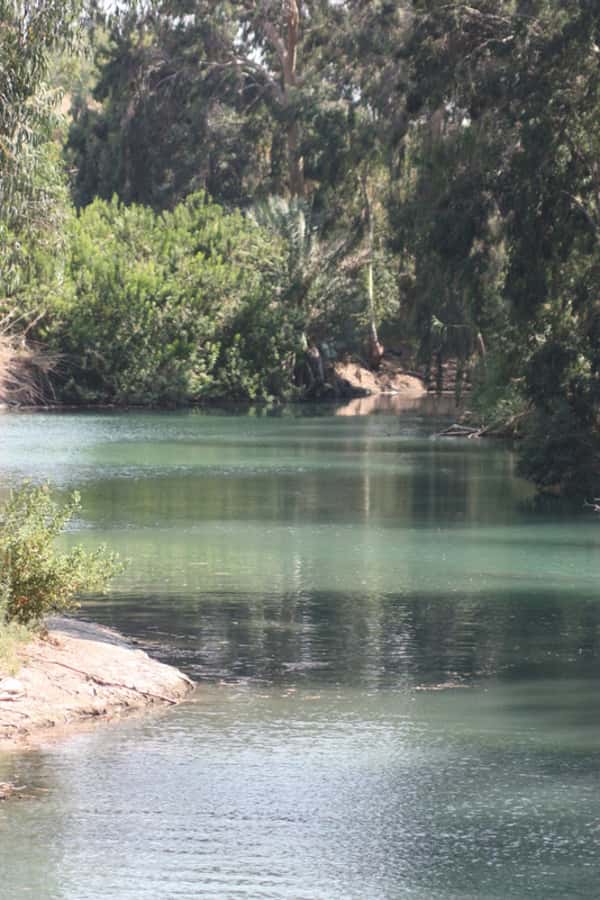
The route then follows the Jordan Valley north toward Yardenit, a well-known baptism site on the Jordan River. This is a short but meaningful change of mood after the Roman ruins. Instead of ancient civic remains, you encounter a living religious tradition connected with Christian baptism.
Yardenit is not presented as the river’s only source. The second day visits Banias, one of the tributaries that feed the Jordan system. Keeping those places distinct helps you understand the geography: Yardenit is associated with baptism, while Banias is a northern source area.
You should dress respectfully at religious locations. The tour requires modest clothing for holy places, and that advice applies especially to anyone planning to enter or spend time near sacred spaces.
More trips into the Galilee:
- From Jerusalem: Nazareth and Sea of Galilee Tour
★ 4.5 · 588 reviews - Nazareth and the Sea of Galilee Day Trip from Jerusalem
★ 4.5 · 446 reviews - Travel To Bethlehem, Jericho & Jordan River – Group Guided Tour from Jerusalem
★ 4.5 · 128 reviews - Caesarea, Haifa & Akko Day Trip from Jerusalem
★ 4.3 · 96 reviews
Hamat Gader and the climb to the Golan
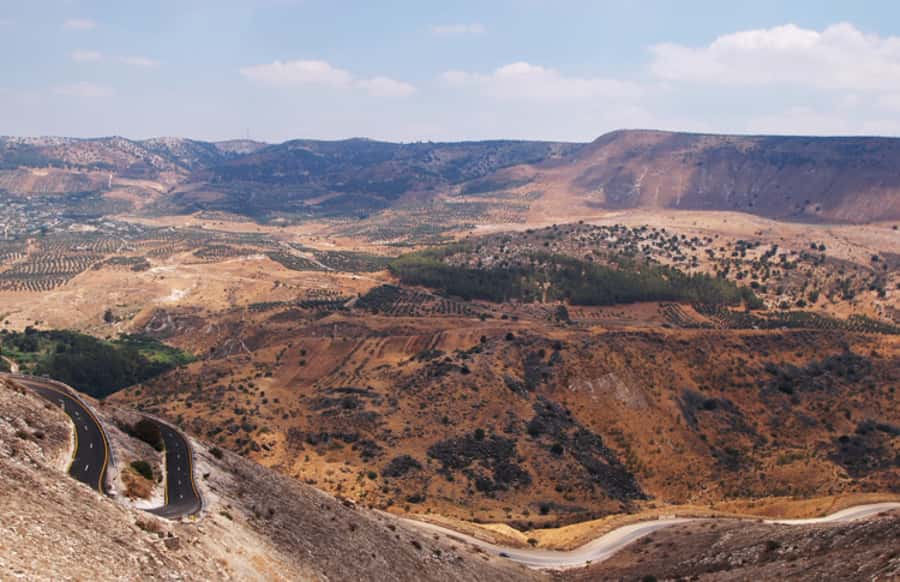
After Yardenit, the route ascends toward the southern Golan Heights via Hamat Gader. This transition is one of the pleasures of the trip. The scenery changes as the coach leaves the lower valley and climbs toward higher ground.
At the Shalom Observatory, you look west across the Sea of Galilee. This is a useful orientation stop because it lets you connect the areas you have crossed by road. The view is part of the experience, but the guide’s explanation also matters here. Without context, a wide overlook can blur into the next one. With a map and a few place names, the geography becomes much easier to follow.
Bring water and a hat even if the day begins cool. Viewpoints can feel exposed, and the tour includes outdoor stops where shade may be limited.
Katzrin, the Talmudic city
The next major stop is the excavated remains of Katzrin, described as the Talmudic capital of the Golan. The site offers a different kind of ancient experience from Beit Shean. Beit Shean presents a large Roman city, while Katzrin brings you closer to Jewish life in the Talmudic period.
The area is also known for its synagogues, which add an important religious and architectural layer to the trip. I would pay attention to the building details and the way the guide explains the community that once lived here. The stop is valuable because it gives the Golan a human story, not just a military or geological one.
This is one reason the tour works well for people interested in Jewish history and archaeology. You are not confined to one era. The two days move through Roman, Talmudic, Crusader, Christian, modern military, and kibbutz history.
Mount Bental and the Kuneitra valley
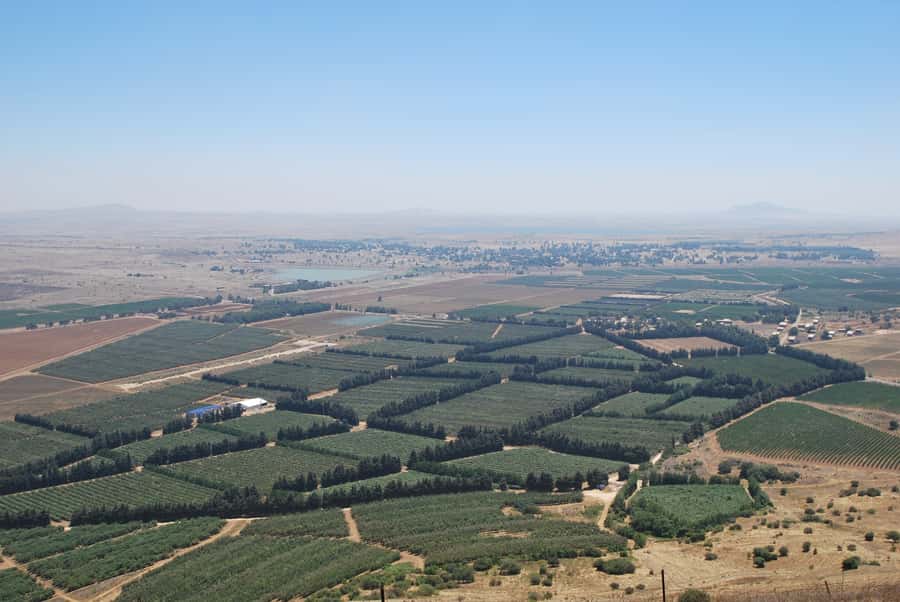
The day continues to Mount Bental, written in the schedule as Mount Bentalwe. From the viewpoint, you look across the Kuneitra valley toward former Syrian fortifications and the Syrian city of Kuneitra across the border.
This stop adds modern history to a day otherwise filled with ancient remains. The fortifications and border view make the Golan’s strategic importance visible. You do not have to be a military-history specialist to appreciate the location. The terrain explains why high ground matters.
Keep your expectations practical. This is a viewpoint and historical stop, not an extended trek. You will be looking outward, listening to the guide, and taking in the broad view. The value lies in seeing the setting directly, especially after visiting ancient sites that show how long this area has been contested and settled.
A kibbutz night, with breakfast included
The overnight stay is at a kibbutz guesthouse, in a double room on a bed-and-breakfast basis. For two people traveling together, this arrangement is simple and useful. You get a clean place to sleep outside the main city centers, and the next morning includes a tour of the kibbutz itself.
The available stay description points to clean rooms and a generous Israeli-style breakfast. That makes the overnight feel more like part of the route than a basic transfer stop. You are not simply parking at a standard hotel. You get a glimpse of a distinctive Israeli communal settlement model, followed by a guided visit.
Still, keep the accommodation category in mind. A kibbutz guesthouse is chosen for location and character, not for a luxury-resort experience. Your room is based on a double occupancy arrangement, so solo travelers should check how the booking handles room allocation and pricing before paying.
Food and drink are not included except for breakfast. Plan to budget separately for meals during both days. The tour information does not specify restaurant stops, menus, or meal times, so you should not assume that lunch or dinner is covered in the $348 price.
Day two: Banias, Nimrod Fortress, and Birkat Ram
The second morning begins with a tour of the kibbutz before the route continues north. This is a good contrast with the first day. You have seen ancient settlements and military viewpoints; now you get a closer look at a modern rural community.
The group then heads toward Banias, the northern part of the journey.
Banias, or Caesarea Philippi
Banias is one of the tributaries and source areas of the Jordan River. It is also known as Caesarea Philippi, a name that connects the site with its ancient religious and political past.
The Banias nature reserve gives the tour a more natural setting than Beit Shean or Katzrin. You can expect water, greenery, and archaeological context rather than a broad paved Roman city. The site works especially well after the previous day because it changes the pace and the scenery.
Do not confuse a visit to Banias with a full outdoor hiking day. The supplied schedule confirms a visit to the reserve, but it does not promise a long hike or a particular trail. Wear comfortable walking shoes, but keep your plans flexible.
Nimrod Fortress, a Crusader stronghold
The next stop is Ka’alat Nimrod, also known as Nimrod Fortress. This Crusader castle is one of the most striking historical sites on the route because it occupies a high position and was built for defense.
A fortress visit rewards curiosity. Look for the relationship between walls, towers, entrances, and the surrounding terrain. The site helps explain how control of mountain routes and passes shaped the region. It also gives you a chance to move through a place designed for protection rather than public life.
Uneven surfaces are likely at a medieval fortress, so sturdy shoes matter. The tour data does not provide details about every stair or passage, so anyone concerned about walking should ask the operator for current conditions before booking.
Birkat Ram, an extinct volcano
After the fortress, the itinerary reaches Birkat Ram, described as an extinct volcano. This is another sharp change in subject. In two days, you move from archaeology to religious geography, from border history to geology.
Birkat Ram helps you see the Golan as more than a collection of ruins. Its volcanic origin explains part of the region’s distinctive terrain. The stop may be brief, since it shares the second day with Banias, Nimrod, and Safed, but it broadens the tour’s subject matter.
If you enjoy tours that connect geology with human history, this is a useful inclusion. If you mainly want ancient buildings, you may prefer to spend more time at Katzrin or Beit Shean.
Safed, synagogues, and the artists’ quarter
The final destination is Safed, the city associated with Kabbalah, Jewish mysticism, and historic synagogues. The program includes synagogues, a visitors center, and the artists’ quarter.
Safed gives the trip a more lived-in cultural finish. Earlier sites are mainly archaeological or viewed from designated overlooks. Here, the focus turns to religious tradition, urban streets, art, and ongoing cultural life.
Modest dress is important for the synagogue visits. I would also keep your clothing practical for walking, since the artists’ quarter and older parts of Safed may involve uneven streets or slopes. The itinerary does not state how much free time you receive in the city, so do not count on a long independent shopping session.
The artists’ quarter can be appealing if you want a less formal ending. It provides a change from guided ruins and viewpoints, allowing you to see a creative side of the city. The program is still structured, so ask your guide when and where to regroup before wandering off.
Is $348 a fair price?
At $348 per person, the cost is easiest to justify if you would otherwise need to rent a car, pay for fuel, arrange lodging, buy site admissions, and organize a cross-regional route yourself. The package includes an air-conditioned coach, professional guide, hotel pickup and drop-off, entry fees, one night in a kibbutz guesthouse, and breakfast.
That is a solid bundle for a two-day northern circuit. The lodging is based on two people sharing a room, so the value is strongest for couples or friends traveling together. A solo traveler may find the price less attractive if there is an additional room supplement, though the supplied details do not state one.
The cost is less appealing if you dislike organized touring or want to choose your own meal stops. Food and drinks are excluded apart from breakfast, so add those expenses to your budget. You are paying for access and coordination, not an all-inclusive holiday.
The one available rating is five out of five from a verified booking dated October 22, 2017. The direct praise focuses on the pleasant kibbutz stay, clean rooms, plentiful Israeli breakfast, and a friendly guide who explained the sites well. Those points line up with the tour’s strongest practical benefits: the route is demanding to arrange independently, and the overnight stop adds comfort and local character.
Because that feedback is from 2017 and represents only one booking, I would treat it as encouraging rather than definitive. Ask for current pickup details, accommodation information, and the expected group size before booking.
Who should book this tour?
I would recommend it to you if you want a broad introduction to northern Israel in a short period. It suits first-time visitors who want major archaeological, religious, geological, and border-history stops without driving themselves.
It is also a good match for couples who appreciate a simple overnight with breakfast and a rural setting. The kibbutz stay adds something different from a standard city hotel, and the included transport keeps the route straightforward.
You may want another plan if you need a slow pace, extensive hiking, or plenty of independent time. Families with very young children should note that the tour is not suitable for children under four. Older children may find the long sequence of historical sites demanding, though the mix of ruins, views, a fortress, and nature could keep school-age children interested.
Bring:
- Comfortable walking shoes
- A hat and water
- Modest clothing for holy places
- Extra money for meals and drinks
- A flexible attitude toward a busy two-day schedule
Free cancellation is available up to 24 hours before departure for a full refund, and you can reserve now and pay later. Starting times depend on availability, so check the current schedule before making other plans.
Should you book the northern Israel package?
Book it if you want maximum variety with minimum transport planning. Beit Shean, Katzrin, Mount Bental, Banias, Nimrod Fortress, Birkat Ram, the kibbutz, and Safed form a strong two-day overview of the north.
I would pass if your priority is luxury lodging, long meals, or unhurried time at one site. For most visitors with limited time, though, the package offers good practical value. The clean kibbutz rooms, Israeli breakfast, friendly guiding, and wide range of stops are its strongest points. Just budget for food, prepare for a full schedule, and bring shoes that can handle ruins and fortress paths.
FAQ
How long is the tour?
The tour lasts two days and includes one overnight stay at a kibbutz guesthouse.
What language is the tour conducted in?
The live tour guide and tour information are in English.
Is transportation included?
Yes. Transportation by air-conditioned coach is included, along with hotel pickup and drop-off.
Where do you stay overnight?
You stay at a kibbutz guesthouse in a double room on a bed-and-breakfast basis.
Is breakfast included?
Yes. One breakfast is included. Other food and drinks are not included.
Which ancient sites are visited?
The route includes the Roman ruins at Beit Shean and the excavated Talmudic city of Katzrin. It also visits the Crusader fortress of Ka’alat Nimrod.
Are religious sites part of the itinerary?
Yes. The route includes Yardenit, synagogues in Safed, and other Jewish heritage sites. Modest dress is required at holy places.
Can children join the tour?
The tour is not suitable for children under four years old.
Just added in Jerusalem
- Walking Jerusalem in Russian★ 5.0 · 1 review
- private Full-Day Tour to Bethlehem and Jerusalem★ 5.0 · 2 reviews
- Jerusalem and Dead Sea Trip from Tel Aviv★ 4.0 · 6 reviews
- Tel Aviv & Old City of Jaffa – Tiny group from Tel Aviv★ 4.5 · 9 reviews
- Tel Aviv; Jaffa Old City, Port & Shuk Hapishpishim Walking Tour★ 4.5 · 11 reviews
- Tel Aviv: Food & History Tour of Jaffa Old City & Flea Market★ 5.0 · 1 review
- Discover the Secrets of the Underground Jerusalem with a private tour★ 5.0 · 4 reviews
- Private Tour from Tel Aviv to Jerusalem★ 5.0 · 3 reviews
Haifa and the Galilee Tours, compared.
Nazareth and the Sea of Galilee Day Trip from Tel Aviv
Read our review →
Nazareth and the Sea of Galilee Day Trip from Jerusalem
Read our review →
Caesarea, Rosh Hanikra and Acre Day Trip from Tel Aviv
Read our review →
Travel To Bethlehem, Jericho & Jordan River – Group Guided Tour from Jerusalem
Read our review →
Haifa Shore Excursion: Nazareth and the Galilee – for cruise ship guests only
Read our review →Browse the lists this tour appears in