
Reviewed · BETHLEHEM AND THE WEST BANK TOURS
Hebron & Ramallah Full-Day Guided Tour from Jerusalem
This is a day for seeing beyond Jerusalem. I like the way this tour connects Ramallah’s modern Palestinian center with Hebron’s divided old city, giving you two very different views of life in the West Bank. I also like the small group limit of 15 people, which should make it easier to hear your guide and ask questions.
The main drawback is the long, politically charged day. Much of the value comes from explanation and context, not polished sightseeing. You will also need a passport, modest clothing, and enough stamina for walking, checkpoints, and a full eight hours on the road.
The guide can make or break an experience like this. Mohammed is praised for his sincere, clear approach, and for arranging a chance to speak with Palestinian students in Ramallah. That kind of human contact can add more than another formal stop.
In This Review
- Key points to know before booking
- Why this day is different from a standard Jerusalem tour
- Leaving Jerusalem through Pisgat Ze’ev and Kufr Akab
- Ramallah and Arafat’s Tomb
- Through the Judean Desert and past Ma’ale Adumim
- Hebron, the Ibrahimi Mosque, and the Cave of the Patriarchs
- The guide is the real center of the experience
- Is $230 a fair price?
- Physical effort, clothing, and documents
- Who should book this tour?
- FAQ
- How long is the Hebron and Ramallah tour?
- Where does the tour begin?
- Is lunch included?
- Do I need to pay an additional admission fee?
- What should I wear in Hebron?
- Is a passport required?
- Should you book it?
Key points to know before booking
- Two cities, two very different experiences: Ramallah feels like a working administrative center, while Hebron brings you into a tense and divided historic city.
- Arafat’s Tomb costs 10 NIS extra: Bring a small amount of local currency, since this admission is not included.
- Hebron requires conservative dress: Wear long trousers or a long skirt, and a shirt covering your shoulders and upper body.
- The road tells part of the story: You pass checkpoints, the Separation Barrier, Ma’ale Adumim, Palestinian villages, farms, and restricted roads.
- The tour runs about eight hours: Pickup is at 8:30 a.m. at the YMCA Three Arches Hotel in Jerusalem, with return to the same meeting point.
- The best value is the guide’s interpretation: The air-conditioned vehicle is useful, but the real purpose is understanding how movement and daily life differ across the region.
Why this day is different from a standard Jerusalem tour
Jerusalem can keep you busy for days, but it also makes it easy to remain inside the usual circuit of holy sites, museums, and viewpoints. This tour takes you into the West Bank, where borders, roads, checkpoints, settlements, and restrictions are part of the setting you see from the vehicle.
That does not make the day light entertainment. You are visiting places shaped by a difficult political reality, and the subject comes up throughout the route. If you want only monuments and pleasant photo stops, this may feel demanding. If you want to understand more about Palestinian life and the separation between Jerusalem and nearby cities, the tour offers material you will not get from central Jerusalem alone.
I value the route because it does not treat Ramallah and Hebron as interchangeable. Ramallah gives you a look at Palestinian public life and urban streets. Hebron focuses more sharply on religious history, divided neighborhoods, settlements, and limits on movement. The contrast is the point.
The tour begins at 8:30 a.m. at the YMCA Three Arches Hotel on King David Street. You return there at the end of the day. An air-conditioned vehicle is included, which matters during a full day that combines city walking with several hours of driving.
More Bethlehem and West Bank tours:
- From Tel Aviv: Jerusalem and Bethlehem Guided Day Trip
★ 4.3 · 1,316 reviews - Tel Aviv: Jerusalem, Bethlehem & Dead Sea
★ 4.0 · 881 reviews - Day Tour to Jerusalem and Bethlehem from Tel Aviv
★ 4.5 · 720 reviews
Leaving Jerusalem through Pisgat Ze’ev and Kufr Akab
The first part of the route takes you through Pisgat Ze’ev and toward Ramallah. You enter through a checkpoint to reach Kufr Akab, a neighborhood divided from Jerusalem by the Separation Wall.
This is not simply a transfer from one city to another. The route introduces the central subject of the day: Jerusalem may be geographically close to Palestinian communities, yet barriers, checkpoints, Israeli-only roads, and travel rules can make the connection feel remote.
Your guide’s explanation matters here. From a bus window, a wall or checkpoint can look like just another piece of infrastructure. With context, you begin to see how it affects access, commuting, and the relationship between nearby communities.
Expect the transition into Ramallah to feel more educational than scenic. The tour is not selling a postcard view. It is showing you how the built environment reflects political decisions.
Ramallah and Arafat’s Tomb
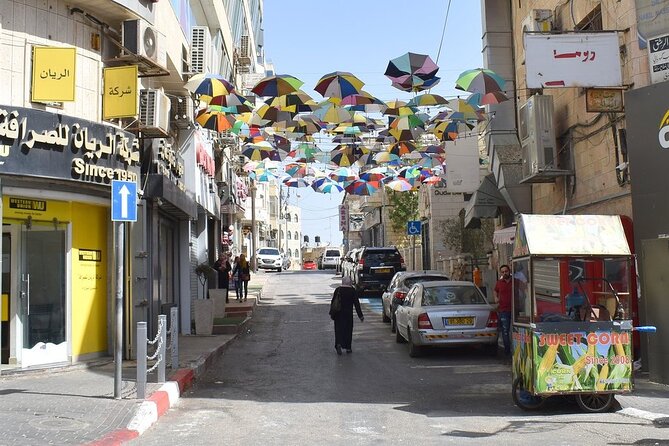
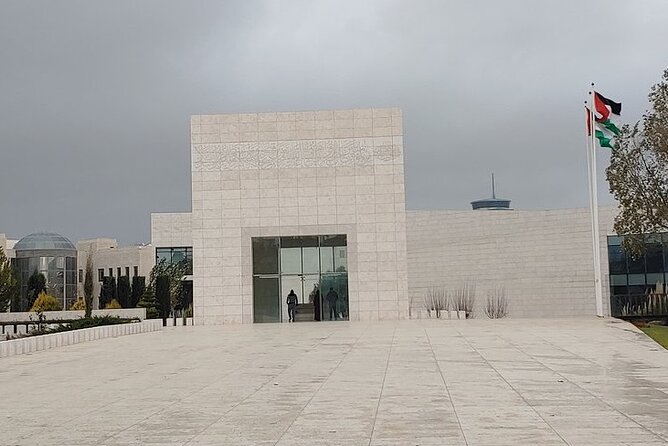
The first main stop is Arafat’s Tomb, followed by time walking through Ramallah. The visit lasts about two hours, giving you more than a quick stop for a photograph.
Arafat’s Tomb is an important political site for Palestinians, and the visit helps frame Ramallah as the de facto Palestinian capital in the West Bank. The admission fee is 10 NIS and is not included, so keep a little local currency ready.
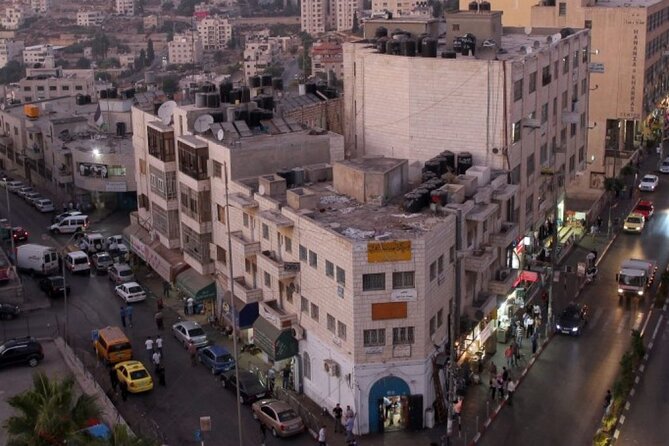
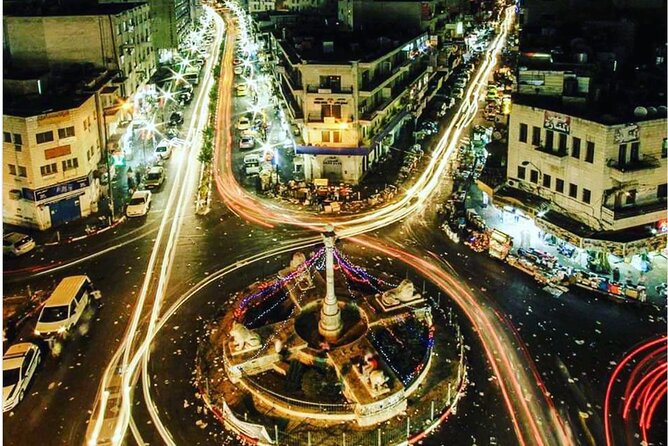
Afterward, you walk through the city’s streets. This is where the tour can feel more immediate. Rather than viewing Palestinian life from a distant lookout, you get time in an active urban setting, with the guide explaining what you are seeing as you move through town.
One especially useful detail is the chance, when available, to speak with local students. Mohammed, the guide praised for this tour, has even found students willing to talk with the group. That sort of exchange can make the city feel less like a political case study and more like a place where young people study, work, and make plans.
Still, keep your expectations sensible. The itinerary does not promise a long food tour, museum visit, or extended free time. The Ramallah portion is built around Arafat’s Tomb, a guided walk, and conversation. If you want independent shopping or a leisurely café stop, you may find the schedule fairly structured.
I would give this part your full attention. The city walk is not filler between major monuments. It is one of the few chances during the day to observe ordinary urban life rather than only contested landmarks.
Through the Judean Desert and past Ma’ale Adumim
After Ramallah, the route turns toward the Judean Desert and passes Ma’ale Adumim. You also pass Bethany, associated with the Tomb of Lazarus.
This two-hour section combines road travel with explanation. At first, you use a highway shared by Israelis and Palestinians. Later, the route continues through Wadi al-Na’ar on roads restricted to Palestinians and tourists.
The changing roads are part of what you are meant to notice. The tour shows that movement through this area is not governed by one simple road system. Different roads and access rules affect who can pass, where they can go, and how long a journey may take.
You should not think of this as a scenic desert excursion in the usual sense. The desert setting is striking, but the guide’s comments about settlements, access, and transport give the views their meaning. You may find this stretch less active than the city stops, especially if you prefer continuous sightseeing.
It is also a useful pause between Ramallah and Hebron. The vehicle gives you time to absorb what you have seen, while the route itself adds more context. Keep water with you, wear practical shoes, and use the ride as a chance to listen.
More things to do in Jerusalem:
- From Tel Aviv: Jerusalem Old & New City Bus Tour
★ 4.2 · 824 reviews - From Jerusalem: Masada & Dead Sea Full Day Tour with Pick Up
★ 4.5 · 815 reviews - Masada and the Dead Sea Day Trip from Jerusalem
★ 4.5 · 757 reviews - From Jerusalem: Nazareth and Sea of Galilee Tour
★ 4.5 · 588 reviews
Hebron, the Ibrahimi Mosque, and the Cave of the Patriarchs
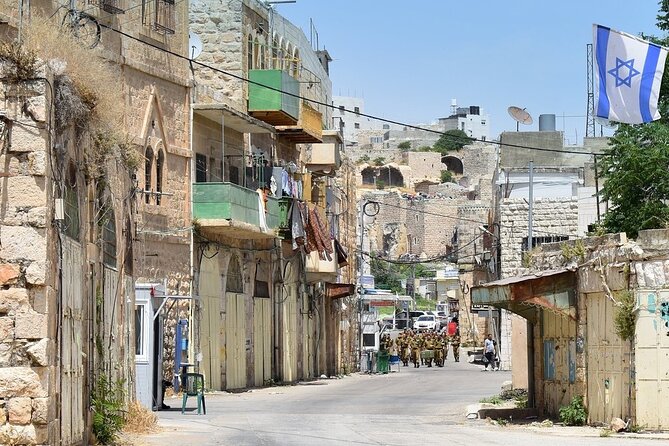
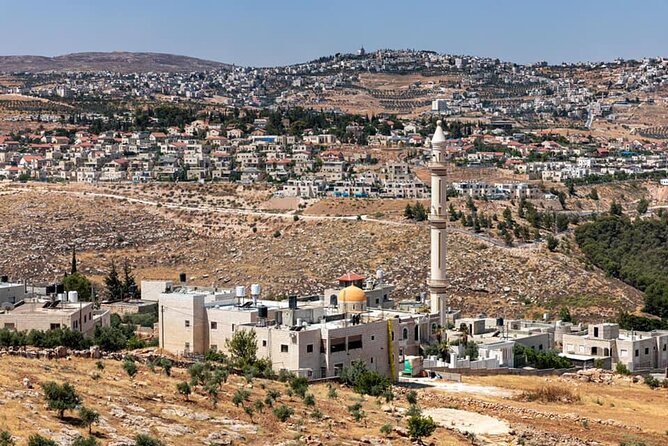
The final major portion takes you through the southern West Bank toward Hebron. Along the way, you see Israeli settlements, Palestinian farms, and villages. The guide discusses home demolitions and travel restrictions affecting Palestinians in the area.
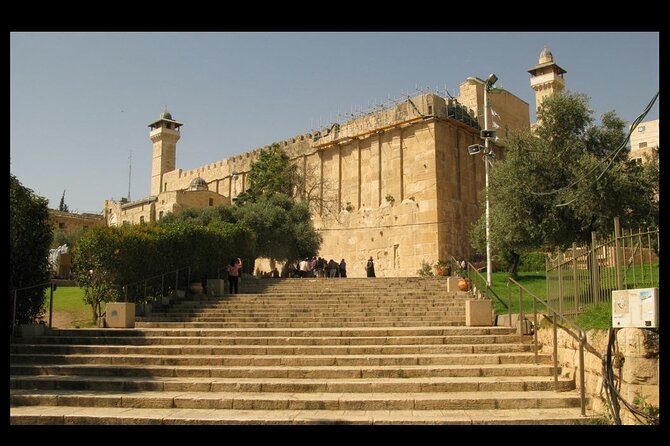
Hebron is the most intense stop of the day. Its religious importance is tied to the Ibrahimi Mosque, also known as the Cave of the Patriarchs. The site carries meaning for both Muslims and Jews, and the tour presents it within the wider setting of a divided city.
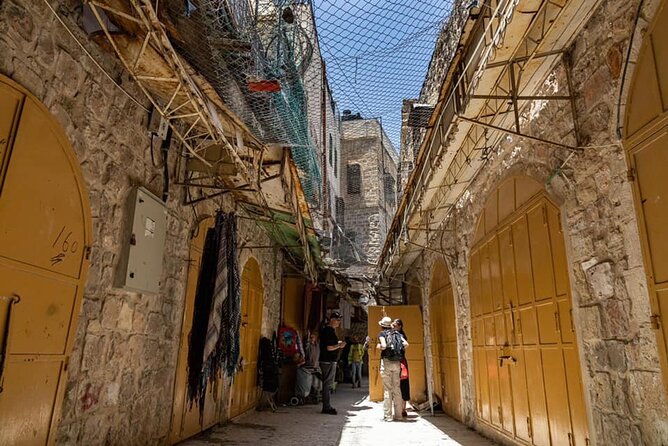
The stop lasts about two hours and includes time in the market. You walk through the market with an opportunity to shop, so carry a small bag and leave room in your schedule for browsing.
Do not expect Hebron to feel like an ordinary old-town visit. The market, religious site, settlements, and movement restrictions all exist close together. You may see signs of everyday commerce beside visible reminders of political tension. That contrast is difficult, but it is precisely why this stop matters.
Dress is especially important here. The stated rule is that only your face, lower arms, and hands should show. Men and women should avoid shorts, wear trousers or long skirts, and choose shirts that reach the neck and cover the shoulders. In hot weather, light, loose clothing is the practical answer.
Following the dress code is more than a matter of avoiding embarrassment. It shows respect in a religious city with socially conservative residents, and it keeps a simple clothing issue from distracting you from the visit.
The market gives the day a more personal side. You have time to look at goods and support local businesses, rather than simply passing through in a vehicle. At the same time, shopping is not the main purpose. The guide’s discussion of the city’s divisions and restrictions will likely occupy much of your attention.
The guide is the real center of the experience
The vehicle and route are important, but I would judge this tour mainly by the quality of the guide. The strongest praise goes to Mohammed, who is described as informative and sincere. He also made an effort to bring local student voices into the Ramallah visit.
That detail tells you something useful about the tour’s approach. The day is not limited to reciting dates or pointing out buildings. It aims to connect political conditions with the people living among them.
You should also expect a Palestinian point of view. That is appropriate for a tour focused on Palestinian cities and restrictions affecting Palestinian communities, but it is worth recognizing before you book. The experience is not designed as a neutral survey of every political argument. It presents the route through the realities encountered in Ramallah and Hebron.
A good guide should help you separate what you see from what you assume. Ask questions if you need clarification, especially around road access, the Separation Barrier, settlements, and the status of the cities visited. A small group of no more than 15 people gives you a better chance to do that than a large coach tour.
Is $230 a fair price?
At $230 per person, this is not a budget outing. Lunch is not included, and you pay an additional 10 NIS for Arafat’s Tomb. The price does include the air-conditioned vehicle, the guide, and a full day of organized transport from Jerusalem and back.
The value depends on what you want from the day. If you are mainly paying for entrance tickets, the price may look high because there are few included admissions. If you are paying for transport across a complicated route, a guide who can explain the political setting, and access to two cities that can be difficult to visit independently, the cost is easier to justify.
The maximum group size of 15 helps. You are not paying for a private tour, but you are also not being packed into a large sightseeing bus. For a politically sensitive route, the ability to hear the guide and ask questions is a real part of the value.
Bring money for lunch as well as the tomb admission, since food is excluded. The supplied details do not specify a restaurant or meal arrangement, so plan to follow the guide’s instructions during the day rather than expecting a prepaid lunch.
Physical effort, clothing, and documents
You need a moderate level of physical fitness. The tour includes walking in Ramallah, the Hebron market, and the Cave of the Patriarchs area, along with a full day of sitting and getting in and out of the vehicle.
Comfortable walking shoes are a wise choice. The day is about eight hours, and even an easy walking route can feel tiring when combined with road travel and the emotional weight of the subject.
A current valid passport is required on the day. Do not leave it in your hotel room. You should also confirm that you have the document with you before leaving Jerusalem.
Service animals are allowed, and the meeting point is near public transportation. The tour begins and ends at the YMCA Three Arches Hotel, so the fixed meeting point keeps the day simple if you are staying nearby or can reach the area easily.
Free cancellation is available if you cancel at least 24 hours before the start time. Changes or cancellations inside that window are not accepted for a refund, and the experience requires a minimum number of people to operate.
Who should book this tour?
I would recommend it to you if you want a serious, guided look at Palestinian cities rather than another standard Jerusalem excursion. It suits people interested in modern politics, religion, urban life, and the effect of borders and road systems on daily movement.
It is also a good choice if you prefer having transport and local interpretation arranged for you. The route is complicated, and the guide provides structure across places that can otherwise be hard to connect.
You may want to skip it if you dislike long road days, politically difficult subjects, or strict clothing rules. It is not a relaxed day at the beach, and Hebron in particular may feel confronting.
FAQ
How long is the Hebron and Ramallah tour?
The tour lasts approximately eight hours, beginning at 8:30 a.m. and ending back at the YMCA Three Arches Hotel in Jerusalem.
Where does the tour begin?
Pickup is at the YMCA Three Arches Hotel, King David Street 26, Jerusalem, Israel.
Is lunch included?
No. Lunch is not included in the tour price.
Do I need to pay an additional admission fee?
Yes. Admission to Arafat’s Tomb costs 10 NIS and is not included.
What should I wear in Hebron?
Wear modest clothing. Trousers or long skirts are recommended for men and women, along with shirts that cover the neck, shoulders, and upper body. Shorts are not appropriate.
Is a passport required?
Yes. You must bring a current valid passport on the day of the tour.
Should you book it?
Book this tour if you want context, direct exposure to Palestinian urban life, and a guide-led look at the forces separating Jerusalem from Ramallah and Hebron. The strongest reasons to go are the two-city contrast, the chance to hear local perspectives in Ramallah, and Mohammed’s sincere, personal guiding style.
Skip it if you want a light sightseeing day or a schedule built around famous monuments alone. At $230, the experience earns its price through access, organization, and interpretation rather than included attractions. For the right visitor, that makes it a worthwhile and memorable use of one day from Jerusalem.
Just added in Jerusalem
- Walking Jerusalem in Russian★ 5.0 · 1 review
- private Full-Day Tour to Bethlehem and Jerusalem★ 5.0 · 2 reviews
- Jerusalem and Dead Sea Trip from Tel Aviv★ 4.0 · 6 reviews
- Tel Aviv & Old City of Jaffa – Tiny group from Tel Aviv★ 4.5 · 9 reviews
- Tel Aviv; Jaffa Old City, Port & Shuk Hapishpishim Walking Tour★ 4.5 · 11 reviews
- Tel Aviv: Food & History Tour of Jaffa Old City & Flea Market★ 5.0 · 1 review
- Discover the Secrets of the Underground Jerusalem with a private tour★ 5.0 · 4 reviews
- Private Tour from Tel Aviv to Jerusalem★ 5.0 · 3 reviews
Bethlehem and the West Bank Tours, compared.
Day Tour to Jerusalem and Bethlehem from Tel Aviv
Read our review →
Jerusalem, Dead Sea, and Bethlehem from Tel Aviv
Read our review →
Jerusalem and Bethlehem Day Tour from Jerusalem
Read our review →
Travel to Bethlehem Half Day Guided Tour from Jerusalem & TelAviv
Read our review →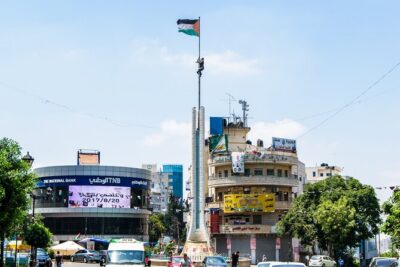
Ashdod Shore Excursion: Jerusalem and Bethlehem – for cruise ship guests only
Read our review →Browse the lists this tour appears in