
Reviewed · BETHLEHEM AND THE WEST BANK TOURS
Jerusalem & Bethlehem Tour from Haifa Port 2024 – Small Group
Two holy cities in one long day. This tour makes a difficult shore excursion possible by linking Jerusalem and Bethlehem with port pickup, air-conditioned transport, and a licensed English-speaking guide. I especially like the Mount of Olives panorama and the chance to visit both the Church of the Holy Sepulchre and the Church of the Nativity without arranging several separate transfers.
I also like that the return journey is planned around your ship’s schedule, and that entrance costs are included in the tour price. The main concern is time: Jerusalem and Bethlehem together can feel rushed, particularly when traffic is heavy or the Old City is crowded. Some departures have reached the key sites, while others have had to shorten the Jerusalem portion.
In This Review
- Key points to know before booking
- Why this shore excursion is useful from Haifa
- Meeting your guide at Haifa Port
- Mount of Olives: the best first view of Jerusalem
- Gethsemane and the Mount of Olives foothills
- Mount Zion: David’s Tomb and the Last Supper Room
- Walking the Armenian and Jewish quarters
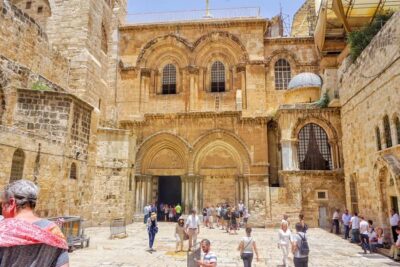
- Via Dolorosa and the Church of the Holy Sepulchre
- The Western Wall and Jerusalem’s Jewish heart
- Crossing into Bethlehem
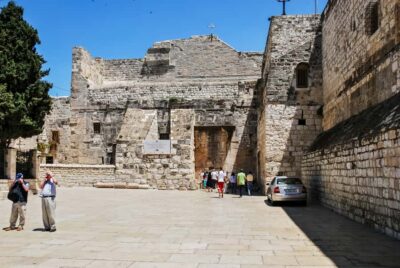
- Church of the Nativity and Manger’s Square
- Guides, flexibility, and the human factor
- Lunch, clothing, and what to bring
- Who should book this tour?
- FAQ
- Where does the tour begin?
- How long does the tour last?
- Is transportation included?
- Is a guide included?
- Are entrance fees included?
- Is lunch included?
- What clothing is required?
Key points to know before booking
- Port-to-port planning: Pickup and return transfer are arranged around your ship’s docking and re-boarding times.
- A maximum of 18 people: This is smaller than a large coach tour, though the vehicle can still feel full at capacity.
- The Mount of Olives begins the sightseeing: You get a valuable city view before walking through the Old City.
- Bethlehem adds a second country and culture: The tour crosses into a Palestinian city for the Church of the Nativity and Manger’s Square.
- Strong guides make a real difference: Avi has been praised for warmth, Bible knowledge, flexibility, and quick adjustments to the schedule.
- Dress carefully: Knees and shoulders must be covered at religious sites, for both men and women.
Why this shore excursion is useful from Haifa
Jerusalem is not a quick hop from Haifa Port. You need a vehicle, a plan that respects cruise timing, and someone who can keep the day moving when roads or crowds cause delays. This tour handles the basic transportation problem and gives you a full day, roughly eight to ten hours, to see the main Christian, Jewish, and Biblical places.
The price is $255 per person. That is not cheap, but it includes port pickup, return transportation, an air-conditioned vehicle, a licensed English-speaking guide, and entrance fees connected with the planned visits. You also avoid the cost and stress of arranging a private car from the port.
The value depends on your priorities. If your aim is to see both Jerusalem and Bethlehem during one cruise stop, the price is reasonable. If you want quiet time in the Old City, a long lunch, or several hours inside museums and churches, this schedule may ask too much of the day.
A maximum of 18 people keeps the group smaller than a standard sightseeing coach. Still, do not picture an intimate private tour. At full capacity, the vehicle can feel crowded, and one departure had passengers separated from their companions because of limited seating. If personal space matters greatly, ask about the expected group size before you book.
More Bethlehem and West Bank tours:
- Travel To Bethlehem, Jericho & Jordan River – Group Guided Tour from Jerusalem
★ 4.5 · 128 reviews - Bethlehem, Jericho & Jordan River Tour from Jerusalem
★ 4.0 · 78 reviews - Bethlehem, Jericho & Jordan River Tour from Tel Aviv
★ 3.5 · 57 reviews
Meeting your guide at Haifa Port
Your guide waits near the exit of the arrival terminal with a COMPASS sign. This detail matters. The provider is Compass Travel Israel, but the sign does not necessarily say the name of your booking platform, so keep the company name and pickup instructions handy.
At booking, you must provide your ship name, docking time, disembarkation time, and re-boarding time. These details are not paperwork for its own sake. They allow the operator to set the pickup and return around the ship’s timetable.
A serious no-show has occurred on at least one departure, with an uncomfortable wait and no useful contact. That appears to be an exception rather than the usual experience, but it is a reason to confirm the meeting point and keep the emergency contact details accessible before leaving the ship.
The vehicle is air-conditioned, a welcome feature during a full day of driving and walking. The road journey can be substantial. One account described the round trip as about five hours, with traffic in Jerusalem and Bethlehem adding more delay. Your exact time will vary, but you should think of this as a long transport day with sightseeing in the middle, not eight straight hours on foot.
Mount of Olives: the best first view of Jerusalem
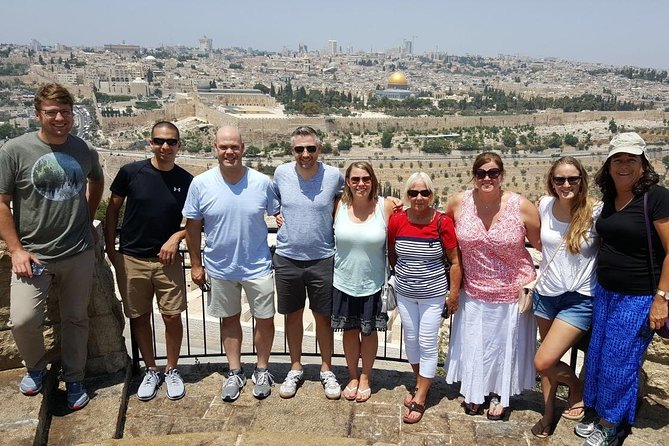
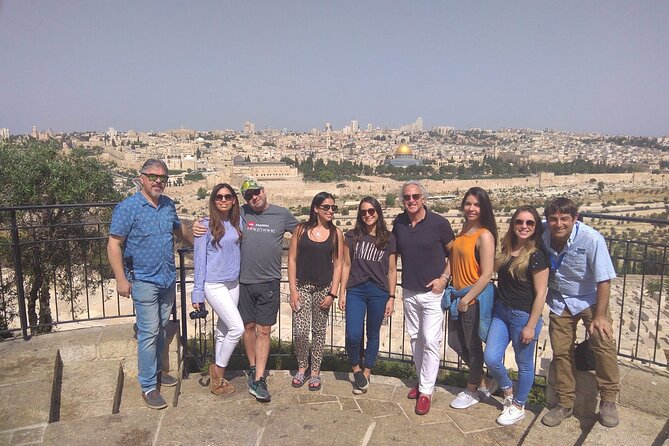
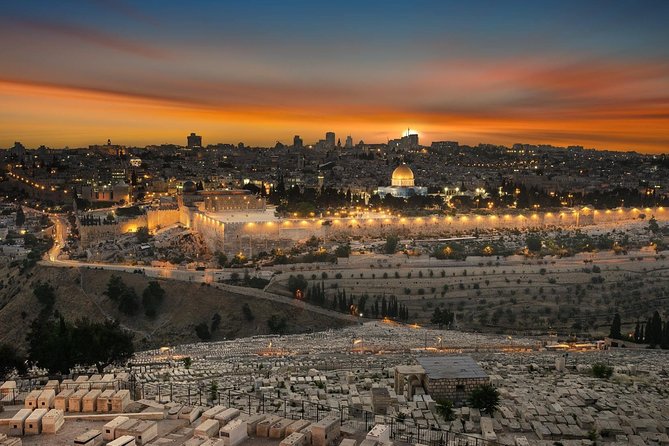
The first major stop is the Mount of Olives, where you get a panoramic view toward Jerusalem and the Temple Mount. It is a smart opening stop because the city’s layout makes more sense from above than it does from within the Old City’s tight lanes.
The Mount of Olives also carries major Christian meaning. The New Testament connects it with Jesus’ route between Jerusalem and Bethany, his sorrow over the city, and his ascension into heaven. The tour gives you around 30 minutes here, enough for the view and an introduction from the guide.
This stop is especially valuable if it is your first time in Jerusalem. You can see the separation between the city and the Judean Desert, then recognize the major sites as you encounter them later.
The drawback is that a panoramic stop is only a view. You will not have time for a long walk across the hill or a leisurely visit to every religious site connected with it. Bring a camera, listen closely, and use the short stop to orient yourself.
Gethsemane and the Mount of Olives foothills
At the foot of the hill, the tour visits the Garden of Gethsemane. Christian tradition identifies this area with Jesus’ agony before his arrest. Several small olive groves near church properties are associated with Biblical Gethsemane, so the visit is both a religious stop and a chance to see one of Jerusalem’s most recognizable olive-growing settings.
You have about 30 minutes here. The stop works best if you approach it as a quiet place for reflection rather than expecting a large attraction with many rooms to explore. The guide can explain the Gospel accounts and the different garden areas connected with the site.
The short visit also shows the basic rhythm of the tour: arrive, hear the context, see the central place, and move on. That keeps the day efficient, but it leaves little room for lingering.
More shore excursions in Haifa and the Galilee:
- Haifa Shore Excursion: Nazareth and the Galilee – for cruise ship guests only
★ 4.5 · 109 reviews - Haifa Port Shore Excursion: Nazareth and Sea of Galilee Day Tour from Haifa Port
★ 4.0 · 36 reviews - Haifa Shore Excursion: Private Nazareth and Sea of Galilee Day Trip
★ 4.5 · 7 reviews - Haifa Shore Excursion: Private Jerusalem and Dead Sea Day Trip
★ 4.5 · 5 reviews
Mount Zion: David’s Tomb and the Last Supper Room
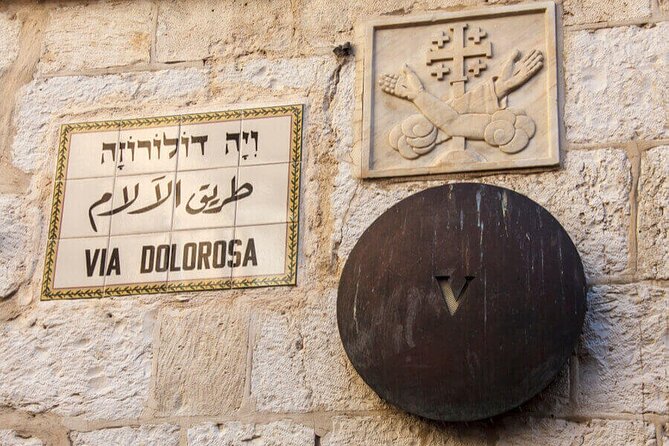
The stop on Mount Zion lasts about an hour and includes King David’s Tomb and the Room of the Last Supper. Mount Zion has a layered meaning in Jewish and Christian tradition. In Biblical language, it can refer to Jerusalem itself, not only the hill now called Mount Zion.
King David’s Tomb is one of the most sacred Jewish sites in the city, although there is no certainty that the burial place is actually David’s. The Bible places David’s burial in the City of David, lower down near the Temple Mount. That uncertainty does not make the site unimportant. It gives your guide a chance to explain how tradition, archaeology, and faith can point to different conclusions.
The Room of the Last Supper is on an upper floor. It is traditionally associated with the meal Jesus shared with his disciples, although the building and its present form reflect many later periods. I like this stop because it gives you more than a single denominational view of Jerusalem. You see how Jewish and Christian traditions overlap in the same small area.
Walking the Armenian and Jewish quarters
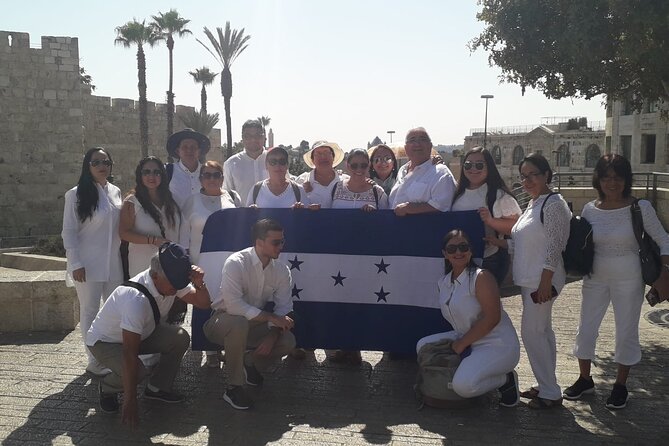
The tour then enters the Old City, moving through the Armenian and Jewish quarters toward the Cardo. The Cardo was a Roman road, and the section in the Jewish Quarter has been excavated and restored. The southern part dates from the reign of Byzantine emperor Justinian, from 527 to 565, and once helped connect important churches in Jerusalem.
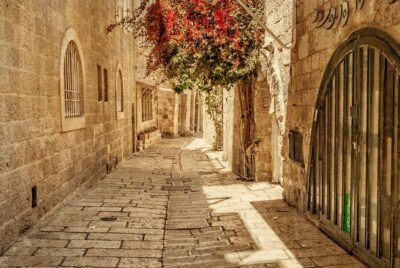
This is where walking conditions become important. The Old City has stone lanes, uneven surfaces, religious visitors, shops, and narrow passages. Wear shoes that can handle a full day on foot, and expect the pace to change as the group moves through crowded areas.
The Cardo is not a long, open Roman avenue like you might picture from an archaeological park. It is a restored section within the modern Old City. Its value comes from seeing how ancient city planning survives under the later layers of Jerusalem.
You are scheduled to spend about an hour in this part of the city. That is enough to see the main stretch and hear its story, but not enough for a broad tour of every quarter.
Via Dolorosa and the Church of the Holy Sepulchre
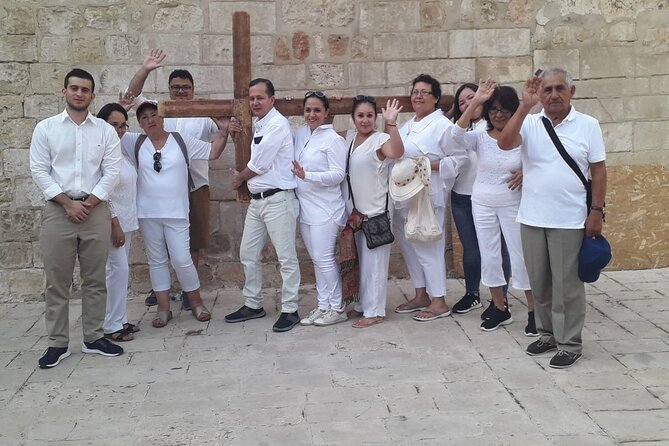
The Christian Quarter brings you to the Via Dolorosa, the processional route traditionally connected with Jesus’ path to crucifixion. The stone route is narrow and filled with religious meaning, but it is also a working part of the Old City, with everyday movement taking place around the devotional stops.
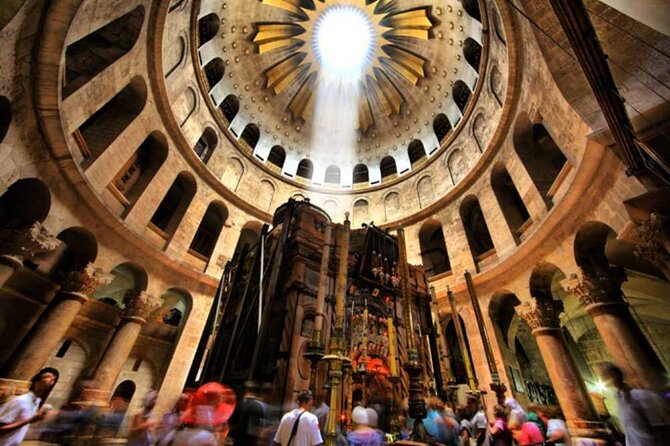
The tour allows about an hour for the Via Dolorosa and the Church of the Holy Sepulchre. The church is the central Christian site in Jerusalem, associated with the crucifixion, burial, and resurrection of Jesus. Within the complex, Christian tradition identifies places connected with Calvary, or Golgotha, and the tomb.
This is one of the strongest parts of the day for Christian pilgrims. It is also a complicated place to visit. Several Christian communities share responsibility for the church, and the interior can feel crowded, dark, and difficult to understand without a guide. A good explanation helps you follow what you are seeing rather than simply moving through a famous building.
Do not assume you will have time for every chapel or a long private prayer. Crowds, religious services, and access restrictions can change the pace. The itinerary has reached the church for many departures, but the wider Jerusalem schedule can be shortened when traffic or delays take over.
The Western Wall and Jerusalem’s Jewish heart
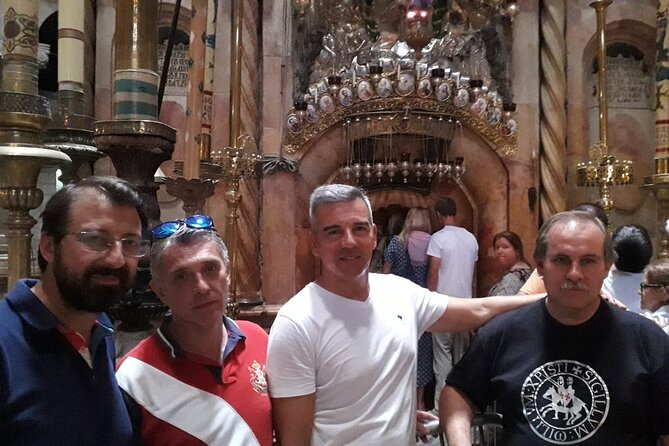
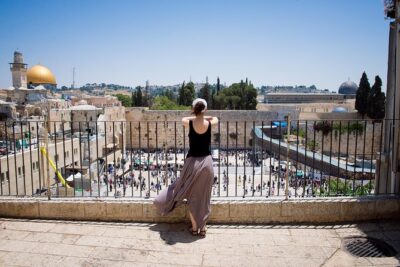
The Western Wall, also called the Kotel, is a short visible section of a much longer ancient retaining wall around the Temple Mount. Its holiness comes from its closeness to the Temple Mount, which contains the Foundation Stone, the most sacred point in Judaism.
The tour gives you around 30 minutes at the wall. That is enough to see the prayer area and absorb the setting, though it is not a full visit to the Temple Mount complex. Entry rules for the Temple Mount are separate and can be restrictive, so the Western Wall is the main accessible point connected with this part of Jerusalem.
This short stop adds necessary balance to a Christian-focused itinerary. Jerusalem is not only a destination of churches and Gospel sites. The Western Wall shows the city’s Jewish religious life in a direct and powerful way.
Dress respectfully, keep your shoulders and knees covered, and follow local instructions at the prayer area. The same clothing rules apply at the churches and other places of worship.
Crossing into Bethlehem
After Jerusalem, the tour continues to Bethlehem, a Palestinian city associated with the birth of Jesus. That transition is one of the most meaningful features of the day. You are not seeing Jerusalem in isolation. You are adding a different city, local setting, and political context to the Christian story.
The timing here matters. Bethlehem is not close enough to treat as a casual side trip from the Old City. Traffic can be slow, and the border or checkpoint process may affect the schedule. Your guide has to watch the clock carefully because the vehicle must still return you to Haifa Port.
The benefit is clear: you can visit one of Christianity’s most important birth sites without booking another day. The cost is that Jerusalem receives less time than it would on a dedicated Jerusalem tour.
Church of the Nativity and Manger’s Square
The Church of the Nativity is the final major sightseeing stop. It contains a grotto traditionally identified as the place where Jesus was born. Christian tradition connects the site with the Gospel accounts of Matthew and Luke, and the grotto has remained in continuous Christian use for centuries.
The tour allows about two hours for the church and Manger’s Square. That is a useful amount of time, especially if the site is not crowded. One departure found Bethlehem relatively quiet, which allowed a more relaxed visit than expected.
The grotto itself may surprise you. It is not a bright Christmas-card scene. It is a dim stone cave reached through a historic church, and the setting feels far more physical and worn than many visitors imagine. That contrast is part of the power of the visit.
Crowds can change everything. Lines may form, access may slow, and the two-hour window can shrink quickly. If the church is busy, listen to your guide’s instructions and stay aware of the group’s meeting time. Getting separated in a crowded religious site can cost precious minutes.
Guides, flexibility, and the human factor
The best reports from this experience focus on the guides. Avi has been praised for giving extensive historical and Biblical context while remaining personable and flexible. He also adjusted the order and timing for people who had already visited Jerusalem, shaping the day around what they still needed to see.
Another guide, Abri, was praised for making quick visits possible at places where a small group could move efficiently. Drivers have also received strong praise, particularly for humor, safe driving, and using back streets when traffic allowed.
This matters more than it might seem. The itinerary contains many stops, and the difference between a plain transfer and a useful tour often comes down to explanation. A good guide can connect the Mount of Olives, Gethsemane, Mount Zion, the Via Dolorosa, and Bethlehem into one story instead of leaving you with a string of disconnected photo stops.
Flexibility is valuable, but it has a limit. If the group arrives late, traffic is heavy, or a major religious day brings unusual crowds, the guide may need to choose between stops. A departure on Israel’s flag day benefited from a guide who knew how to alter the plan and keep the group safe. That is encouraging, but it also confirms that the schedule should be treated as an ambitious plan, not a guarantee that every minute will unfold exactly as printed.
Lunch, clothing, and what to bring
Food and drinks are not included, and lunch is not included. The schedule is busy enough that you should clarify when the group will have time to eat. Do not count on a leisurely restaurant meal unless your guide confirms it during the day.
Wear smart casual clothing that covers your shoulders and knees. This rule applies to both men and women, and you can be refused entry if you arrive in shorts or a sleeveless top. Lightweight layers are practical because the vehicle is air-conditioned while the outdoor stops may be warm.
Bring comfortable walking shoes, water, and modest clothing that you can wear from the port. Keep your ship information, meeting instructions, and the COMPASS name easy to find.
Who should book this tour?
I would choose this tour if I had one Haifa port day and wanted the major Christian landmarks in both Jerusalem and Bethlehem. It suits first-time visitors who value convenience, a guide’s explanations, and a broad introduction more than free time.
It is less suitable if you want a slow Jerusalem visit, extensive shopping, museum time, or a long meal. The road distance and traffic can consume a large part of the day, and the Old City stops may be shortened when the schedule slips.
At $255, I see fair value for a cruise passenger who would otherwise need to arrange long-distance transport, a guide, and port-safe timing separately. I would book it only after accepting the central tradeoff: you gain breadth, but you give up depth.
The tour has a 4.5 rating from 30 ratings, with especially strong praise for Avi and other guides, the Mount of Olives view, Bethlehem, and capable drivers. At the same time, missed pickups, crowded seating, and incomplete Jerusalem visits are serious concerns. Confirm the pickup details, dress correctly, and keep your expectations focused on the essential sights.
FAQ
Where does the tour begin?
The tour begins at Haifa Port. Your guide will wait at the exit of the arrival terminal with a COMPASS sign.
How long does the tour last?
The planned duration is approximately eight to ten hours, adjusted to your cruise ship’s anchoring and departure schedule.
Is transportation included?
Yes. Pickup and return transportation from Haifa Port are included, with transfers in an air-conditioned vehicle according to the tour plan.
Is a guide included?
Yes. A government-licensed English-speaking tour guide is included.
Are entrance fees included?
Yes. Entrance fees connected with the planned visits are included, so you should not expect extra tour admission charges.
Is lunch included?
No. Food, drinks, and lunch are not included.
What clothing is required?
You must cover your knees and shoulders at places of worship and selected museums. The required dress is smart casual, and both men and women must follow the rule.
Just added in Haifa and the Galilee
- Sea of Galilee – Off the Beaten Track★ 5.0 · 3 reviews
- A Day of Spiritual Discovery in the Upper Galilee★ 5.0 · 7 reviews
- Tour The Mystical City Of Safed★ 5.0 · 11 reviews
- Druze Culinary Tour of the Western Galilee★ 5.0 · 6 reviews
- Haifa Acre and Rosh Ha-Nikra Private Tour from Tel Aviv★ 5.0 · 5 reviews
- The Golan heights★ 5.0 · 4 reviews
- Sea of Galilee, Capernaum and Nazareth Day Trip from Tel Aviv★ 4.0 · 6 reviews
- Private tour: Caesarea, Haifa, and Mt. Carmel★ 5.0 · 7 reviews
Bethlehem and the West Bank Tours, compared.
Day Tour to Jerusalem and Bethlehem from Tel Aviv
Read our review →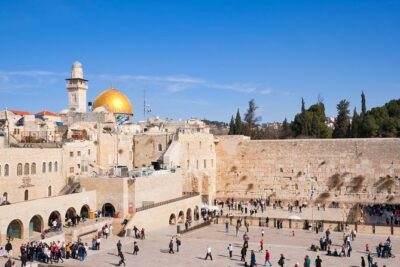
Jerusalem, Dead Sea, and Bethlehem from Tel Aviv
Read our review →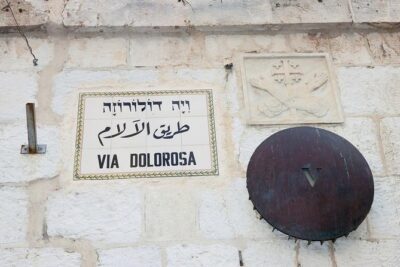
Jerusalem and Bethlehem Day Tour from Jerusalem
Read our review →
Travel to Bethlehem Half Day Guided Tour from Jerusalem & TelAviv
Read our review →
Ashdod Shore Excursion: Jerusalem and Bethlehem – for cruise ship guests only
Read our review →Browse the lists this tour appears in