

Reviewed · WALKING TOURS IN JERUSALEM
Jerusalem Jewish Orthodox Neighborhood Walking Tour
Jerusalem keeps its most revealing streets close. This walking tour opens a window onto Haredi Jewish life in Me’a She’arim, with a local guide explaining customs, religious signs, community routines, and the meaning behind the neighborhood’s appearance. I like the chance to visit places tourists rarely enter, especially the working synagogue, community center, soup kitchen, and library with ancient religious artifacts. I also like the food angle, with rugelach and challah connected to the neighborhood rather than served as a generic tourist snack.
The main caution is that the advertised experience does not always match what you receive. The details describe a four-hour tour, while the listed duration is about two and a half hours, and some accounts describe a tour closer to three hours. The promised family visit, bakery tasting, and synagogue access may also vary, so I would confirm those points before booking.
In This Review
- Key points to know before you go
- Why Me’a She’arim makes this tour different
- Starting at Davidka Square at 4:30 pm
- Walking through Me’a She’arim
- The synagogue, community center, and soup kitchen
- The promised family visit and local library
- Rugelach, challah, and the food question
- What the $45 price really buys
- Timing, clothing, and practical planning
- Who will appreciate this walk most
- Should you book the Jerusalem Jewish Orthodox Neighborhood Walking Tour?
- FAQ
- Where does the tour begin?
- Where does the tour end?
- How long does the tour last?
- What is included in the price?
- Is modest clothing required?
- How many people can join the tour?
- Can I cancel for a full refund?
Key points to know before you go
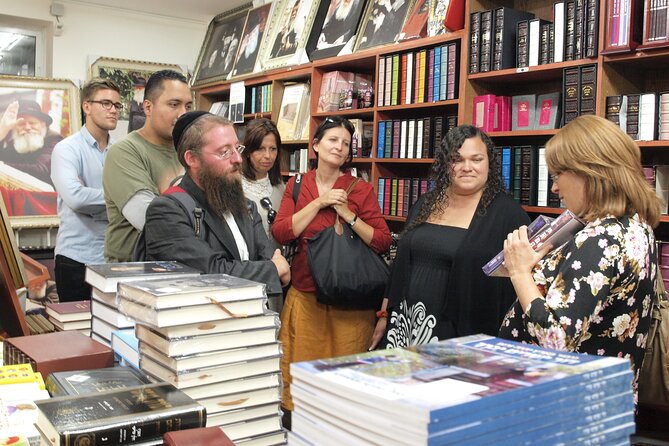
- Me’a She’arim is the heart of the visit: You walk through a traditional Haredi neighborhood and learn how its signs, clothing, buildings, and public customs reflect religious life.
- The guide matters greatly: Motti received especially warm praise for clear explanations, fair answers, and a strong grasp of current Israeli society.
- The experience reaches beyond sightseeing: A synagogue, community center, soup kitchen, local library, and possible family visit give the tour a social focus.
- Davidka Square is the meeting-area landmark: The tour begins near a historic square, the light rail, Jaffa Road, and Mahane Yehuda Market.
- Food may cost extra: Rugelach and challah are described as part of the experience, but food and drinks are not included in the price.
- Dress and timing are important: Modest clothing is required, and the 4:30 pm start means you should plan your Jerusalem day around an afternoon walk.
Why Me’a She’arim makes this tour different
Jerusalem offers famous stones, grand religious sites, and sweeping viewpoints. This tour takes a different route. Instead of focusing on monuments alone, it looks at a living neighborhood where religious practice shapes daily routines, public behavior, and the way streets are used.
Me’a She’arim is a traditional Haredi quarter. The tour is led by someone from the local Ultra-Orthodox community, giving you a guide with an inside connection to the subject. That matters here. A guide can explain details that are easy to misread from the outside, from religious symbols to neighborhood customs and the role of community institutions.
I especially like the promise of a fair, balanced explanation. One strong account praised the guide for presenting this part of Israeli society without turning the tour into either a defense or an attack. That approach is useful because Haredi life can be unfamiliar to many visitors, and simple observation does not tell you much by itself.
The best version of this tour should leave you with a better sense of how the community functions, not just a collection of unusual photographs. You will likely hear about traditions, religious identity, and the ways local organizations support residents.
More Walking Tours in Jerusalem
- Jerusalem: Guided Walking Tour of the Old City
★ 4.7 · 386 reviews - All Inclusive Walking Tour Old City Jerusalem
★ 5.0 · 83 reviews - Jerusalem Walking Tour: In the Footsteps of Jesus
★ 4.5 · 67 reviews
Starting at Davidka Square at 4:30 pm
The meeting point is Abraham Jerusalem, at Ha-Nevi’im Street 67. The tour begins at 4:30 pm, with the first stop at Davidka Square, about a 15-minute visit.
Davidka Square is named for the Davidka, a homemade mortar used by Jewish forces during the 1948 Arab-Israeli War. The square today connects several useful parts of central Jerusalem. It is near the Mahane Yehuda Market, the Jaffa Road pedestrian mall, and a Jerusalem light rail station, so it is practical to reach by public transportation.
This opening stop helps you get your bearings before entering the neighborhood. It is not the main reason to book the tour, but it gives the walk a clear starting point and links the Haredi quarter to the wider city around it.
If you arrive early, the nearby market and Jaffa Road make good places to wait. Just remember that the tour itself begins at the stated meeting point, and the experience ends there too. The tour is a walking activity, so comfortable shoes will help.
Walking through Me’a She’arim
The major part of the route is a walk through Me’a She’arim, listed at about one hour and 15 minutes. This is where the tour earns its price, provided your guide offers the promised context and access.
Your guide points out religious symbols, customs, and significant places along the streets. The value is not in checking off landmarks. It is in learning how to read a neighborhood that may otherwise seem closed or difficult to understand.
You might notice signs, clothing styles, and public rules that differ from other parts of Jerusalem. The guide can explain what those details mean and how they connect to Haredi identity. The tour is designed to remove some of the distance between an outside observer and the people who live there, while still treating the community with respect.
This is also the part where the experience depends most on the person leading it. Motti was singled out for answering questions well and explaining the Haredim in a clear way. Another highly praised guide was described as giving an inside view while stopping often for important facts. Those comments point to the ideal pace: enough walking to see the area, with regular pauses so you can understand what you are seeing.
The group can include up to 20 people. That is not a tiny private walk, but it is still small enough for questions if the guide manages the group well. If you prefer a silent stroll or a standard sightseeing loop, this may feel too discussion-based. If you want social and cultural context, the walking format works well.
The synagogue, community center, and soup kitchen
The tour highlights several community institutions, including a working synagogue, a community center, and a soup kitchen. These stops give the neighborhood more depth than a walk past residential streets.
A synagogue is not just another old building on this route. It is a functioning place of worship, and seeing it can help you understand how religious practice fits into the rhythm of local life. However, access appears to vary. One account said the synagogue was viewed only through a window rather than entered, so you should not assume that an interior visit is guaranteed.
The community center and soup kitchen are also valuable because they show the practical side of community life. They suggest a neighborhood organized around shared religious and social needs, not simply a collection of private homes. The tour information does not provide detailed descriptions of these sites, so your guide’s explanation will shape how much you learn at each one.
I would approach these visits with a respectful attitude. This is an active community, not a museum display. Modest dress is required for both men and women, and it is sensible to follow the guide’s instructions about photography, behavior, and where to stand.
A completely different kind of day:
- From Tel Aviv: Jerusalem and Bethlehem Guided Day Trip
★ 4.3 · 1,316 reviews - Tel Aviv: Jerusalem, Bethlehem & Dead Sea
★ 4.0 · 881 reviews - From Tel Aviv: Jerusalem Old & New City Bus Tour
★ 4.2 · 824 reviews - From Jerusalem: Masada & Dead Sea Full Day Tour with Pick Up
★ 4.5 · 815 reviews
The promised family visit and local library
One of the most distinctive elements is the planned welcome into a Haredi family’s home. In principle, this could be the most personal part of the walk. A home visit can show you how religious identity is expressed away from public streets, shops, and institutions.
But this is also one of the elements I would verify before paying. At least one account said the family visit did not happen. Since the tour’s content may depend on availability and local arrangements, treat this as a possible feature rather than a firm guarantee unless the provider confirms it for your date.
The neighborhood library offers another unusual stop. It houses ancient Jewish religious artifacts, allowing you to see material connected to Jewish learning and worship in a local setting. This is a better fit for visitors who enjoy books, manuscripts, objects, and explanations of religious tradition than for anyone seeking a fast-paced sightseeing tour.
The library also gives the guide a chance to connect present-day community life with older religious practice. The supplied details do not identify the specific artifacts, so I would ask questions during the visit rather than expect a formal museum display.
Rugelach, challah, and the food question
The bakery stop is one of the easiest parts of the tour to picture. You step into a neighborhood bakery and sample Jewish pastries such as rugelach and challah. These foods are familiar to many people, but tasting them in the quarter where they are part of everyday religious and family life gives the stop a local setting.
Rugelach brings a sweet pastry break to the walk. Challah connects more directly to Jewish Sabbath tradition, though the tour information does not say how the bread is presented or explained. You may find the food stop brief, but it adds a welcome sensory note to a tour that otherwise centers on conversation and observation.
There is an important value issue here. Food and drinks are listed as not included, and one account said that food bought at a snack shop had to be paid for separately. So I would budget a little extra and ask the guide what is included before ordering anything.
This may sound minor, but it prevents confusion. The price is $45 per person, and that covers the guided tour, not a full food outing. At that rate, the cultural access and guide are the main purchase. The pastry is a bonus, not the reason to expect a meal.
What the $45 price really buys
At $45, this is not the cheapest way to spend two or three hours in Jerusalem. You can walk through public streets on your own for free. The question is whether the guide provides enough explanation and access to make the cost worthwhile.
I think the price can be fair for someone interested in Haredi culture, especially if the tour includes the synagogue, community sites, bakery, library, and family meeting described. Those are not experiences you can easily reproduce with a self-guided walk.
The value drops if the visit becomes only a general stroll with commentary. One dissatisfied account said the advertised stops did not happen, the tour lasted less than promised, and the pastry tasting was missing. Another account described the guide as good but said the family was not visited, the synagogue was seen only from outside, and food cost extra.
That contrast is the key point. You are paying for access and interpretation, but the exact access may change. Before booking, ask three direct questions: How long will the tour run on my date? Is the family visit confirmed? Are pastries included, or should I bring cash for food?
Timing, clothing, and practical planning
The start time is 4:30 pm, and the walk ends back at the meeting point. The listed duration is approximately two hours and 30 minutes, while other tour details describe four hours. Since one account reported a tour of about three hours, I would leave your evening open rather than schedule a tight dinner reservation immediately afterward.
Modest dress is required for men and women. Choose clothing that covers shoulders and knees, and avoid anything that could make entry into religious spaces difficult. This is not just a formality. It shows respect and may affect whether certain parts of the tour are possible.
The starting point is near public transportation, which makes the tour easy to pair with central Jerusalem plans. The experience requires good weather, and it can also be canceled if the minimum number of participants is not reached. If that happens, a different date, another experience, or a full refund is offered.
Free cancellation is available up to 24 hours before the start time. Changes or cancellations inside that window are not accepted for a refund, so keep the local 4:30 pm start time in mind.
Service animals are allowed, and the activity states that most people can participate. The group size is capped at 20, giving the guide a manageable number of people for questions and street stops.
Who will appreciate this walk most
I would recommend this tour to you if you want to understand a less familiar part of Jerusalem and prefer a local guide over a list of famous sights. It suits people interested in religion, Israeli society, community life, food traditions, and the relationship between public customs and private life.
It is also a good choice if you have already seen the major historic sites and want a different angle on the city. The tour does not replace Jerusalem’s major monuments, but it adds social context that those sites cannot provide.
I would be more cautious if you need a fixed itinerary. The family visit, synagogue entry, pastry tasting, and total duration appear to be the uncertain points. You may still enjoy the walk, especially with a strong guide, but you should book it for the neighborhood explanation rather than for any single promised stop.
The tour may also be less suitable if you want extensive free time for photos or independent wandering. The guide sets the route and pace, and the community setting calls for restraint.
Should you book the Jerusalem Jewish Orthodox Neighborhood Walking Tour?
Book it if your main goal is a respectful, inside explanation of Haredi life in Jerusalem. The strongest parts are the local guide, the walk through Me’a She’arim, and the chance to see community institutions that most independent visitors would pass without understanding.
At $45, the tour is worthwhile when the guide is as clear and fair as Motti was described to be. I would confirm the duration and optional stops before booking, and I would carry money for food. If you do that, you can judge the experience on what it reliably offers: informed conversation and a closer look at daily life in a distinctive Jerusalem neighborhood.
FAQ
Where does the tour begin?
The tour begins at Abraham Jerusalem, Ha-Nevi’im Street 67, Jerusalem, at 4:30 pm.
Where does the tour end?
The activity ends back at the meeting point.
How long does the tour last?
The listed duration is approximately two hours and 30 minutes. Other details describe a four-hour tour, while one account reported a duration of about three hours, so you should confirm the timing before booking.
What is included in the price?
A guided tour is included. Food and drinks are not included.
Is modest clothing required?
Yes. A modest dress code is required for both men and women.
How many people can join the tour?
The tour can have a maximum of 20 participants.
Can I cancel for a full refund?
Yes, if you cancel at least 24 hours before the experience start time. Cancellations or changes made less than 24 hours before the start are not refunded.
Just added in Jerusalem
- Walking Jerusalem in Russian★ 5.0 · 1 review
- private Full-Day Tour to Bethlehem and Jerusalem★ 5.0 · 2 reviews
- Jerusalem and Dead Sea Trip from Tel Aviv★ 4.0 · 6 reviews
- Tel Aviv & Old City of Jaffa – Tiny group from Tel Aviv★ 4.5 · 9 reviews
- Tel Aviv; Jaffa Old City, Port & Shuk Hapishpishim Walking Tour★ 4.5 · 11 reviews
- Tel Aviv: Food & History Tour of Jaffa Old City & Flea Market★ 5.0 · 1 review
- Discover the Secrets of the Underground Jerusalem with a private tour★ 5.0 · 4 reviews
- Private Tour from Tel Aviv to Jerusalem★ 5.0 · 3 reviews
Walking Tours in Jerusalem, compared.


Jerusalem Walking Tour: In the Footsteps of Jesus
Read our review →

The Center of the Universe – Walk the “Holy City” with GaryTheGuide
Read our review →
Jaffa: Old City, Port & Shuk Hapishpishim Walking Tour
Read our review →
Browse the lists this tour appears in