
Reviewed · HISTORICAL TOURS
Heritage Of The Holy Land Tour
The Holy Land rewards careful planning. This 8-day Israel tour takes you from Jaffa and Caesarea to Galilee, Bethlehem, Masada, and Jerusalem while handling hotels, transfers, and daily transport. I love the strong Christian focus and the chance to see major biblical sites without working out every route yourself. I also like that the tour includes both famous religious places and important Jewish sites such as Yad Vashem and the Israel Museum.
The main drawback is the pace. You cover a great deal of ground in seven touring days, and several visits last less than an hour. The tour suits you best if you want a broad first look at Israel rather than long, quiet visits at each church or archaeological site.
In This Review
- Five details worth knowing before you book
- What the $1,597 price really covers
- Arrival in Tel Aviv and the first night
- Jaffa, Caesarea, Megiddo, and Cana
- Galilee: Capernaum, Tabgha, and the Jordan River
- Nazareth, Beit Alpha, and the boat on Galilee
- Masada, Qumran, and floating in the Dead Sea
- The Israel Museum, Ein Karem, and Yad Vashem
- Jerusalem’s Old City and the final Christian sites
- Guide, group size, and the pace of the road
- Hotels, meals, and who gets the best value
- Should you book the Heritage of the Holy Land Tour?
- FAQ
- How long is the Heritage of the Holy Land Tour?
- What is included in the tour price?
- Are meals and drinks included?
- Is the Sea of Galilee boat ride included?
- How large can the tour group be?
- Where does the tour start and finish?
Five details worth knowing before you book
- Seven hotel nights are included, along with breakfast each morning, arrival and departure transfers, and an air-conditioned vehicle.
- The Christian route is wide-ranging, from Cana and Capernaum to Bethlehem, the Via Dolorosa, and the Church of the Holy Sepulchre.
- The itinerary also covers Jewish history, including Masada, the Dead Sea Scrolls, the Israel Museum, and Yad Vashem.
- Daily hotel pickup and drop-off reduce the hassle, but the group can include up to 40 people.
- The Sea of Galilee boat ride costs extra and depends on weather, so you should carry some flexibility in your plans.
- The $1,597 price includes major touring costs, but not meals, drinks, or every optional activity.
What the $1,597 price really covers
At $1,597 per person, this is not a shoestring trip, but it includes the parts of Israel travel that can quickly become expensive and confusing. You receive seven nights of accommodation, breakfast each day, a professional guide, transportation in an air-conditioned vehicle, national park fees, and airport transfers on the designated arrival and departure dates.
I consider that a fair package for a first visit, especially because the route crosses much of the country. You are not simply paying for sightseeing. You are also paying to avoid arranging separate hotels, transfers, intercity transport, and admission fees at national parks.
Food and drinks are not included unless specifically stated. That gives you some freedom, but you should budget separately for lunches, dinners, snacks, and drinks during long touring days.
The trip is usually booked about 77 days ahead. That is a useful planning clue, particularly if you need fixed flights or want to travel during a popular season. Passport name, number, expiry date, country, and flight details are required when booking, so have those details ready.
More History Tours in Israel:
- Jerusalem Yad Vashem Holocaust History Museum Tour
★ 5.0 · 98 reviews - Kabbalah Heritage Walk
★ 5.0 · 23 reviews - Jerusalem Christian Heritage Private Tour
★ 5.0 · 9 reviews
Arrival in Tel Aviv and the first night
Day one is intentionally light. You may arrive at Ben Gurion Airport at any time on your scheduled arrival date, meet the local representative, and transfer to your Tel Aviv hotel. Touring begins the next day.
I like this arrangement because it avoids forcing you onto a sightseeing schedule after a long flight. You get a night to sleep, adjust, and prepare for an early start. The airport transfer is included only on the designated tour arrival date, so anyone arriving earlier or later must arrange that transport independently.
The tour information gives an 8:00 am start time, so you should be ready for early mornings once sightseeing begins. Hotel pickup is provided, which saves you from finding a meeting point in an unfamiliar city.
Jaffa, Caesarea, Megiddo, and Cana
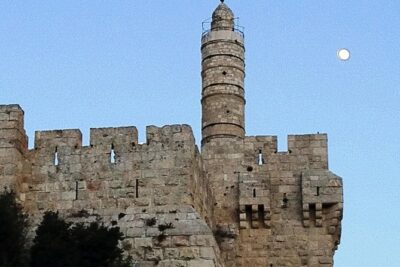
The first touring day begins in Jaffa, the old port city beside Tel Aviv. A short walking visit takes you through the old fortified quarter, with its narrow lanes and hilltop views. You also pass the traditional house of Simon the Tanner, a place connected with the apostle Peter.
The visit lasts about 40 minutes. That is enough for a quick orientation and photographs, but not enough for a slow exploration of Jaffa. I would treat it as an atmospheric introduction rather than a full city tour.
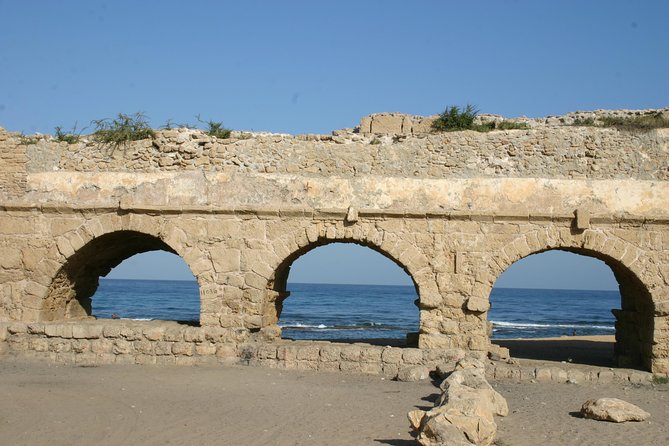
From there, the route heads north to Caesarea National Park. Herod the Great built this port city in honor of Augustus Caesar, and the ruins offer an early look at the Roman world that shaped first-century Judea. You have about an hour here, with admission included.
Megiddo follows, another one-hour visit. The site is linked with Armageddon in the Book of Revelation and was inhabited for thousands of years, from roughly 6000 to 500 BC. Even if you are not studying biblical prophecy, Megiddo gives useful archaeological context for the ancient kingdoms and trade routes of the region.
The day ends at the Franciscan Wedding Church in Cana, where Christian tradition places Jesus’ first miracle, the turning of water into wine. The visit lasts about 40 minutes. I like the mix of settings on this day: a coastal port, a major archaeological site, an ancient settlement, and a Christian shrine.
The tradeoff is time. Four stops plus the drive north create a full day, and you should expect a structured visit rather than hours to wander.
Galilee: Capernaum, Tabgha, and the Jordan River
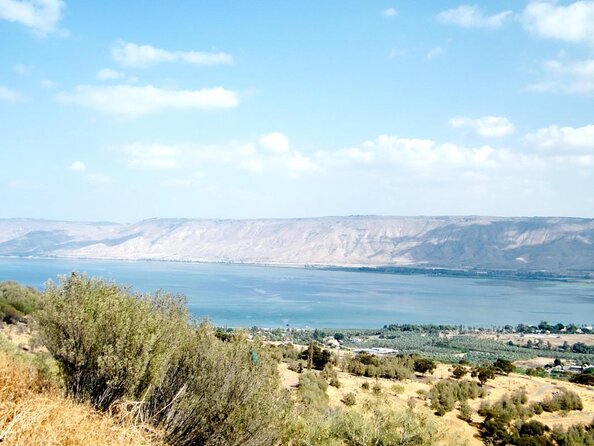
Day three centers on the Sea of Galilee and some of the most important Christian sites in northern Israel. At Capernaum, you visit the place described as the center of Jesus’ ministry. The stop at Kfar Nahum National Park lasts about 40 minutes, with admission included.
Tabgha comes next. The Church of the Multiplication is associated with the feeding of the 5,000, and its mosaic floor shows a basket with loaves and two fish. You have about 50 minutes here, enough to see the church and its famous floor without rushing through the entire area.
At the Mount of Beatitudes, you look over the Sea of Galilee from the traditional site of the Sermon on the Mount. Christian tradition also connects this hill with the choosing of the twelve apostles. The stop lasts around 40 minutes.
The route then reaches Yardenit, a baptismal site along the Jordan River south of the Sea of Galilee. You have 50 minutes. The setting has special meaning for Christian pilgrims, though the site should be understood as a modern pilgrimage location rather than a confirmed location for every event associated with the Jordan River.
The Church of the Primacy of Peter receives about an hour. Tradition places here the moment when Jesus gave Peter a leading role among the apostles. The final stop is Banias Nature Reserve, one of the sources of the Jordan River, with about an hour to see the area connected with the confession of Jesus as the Messiah.
This is one of the strongest days for a Christian visitor. It connects several Gospel locations in one region and gives you time at each stop. Still, six stops make it busy. Comfortable shoes, water, and a willingness to keep moving will help.
A completely different kind of day:
- From Tel Aviv: Masada & Dead Sea Full Day Tour with Pick Up
★ 4.5 · 1,496 reviews - From Tel Aviv: Jerusalem and Bethlehem Guided Day Trip
★ 4.3 · 1,316 reviews - Masada and the Dead Sea Day Trip from Tel Aviv
★ 4.5 · 1,014 reviews - Tel Aviv: Jerusalem, Bethlehem & Dead Sea
★ 4.0 · 881 reviews
Nazareth, Beit Alpha, and the boat on Galilee
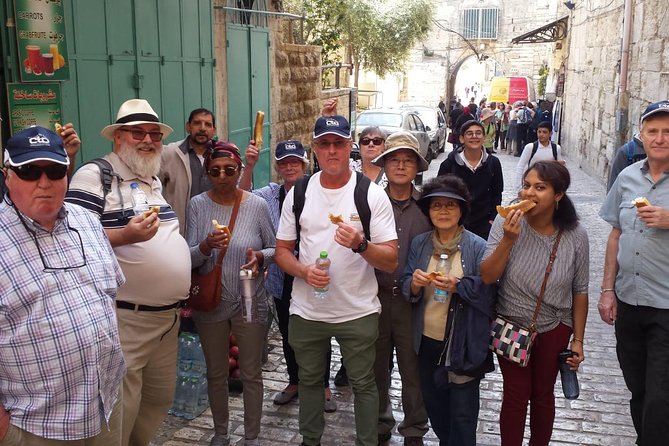
Day four begins in Nazareth at the Church of the Annunciation. The church is built where archaeologists believe the Archangel Gabriel appeared to Mary. The visit also includes Mary’s Well and Joseph’s Church, with about an hour at the site.
This is an important stop, but it can feel crowded and formal compared with the smaller churches elsewhere on the route. I would pay close attention to the guide here, since the value comes not only from the building but also from understanding the layers of tradition and archaeology connected with it.
Beit Alpha Synagogue National Park offers a change of focus. Its preserved mosaic is one of the most attractive ancient mosaics in Israel, and the site sits near the northern slopes of the Gilboa Mountains. You have about 50 minutes, with admission included.
The day may include a boat ride on the Sea of Galilee. The ride lasts about an hour, but it is subject to weather and requires an additional fee. The calm water and familiar biblical setting can be a welcome pause after several church visits. Since it is not guaranteed, I would not make the boat the deciding reason to book the tour.
You then arrive in Jerusalem for the overnight stay. This change of base matters because the following days focus on the Dead Sea region and Jerusalem itself.
Masada, Qumran, and floating in the Dead Sea
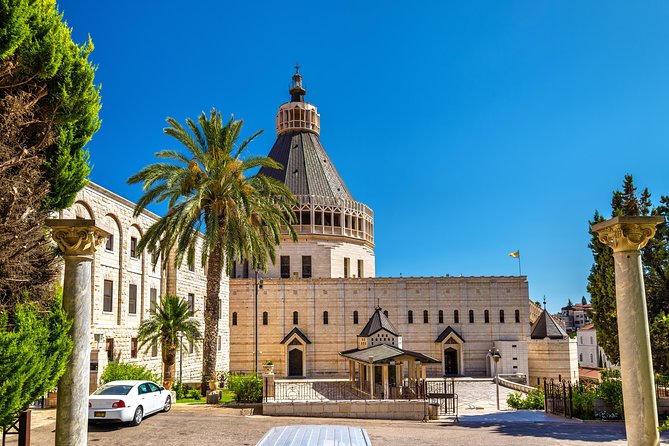
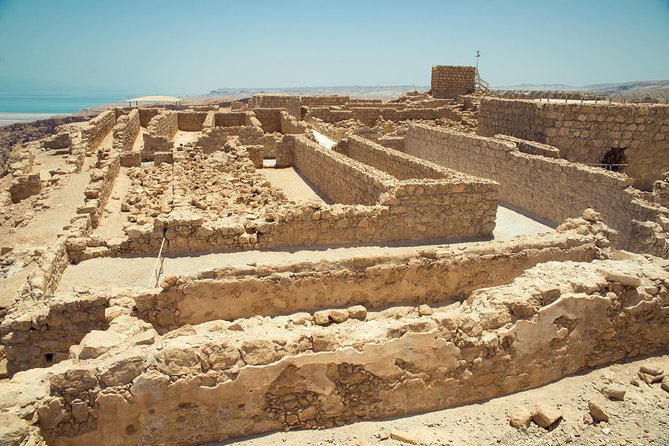
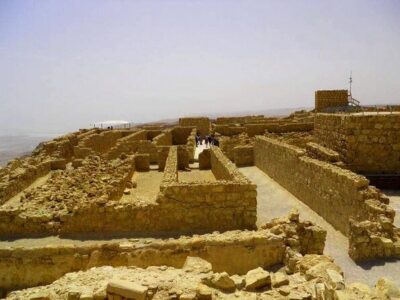
Day five leaves Jerusalem for the Judean Desert and the Dead Sea area. Masada is built on an isolated cliff and became a UNESCO World Heritage Site in 2001. You have about an hour at the national park, with the park fee included.
Masada is important both for its dramatic setting and for the story attached to the fortress. The visit also gives you a sharp change of scenery from Galilee and Jerusalem. Because the stop is limited to an hour, ask your guide which parts matter most if you want to focus your time.
At Qumran Caves, you visit the place associated with the discovery of the Dead Sea Scrolls. The stop lasts about 40 minutes. This is a compact visit, but it adds valuable context to the religious and literary world of ancient Judea.
The longest stop of the day is the Dead Sea, at two hours. Bring a swimsuit. If weather permits, you can float in the mineral-rich, salty water at the lowest point on Earth’s surface.
I like the balance here: archaeology, desert scenery, and a chance to do something rather than only look at ruins. You should also remember that the Dead Sea is not a normal swimming beach. The tour information does not specify changing facilities or other details, so plan to follow the local instructions carefully.
The Israel Museum, Ein Karem, and Yad Vashem
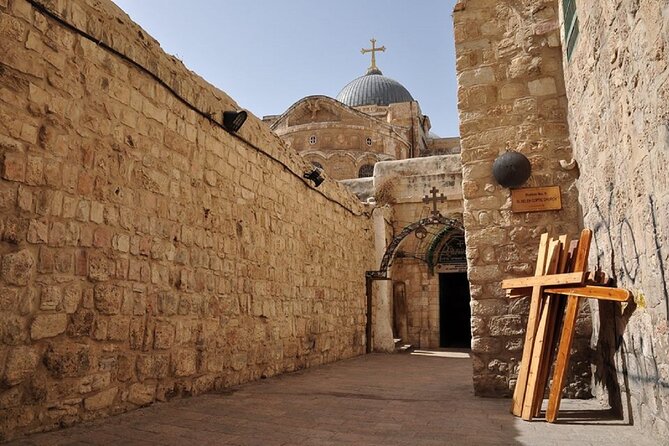
Day six shifts from outdoor sites to Jerusalem’s museums and religious districts. At the Israel Museum, you visit the Shrine of the Book, home of the Dead Sea Scrolls, followed by a model of Jerusalem from the Second Temple period.
This is one of the most useful stops for putting the rest of the trip into context. The model helps you picture the city before its destruction, while the scrolls connect the archaeological record with the religious traditions you have been following since Galilee.
Ein Karem is a small village on the southwestern edge of Jerusalem. Christian tradition identifies it as the birthplace of John the Baptist. You have about 50 minutes, and admission is free.
The day also includes Yad Vashem, Israel’s official memorial to Jewish victims of the Holocaust. The visit lasts about an hour. I appreciate its inclusion because a Holy Land tour should not reduce Israel to biblical sites alone. Yad Vashem adds essential modern history and asks for a more serious, reflective kind of attention.
Bethlehem follows, with two hours at the Church of the Nativity and Manger Square. This is a major Christian pilgrimage stop and one of the itinerary’s central moments. Since the visit is listed without an admission fee, the tour covers the main sightseeing plan, though the pace remains structured.
The combination of Bethlehem and Yad Vashem makes this a weighty day. You move between Christian tradition, Jewish memory, and present-day Jerusalem. Give yourself mental space for both.
Jerusalem’s Old City and the final Christian sites
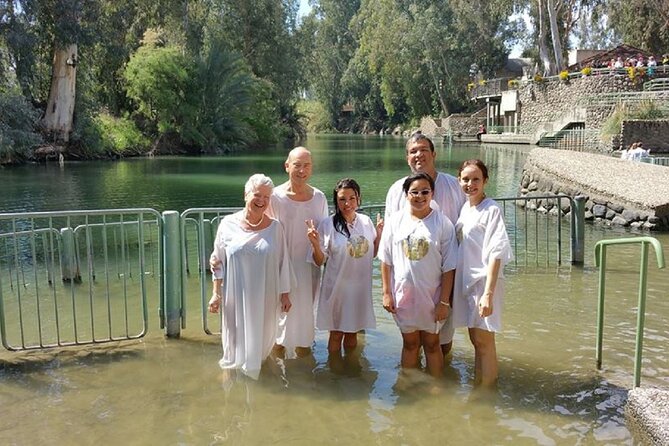
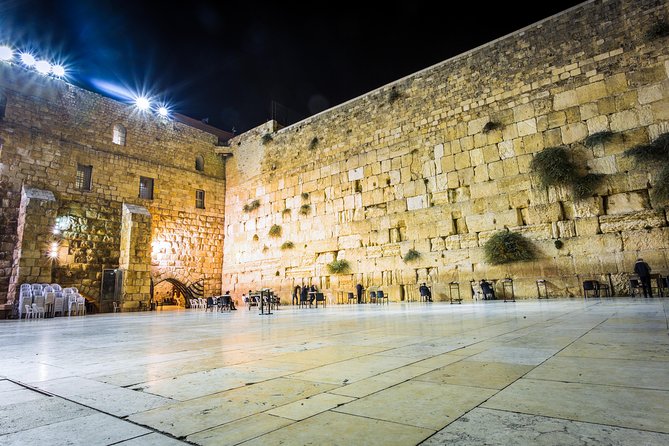
Day seven is the emotional center of the tour. You enter Jerusalem’s Old City to see the Western Wall and the Temple Mount, the traditional location of the Second Temple. The visit lasts about an hour.
The Western Wall is an active place of prayer, not simply a photo stop. Dress and behave respectfully, and listen closely to your guide’s instructions. The tour data does not give a detailed dress code, so modest clothing is the safest choice at religious sites.
You then walk the Via Dolorosa, the traditional Way of the Cross, toward Calvary and the Church of the Holy Sepulchre. The church contains the traditional sites of the Crucifixion and the Tomb of the Resurrection. The scheduled visit is one hour.
This is where the tour’s Christian focus becomes most direct. The route is meaningful, but the Old City can be crowded and the church visit may feel compressed. You should expect a shared group experience rather than private prayer time.
Mount Zion follows, with about 40 minutes for the traditional tomb of King David and the Room of the Last Supper. The final religious stops are the Garden of Gethsemane, associated with Judas’ betrayal of Jesus, and the Mount of Olives.
From the Mount of Olives, you get a broad view of Jerusalem, a city sacred to Christianity, Judaism, and Islam. The stop lasts about 30 minutes. I would save your camera for this final overlook, but also listen to the guide’s explanation of what you are seeing.
Guide, group size, and the pace of the road
A professional Hebrew-speaking guide accompanies the tour, helping with language and explaining the religious, historical, and current social setting. The strongest praise in the available feedback focuses on the guide’s broad and detailed explanations, along with the organization of the trip.
No guide’s name is provided, so you cannot request a particular person in advance. The group may reach 40 people. That size keeps the price below a private tour, but it can make church visits and head counts less personal.
The air-conditioned vehicle is a major practical benefit. Israel’s route involves long drives between regions, and you do not have to navigate unfamiliar roads or arrange each transfer. Daily hotel pickup and drop-off also remove a common source of stress.
The same convenience creates a fixed rhythm. If you prefer to linger at one church, spend an afternoon in a museum, or choose restaurants and neighborhoods on your own, this tour may feel too controlled.
Hotels, meals, and who gets the best value
Seven nights of accommodation and seven breakfasts are included. The available feedback describes the hotels, service, and food as very good, but it does not provide hotel names, locations, or room categories. I would confirm those details before booking if your choice of neighborhood or hotel quality matters greatly.
The tour is best for a first-time visitor who wants the main Christian sites in one organized trip. It also works well for someone who values a guide’s explanations and prefers not to rent a car.
I would be more cautious if you want a quiet pilgrimage, independent exploration, or a deep visit to each museum. The itinerary is broad, but the time at each stop is often 30 to 60 minutes. You see a lot, yet you will need to accept that some places receive only an introduction.
Cancellation is generous if you cancel at least six full days before the start time. A cancellation two to six days ahead receives a 50 percent refund, while cancellations less than two full days before departure are not refunded. Changes are not accepted inside those shorter cutoffs.
Should you book the Heritage of the Holy Land Tour?
I would book this tour if your goal is to cover Israel’s key Christian sites in eight days with transport, hotels, a guide, and major admission fees arranged in advance. The route is especially strong for Galilee, Bethlehem, and Jerusalem, while Masada, Qumran, Yad Vashem, and the Israel Museum keep the trip from becoming narrowly focused.
I would skip it if you need slow mornings, small groups, or freedom to change plans. For most first visits, though, the $1,597 cost offers solid value because the tour connects distant parts of Israel without making you solve the logistics yourself. Just budget for meals, check the hotel details, and treat the Sea of Galilee boat ride as an optional bonus rather than a promise.
FAQ
How long is the Heritage of the Holy Land Tour?
The tour lasts approximately eight days and includes seven nights of accommodation. Touring begins the day after arrival and ends with a transfer to Ben Gurion Airport on day eight.
What is included in the tour price?
The price includes seven nights of accommodation, seven breakfasts, national park fees, a professional guide, an air-conditioned vehicle, and arrival and departure transfers on the designated tour dates.
Are meals and drinks included?
Breakfast is included each day. Other food and drinks are not included unless specifically stated.
Is the Sea of Galilee boat ride included?
No. The boat ride requires an additional fee and operates subject to weather conditions.
How large can the tour group be?
The tour has a maximum group size of 40 people.
Where does the tour start and finish?
The tour starts at Ben Gurion Airport in Israel and ends back at the meeting point with a transfer to the airport. Airport transfers are provided only on the designated arrival and departure dates.
Just added in Israel
- Walking Jerusalem in Russian★ 5.0 · 1 review
- Sea of Galilee – Off the Beaten Track★ 5.0 · 3 reviews
- Wine Tour North of Israel from Tel Aviv★ 5.0 · 2 reviews
- Tour The Mystical City Of Safed★ 5.0 · 11 reviews
- private Full-day Tour to Jericho + the Dead Sea★ 5.0 · 3 reviews
- A Day of Spiritual Discovery in the Upper Galilee★ 5.0 · 7 reviews
- private Full-Day Tour to Bethlehem and Jerusalem★ 5.0 · 2 reviews
- Druze Culinary Tour of the Western Galilee★ 5.0 · 6 reviews
Historical Tours, compared.
Full-Day Private Luxury and Cultural Tour in Tel Aviv
Read our review →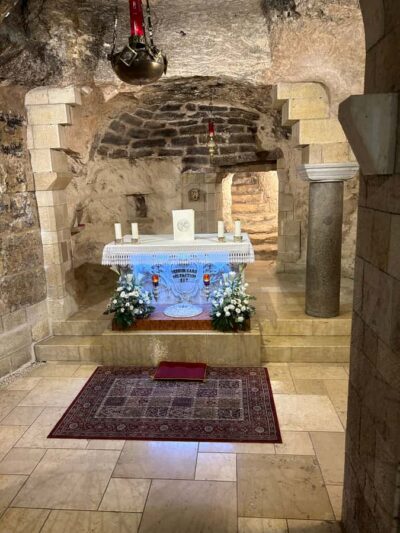
Private Historical Tour of Masada & Dead Sea from Jerusalem
Read our review →Browse the lists this tour appears in